In This Article
What are borax ant bait stations for indoor use? They are small, mostly enclosed plastic trays holding a sweet liquid laced with a low dose of borax. Worker ants sip the bait, carry it home and share it around the nest. The poison reaches the colony slowly instead of dropping foragers on your worktop.
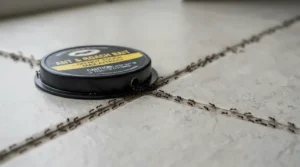
It’s a clever bit of chemistry, and a very British problem. Once spring warms up, a neat line of black ants can appear from nowhere and head straight for the sugar bowl. According to Which?’s ant guide, black ants are the only species likely to wander indoors. They don’t live in your house, they just forage for sugary food. Which? also rates bait stations as effective, particularly when the nest is out of reach, say inside a wall.
Here’s the catch most “best ant bait” lists skip. Borates are classed as toxic for reproduction, which is why borax-based consumer products have all but vanished from UK shelves. The famous borax liquid baits are American brands that reach British homes through import resellers. So this guide is deliberately honest. Three picks below are true borax-formula baits, and four are UK-ready stations using different actives that work on the same share-it-with-the-nest principle.
You’ll also get focused advice on liquid ant bait stations for windowsills, enclosed ant bait stations for homes with pets, the borax sugar solution question, ant trail disruption and refillable bait trays. Prices are ranges as researched, so check current price before buying.
Quick Comparison: Borax Ant Bait Stations for Indoor Use at a Glance
| Product | Active type | Format | Indoor and pet fit | Best for |
|---|---|---|---|---|
| TERRO T300-3SR Liquid Ant Baits | Borax (5.40%) | 18 pre-filled stations | Flat stations, place out of reach | TERRO T300-3SR: whole-home coverage |
| TERRO T334B Multi-Surface Liquid Ant Baits | Borax | 4 stations with adhesive strip | Mounts up off the floor | TERRO T334B: windowsills and cabinets |
| TERRO T100-12 Liquid Ant Killer | Borax (5.40%) | 1 oz bottle plus cardboard squares | Open liquid, least pet-friendly | TERRO T100-12: pet-free budget baiting |
| Nippon Ant Bait Station Twin Pack | Spinosad | 2 enclosed pre-filled stations | Enclosed, holes snapped open | Nippon Ant Bait Station: simple UK-ready baiting |
| Nippon Ant Control System | Spinosad | 2 refillable stations plus 25g liquid | Enclosed once holes are pierced | Nippon Ant Control System: repeat infestations |
| Rentokil Ant Killer Gel Twin Pack | 1R-trans phenothrin | 2 gel stations | Press-to-activate, low profile | Rentokil Ant Killer Gel: light kitchen invasions |
| Home Defence AntClear Bait Station | Gel (fipronil named on the earlier version) | Twin station pack | Spurs snapped off, tile cover | Home Defence AntClear: hallways and garages |
Looking at the table, the three TERRO products are the only true borax options, and they trade UK-style retail convenience for the formula the keyword asks about. The Nippon pair and Rentokil Ant Killer Gel are the easiest to find on British shelves, while Home Defence AntClear sits in the middle on price. If pets share your home, the enclosed formats lower the odds of nosy contact, though none make a bait harmless.
💬 Just one click — help others make better buying decisions too!😊
Top 7 Borax Ant Bait Stations for Indoor Use: Expert Analysis
1. TERRO T300-3SR Liquid Ant Baits — best borax multipack for whole-home coverage
The headline feature is quantity: three packs, 18 pre-filled stations, enough to ring a kitchen, hallway and bathroom without rationing.
Each station holds a liquid with 5.40% sodium tetraborate decahydrate (borax), according to the manufacturer. That modest dose is deliberate, because the slow action lets workers survive the journey home to the nest. A snap-off tab keeps the bait fresh until opening. Terro says full control can take up to two weeks and suggests swapping stations every three months once ants are gone.
Based on the label, this suits sweet-feeding household ants, which covers the black garden ants UK homes usually see. Terro itself says it isn’t aimed at fire, pharaoh, carpenter or harvester ants. Pharaoh ants are a heat-loving species that turns up in some UK buildings, so a persistent indoor colony that ignores the bait deserves a professional look. Note the label is written for the American market, so read it carefully and check who is selling.
Reviewers on the US listing for the 12-pack averaged around 4.6 out of 5 across well over 160,000 ratings in a 2025 snapshot. A minority said ants ignored the bait at first, and others noted a surge of ants once they found it. I couldn’t verify a UK-specific review pool.
Pros:
- ✅ Eighteen stations cover every room
- ✅ Sealed tab keeps bait fresh until used
- ✅ Modest borax dose suits colony sharing
Cons:
- ❌ American label and import-reseller supply
- ❌ Flat stations need careful pet-proof placement
Import resellers listed 18-station packs in roughly the £20–£25 range at the time of research, which works out around £1.10–£1.40 per station. That’s fair value if you need whole-home coverage.
2. TERRO T334B Multi-Surface Liquid Ant Baits — adhesive backing for walls and cabinets
This is the borax option designed for getting bait off the floor.
Each of the four stations has an adhesive strip and a two-colour design, so you can mount it under a cabinet or beside a window and pick white or brown to blend in. On paper, that makes sense. Ants follow edges and skirting, so a station mounted at the right height meets the trail head-on. Mounting up high also helps keep it away from children and pets, which Terro itself points out.
Retail listings credit the borax with a slow digestive effect, with complete control taking two to four weeks. Plan on patience, and don’t judge it after three days.
Review sentiment looks mixed. Terro’s own product page carries at least one detailed complaint that the adhesive backing is recessed and fails to grip. Weigh that against the neat idea, and consider a dab of removable putty if the strip fails. I couldn’t confirm a regular UK stockist, so check availability and the seller before relying on this one.
Pros:
- ✅ Mounts off the floor on walls and cabinets
- ✅ Two colours blend with fittings
- ✅ Stay-fresh twist tab until opened
Cons:
- ❌ Reviewers report weak adhesive grip
- ❌ Unclear regular UK availability
I couldn’t pin down a dependable UK price range, so check current price. Treat it as a niche pick for windowsills rather than a whole-house solution.
3. TERRO T100-12 Liquid Ant Killer — flexible bottle for pet-free homes
The standout here is flexibility: it’s the same 5.40% borax liquid, but in a 1 oz bottle with nine cardboard squares to place it on.
That open-liquid format lets you put a few drops exactly where ants are feeding, which suits awkward gaps and odd shapes. It also means the bait is exposed, and that is the whole safety trade-off. Cardboard squares are easy to knock, lick or carry off.
My honest take, based on the format: this is only sensible in a home without pets or toddlers, and only on surfaces you can wipe afterwards. Terro suggests leaving the bait undisturbed while ants feed and adding more placements for bigger problems. Shoppers who want a sealed unit should skip this and use the stations above.
Reviews I found for the Terro liquid line praise cost-effectiveness for light and heavy infestations. They also repeat the warning to keep it away from children and pets despite borax’s relatively low toxicity. I couldn’t isolate review data for this exact bottle on UK listings.
Pros:
- ✅ Precise drops in tight gaps
- ✅ Same borax strength as stations
- ✅ Cheap way to bait many spots
Cons:
- ❌ Open liquid unsuitable around pets
- ❌ Cardboard squares are easily disturbed
Prices vary a lot by pack size on import listings, so check current price. Value is decent, but only if the open format suits your household.
4. Nippon Ant Bait Station Twin Pack — enclosed, pre-baited and easy to find
Simplicity is the selling point: two pre-filled, fully enclosed stations you can pick up from garden centres or supermarkets.
You snap off the lugs to open the access holes, then set the station flat near the nest or ant run, ideally in the late evening. The active ingredient is spinosad, and one retailer’s summary says an effective dose normally builds over seven to ten days. That slow build matches how colony baiting works. The regulatory paperwork for a Nippon station lists indoor household use and outdoor use around domestic premises, which makes it a tidy fit for a kitchen.
The practical edge is the enclosure. Which? notes that small openings in bait stations stop pets and garden wildlife reaching the bait, and that design logic applies here. One retailer FAQ calls it not considered harmful to children or pets, but treat that as marketing copy and keep it out of reach regardless.
User comments I found were positive but sparse, such as a deal-site reviewer reporting ants gone by the next morning. Retailer review pools were small, so don’t over-read them.
Pros:
- ✅ Fully enclosed, mess-free design
- ✅ Widely stocked on UK shelves
- ✅ Suitable for indoor and domestic outdoor use
Cons:
- ❌ Small review pools to judge from
- ❌ Not a borax formula
Retailers listed twin packs in roughly the £4–£8 range, depending on the seller. For a UK-ready station, that’s good value.
5. Nippon Ant Control System — refillable stations for repeat visitors
The standout is the refill concept: two reusable bait stations and a 25g tube of liquid bait, so you aren’t rebuying plastic every spring.
The kit uses spinosad liquid. You pierce four holes in the sides of each trap, add a few drops in the centre and replace the lids. Retailers say it treats up to four nests and stays effective for about a month. In practice, that means you top up the same stations when bait runs low, instead of scattering disposable ones.
Here’s the analytical angle: the system rewards people who see ants every year, such as a ground-floor flat or a house with a south-facing patio. For a one-off visitor, a sealed twin pack is simpler. Retailer notes on the kit also say not to use it around children or animals, so keep the stations tucked behind skirting-level furniture or inside cupboards.
User feedback specific to this kit was thin in the sources I could reach, so I’d rather say that than invent a verdict. Retail pages consistently stress it’s reusable and low cost.
Pros:
- ✅ Refillable trays suit annual infestations
- ✅ Treats several nests from one tube
- ✅ Indoor and domestic outdoor use
Cons:
- ❌ You must pierce and fill stations yourself
- ❌ Label warns against use around children and animals
Retail listings sat in roughly the £7–£10 range. Over two or three seasons, it’s the cheapest per-use option here.
6. Rentokil Ant Killer Gel Twin Pack — brand-name gel for light kitchen invasions
The standout is familiarity: a press-to-activate gel station from a name most Britons already trust.
Rentokil’s DIY range says the gel contains 1R-trans phenothrin and is suited to light infestations in and around the home. You press down firmly on the top to activate it, then place one or two stations per room depending on the size and severity of the problem. The gel carries back to the nest, where it works on the colony from within.
On paper, this is the “set it and forget it” choice for a small kitchen problem. If you see ants in several rooms, you may have more than one nest in the vicinity. Pest-control retailers also note that one pack may not cope with large or multiple nests, so scale up early in the season while colonies are small.
A reviewer on a marketplace listing reported ants gone within two weeks and reordered a year later when one reappeared. Another buyer found a station had activated in transit, so check the pack on arrival.
Pros:
- ✅ Recognised UK brand and easy activation
- ✅ Clear per-room placement guidance
- ✅ Compact, low-profile stations
Cons:
- ❌ Struggles against large or multiple nests
- ❌ Reports of pre-activated units in transit
Twin packs ran roughly £5–£8 at retailers. That’s good value for a light infestation.
7. Home Defence AntClear Bait Station — the best-known UK bait station, now rebranded
You may still know it as Ant Stop!, because the brand’s own site says the name changed but the results should not.
Expert Reviews picked the Ant Stop! bait station as its best bait station for ants. The design uses spurs that you snap off to expose the holes, and a tile cover that doesn’t block them. Retailer copy says it can be used in and around the house, garages and sheds, and reviewers report activity dropping within three to six days. A B&Q listing for the earlier version named fipronil as the active, though the active wasn’t stated in every review I read. Check the label on the pack you receive.
The honest analytical take: it’s a sensible hallway or garage pick, and a strong default if you want a station built by a company that has sold it for years. But marketplace ratings are split, and one two-pack listing showed a pile of one- and two-star scores. That suggests variable batches or sellers, so buy from a reputable retailer.
Pros:
- ✅ Well-known UK-market bait station
- ✅ Tile cover design keeps holes open
- ✅ Good for garages, sheds and hallways
Cons:
- ❌ Marketplace ratings are inconsistent
- ❌ Active ingredient varies between versions
Retailers listed it in roughly the £4–£10 range, though marketplace listings ran higher. Buy from a trusted seller and check current price.
| Product | Price range | Where it’s sold | Review picture | Best for |
|---|---|---|---|---|
| TERRO T300-3SR | Roughly £20–£25 | UK import resellers | Strong US ratings, UK pool unverified | Big homes with many entry points |
| TERRO T334B | Check current price | Limited UK sellers | Mixed, adhesive complaints | Windowsills and cabinet undersides |
| TERRO T100-12 | Check current price | Import resellers | Light feedback on UK listings | Pet-free, wipeable surfaces |
| Nippon Ant Bait Station | Roughly £4–£8 | Supermarkets, garden centres | Sparse but positive | First-time UK baiters |
| Nippon Ant Control System | Roughly £7–£10 | Garden centres, online | Thin, positive retail copy | Annual infestations |
| Rentokil Ant Killer Gel | Roughly £5–£8 | Supermarkets, DIY stores | Mostly positive, occasional pre-activation | Light kitchen problems |
| Home Defence AntClear | Roughly £4–£10 | DIY and garden retailers | Mixed across listings | Hallways, garages, sheds |
The table shows that the cheapest UK-ready routes are Nippon Ant Bait Station and Rentokil Ant Killer Gel, while TERRO T300-3SR costs more upfront but spreads across 18 stations. If you want the borax formula specifically, the multipack beats the bottle for safety. If you just want ants gone with the least fuss, the UK-ready stations win on availability.
✨ Ready to Pick Your Bait Station?
🔍 Click any highlighted product above to check current pricing and availability. A few well-placed stations now can save you a summer of kitchen-counter ant parades!
How to Choose Borax Ant Bait Stations for Indoor Use
Choosing well comes down to a few checks you can run in a couple of minutes.
- Confirm it’s ants, and which kind. Black garden ants are the usual indoor visitors and love sugar. Baits suit them best, which is why Which? rates stations highly for this species.
- Check the active ingredient and where it’s authorised. Borax, spinosad and phenothrin products carry different labels and legal histories, so read the pack, not the marketing.
- Pick pre-filled or refillable. Pre-filled suits a one-off visit, while refillable trays suit annual returns.
- Inspect the access holes. Smaller openings keep curious paws out, and a sealed lid keeps bait fresh.
- Match bait to season. Ants shift between sweet and protein preferences, so be ready to swap formats if they ignore the bait.
- Count the stations. Rentokil suggests one or two per room, while Terro recommends using all six in a pack for best results.
- Think about mounting. Flat stations suit floors, while adhesive types suit windowsills and cabinet undersides.
Borax Sugar Solution: Why It Works and the UK Catch
A borax sugar solution is the DIY cousin of the commercial bait. Sugar attracts foragers, borax is the slow poison, and the workers carry the mixture home. One UK greenhouse supplier’s guide cites a 1:3 borax-to-sugar paste and claims colonies collapse within a week. It’s a tidy theory, and it explains why the manufactured versions exist.
Concentration is where it goes wrong. Commercial baits use a modest dose, 5.40% borax in the Terro labels, so foragers survive long enough to feed the colony. Strong home mixes can kill workers before they return or taste unpleasant enough to be ignored.
The UK catch is regulatory. Borates are classed as toxic for reproduction, and retained UK legislation, such as Regulation 109/2012, restricts supplying CMR-classified substances to the general public. That helps explain why a tub of borax is hard to find on British shelves.
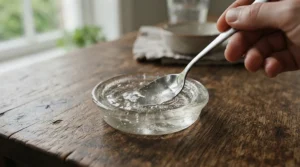
There is also a household-safety angle. Poison-control guidance warns that borates are particularly hazardous if ingested by children or pets, and an unlabelled sugary mixture in a cupboard is exactly the sort of thing that gets eaten. For that reason I’m deliberately not giving a mixing recipe here. A sealed, labelled station is a better route.
Liquid Ant Bait Stations for Windowsills
Windowsills are prime real estate for ants. Gaps around frames and sealant act as motorways into the house, and a sunny sill is warm and dry.
What to look for
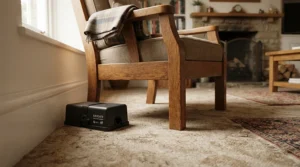
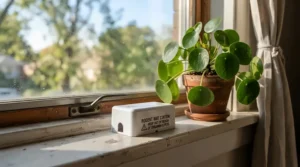
For liquid ant bait stations for windowsills, choose a low, flat station that sits steady and won’t tip when a curtain brushes past. Terro lists windowsills among its recommended placements for the T300 stations. The TERRO T334B adds an adhesive strip for vertical surfaces.
Heat, condensation and cats
Sun is the enemy of liquid bait. Terro’s guidance notes that bait stays usable while liquid and only becomes ineffective once it crystallises or hardens, so a station baking in direct sun can fail early. Check it weekly and replace it if it looks dry.
Condensation is a smaller problem, but wipe the sill so stations don’t sit in puddles. And remember that cats adore windowsills. If one shares your home, choose an enclosed format such as Nippon Ant Bait Station and place it behind a plant pot or in a corner the cat doesn’t use.
Enclosed Ant Bait Stations for Homes With Pets
Pet owners often ask for “pet-safe” ant bait. The honest answer is that no bait is guaranteed safe, but enclosed ant bait stations for homes with pets lower the odds of contact.
Which? points out that small openings in bait stations stop pets and garden animals from reaching the bait. That’s useful, but not a promise. A determined dog can chew a plastic station, and a cat can bat one across the floor.
Borax is a special consideration. Poison-control guidance says borates are especially hazardous if ingested by children or pets. Terro’s own instructions say to place bait in areas inaccessible to children and pets, so even the manufacturer isn’t claiming immunity.
A sensible routine looks like this:
- Choose enclosed formats such as Nippon Ant Bait Station or Home Defence AntClear Bait Station over open liquid in a bottle.
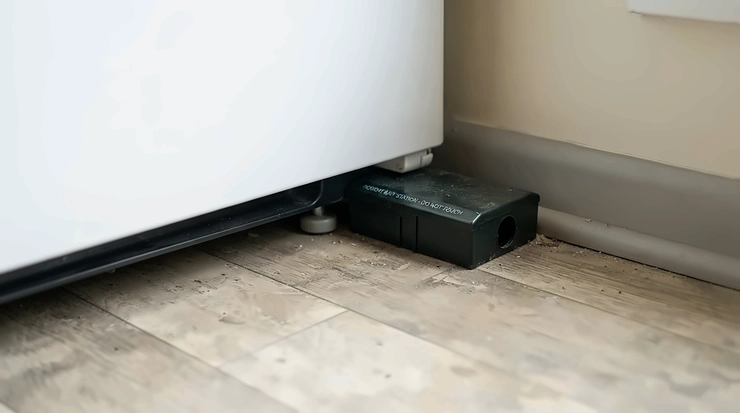
- Place stations behind appliances, inside cupboards or in voids pets can’t reach.
- Count the stations when you place them and again when you remove them.
- Keep the packaging so you can show a vet the label if something goes wrong.
If you suspect a pet has eaten bait, contact your vet promptly with the product label.
Ant Trail Disruption: Cleaning Without Wrecking Your Bait
Ants navigate by scent trails, so ant trail disruption is a useful trick, as long as you use it where it helps rather than where it hurts.
A UK greenhouse supplier’s guide notes that vinegar solutions break down pheromone trails that guide workers to food. That’s handy on a worktop or around a bin, where you want ants to lose their route. Cardiff Council also advises homeowners to observe trails and trace them to entry points, because the opening may be as tiny as a crack by a skirting board.
Where to clean and where not to
- Do wipe trails across food-prep surfaces and seal the gaps you find.
- Don’t wipe the trail right at your bait station, or you’ll break the route to the bait.
- Don’t spray insecticide near stations. Terro’s instructions say not to place bait where insecticides have been sprayed.
Sprays have another limit. Council guidance says ant sprays kill on contact but only deal with visible ants, not the nest. Use trail disruption to protect your food, and use bait to reach the colony.
Refillable Bait Trays: Worth the Extra Faff?
Refillable bait trays sound thrifty, and in the right system they are. The Nippon Ant Control System pairs two reusable trays with a 25g tube of liquid. You pierce four holes in each tray, add a few drops and replace the lid, and retailers say it can treat up to four nests.
The key word is “system”. Trays are designed around a specific bait, so refilling makes sense only when the maker intends it. Some pre-filled products say the opposite. A supermarket listing for Deadfast Ant Killer Plus Bait Station says not to refill or reuse the empty containers, so respect that.
You may also see empty refillable trays sold by third parties. I can’t vouch for those, and I wouldn’t fill any tray with a home-mixed borax sugar solution for the reasons given earlier.
Refillable works best for annual infestations, when you can store the tube and top up each spring. For a one-off visitor, pre-filled stations such as Nippon Ant Bait Station are simpler and avoid handling liquid bait.
Practical Usage Guide: Your First 30 Days With Indoor Ant Baits
Here’s a schedule that suits almost any of the stations above.
Day 0: Wipe worktops, store sugary foods and seal bins. Then place stations along the trail or at the entry point. Terro advises removing other food sources before baiting. Rentokil suggests one or two stations per room.
Days 1–3: Expect more ants, not fewer. Reviewers describe a surge when ants discover the bait. Leave it alone, and don’t spray or squash.
Days 4–14: Check stations every couple of days. A retailer note on Nippon Ant Bait Station says an effective dose normally builds over seven to ten days, and Terro says control may take up to two weeks.
Days 15–30: Replace any station that is empty, dry or crystallised. If ants vanish, keep stations in place a little longer, because the queen may not have been reached yet. Terro suggests replacing baits every three months once ants are controlled.
Common first-month mistakes:
- Moving stations while ants are feeding
- Using sprays alongside bait
- Forgetting to seal the entry gap
Problem → Solution Guide: When the Ants Ignore Your Bait
Problem 1: Ants walk past the station. Feeding preferences change with the season and the colony’s needs, as Terro’s own Q&A acknowledges. Try a different bait type, for example swapping a liquid for a gel such as Rentokil Ant Killer Gel.
Problem 2: More ants than before. That’s the discovery surge. Keep stations topped up and resist the urge to spray.
Problem 3: The bait has dried out. Liquid baits stop working once they crystallise. Replace the station and move it out of direct sun, particularly on windowsills.
Problem 4: Ants keep returning from outside. Baiting indoors only handles the foragers that get in. Seal gaps and manage the outdoor nest. The RHS guide to garden ants explains why ants are generally a nuisance rather than a damaging pest, and why a calm approach is usually enough.
Problem 5: Winged ants appear in summer. These are reproductives on a mating flight, and they leave once they’ve mated. Bait stations aimed at workers won’t stop a swarm, but they can help with the nest that produced it.
Real-World Scenarios: Three UK Households, Three Different Picks
These are illustrative profiles to help you match a pick to your situation.
The renter with a cat. If you’re in a ground-floor flat and a line of ants enters by the kitchen window, enclosed stations make the most sense. Nippon Ant Bait Station or Home Defence AntClear Bait Station can go behind the bin or inside a cupboard void. Skip open liquid in a bottle.
The family in a terraced house. If the nest is under the patio and ants reach the pantry, scale up. A Nippon Ant Control System lets you treat several spots through the season, but the label advises against use around children and animals. That means placing stations in sealed voids and checking them regularly.
The holiday-let host. If you face ants every spring across several rooms, a borax multipack like TERRO T300-3SR gives you 18 stations. The trade-off is the import label, and the need to check each pack’s instructions carefully before use. Many hosts would prefer UK-ready options, so compare the cost per station before committing.
Bait Stations vs Sprays, Powders and Gels
Not every ant problem needs a bait station. Here’s how the main approaches compare.
| Method | Colony kill | Pet and child risk | Mess | Best for |
|---|---|---|---|---|
| Enclosed bait station | Yes, via sharing | Lower when enclosed | Low | Hidden or unreachable nests |
| Contact spray | Visible ants only | Higher around surfaces | Medium | Quick tidy-ups |
| Powder | Contact, lasting residue | Higher, avoid food areas | Dusty | Cracks and outdoor runs |
| Gel station | Yes, via sharing | Lower when contained | Low | Light kitchen infestations |
The table shows that sprays and powders deal with ants you can see, while baits and gels aim at the nest. Expert Reviews describes Nippon Ant Powder as lasting up to six months and killing on contact, which is useful along outdoor runs but less suited to a kitchen. For indoor use, a bait or gel station is usually the better fit, particularly when you can’t find the nest.
Long-Term Cost and Maintenance
Cost per station tells a clearer story than pack price. A TERRO T300-3SR multipack at roughly £20–£25 works out around £1.10–£1.40 per station. Nippon Ant Bait Station twin packs at roughly £4–£8 come to around £2–£4 per station. The Nippon Ant Control System at roughly £7–£10 spreads the cost across refills and several nests.
Maintenance matters as much as purchase price:
- Check stations weekly during an active infestation.
- Replace dry or crystallised bait promptly.
- Once ants are controlled, swap baits on the schedule the label gives. Terro suggests every three months.
- Store spare liquid in a cool, dry place and out of reach.
Prevention is the cheapest part. Airtight jars for sugar, closed bins and sealed entry gaps cost little and reduce the need for repeat baiting. Think of the station as the second line of defence, not the first.
Safety, Regulations and Compliance Guide
Ant baits are biocides, so they sit under regulation. The HSE explains that biocidal products are controlled in Great Britain under the GB Biocidal Products Regulation, and that users are responsible for using them correctly so they don’t harm people, pets or wildlife.
In practice, that means five habits:
- Read the label every time. Instructions on UK-market products reflect UK rules, while imported labels reflect their home market.
- Keep baits out of reach of children and pets, even when the pack calls the bait low risk.
- Be cautious with borates. Because they carry a reproductive-toxicity classification, anyone pregnant or trying to conceive may prefer not to handle open borate baits.
- Dispose responsibly. Some UK labels advise contacting the Environment Agency or SEPA for disposal information, and say to avoid release to the environment.
- Don’t mix products. Using sprays near baits can undermine both.
I couldn’t verify a GB authorisation for the Terro products, so if you want the least regulatory ambiguity, the UK-market stations are the safer choice.
FAQ
❓ Can you buy borax ant bait stations in the UK?
❓ How many ant bait stations do I need per room?
❓ How long should I leave ant bait stations out?
❓ Can I use indoor ant bait stations outdoors?
❓ Do ant bait stations work on flying ants?
Conclusion
Borax ant bait stations for indoor use work on a simple, clever principle: let the workers carry the slow poison home. The honest UK picture is more complicated. The true borax options are American imports such as TERRO T300-3SR, TERRO T334B and TERRO T100-12, while the easiest UK-ready routes are Nippon Ant Bait Station, Nippon Ant Control System, Rentokil Ant Killer Gel and Home Defence AntClear Bait Station.
If you want borax specifically, the TERRO T300-3SR multipack is the safest format of the three. If you’d rather keep things simple, an enclosed UK-market station is easier to find and easier to place safely. Either way, keep stations out of reach of pets and children, resist the urge to spray, and give the bait two weeks to do its work.
✨ Ready to tackle your ant problem?
🐜 Click any highlighted product above to check current pricing and availability, place your stations tonight, and let the colony do the hard work for you!
Recommended for You
- Sugar Ant Gel Bait For Kitchen Worktops: 7 Best Picks (2026)
- Ant Killer Powder For Patio Paving Cracks: 7 Proven Picks 2026
- Pet Safe Cockroach Killer For Homes With Cats: 7 Proven Picks (2026)
Disclaimer: This article contains affiliate links. As an Amazon Associate, I earn from qualifying purchases. If you purchase products through these links, we may earn a small commission at no additional cost to you.
✨ Found this helpful? Share it with your friends! 💬🤗
