In This Article
Mice don’t need an invitation. They need a gap about as wide as a pencil. According to Havant Borough Council’s pest advice, mice can get through holes of only around 5mm, and rats need roughly the size of a 50p coin. That’s the uncomfortable maths behind every “but I only just moved in” infestation.
Most of us reach for traps first. Fair enough. But traps treat the symptom. Rodent proofing products treat the cause, which is a house with more holes than a colander. Block the entry points, and the next mouse that turns up finds a locked door instead of a buffet.
This guide covers seven real rodent proofing products you can find through UK retailers, including amazon.co.uk where listings exist. Alongside them you get the analysis the product pages leave out. We look at what each material actually does, who it suits, and where it will let you down. We also cover typical entry points around skirting and pipework, how much DIY mouse proofing costs, and what to check before buying from Amazon.co.uk Sellers in pest control.
One caveat up front. Listings, sellers and prices on Amazon change constantly, so treat every price here as a range and check current availability before you buy. Where I couldn’t verify real customer reviews for a product, I say so rather than guess.
Quick Comparison: Rodent Proofing Products at a Glance
| Product | Format | Best For | Price Range | DIY Difficulty |
|---|---|---|---|---|
| Roshield ProVent Air Brick Cover | Stainless mesh in plastic frame | Covering air bricks on a budget | Under £10 each | Easy |
| MouseMesh Pest Proofing Air Brick Vent Cover | Mesh and flame-retardant frame | Neat, discreet air brick protection | £8-£15 | Easy |
| Roshield Rodent Proofing & Prevention Mastic | Gnaw-deterrent gap filler | Hairline cracks and joints | £8-£15 per tube | Easy |
| ShopGenius UK Stainless Steel Rodent Mesh Sheets | Flat 1mm mesh sheets | Cutting your own vent covers | Under £15 per pack | Moderate |
| Xcluder Rodent Control Fill Fabric | Steel wool and poly fibre | Pipe holes and odd-shaped voids | £15-£30 | Moderate |
| Stuf-Fit Copper Mesh | Soft copper mesh roll | Small holes, comfortable handling | £10-£25 | Easy |
| Metex Raxit RaxFoam Foam Sealant Set | Foam, seal and mesh bundle | An all-in-one starter kit | £20-£35 (check) | Moderate |
The cheapest route to a protected house is a small mesh or mastic purchase. Fill fabric and copper mesh earn their place where gaps are irregular, such as the hole where a waste pipe leaves a kitchen cupboard. Roshield ProVent and MouseMesh cover vents, while Metex RaxFoam suits buyers who want one box containing everything. If you only buy one thing, buy for the biggest, most obvious hole first.
💬 Just one click — help others make better buying decisions too!😊
Top 7 Rodent Proofing Products: Expert Analysis
1. Roshield ProVent Air Brick Cover — UK-made mesh vent for tight budgets
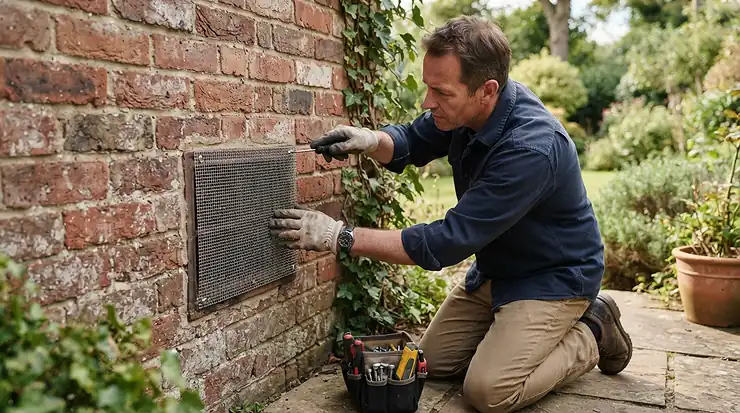
Air bricks are the front door for cavity-wall mice. The Roshield ProVent puts a stainless steel mesh inside a plastic frame that sits over the vent, so air still flows but rodents and crawling insects don’t get through. The listing states it is made in the UK from recycled plastics.
The single-cover size is listed at 254mm × 102mm, and a medium two-pack at 254mm × 170mm, with screws and wall plugs included. On paper that means measuring your air brick before ordering. A cover that’s too small leaves a gap, and mice love a gap more than a free sandwich. Fixing is by screws or adhesive, which suits most DIYers.
Here’s the analytical take. This is a “protect the obvious hole” purchase. It won’t help with gaps around pipes or under skirting. It’s best for owners of older cavity-wall properties with several air bricks to cover.
Review sentiment is thin. The only third-party opinion I could verify was a deals-forum commenter calling it pricey for a small amount of mesh and plastic. I couldn’t confirm a broad review pool, so check current Amazon reviews yourself.
Pros:
- ✅ Stainless mesh keeps airflow while blocking rodents
- ✅ Screws and plugs included in the kit
- ✅ Multipack options lower the cost per cover
Cons:
- ❌ Only useful for air brick openings
- ❌ Plastic frame feels pricey for what it is
Price: under £10 per cover, with multipacks cheaper per unit. Fair value if you have several vents; check current price.
2. MouseMesh Pest Proofing Air Brick Vent Cover — the discreet, brick-matching option
MouseMesh began as a builder’s frustration with mice coming through air bricks and now supplies homeowners, landlords and councils. Its covers use stainless steel mesh in a flame-retardant plastic frame. One standard brown version measures 105mm × 255mm × 13mm, and an XL model is 305mm × 305mm with 0.9mm wire and a 2.5mm aperture.
That 2.5mm aperture is well under the 5mm gap mice can exploit, so the mesh size itself leaves a comfortable safety margin. The thin 13mm profile also keeps the cover from looking like an afterthought bolted to your wall.
Who is it for? Anyone who cares how the house looks from the street. Reviewers on retailer pages say the covers blend with the brickwork, fit with either adhesive or screws, and the frame flexes enough to sit snugly on uneven brick. One reviewer cautioned that the overall size exceeds a standard air brick, so it won’t fit where a single-course brick sits beneath a door.
Pros:
- ✅ Fine stainless mesh with a generous safety margin
- ✅ Slim frame blends with brickwork
- ✅ Screw or adhesive fixing options
Cons:
- ❌ Too large for single-course bricks
- ❌ Screws not supplied with some versions
Price: roughly £8-£15 depending on size and pack. Good value for visible vents; confirm the dimensions first.
3. Roshield Rodent Proofing & Prevention Mastic — gnaw-deterrent filler for hairline gaps
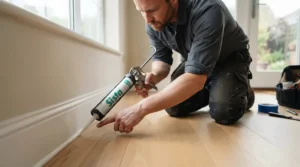
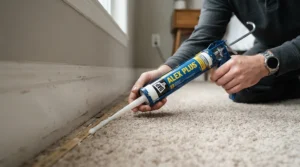
Foam and mesh handle big holes. Mastic handles the fiddly ones. This product is a pest-repellent mastic, a gap filler that blocks access and deters gnawing. The listing describes it as non-toxic and suitable for sealing holes, cracks, seams, joints, expansion joints and settlement cracks. It adheres to concrete, masonry, drywall, plastics, metal and wood.
Think of it as caulk with attitude. Standard decorator’s caulk is soft and gnawable, whereas pest mastics are designed so a mouse that gnaws through the outer skin hits a deterrent core. The category is common across brands. For comparison, retailers stock Mouseshield Classic and Metex RaxStop, with the latter sold in a 300ml tube that retailers say can be painted over.
My view: it’s the right tool for cracks where skirting meets a wall or where cables enter. It’s the wrong tool for a hole you can push your thumb into. Use mesh first, then seal around it.
I couldn’t verify a meaningful pool of customer reviews for this specific pack, so I won’t characterise sentiment.
Pros:
- ✅ Fills hairline cracks that mesh can’t
- ✅ Bonds to masonry, wood, metal and plastic
- ✅ No special tools beyond a standard caulk gun
Cons:
- ❌ Unsuitable for holes wider than a few millimetres
- ❌ Reviews difficult to verify for this pack
Price: typically £8-£15 per 300ml tube in this category. Sensible value as a finishing product.
4. ShopGenius UK Stainless Steel Rodent Mesh Sheets — cheapest DIY vent covering
Sometimes the best product is a sheet of metal. These flat A4-sized sheets (300mm × 210mm) feature 1mm × 1mm stainless steel mesh. They are marketed for covering air bricks and vents and are sold in 3 and 5 packs.
A 1mm aperture is tiny, so mice, and even insects, won’t pass. The catch is that you supply the frame and fixing, which means cutting with tin snips, bending the edges and securing with adhesive or screws. That’s more effort than a pre-framed cover, but the cost per square centimetre is lower.
Honestly, this suits tinkerers. If you’re proofing a shed, a garage vent or an awkward-shaped opening, flat mesh lets you tailor the shape. If you want something that looks finished, buy the framed covers instead.
I couldn’t verify reviews for this specific listing, though the seller has a track record on Amazon.co.uk. Check the product reviews before purchasing.
Pros:
- ✅ Very fine mesh blocks even small insects
- ✅ Cut to any shape for odd openings
- ✅ Multipack gives spare sheets for later jobs
Cons:
- ❌ Cut edges are sharp, so gloves are a must
- ❌ Needs your own fixings and finishing
Price: expect under £15 per pack. Excellent value if you’re handy.
5. Xcluder Rodent Control Fill Fabric — springy stainless fill for pipe holes
Xcluder weaves coarse stainless steel wool with poly fibres so the material springs back after compression. That matters when you’re ramming it into an irregular hole. The Large DIY Kit includes a 4in × 5ft roll, shears and work gloves. The manufacturer cites USDA APHIS testing.
Its stainless content means it won’t rust the way plain wire wool eventually does. The British Pest Control Association’s technical article highlights Xcluder fabric and Vermiguard mesh as better backing materials than ordinary wire wool because they resist corrosion and have more spring to fill nooks.
Who should buy it? Anyone sealing gaps around exterior pipework, which is exactly where most kitchens leak mice. US-based reviewers repeatedly note that the gloves matter, the fabric is tough to cut (one used a razor blade for perforations), and it stays put with fingers and a screwdriver. UK availability varies by supplier, so check whether amazon.co.uk stocks it when you shop.
Pros:
- ✅ Stainless content resists rust
- ✅ Springs back to fill irregular holes
- ✅ Kit includes shears and gloves
Cons:
- ❌ Tough to cut without proper shears
- ❌ UK Amazon availability inconsistent
Price: broadly £15-£30 depending on roll length. Worth it where gaps matter.
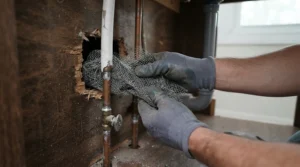
6. Stuf-Fit Copper Mesh — soft copper, gentle on your hands
If Xcluder is the sturdy workhorse, Stuf-Fit is the friendlier cousin. This is 100% copper mesh, softer than stainless, rust-proof, and cuts with household scissors. Rolls are around 6 inches wide and double-folded, and the maker says it works best in holes around 2 inches across, so larger voids need a proper repair.
That softness translates into easy handling. You can twist, fold and pack it into a pipe hole without shredding your palms. The trade-off is that soft material could in theory be pulled out by a determined rodent, so pair it with sealant or foam. A Bob Vila guide makes the same point, recommending caulk or foam to keep mesh from being tugged free.
US reviewers on a pest-supply retailer describe it as easy to work with, one says an installation from six years earlier still holds, and another reports hearing a mouse chewing on it without making progress. UK availability and Amazon listings vary, so confirm.
Pros:
- ✅ Cuts with ordinary household scissors
- ✅ Rust-proof and stain-proof copper
- ✅ Easy to push into small gaps
Cons:
- ❌ Best for holes around 2 inches or smaller
- ❌ Needs sealant to prevent pulling out
Price: roughly £10-£25 depending on roll size. Very good value for small jobs.
7. Metex Raxit RaxFoam Foam Sealant Set — a ready-made rodent exclusion kit
This bundle contains a 500ml can of RaxFoam sealant, a 15cm Raxit seal and 2m of stainless steel mesh. The foam includes additives intended to deter insects, rodents and small animals. Screwfix lists it as 18+ with a Challenge 25 policy.
Here’s the nuance. BPCA’s article bluntly describes expanding foam as weak against rodents and best used as the adhesive holding wool or mesh in place. So the stainless mesh in this kit is the barrier, and the foam is the glue. Treat it as a package, not a miracle can.
The set suits first-timers who don’t want to assemble components. It’s a genuine rodent exclusion kit in a box. I couldn’t verify customer reviews because the product is new, and Amazon.co.uk availability may differ, so check before buying.
Pros:
- ✅ Foam, seal and mesh in one bundle
- ✅ Stainless mesh does the real blocking
- ✅ Handles larger voids than mastic
Cons:
- ❌ Foam alone is weak against gnawing
- ❌ Reviews not yet verifiable
Price: a rough £20-£35 bracket; confirm the current figure. Reasonable value as a beginner bundle.
What Is Rodent Proofing, and How Do Mice Get In?
Rodent proofing is the process of physically sealing the gaps, vents and service holes that mice and rats use to enter a building. Rodent proofing products, such as mesh, fill fabric, gnaw-resistant sealants and covered air bricks, work by blocking access permanently rather than killing pests already inside.
The principle is simple, but the execution is where people stumble. The classic pest-controller method pairs a backing material (wire wool or mesh) with an adhesive filler (expanding polyurethane foam). The backing resists gnawing, pushing and pulling, and the foam holds everything still.
Why does it matter in 2026? Because mice are opportunists. They follow warmth, food and tiny gaps. A single hole behind a kitchen unit can become a motorway for a whole family. Blocking entry points protects food, wiring and insulation, and it reduces the contamination risks that councils highlight, because droppings and urine spread through food stores.
How to Choose Rodent Proofing Products
Picking the right kit is mostly about matching material to gap. Work through these steps in order.
- Measure the gap first. Under about 5mm, mastic usually does the job. Between 5mm and roughly 50mm, use mesh or fill fabric. Anything larger needs a proper repair.
- Pick the backing material. Stainless fill fabric resists rust, copper mesh is gentle to handle, and plain wire wool is cheapest but corrodes eventually.
- Decide what holds it in place. Mastic, foam or screws all work. Mesh without a fixing can be dragged out.
- Match vent covers to your air bricks. Measure width and height before you order, and check the cover won’t block a gas appliance vent.
- Think about visibility. Framed, brick-coloured covers look tidier on a front elevation than raw mesh.
- Check the supplier. Look for a named UK seller and recent reviews rather than a vague marketplace listing.
- Add a monitoring step. Check seals every few months, especially after winter.
Typical Entry Points Around Skirting and Pipework
If you want to know where to start, look low and look behind things. Typical entry points around skirting and pipework include the following.
- Gaps behind and beside skirting boards. Boxed-in pipes often leave a void running right behind the skirting, which mice treat as a corridor.
- Pipe holes under sinks and behind appliances. Havant Borough Council lists access holes into the cavity, often outside kitchens or bathrooms where pipes have been removed.
- Redundant pipe penetrations. Old holes from removed heating or waste pipes are the classic culprits.
- Broken air bricks and tumble dryer outlets. Both are listed by the same council as common access points.
- Garage door edges. Keep gaps under and beside doors small.
Manchester City Council advises filling gaps around pipework to the outside and covering air bricks with fine metal mesh, which matches this checklist. When inspecting, use a torch, check behind units, and look for greasy smears or droppings along skirting.
Here’s my practical take. Pipework gaps rarely need more than a fistful of fill fabric or copper mesh plus a bead of mastic. Skirting gaps tend to be hairline, so mastic leads. Sort the pipework first, because it’s usually the biggest hole.
Mouse Proofing Supplies: The Core Toolkit
Good mouse proofing supplies come down to four categories. Knowing which does what saves money.
Backing materials include stainless fill fabric, copper mesh and wire wool. These are the actual barriers. Pest-grade wire wool is cheapest but tends to rust, so use it in dry indoor spots.
Fillers and sealants include pest mastics and expanding foam. They lock the backing in place and seal hairline cracks. Remember that foam on its own is weak.
Covers and plates include framed air brick covers and metal sheets. They deal with larger openings that you can’t stuff.
Tools and safety kit cover gloves, tin snips, a caulk gun and a torch. Don’t skip the gloves, because multiple reviewers of steel-based fabric stress how sharp the fibres are.
A sensible shopping order is backing material first, sealant second, covers third. Most of the cost sits in the covers, so measure twice and buy once.
Build Your Own Rodent Exclusion Kit
A rodent exclusion kit is simply a bundle of materials sized for a typical house. You can buy one pre-made, such as the Metex RaxFoam set, or assemble your own for less.
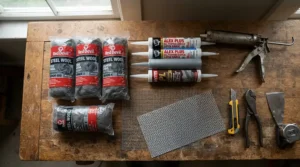
A sensible DIY rodent exclusion kit for a terraced or semi-detached house contains:
- One roll of Xcluder Fill Fabric or Stuf-Fit Copper Mesh for pipe holes
- One or two tubes of Roshield Rodent Proofing Mastic for hairline gaps
- Two to four air brick covers, such as Roshield ProVent or MouseMesh
- A pack of ShopGenius UK Rodent Mesh Sheets for odd vents
- Gloves, tin snips and a caulk gun
Why build your own? Flexibility. Pre-made bundles are convenient, but they assume your house has average gaps. Yours doesn’t. A DIY kit lets you buy more mesh and fewer covers if your problem is pipework, or the reverse if it’s air bricks.
Affordable Ways to Seal Mouse Entry Points
You don’t need a pest controller’s van to get results. These are affordable ways to seal mouse entry points, ranked by value.
- Pest-grade wire wool or copper mesh in small holes. Pennies per hole, and it needs sealing to stay put.
- Pest mastic over hairline cracks. One tube covers many metres of joint.
- Flat mesh sheets cut to size. Cheaper than framed covers.
- Framed air brick covers for visible vents. Pricier, but they look better and fix quickly.
Cheap doesn’t mean careless. Ordinary decorator’s caulk is gnawable, and plain expanding foam won’t resist teeth. The cheapest effective option is mesh plus a sealant.
Compared with professional pest treatment, which one council quotes at around £90-£100 for a rats-and-mice treatment of up to three visits, a proofing kit is a modest outlay. Note that professional treatment kills pests, while proofing keeps them out. You often need both.
✨ Don’t Miss These Practical Fixes!
🔍 Take your home defences to the next level with these carefully selected rodent proofing products. Click on any highlighted item to check current pricing and availability on Amazon UK. Pick the one that fits your biggest gap and start there!
How Much Does DIY Mouse Proofing Cost?
People ask how much does DIY mouse proofing cost, and the answer depends on your house. Here is a realistic breakdown. These figures are estimates built from typical category price ranges, so check current prices.
| Job Size | Typical Materials | Estimated Cost | Best For |
|---|---|---|---|
| Starter (flat or single-room issue) | Stuf-Fit Copper Mesh plus one mastic tube | £20-£40 | Renters, small flats |
| Standard (semi-detached) | Xcluder Fill Fabric, mastic, 2-3 air brick covers | £50-£90 | Most family homes |
| Thorough (older or detached) | Fill fabric, several mastic tubes, 4+ covers, Metex RaxFoam set | £90-£160 | Older cavity-wall properties |
| Professional proofing (for comparison) | Contractor labour and materials | Several hundred pounds | Large or tricky properties |
So how much does DIY mouse proofing cost for a typical semi? Most households land in the £50-£90 range. That’s slightly more than a couple of boxes of traps, but traps recur and proofing doesn’t. The big swing factor is air brick covers, so count your vents before you budget.
The table shows that the starter route is cheapest, yet it only works if the infestation is limited to one or two holes. Thorough proofing costs more upfront but removes the guesswork. For older homes where the bill could balloon, prioritise the largest, most obvious holes and re-inspect later.
Amazon.co.uk Sellers in Pest Control: What to Check Before You Buy
Amazon.co.uk Sellers in pest control range from established UK suppliers to anonymous marketplace stores. The product can be identical; the experience isn’t.
Check these five things:
- Seller name and rating. A named UK seller with consistent feedback is safer than a vague storefront.
- Fulfilment. Fulfilled by Amazon items usually arrive fast and return easily.
- Dimensions. Many mesh and cover disputes boil down to size. Measure first.
- Material claims. Look for stainless steel or copper explicitly, not just “metal”.
- Restricted items. Foam and some sealants can be age-restricted. Screwfix, for instance, applies a Challenge 25 policy to the Metex RaxFoam set.
For example, the Roshield ProVent covers appear through Fort Products and Fulfilled by Amazon. The ShopGenius UK mesh sheets come from a seller with a long marketplace track record. That’s useful context, not an endorsement. Listings change, so confirm before you click buy.
Rodent Proofing Products vs Traps and Poison
Proofing and killing are different jobs. Here’s how they compare.
| Approach | What It Does | Ongoing Cost | Best For |
|---|---|---|---|
| Rodent proofing products | Blocks entry permanently | Low after install | Prevention and long-term control |
| Snap traps | Kills mice already inside | Recurring | Active infestations |
| Poison baits | Kills over time | Recurring | Professional-led treatments |
The comparison makes the case plainly. Proofing is the only approach that stops new mice arriving, but it can’t remove mice already indoors. If you have an active problem, combine traps with proofing, and seal only once you’re confident nothing is trapped inside.
For poison, take extra care. Council guidance stresses following all safety instructions on baits and traps, particularly where children or pets are present.
Common Mistakes When Buying and Fitting Rodent Proofing Products
Even good materials fail when fitted badly. Watch for these.
- Relying on expanding foam alone. BPCA points out foam is weak against rodents. Use it as glue behind mesh.
- Covering gas appliance vents. Mesh can clog with dust and restrict airflow, which raises carbon monoxide risk. Never cover vents serving gas appliances.
- Skipping measurements. A cover that’s even slightly too small leaves a path.
- Sealing in live mice. Check for activity first.
- Ignoring food sources. Proofing without tidy storage invites determined rodents to look for new routes.
- Forgetting responsibility. Rochford District Council notes that if rats or mice are seen at your property, arranging treatment is your legal responsibility.
If shop-bought products don’t resolve the problem, the same guidance recommends a professional contractor.
Practical Guide: Mouse-Proofing a Room in One Weekend
You don’t need weeks. Here is a workable plan.
Saturday morning: inspect. Grab a torch and check skirting boards, under sinks, behind the cooker and around pipe exits. Look for droppings, gnaw marks and greasy smears. Mark each gap with masking tape.
Saturday afternoon: stuff. Cut Xcluder Fill Fabric or Stuf-Fit Copper Mesh to size and push it into pipe holes with a screwdriver. Wear gloves, because the fibres are sharp.
Sunday morning: seal. Run Roshield Rodent Proofing Mastic over hairline cracks and around the mesh. Smooth it with a spatula and let it cure. For larger voids, use the Metex RaxFoam set so foam locks the stainless mesh in.
Sunday afternoon: cover. Fit Roshield ProVent or MouseMesh covers to air bricks outside. Use adhesive for a clean look or screws for a sturdier hold.
Maintenance. Re-inspect after four weeks, then every three months. Mice test fresh seals, so early checks catch problems cheaply.
Common first-month mistakes include leaving gaps behind appliances, skimping on mesh, and painting mastic before it has cured.
Real-World Scenarios: Matching Products to Households
The renter in a Victorian terrace. Budget is around £30, and the landlord won’t allow drilling. Best match: Stuf-Fit Copper Mesh plus a mastic tube for pipe holes under the sink. Skip covers and ask the landlord about the air bricks.
The family in a 1970s semi. Budget of £70-£90, with a mouse problem in the kitchen and garage. Best match: Xcluder Fill Fabric for the pipes, mastic for skirting gaps, and three MouseMesh covers for the front elevation. The visible covers need to look decent.
The owner of a detached cottage with outbuildings. Budget of £150 and plenty of odd openings. Best match: ShopGenius UK Rodent Mesh Sheets for sheds and vents, a Metex RaxFoam set for larger voids, and Roshield ProVent covers for the main house. The flat mesh adapts to awkward shapes.
Notice that the priority shifts with property type. Renters fight pipe holes, families fight visible vents, and rural owners fight variety.
Problem and Solution: Troubleshooting Common Proofing Headaches
“Mice keep returning after I sealed the hole.” Check for a second entry point. Mice rarely use just one, so recheck skirting and pipe runs.
“The mesh keeps pulling out.” Add mastic or foam around it. Mesh without a fixing can be dragged away.
“I can’t cut the fill fabric.” Use proper shears or tin snips, and perforate with a razor blade before tearing.
“The air brick cover doesn’t fit.” Measure the visible brick opening and compare with the cover’s dimensions. If it’s a single-course brick beneath a door, flat mesh sheets cut to size may work better.
“I’m worried about ventilation.” Fine mesh keeps airflow, but dust can block it. Never cover vents serving gas appliances, and clean covers periodically.
FAQ: Rodent Proofing Products
❓ Is it worth buying rodent proofing products rather than just traps?
❓ Is copper mesh better than wire wool for mouse holes?
❓ Do these products work against rats as well as mice?
❓ Can I fit air brick covers if I have a gas boiler?
❓ How often should I re-check my proofing work?
Conclusion
Rodent proofing products don’t work by magic. They work by being fitted properly, in the right places, with the right backing. Mesh or fill fabric blocks teeth, mastic seals the hairlines, and covers protect vents. Foam is the glue, not the guard.
My shortlist is simple. For vents, choose Roshield ProVent if budget leads, MouseMesh if looks matter, or ShopGenius UK Rodent Mesh Sheets if you like cutting your own. For holes, choose Xcluder Fill Fabric for toughness or Stuf-Fit Copper Mesh for comfort. For crack-sealing and bundles, choose Roshield Rodent Proofing Mastic or the Metex RaxFoam set.
Start with the biggest gap, usually around pipework, then work outward. Re-check regularly, and keep food stored properly so there’s no reward for trying.
✨ Ready to Mouse-Proof Your Home?
🔍 Take your first step today by checking current availability and pricing for the rodent proofing products above on Amazon UK. A weekend, a roll of mesh and a tube of mastic can save you months of rustling in the walls. 🐭
Recommended for You
- Multi Pack Ultrasonic Pest Repellers: 7 Honest Picks, UK 2026
- Mouse Deterrent For Car Engine: 7 Proven Picks & Flaws (2026)
- Solar Mouse Repeller For Garden: 7 Honest Picks For 2026
Disclaimer: This article contains affiliate links. As an Amazon Associate, I earn from qualifying purchases. If you purchase products through these links, we may earn a small commission at no additional cost to you.
✨ Found this helpful? Share it with your friends! 💬🤗
