
In This Article
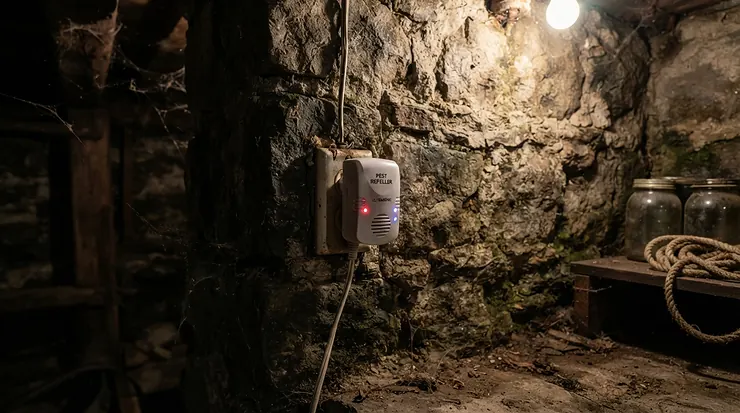
There’s a particular kind of dread that comes from hearing a scratch in the skirting board at 2am. You lie there, doing the maths on how many mice that scratch might represent, and by sunrise you’re deep into a Google rabbit hole about the ultrasonic mouse repeller sitting in your Amazon basket. So what is an ultrasonic mouse repeller? It’s a small electronic device, usually plugged into a wall socket or battery-powered, that emits high-frequency sound waves above human hearing — typically 20–65kHz — intended to make rodents uncomfortable enough to leave the area, without poison, snap traps, or mess.
We’re going to be straight with you from the first paragraph: this is a genuinely contested corner of pest control. Some households swear by their ultrasonic mouse repeller. Others plug one in, wait three weeks, and still find droppings behind the toaster. Both experiences are real, and we’ll dig into why that split exists later in this guide. For now, know that a well-chosen ultrasonic mouse repeller can be a useful supplementary layer in a wider mouse-proofing strategy — it just shouldn’t be your only line of defence, particularly if mice are already established and breeding behind your walls.
Below, we’ve researched seven real, currently-available devices sold in the UK — from humble battery units to electromagnetic multi-mode plug-ins — and paired that with an honest look at the frequency science, the pet safety questions, and the ongoing effectiveness debate among researchers and pest professionals. As the house mouse remains one of Britain’s most common household pests, getting this decision right matters more than the marketing copy would have you believe.
Quick Comparison Table
Before the deep dive, here’s the fast version for anyone standing in the kitchen with a mouse problem and fifteen minutes to spare.
| Product | Power | Best For | Price Range |
|---|---|---|---|
| PestBye Long Life Sonic Rat and Mouse Repeller | Battery | Small rooms, quick budget fix | Under £25 |
| Pest-Stop PR-3000 Professional Repeller | Mains plug-in | Whole-house, serious infestations | £30-£45 range |
| Procter Pest-Stop Ultrasonic Repeller | Mains plug-in | Mid-size homes, everyday use | £20-£30 range |
| Pest-Stop Small House Indoor Repeller | Mains plug-in | Flats, single rooms | Under £20 |
| Neatmaster Ultrasonic Repeller (4-Pack) | Mains plug-in | Multi-room coverage on a budget | £25-£35 range |
| Pest-Stop Outdoor Pest Repeller | Weatherproof mains/solar | Sheds, garages, outbuildings | £25-£35 range |
| BORHOOD Under-Hood Repeller | Battery/USB | Cars, engine bays, garages | Under £20 |
The pattern worth noticing here: nobody selling a genuinely honest product claims their device will “solve” a mouse problem outright. Best value under £20 goes to the Pest-Stop Small House Indoor Repeller, but if you’ve got a three-bedroom semi with mice in more than one room, spreading your budget across several cheaper units — like the Neatmaster Ultrasonic Repeller (4-Pack) — tends to outperform a single premium device, simply because ultrasonic sound can’t travel through walls or furniture.
💬 Found the right device already? Save this comparison and check current prices before you commit — availability shifts fast on these!
Top 7 Ultrasonic Mouse Repellers: Expert Analysis
We’ve picked a genuine spread here — battery and mains-powered, indoor and outdoor, budget and premium — all real products with a track record on the UK market rather than fly-by-night listings that vanish in a month.
1. PestBye Long Life Sonic Rat and Mouse Repeller — best budget battery starter pack
The standout here is simplicity: no wiring, no socket needed, just batteries and a spot on a shelf. The PestBye Long Life Sonic Rat and Mouse Repeller ships as a set of two units, each running on long-life batteries rather than mains power, which matters if the room you’re worried about — a garage, a shed, a utility room without a free socket — doesn’t have easy access to an outlet.
PestBye is a long-established British brand, and this particular line has racked up a 4.0-star average across 776 reviews on Amazon UK, respectable for a device in this category where scepticism runs high. Based on the spec comparison with mains units, the trade-off is coverage: battery units tend to run at lower continuous output to preserve battery life, so they’re better suited to smaller rooms than whole-house use. Reviewers consistently report that battery life lasts several months under normal use, though a handful note the units need repositioning to avoid furniture blocking the sound path.
What most buyers overlook about a set of two is that mice don’t respect room boundaries — placing one unit near suspected entry points (behind the fridge, near a skirting gap) rather than in open floor space tends to get better real-world results.
Pros:
- ✅ No mains socket required — works anywhere
- ✅ Two units for cross-room coverage out of the box
- ✅ Trusted UK brand with a long track record
Cons:
- ❌ Lower output than mains-powered alternatives
- ❌ Battery replacement adds an ongoing running cost
Priced under £25 for the pair, it’s a sensible entry point if you want to test whether ultrasonic deterrents work for your specific situation before committing to a full-house setup.
2. Pest-Stop PR-3000 Professional Ultrasonic and Electromagnetic Pest Repeller — best for serious, established infestations
This is the premium pick in our line-up, and the standout feature is right there in the name: it combines ultrasonic sound with electromagnetic pulses transmitted through your home’s existing wiring, a dual-mechanism approach aimed at properties where a single plug-in unit simply won’t cut it. The Pest-Stop PR-3000 Professional Ultrasonic and Electromagnetic Pest Repeller is built by Procter Brothers, a manufacturer with decades in UK pest control hardware (they also make the well-known Little Nipper trap), which lends it more credibility than the unbranded imports flooding search results.
Here’s what to weigh: the electromagnetic component theoretically extends disturbance beyond a single room via your mains wiring, though independent verification of this specific mechanism is thin, so treat it as a bonus rather than a guarantee. Aggregated reviewer sentiment skews toward “noticeable reduction” rather than “complete elimination” — a pattern that holds across nearly every product in this category, and one worth remembering before you buy.
On paper, this means the PR-3000 suits households with an ongoing, stubborn problem across multiple rooms rather than a single mouse spotted once in the kitchen.
Pros:
- ✅ Dual ultrasonic and electromagnetic mechanism
- ✅ Established UK manufacturer with pest-control pedigree
- ✅ Designed for larger, multi-room properties
Cons:
- ❌ Higher price point than basic plug-ins
- ❌ Electromagnetic claims are harder to independently verify
At around £30-£45, this is the one to reach for when you’ve already tried a basic unit and mice are still very much in residence.
3. Procter Pest-Stop Ultrasonic and Electromagnetic Repeller — best all-rounder for a typical semi
Sitting a notch below the PR-3000 in Procter’s own range, the standout feature of the Procter Pest-Stop Ultrasonic and Electromagnetic Repeller is that it offers the same dual-mechanism concept at a friendlier mid-range price, making it the sensible middle ground for most three-bedroom UK homes. Key specs worth noting: it’s a straightforward mains plug-in with no dial-in frequency adjustment, which keeps things simple but means you can’t fine-tune output for a particularly stubborn infestation the way you can with multi-mode devices.
Reviewers consistently note that results take two to four weeks to become apparent — a timeline that matches what pest-control professionals generally expect from any ultrasonic device, so don’t panic if week one shows no visible change. Who should care about this one specifically: anyone who wants a “set and forget” solution without wading through multiple frequency settings, at a price that doesn’t sting if it turns out not to work for your particular property layout.
What the spec sheet won’t tell you, but reviewers note, is that placement near the mouse’s likely travel route (skirting boards, under-sink cupboards) consistently outperforms placing the unit in the centre of a room.
Pros:
- ✅ Dual mechanism at accessible mid-range pricing
- ✅ Genuinely simple plug-in operation
- ✅ Reputable Procter/Pest-Stop manufacturing standards
Cons:
- ❌ No adjustable frequency settings
- ❌ Single unit won’t cover a whole multi-room house
Expect to pay somewhere in the £20-£30 range, and budget for a second unit if your problem spans more than one floor.
4. Pest-Stop Small House Indoor Pest Repeller — best for flats and single rooms
As the name suggests, this one is scaled deliberately for compact spaces, and the standout feature is the price-to-brand-trust ratio: you’re getting the Pest-Stop name without the multi-room ambitions (or cost) of the PR-3000. The Pest-Stop Small House Indoor Pest Repeller is a combined ultrasonic and electromagnetic unit designed, per the manufacturer, to protect a space up to roughly the size of a flat or a single-storey small house from a single plug point.
Key spec interpretation: because ultrasonic sound genuinely cannot penetrate walls or solid furniture, a device rated for a “small house” only performs that way in an open-plan layout — in a flat with several closed-off rooms, treat the coverage claim more conservatively. Honest analytical take: this is the right call for renters in a one-bed or studio flat who want a low-commitment, low-cost first attempt at a mouse problem before calling in professional help.
Aggregated review sentiment is mixed on speed of results, with some reporting mice gone within a week and others needing the full month before any change — variance that likely reflects how established the infestation already was.
Pros:
- ✅ Purpose-built for compact living spaces
- ✅ Budget-friendly entry into the Pest-Stop range
- ✅ Simple single-socket plug-in setup
Cons:
- ❌ Overstates coverage in multi-room properties
- ❌ Results timeline varies significantly by user
At under £20, it’s one of the cheapest genuinely branded options on the UK market, making it a low-risk trial for smaller properties.
5. Neatmaster Ultrasonic Pest Repeller (4-Pack) — best value for multi-room coverage
The standout feature of the Neatmaster Ultrasonic Pest Repeller (4-Pack) is arithmetic, frankly: four units for roughly the price of one premium single device, which directly addresses the single biggest limitation of every product in this category — the wall-blocking problem. Each unit offers three switchable intensity settings, with the highest setting audible to humans and intended only for severe, temporary use when the house is empty.
Based on the spec comparison, this tiered approach is smarter engineering than a fixed single-frequency unit, because rodent habituation to a constant unchanging tone is one of the most consistently documented weaknesses of ultrasonic technology. Reviewers consistently report noticeable drops in mouse activity over weeks rather than days, with several long-term owners describing a shift from catching multiple mice weekly to only occasional sightings after sustained use — genuinely useful aggregated sentiment, though it should be read as a supplement to good housekeeping rather than a standalone cure.
Who this suits: households with more than two rooms affected, who’d rather spread coverage than concentrate spend on a single unit.
Pros:
- ✅ Four units cover multiple rooms for the price of one premium unit
- ✅ Three intensity settings reduce habituation risk
- ✅ Strong volume of aggregated long-term reviewer feedback
Cons:
- ❌ Highest setting produces audible noise for humans too
- ❌ Basic plastic build quality compared to Pest-Stop range
Typically priced in the £25-£35 range for the full pack, working out cheaper per room than most single premium units.
6. Pest-Stop Outdoor Pest Repeller — best for sheds, garages and outbuildings
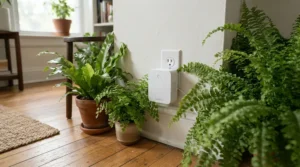
Where the rest of this list focuses on indoor rooms, the Pest-Stop Outdoor Pest Repeller is the standout pick for the bit of the property most people forget about until they open the shed door and regret it. Its key spec advantage is weatherproofing — built to survive damp, temperature swings, and the general indignity of British outdoor storage, which indoor-only units simply aren’t rated for.
Honest analytical take: outbuildings are genuinely one of the better use cases for ultrasonic deterrents, because they’re usually smaller, more enclosed spaces than a full house, meaning the “sound can’t cross walls” limitation actually works in your favour — a single unit covers the whole structure. What most buyers overlook is that a shed or garage often has gaps large enough for mice to enter freely regardless of the repeller, so pairing this device with basic entry-point sealing (wire wool in gaps, as recommended by UK pest advisory guidance) makes a measurable difference to results.
Aggregated reviewer sentiment is generally positive for reducing nesting activity in stored boxes and insulation, though — consistent with the wider category — a minority of reviewers report no change at all.
Pros:
- ✅ Weatherproof build suited to sheds and garages
- ✅ Single unit genuinely covers a typical outbuilding
- ✅ Pairs well with basic entry-point sealing
Cons:
- ❌ Won’t stop mice entering through unsealed gaps
- ❌ Not intended for full indoor house coverage
Expect a price in the £25-£35 range, representing solid value for the one part of the property most repellers ignore entirely.
7. BORHOOD Under-Hood Mouse and Bat Repeller — best for cars and engine bays
A genuinely different use case closes out our list: the BORHOOD Under-Hood Mouse and Bat Repeller is designed specifically for the very particular nightmare of mice nesting in a car’s engine bay and chewing through wiring looms — a repair bill that regularly runs into hundreds of pounds. The standout feature is the combination of ultrasonic output with flashing LED strobe lights, adding a visual deterrent alongside the sound, and it’s powered via USB or DC rather than mains, making it genuinely portable between vehicles, garages, and sheds.
Key spec interpretation: because it’s built for a sealed, low-airflow space like an engine bay rather than an open room, the effective range requirement is much lower than for a house repeller, which is likely why owners report reasonably consistent results compared with the mixed feedback seen on open-room devices. Who should care: anyone who’s found chewed cabling, or lives somewhere rural where field mice regularly seek warm engine bays over winter.
Reviewers consistently frame this as “part of the solution” alongside parking in a mouse-proofed garage rather than a guaranteed fix on its own.
Pros:
- ✅ Purpose-built for the engine-bay use case
- ✅ USB/DC powered — portable between vehicles
- ✅ Combines ultrasonic sound with visual LED deterrent
Cons:
- ❌ Not designed for household room coverage
- ❌ Effectiveness still debated for open engine bays
At under £20, it’s a cheap insurance policy against a genuinely expensive repair.
Top 7 Products at a Glance
| Product | Coverage Type | Rodent Focus | Best For |
|---|---|---|---|
| PestBye Long Life Sonic Rat and Mouse Repeller | Single small room | Mice, rats | Budget starter |
| Pest-Stop PR-3000 Professional Repeller | Multi-room | Mice, rats | Established infestations |
| Procter Pest-Stop Ultrasonic Repeller | Single/mid room | Mice, rats | Typical semi-detached home |
| Pest-Stop Small House Indoor Repeller | Small flat | Mice | Renters, studios |
| Neatmaster Ultrasonic Repeller (4-Pack) | Multi-room | Mice, rats, insects | Multiple affected rooms |
| Pest-Stop Outdoor Pest Repeller | Outbuilding | Mice, rats | Sheds, garages |
| BORHOOD Under-Hood Repeller | Engine bay | Mice, bats | Car owners |
Reading across this table, the honest takeaway is that no single device here claims — or should claim — whole-house coverage from one unit. The Neatmaster Ultrasonic Repeller (4-Pack) and the Pest-Stop PR-3000 Professional Repeller both take the multi-room problem seriously, just via different routes: quantity of units versus electromagnetic wiring transmission. If your budget only stretches to one device, match it to the specific space you’re defending rather than the whole house.
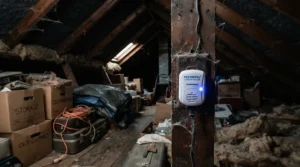
Practical Usage Guide: Getting the Most From Your Device
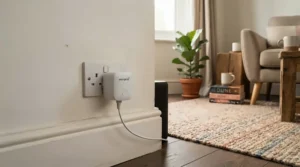
Buying the right unit is only half the job — placement and patience do the rest. First, position matters more than almost anything else: plug your unit into a socket that’s low to the ground and unobstructed by furniture, ideally near a skirting board, under-sink cupboard, or another spot where you’ve actually seen droppings or gnaw marks, rather than in the middle of open floor space. Sound waves scatter around soft furnishings and can’t pass through walls, so a device tucked behind a sofa is doing far less work than one on an open wall.
Second, give it time before judging results. Almost every credible product listing and reviewer account agrees on this: two to four weeks is the realistic window before you’ll see a meaningful drop in activity, and if mice have an established nest with young, it can take longer still. Resist the urge to unplug a unit after three days of continued sightings — that’s simply too early to draw conclusions.
Third, common first-30-days mistakes worth avoiding: plugging a unit in behind a large appliance (blocks sound almost entirely); relying on a single device to cover more than one room; and forgetting that food sources undermine everything — if mice have easy access to crumbs, an ultrasonic device is fighting an uphill battle regardless of frequency or brand. Combine your repeller with basic kitchen hygiene, sealed food storage, and blocking obvious entry gaps for a realistic shot at results.
Real-World Scenarios: Who Actually Benefits
Consider three household types. First, the renter in a one-bedroom flat who’s spotted a single mouse near the kitchen bin — a low-level, early-stage problem. Here, a budget unit like the Pest-Stop Small House Indoor Repeller is a sensible first move: low cost, no landlord permission needed for drilling or bait stations, and genuinely appropriate for the small space involved.
Second, the family in a three-bedroom semi with mice heard in the loft and kitchen — a multi-room, more established situation. This household is better served by either the Neatmaster Ultrasonic Repeller (4-Pack), spreading coverage across affected rooms, or the Pest-Stop PR-3000 Professional Repeller for its electromagnetic multi-room approach — paired, ideally, with a call to a BPCA-approved pest controller if activity continues past a month.
Third, the rural homeowner whose car has twice needed rewiring after mice nested in the engine bay over winter. For this household, the BORHOOD Under-Hood Mouse and Bat Repeller addresses a completely different problem to indoor devices, and is worth combining with simply parking in a sealed garage where possible.
How to Choose an Ultrasonic Mouse Repeller
Five practical criteria, in the order we’d weigh them:
- Room size and layout. Measure the actual space you need covered — open-plan areas need less equipment than several small closed rooms, because each closed door effectively needs its own unit.
- Power source. Mains plug-in units generally output more consistent sound than battery devices, but battery units win anywhere without a free socket — sheds, garages, cars.
- Frequency adjustability. Multi-mode devices that vary or cycle frequency address rodent habituation better than fixed single-tone units, in theory at least.
- Manufacturer track record. Established UK pest-control brands with decades of history tend to have more honestly-worded claims than anonymous marketplace listings promising total elimination.
- Realistic expectations of your own infestation. A single mouse spotted once is a very different problem to droppings in three rooms — match your purchase, and your patience, accordingly.
Ultrasonic Mouse Repeller vs Traditional Traps and Poison
Here’s where we need to be candid: traps and rodenticides have a fundamentally different evidence base to ultrasonic devices. Traps kill or capture on contact — there’s no ambiguity about whether they “worked” on a given mouse. Ultrasonic repellers work, if they work at all, by making an area unpleasant enough that mice choose to leave, which is inherently harder to measure and easier to mistake for coincidence.
| Method | Speed of Results | Mess/Handling | Ongoing Cost | Humane Rating |
|---|---|---|---|---|
| Ultrasonic repeller | 2-4 weeks | None | Electricity/batteries only | High |
| Snap traps | Immediate | Requires handling | Low, reusable | Low |
| Rodenticide (poison) | Days | Requires careful placement | Ongoing bait cost | Very low |
The analysis here matters: rodenticide use in the UK is tightly regulated, and anyone using it is expected to follow UK guidance on authorised rodenticide products, since misuse carries real risk to pets, wildlife, and children. Traps demand no such regulatory caution but do require someone willing to handle a dead or trapped animal. Ultrasonic devices sidestep both issues entirely, which is precisely why they remain popular despite the effectiveness debate — for many households, the humane, hands-off appeal outweighs the uncertainty.
The Effectiveness Debate: What the Science Actually Says
This is the section most ultrasonic mouse repeller listings conveniently skip, so let’s not skip it. The core problem is habituation: laboratory research on rodent ultrasonic communication has repeatedly shown that mice and rats, which naturally use ultrasonic vocalisations for their own social communication, can adjust to a constant, unchanging ultrasonic tone within days, resuming normal activity in a treated space once the novelty wears off. A frequently cited older study, published in Pest Management Science, found no statistically significant reduction in rodent activity in rooms fitted with ultrasonic devices — a result that’s shadowed this entire product category ever since.
On the regulatory side, the US Federal Trade Commission has taken enforcement action against several manufacturers over the decades for making unsubstantiated repellent claims, which is a meaningful part of why the more honest sellers now use careful language (“deterrent,” “may help reduce activity”) rather than promises of elimination. That said, it isn’t a flat “no” either — some devices with variable or cycling frequencies, like several products in our top seven, are specifically engineered to counter habituation, and anecdotal reviewer evidence genuinely does show reduced activity in a meaningful share of households. The honest, unglamorous conclusion: treat an ultrasonic mouse repeller as a supplementary deterrent within a wider strategy, not a standalone solution, and you’ll set expectations that match what the evidence actually supports.

Frequency Range Explained: How Ultrasonic Repellers Work
Most consumer ultrasonic mouse repellers operate somewhere between 20kHz and 65kHz, comfortably above the roughly 20Hz–20kHz ceiling of adult human hearing, which is the entire premise of the technology — silent to you, audible and (theoretically) irritating to a mouse. Mice themselves have a notably wide hearing range: research measuring mouse hearing sensitivity puts their detectable range from roughly 1.5kHz up to around 92kHz, with their own social calls typically clustering between 30kHz and 120kHz — meaning a repeller pitched too low may sit outside the frequencies mice are most sensitive to, while one pitched correctly is working within their natural communicative range rather than some alien, unrecognisable signal.
Here’s what the spec sheet won’t tell you: a single fixed frequency is a blunt instrument. Devices offering multiple frequencies, or ones that cycle automatically, are attempting to stay one step ahead of habituation by varying the signal a mouse can’t simply tune out. When comparing products, a stated frequency range (say, “22kHz to 65kHz, cycling”) tells you more about design thoughtfulness than a single flat number ever will.
Pet Safety Concerns: Is Ultrasonic Safe for Dogs, Cats and Small Pets?
This is a genuinely important question, and the honest answer is “it depends on the pet.” Ultrasonic devices are not designed to harm any animal, and for most dogs and cats the sound sits at a level that’s noticeable but not distressing — dogs can typically hear up to around 45kHz and cats somewhat higher, so a device operating at the lower end of the ultrasonic range may register as background noise rather than a problem. Small caged pets are the real area of caution: hamsters, gerbils, guinea pigs, and rabbits often have hearing ranges that overlap closely with the frequencies these devices target, precisely because they’re evolutionarily close to the rodents these products are trying to repel.
If you keep small pets, the sensible approach is to avoid placing an ultrasonic mouse repeller in the same room as their cage, or to choose a device with an adjustable frequency dial so you can steer clear of ranges known to cause distress in your specific pet. It’s also worth checking a device’s stated frequency range against your pet’s known hearing sensitivity before installing anything, and if you notice unusual agitation, pacing, or reduced appetite in a small pet after installing a repeller, unplug it and consult your vet. Multi-mode devices, like the highest setting on the Neatmaster Ultrasonic Pest Repeller (4-Pack), are explicitly flagged by their own manufacturers as audible and uncomfortable for humans and pets alike — a useful signal that that particular setting should only run when the room, and any pets, are empty.
Battery vs Plug-In Ultrasonic Repellers
The power source question is more consequential than it first appears. Mains plug-in units, like the Procter Pest-Stop Ultrasonic and Electromagnetic Repeller, generally deliver more consistent, higher-volume output because they’re not rationing a finite battery, which matters for larger or more open rooms. Battery units, like the PestBye Long Life Sonic Rat and Mouse Repeller, trade some of that output for total placement freedom — sheds without power, cupboards without sockets, or vehicles like the BORHOOD Under-Hood Mouse and Bat Repeller, where mains power simply isn’t an option.
Long-term cost is worth totting up honestly: a plug-in unit’s electricity draw is typically negligible (many claim under half a watt continuous), while a battery unit needs periodic battery replacement — a small but real ongoing cost that compounds if you’re running several units across a house. For most fixed indoor rooms with an available socket, plug-in wins on consistency and total cost of ownership; for anywhere without power, battery isn’t a compromise, it’s simply the only realistic option.
Common Mistakes When Buying an Ultrasonic Mouse Repeller
The single biggest mistake is buying one unit for a multi-room house and expecting whole-property coverage — sound waves stop at the first solid wall they meet, full stop. The second is expecting results within days rather than the two-to-four-week window that most honest manufacturers and reviewers describe. The third is treating an ultrasonic device as a total substitute for basic pest-proofing — sealing entry gaps and removing food sources — rather than as one layer among several. The fourth is ignoring frequency and pet compatibility entirely if you keep small caged animals, which can cause genuine, avoidable distress. And the fifth is chasing the cheapest possible unbranded multi-pack without checking for any genuine reviewer track record, since this category is unfortunately full of near-identical anonymous listings with recycled marketing copy and little else behind them.
Frequently Asked Questions
❓ Do ultrasonic mouse repellers really work?
❓ How long does it take for an ultrasonic mouse repeller to work?
❓ Are ultrasonic mouse repellers safe for pets?
❓ Can ultrasonic mouse repellers work through walls?
❓ Do I still need traps if I use an ultrasonic repeller?
Conclusion
An ultrasonic mouse repeller isn’t a magic wand, and anyone promising total elimination in a week is stretching the truth further than the evidence supports. What it can be, honestly, is a useful, humane, low-maintenance layer in a broader mouse-proofing strategy — particularly when you match the right device to the right space, from the PestBye Long Life Sonic Rat and Mouse Repeller for a small budget-conscious start, right through to the Pest-Stop PR-3000 Professional Ultrasonic and Electromagnetic Pest Repeller for a stubborn, established problem across multiple rooms. Pair whichever unit you choose with sensible housekeeping — sealed food, blocked entry points, and patience through that two-to-four-week settling period — and you give the technology the best realistic shot at earning its keep.
Recommended for You
- Mouse Repellers Under £30: 7 Best Budget Picks (2026)
- Professional Strength Mouse Bait: 7 Best UK Picks (2026)
- Outdoor Mouse Bait Stations: 7 Best UK Picks (2026)
Disclaimer: This article contains affiliate links. As an Amazon Associate, I earn from qualifying purchases. If you purchase products through these links, we may earn a small commission at no additional cost to you.
✨ Found this helpful? Share it with your friends! 💬🤗
