
In This Article
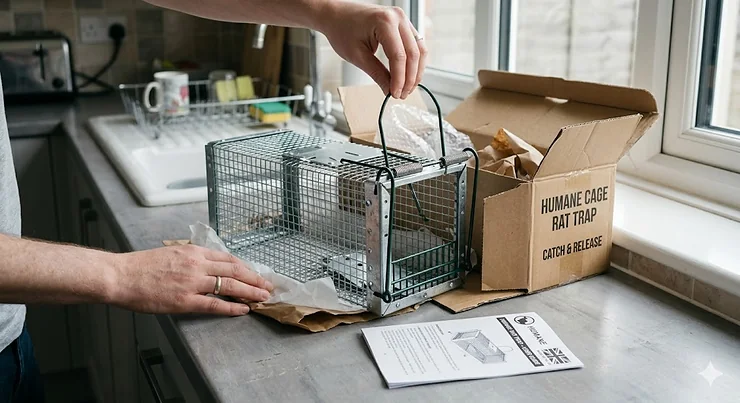
There is a very specific kind of 3am dread that comes from hearing something scuttle across your kitchen floor. You freeze, you listen, and then you spend the rest of the night mentally rehearsing how you’re going to deal with it without hurting anything. If that sounds familiar, you have landed in the right place, because this guide is entirely about how to use a humane rat trap properly, from picking the right cage to releasing your unwelcome guest without anyone losing a whisker.

Rats are not villains. They are opportunistic, clever, family-oriented animals that have simply found your home more appealing than the great outdoors, usually because of food, warmth, or an open drain somewhere you haven’t spotted yet. A humane cage trap lets you deal with the problem without resorting to poison or snap traps, both of which carry serious welfare and safety downsides, especially around children, pets, and non-target wildlife. Getting the technique right, though, matters just as much as the trap you buy, and that is exactly what we will unpack below, alongside seven genuinely capable products worth your money.
We researched real, currently available cage traps, cross-referenced manufacturer specs against aggregated customer feedback, and consulted UK animal welfare guidance so that everything here is grounded in fact rather than marketing fluff. By the end, you will know how to use a humane rat trap step by step, where to put it, what bait actually works, and — crucially — how to handle the release without simply relocating your problem to next door.
What Is a Humane Rat Trap? Quick Comparison Table
A humane rat trap, sometimes called a live-catch or cage trap, is a small enclosure with a spring-loaded, self-locking door that traps a rat unharmed once it steps on a treadle plate to reach the bait. Unlike snap traps or poison, the rat is caught alive and, in principle, can be dealt with without physical injury — though what happens next is where the real responsibility lies, something we cover under the Animal Welfare Act 2006’s duty of care requirements later in this guide.
Not every cage trap on the market performs the same, so before we go product by product, here’s a snapshot comparison to orient you.
| Trap Type | Best For | Catch Capacity | Typical Price Range |
|---|---|---|---|
| Single-catch metal cage | Occasional visitors, gardens | 1 rat per set | Under £15 |
| Heavy-duty galvanised cage | Persistent garden/shed activity | 1 rat per set | £15-£25 range |
| Multi-catch monitoring trap | Ongoing infestations, monitoring | Multiple rats | £25-£40 range |
| Budget multi-pack cages | Whole-property coverage on a budget | 1 rat each | Under £20 for a pair |
Reading across that table, the pattern is fairly intuitive: single-catch budget cages are brilliant for the odd rat that’s wandered in from the garden, but they become a false economy the moment you’re dealing with an actual infestation, because you’ll be constantly emptying and resetting one trap while three more rats queue up behind it. Multi-catch and heavier-duty designs cost more upfront but genuinely save you time if the problem is bigger than a single stray rodent.
💬 Found this comparison useful? Bookmark this page — you’ll want to come back to it once you’ve picked your trap!
Top 7 Humane Rat Traps: Expert Analysis
We shortlisted these seven based on real availability, genuine specification differences, and aggregated review sentiment rather than manufacturer hype. Coverage spans budget single cages through to heavy-duty and multi-catch designs, so whatever your situation, there should be something here that fits.
| Product | Best For | Price Range | Aggregate Rating* |
|---|---|---|---|
| The Big Cheese Ultra Power Rat Trap Cage | Garden & shed infestations | £20-£30 | ~4.5/5 |
| Ratkil Live Rat Cage Trap (Large) | All-weather durability | £18-£28 | ~4.2/5 |
| The Big Cheese Free to Go Multi-Catch | Ongoing monitoring | £30-£45 | ~4.4/5 |
| KCT Humane Rat Trap Cage | Budget occasional use | Under £15 | ~4.1/5 |
| Gingbau Humane Rat Trap | Wary or small rats | Under £15 | ~4.3/5 |
| WDKXCN Humane Rat Traps (2-Pack) | Multi-location coverage | £15-£20 for the pair | ~4.0/5 |
| GEMZPIRE 2-Pack Cage (with gloves & brush) | First-time buyers | £15-£22 for the pair | ~4.1/5 |
*Aggregate ratings reflect a rounded snapshot of publicly visible review scores at the time of research and will shift over time — always check current figures before buying.
Look at this table for more than five seconds and a pattern jumps out: price correlates loosely with catch capacity and build weight, not with basic effectiveness. Even the cheapest cage here catches rats just fine when it’s baited and placed correctly, so the real decision driver is how many rats you’re dealing with and how much wear and tear the trap needs to survive. Don’t assume the priciest option is automatically the most humane one, either — the KCT and Gingbau budget cages use broadly the same spring-and-treadle mechanism as their pricier cousins.
1. The Big Cheese Ultra Power Rat Trap Cage — best for garden and shed rat activity
The standout here is capacity: this galvanised mesh cage measures 36cm x 14cm x 16cm and is built to hold multiple rats caught across a single setting rather than needing to be emptied after every capture. Its spring-loaded, self-locking door means the trap resets its grip the instant the treadle plate is triggered, and the galvanised mesh construction shrugs off damp sheds and outdoor exposure far better than painted or unfinished metal. Based on the spec comparison with lighter budget cages, this is clearly aimed at people with an active infestation rather than a single wandering rat, and its carry handle means you’re not touching the cage itself during transport to release.
Reviewers consistently report that the door mechanism triggers reliably even on lighter juvenile rats, which is a common weak point in cheaper designs where the treadle is calibrated for a full-grown adult. A recurring theme in feedback is that the manufacturer’s own attractant paste, sold separately, noticeably outperforms improvised bait for first-time captures.
Pros:
- ✅ Holds multiple rats without needing to be reset each time
- ✅ Galvanised mesh withstands outdoor and all-weather use
- ✅ Sensitive trigger catches lighter, younger rats reliably
Cons:
- ❌ Bulkier and heavier to carry than single-catch cages
- ❌ Best results depend on using the branded attractant separately
Expect to pay in the £20-£30 range at the time of research. Given the multi-catch design and rugged build, it represents strong value if you suspect more than one rat is involved.
2. Ratkil Live Rat Cage Trap (Large) — best all-weather build quality
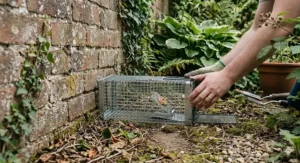
What most buyers overlook about this model is the material choice: it’s built from a thicker-gauge aluminium designed specifically to resist chewing and clawing, which matters because a distressed rat left in a flimsy cage overnight can genuinely injure its teeth or claws trying to escape. The auto-lock door engages the moment the trigger releases, and the trap ships fully assembled, so there’s no fiddly construction before your first use.
For anyone dealing with rats in a shed, garage, or under decking, the “all weather” branding isn’t just marketing — the aluminium resists the rust that can seize up cheaper steel mechanisms after a few damp weeks outdoors. Aggregated customer feedback is broadly positive on build quality and sensitivity, though a notable minority of reviewers reported slower dispatch on customer service enquiries, which is worth flagging honestly rather than glossing over.
Pros:
- ✅ Thick aluminium resists chewing and clawing attempts
- ✅ Fully assembled — no setup faff out of the box
- ✅ Performs reliably in damp, outdoor conditions
Cons:
- ❌ Some reviewers note inconsistent customer service response times
- ❌ Larger footprint than pocket-sized budget cages
Pricing typically sits in the £18-£28 range. If your rat problem lives outdoors rather than indoors, this is one of the more weather-resilient options going.
3. The Big Cheese Free to Go Multi-Catch Rat Cage Trap — best for ongoing monitoring
This one’s standout feature is right there in the name: it’s a self-setting, poison-free multi-catch design intended for situations where you need to monitor an infestation over days or weeks rather than deal with a single rat. The self-setting mechanism means the trap re-arms after each capture without you needing to manually reset the treadle every time, which genuinely changes the maths if you’re catching several rats a week.
Here’s what the spec sheet won’t tell you outright, but the design implies: multi-catch traps like this are really a monitoring and population-reduction tool rather than a total solution. Reviewers who used it as part of a broader clean-up (sealing entry points, removing food sources) reported much better outcomes than those expecting the trap alone to solve a serious infestation overnight. It’s British-made grain-based construction also avoids some of the plastic components found on cheaper imports, which several buyers noted as a durability plus.
Pros:
- ✅ Self-setting mechanism re-arms after each capture automatically
- ✅ Ideal for tracking infestation severity over time
- ✅ Welfare-friendly design avoids poison entirely
Cons:
- ❌ Premium price compared with single-catch alternatives
- ❌ Needs regular checking — multiple captives raise welfare stakes
Expect to pay in the £30-£45 range. For anyone managing a persistent problem rather than a one-off visitor, this is worth the extra outlay.
4. KCT Humane Rat Trap Cage — best simple budget cage for occasional visitors
The standout advantage here is straightforward affordability without sacrificing the core mechanism: a robust metal cage with a locking door hook that secures once the bait hook is triggered. There’s nothing flashy about the KCT — it’s essentially the platonic ideal of a humane trap, stripped back to what actually matters.
Based on the spec comparison against pricier rivals, the main compromise is durability under sustained outdoor exposure rather than catch effectiveness, since the trigger sensitivity is broadly comparable to premium models. This makes it a sensible pick for anyone dealing with an occasional rat rather than committing significant budget to a problem that might resolve itself once entry points are sealed. Aggregated reviews frequently mention how quick the trap is to understand and set for a first-time user, though a handful of buyers noted the mechanism can need a firmer hand to latch correctly compared with spring-assisted premium designs.
Pros:
- ✅ Genuinely low cost for a first attempt at trapping
- ✅ Simple mechanism anyone can understand in minutes
- ✅ Suitable for mice, rats, and similarly sized rodents
Cons:
- ❌ Latch mechanism needs a firmer hand than spring-assisted rivals
- ❌ Less robust for prolonged, heavy outdoor use
Typically priced under £15. As a low-commitment entry point into humane trapping, it’s hard to beat on value.
5. Gingbau Humane Rat Trap Live Mouse Cage Trap — best sensitive trigger for wary or small rats
What stands out about this trap is trigger sensitivity — reviewers and independent testers alike note that even small or juvenile rodents that might not weigh enough to spring a standard trap reliably set this one off. That’s a genuinely useful trait, because rats are neophobic (naturally wary of unfamiliar objects), and a trap that only responds to a confident, full-weight rat will miss a lot of cautious first attempts.
The design is a straightforward plastic-and-metal cage that fully encloses the rat once caught, meaning less visual stress from being watched by household pets or curious children, which is a small but genuine welfare plus. Aggregated customer sentiment is strongly positive on catch rate for smaller specimens, with a recurring complaint that plastic components are less durable than metal-framed alternatives over repeated outdoor use.
Pros:
- ✅ Exceptionally sensitive trigger catches lighter rodents
- ✅ Fully enclosed design reduces stress and visibility
- ✅ Straightforward to set without tools
Cons:
- ❌ Plastic components wear faster than metal-framed rivals
- ❌ Less suited to sustained heavy outdoor exposure
Priced typically under £15. If previous traps have failed to trigger on smaller or more cautious rats, this sensitivity advantage alone can justify the switch.

6. WDKXCN Humane Rat Traps (2-Pack) — best value multi-pack for whole-property coverage
The standout feature is simply arithmetic: buying two reusable cages for the price of one premium single trap lets you cover multiple entry points or rooms simultaneously, which meaningfully increases your odds of an early catch. Reviewers dealing with squirrels, voles, and hamsters alongside rats have also used this design successfully, suggesting a genuinely versatile trigger mechanism rather than one narrowly tuned to a single species.
What most buyers overlook when comparing multi-packs is that placing two traps in different locations tends to outperform placing one trap in the “best” single spot, simply because rats travel established routes and you can’t always predict which one they’ll use first. Aggregated feedback is positive on value for money, with occasional notes that the finish is more basic than premium single-unit alternatives — an entirely reasonable trade-off at this price point.
Pros:
- ✅ Two cages let you cover multiple locations at once
- ✅ Works across several small rodent species, not just rats
- ✅ Reusable design keeps ongoing costs low
Cons:
- ❌ Build finish is more basic than premium single traps
- ❌ Each individual cage is smaller than heavy-duty options
Expect a combined price in the £15-£20 range for the pair. As a way of maximising coverage on a tight budget, this is one of the more sensible picks on this list.
7. GEMZPIRE 2-Pack Humane Mouse Trap Cage — best beginner bundle with gloves and cleaning brush
The standout feature here is the bundle itself: alongside two reusable cages, you get a pair of gloves and a cleaning brush included, which genuinely removes two common first-timer objections — not wanting to touch anything remotely rat-adjacent, and not knowing how to clean the cage afterwards without transferring odour or bacteria. The auto-lock trigger is sensitive enough for mice as well as rats, making this a flexible pick if you’re not entirely sure what you’re dealing with yet.
Here’s what the accessories won’t tell you outright: gloves matter for more than squeamishness, since rats can carry pathogens including Weil’s disease (leptospirosis), and washing hands thoroughly after any contact with a trap or cage is genuinely important, not just good manners. Aggregated review sentiment is strongly positive from first-time buyers specifically, citing the accessories as removing hesitation around actually using the trap once a rat is caught.
Pros:
- ✅ Includes gloves and cleaning brush — genuinely useful extras
- ✅ Beginner-friendly for anyone new to trapping
- ✅ Effective across both mice and rats
Cons:
- ❌ Cage capacity is smaller, suited to single small-to-mid rats
- ❌ Accessories add bulk to packaging versus trap-only listings
Typically priced £15-£22 for the pair. For genuinely nervous first-timers, the included accessories make this an easy recommendation.
How to Use a Humane Rat Trap: Step-by-Step Setup Guide
Right, let’s get into the actual mechanics, because a trap is only as good as the person setting it. Here’s the process that consistently produces better results than winging it.
1. Wear gloves before you touch anything. Human scent on a trap can make a neophobic rat suspicious for days, and gloves also protect you from any pathogens the rat may be carrying.
2. Bait generously but sensibly. Use roughly a teaspoon-sized amount — rats need to commit to reaching for the bait, not just sniff and wander off, unlike the pea-sized amounts recommended for mice.
3. Position the bait deep inside the cage, ideally on or near the treadle plate itself, so the rat’s full weight lands on the trigger while it’s feeding.
4. Set the trap along a wall or known travel route, not in the open middle of a room — more on exactly why in the placement section below.
5. Pre-bait if you can spare the time. Leaving the trap unset with bait inside for several days lets naturally wary rats get comfortable with its presence before you actually arm it.
6. Check the trap at least twice daily, ideally every few hours once you suspect activity, since welfare guidance is clear that a caught animal shouldn’t be left without food, water, or a swift release for extended periods.
7. Replace bait every two to three days even if untouched — rats can detect when food starts to turn, and stale bait dramatically underperforms fresh.
Common first-30-days mistakes include giving up after two or three empty nights (pre-baiting periods of five to seven days are entirely normal for cautious rats), overloading the bait so the rat can nibble without triggering the plate, and forgetting to wash the cage between uses, which leaves human scent that deters the next visitor.
Live Rodent Trap Placement Tips: Where to Place a Live Catch Rat Trap
If there’s one thing that separates a successful humane trapping attempt from a frustrating one, it’s placement, so let’s talk properly about where to place live catch rat trap setups for maximum effect.
Rats are thigmotactic, meaning they instinctively hug walls, skirting boards, and other vertical surfaces rather than crossing open floor space, since exposed ground leaves them vulnerable to predators. Practically speaking, that means your live rodent trap placement tips checklist should always start with corners and along walls rather than the middle of a room. Look for droppings, gnaw marks, greasy smear marks along skirting boards (caused by dirt and oil on a rat’s fur brushing the same route repeatedly), and burrow entrances outdoors — all of these mark established travel routes worth targeting directly.
Indoors, prioritise areas behind appliances, under kitchen units, along loft joists, and near any pipework entering the building, since these double as both travel corridors and entry points. Outdoors, sheds, compost heaps, decking edges, and the base of fences bordering neighbouring gardens are classic hotspots. Avoid placing traps somewhere pets or young children can reach unsupervised, and always position the trap so the door swings freely without catching on nearby objects. If you’re getting no activity after several days in one spot, move the trap rather than assuming the rat problem has resolved itself — rats can and do shift routes when they sense disturbance.
Best Bait for a Live Rat Trap
Choosing the best bait for live rat trap setups genuinely changes your success rate, and there’s decent consensus among pest professionals on what works.
Peanut butter tops most lists for good reason: it’s calorie-dense, strongly scented, and sticky enough that a rat has to commit real effort (and weight) to get at it, rather than delicately nibbling from the edge. Chocolate performs almost as well, tapping into the same fat-and-sugar preference, and a small piece of bacon brings a smoky, high-protein pull that many rats find hard to resist. Sunflower seeds and dried fruit work as secondary options, particularly outdoors, where they mimic a rat’s natural foraging diet more closely than processed foods.
A few practical notes: use roughly a teaspoon-sized amount for rats (noticeably more than the pea-sized quantity recommended for mice), spread it directly onto or right beside the treadle plate rather than the entrance, and refresh it every two to three days regardless of whether it’s been taken, since oxidised or stale bait is dramatically less effective. If a trap sits untouched for over a week with no sign of interest, try switching bait types before assuming the location is wrong — individual rat populations do show some regional and individual preference quirks.

How to Release a Caught Rat Safely
This is the section most guides skate over, and it deserves honesty rather than a cheerful one-liner, because how to release caught rat safely is genuinely more complicated than “drive it somewhere and let it go.”
Here’s the uncomfortable truth: several UK animal welfare bodies now caution that simply releasing a trapped rat some distance away isn’t automatically the humane choice it feels like. Rats are highly social, territorial animals that live in established family groups, and a rat released into unfamiliar territory loses that support structure, faces resident rats defending their turf, and is significantly more vulnerable to predators and starvation while it tries to find food and shelter it doesn’t know exists. The RSPCA’s own advice on rodent welfare stresses checking any live trap frequently — at least every couple of hours where practical — precisely because prolonged confinement without food or water causes real suffering, and release decisions should be made quickly rather than delayed.
If you do choose to release rather than seek professional pest control advice, do it as soon as possible after capture, away from housing and food sources but not so far that you’re simply displacing the problem onto someone else’s property — there’s no single official “correct” distance in UK guidance, and that ambiguity is itself worth knowing rather than trusting a confident-sounding number online. Release near cover (hedgerows, undergrowth) rather than open ground, during daylight when predation risk from cats is often lower, and never handle the rat directly — tip the cage door open at ground level and let it leave under its own steam. If the infestation is significant, many welfare organisations now recommend combining humane traps with proofing your property rather than relying on ongoing catch-and-release, since repeated relocation of individual rats does little to solve an underlying access or food-source problem.
Real-World Scenarios: Matching the Right Trap to Your Situation
Sometimes it’s easier to see yourself in a scenario than to parse a spec sheet, so here are three genuinely common situations and the products that suit them.
The allotment holder with an occasional visitor: You’ve spotted droppings near the compost heap but no sign of a full infestation. A single KCT or Gingbau cage, checked daily and re-baited as needed, is proportionate — no need to spend £40 on multi-catch capacity for one rat.
The family with a persistent shed problem: Rats have moved into insulation or stored pet food, and you’re seeing activity most nights. The Big Cheese Ultra Power Rat Trap Cage’s multi-rat capacity and weatherproof mesh suit this better than a delicate single-catch cage that needs constant resetting.
The nervous first-timer who’s never touched a rodent trap before: The GEMZPIRE bundle, with its included gloves and cleaning brush, removes the main psychological barrier — you can set, empty, and clean the trap without direct contact, building confidence before you commit to pricier gear.
How to Choose a Humane Rat Trap
Picking between seven genuinely different products can feel overwhelming, so here’s the reasoning process pest professionals actually use.
1. Assess the scale of your problem first. One rat versus an ongoing infestation calls for very different catch capacities — don’t buy multi-catch gear for a single visitor, and don’t under-buy for a genuine infestation.
2. Match the build material to the environment. Indoor-only use tolerates lighter plastic-metal hybrids; anything going outside or into a damp shed needs galvanised or aluminium construction that resists rust and chewing.
3. Prioritise trigger sensitivity if you suspect smaller or younger rats, since standard treadle weights calibrated for adult rats will simply miss juveniles.
4. Consider your own comfort level with handling. If the idea of dealing with a caught rat makes your skin crawl, bundles with gloves and cleaning tools genuinely remove a real barrier to consistent use.
5. Factor in checking frequency realistically. A multi-catch trap left unchecked for days raises welfare concerns fast — be honest about how often you can actually inspect it.
6. Weigh upfront cost against durability needs. A £12 cage used once or twice is fine disposable-adjacent value; a £30 cage used weekly across a persistent problem earns its keep through reuse.
7. Read aggregated reviews for your specific rodent, not just “rodents” generally, since some cages perform noticeably better on mice than full-grown brown rats, or vice versa.
Humane Rat Traps vs Traditional Snap Traps
This comparison matters because plenty of people default to a snap trap out of habit rather than genuine preference, so let’s put the two side by side.
| Factor | Humane Cage Trap | Traditional Snap Trap |
|---|---|---|
| Outcome for rat | Unharmed, requires release decision | Lethal if working correctly |
| Risk to pets/children | Low — enclosed design | Higher — exposed spring mechanism |
| Setup difficulty | Simple, reusable | Simple, single-use per catch |
| Ongoing welfare responsibility | Yes — checking, releasing/dispatching | None after capture |
| Best For | Households wanting a non-lethal first attempt | Those prioritising fast, definitive removal |
The honest analysis here is that neither option is unambiguously “better” in every situation — a cage trap avoids the immediate finality of a snap trap but transfers real responsibility onto you for what happens after capture, while a well-maintained modern snap trap, contrary to old prejudices about crude mousetraps, is designed to kill quickly and is arguably less prone to the welfare grey areas around release and relocation. If you’re not prepared to handle the release question honestly, a cage trap can actually create more prolonged animal stress than a fast, well-functioning snap trap would, which is worth sitting with rather than assuming humane always equals kinder in every single case.
✨ Weigh up your options carefully — the right trap depends on your specific situation, not just your gut instinct.
Common Mistakes When Buying and Using a Humane Rat Trap
Even well-intentioned buyers trip up in predictable ways, so here’s the honest rundown.
Buying a single-catch trap for a multi-rat infestation and then getting discouraged when it’s constantly full is one of the most common errors — scale your trap count or capacity to the actual problem. Under-baiting is another frequent misstep, since a pea-sized smear works for mice but leaves rats able to nibble without triggering the plate. Giving up after just one or two quiet nights ignores how genuinely wary rats are of new objects; five to seven days of pre-baiting is standard practice among professionals, not a sign of a faulty trap. Skipping gloves risks both scent contamination that deters future catches and personal exposure to pathogens rats can carry. Finally, treating a single trapped rat as “job done” without addressing entry points or food sources almost guarantees a repeat visitor within weeks.
What to Expect: Real-World Performance
Specs on a box rarely translate directly into lived experience, so here’s what actually happens day to day. Brown rats (the species overwhelmingly responsible for UK infestations, as detailed on Wikipedia’s overview of the species) are primarily nocturnal, so most captures happen overnight, meaning your first checks each morning matter more than daytime monitoring. Expect several quiet nights before a first catch if you haven’t pre-baited, followed by more consistent activity once the rat population in the area gets used to the trap’s presence — assuming you haven’t inadvertently scented it with bare hands. Multi-catch traps genuinely do land several rats over a week during an active infestation, which is satisfying but also means you’ll be making several release or dispatch decisions in quick succession, not just one.
Humane Pest Control and the Law: Safety & Regulations Guide
Humane pest control sits at an interesting legal and ethical junction in the UK right now, and it’s worth understanding before you set a single trap.
The Animal Welfare Act 2006 places a legal duty of care on anyone responsible for an animal, including, arguably, a rat you’ve deliberately trapped and are now keeping (however briefly) in a cage — meaning it must not be left without food, water, or a timely resolution. Separately, the use of glue traps by members of the public is now illegal in England under the Glue Traps (Offences) Act 2022, with similar bans following in Wales and Scotland, precisely because of the prolonged suffering they cause — a useful reminder that “cheap and available” doesn’t always mean “acceptable,” a point explored well in UFAW’s guidance on humane rodent control. Grey squirrels, for context, cannot legally be released once trapped and must be humanely dispatched, though this specific restriction does not apply to brown rats, which sit in a genuinely murkier ethical space rather than a clearly illegal one. If in doubt about a serious infestation, a licensed pest control professional carries training in humane dispatch that most of us simply don’t have, and involving one isn’t an admission of failure — it’s often the more welfare-conscious choice.
Long-Term Cost & Maintenance
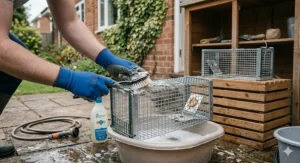
A reusable cage trap’s real value shows up over months, not on day one. A £25 trap used across a single infestation and then stored for future use comfortably outperforms repeated £8 disposable snap traps bought every few months, provided you actually clean and store it properly between uses — a quick wash with hot soapy water, gloves on, followed by thorough drying, prevents both rust on metal cages and lingering scent that might deter future catches. Factor in occasional bait costs (negligible, since peanut butter or chocolate from your own cupboard works fine) and the total cost of ownership over a year of intermittent use rarely exceeds what you’d spend on rodenticide bait stations, without the associated risks to pets or wildlife that poison carries.
🔍 Ready to Tackle Your Rat Problem?
Take the guesswork out of pest control by choosing a trap that actually matches your situation. Click through on any of the products above to check current availability and pricing — a bit of research now saves a lot of frustration later!
FAQ
❓ How long does it take to catch a rat in a humane trap?
❓ Is it legal to release a rat I've caught in the UK?
❓ What's the best bait for a live rat trap?
❓ How often should I check a humane rat trap?
❓ Can humane rat traps catch mice too?
Conclusion
Dealing with rats humanely takes a bit more thought than reaching for poison or a snap trap, but it’s entirely manageable once you understand the mechanics: pick a trap that matches your actual problem size, bait it properly, place it along established travel routes, check it frequently, and think honestly about what happens after a successful catch. None of the seven traps covered here are magic — they’re simple, well-engineered cages that do their one job effectively, provided you do yours around them.
Whether you go for the rugged capacity of the Big Cheese Ultra Power, the weatherproof reliability of the Ratkil, or the beginner-friendly GEMZPIRE bundle with its included gloves, the underlying principles stay the same. Get those right, and you’ll handle your rat problem calmly, safely, and without unnecessary harm to anything involved — including your own nerves.
Recommended for You
- Best Live Catch Rat Trap 2026: 7 Humane Picks Reviewed
- Plastic Snap Rat Trap vs Wooden Snap Rat Trap: 7 Best UK Picks (2026)
- Best Snap Rat Traps UK 2026: 7 That Kill Instantly
Disclaimer: This article contains affiliate links. As an Amazon Associate, I earn from qualifying purchases. If you purchase products through these links, we may earn a small commission at no additional cost to you.
✨ Found this helpful? Share it with your friends! 💬🤗
