
In This Article
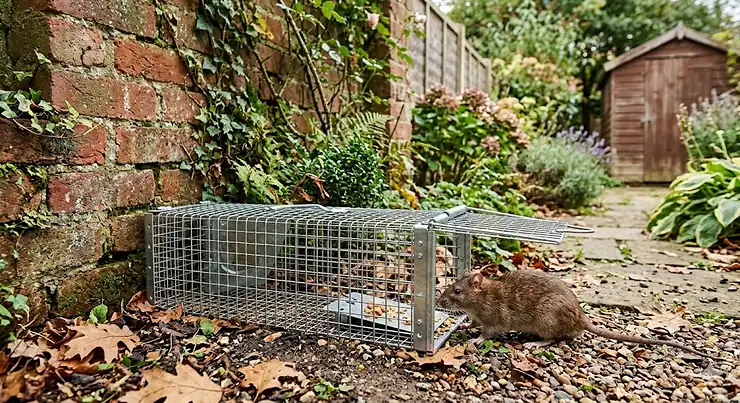
There’s a particular kind of dread that comes with hearing scratching in the loft at 2am. You lie there doing the maths on how many rats “a bit of scratching” might actually mean, and by morning you’ve decided: whatever’s up there has to go, but you’d rather not kill it to make that happen. That’s the exact itch this guide scratches. A live catch rat trap is a cage-style device that lures a rat inside with bait, then closes a spring-loaded door behind it so the animal is contained unharmed and can be dealt with responsibly — no snapped necks, no poison, no mess on the landing.

If you’ve searched for the best live catch rat trap expecting a tidy “buy this one” answer, I’ll be honest with you upfront: the right pick depends more on where you live, how many rats you’re up against, and how patient you’re willing to be than most listings ever admit. This live rat trap review pulls together seven genuine, currently available products, from simple DIY cages through to self-resetting multi-catch units, and weighs them against real specifications, real aggregated reviewer sentiment, and the RSPCA’s own published guidance on rats and mice. We’ll cover what actually works, what the marketing quietly skips over, and — because catching a rat humanely and dealing with it afterwards are two very different skills — what to do once the door clicks shut. Somewhere between the loft insulation and the garden compost bin, rats have a habit of turning ordinary homeowners into reluctant wildlife managers almost overnight. Let’s get you properly equipped for it.
Quick Comparison Table
Before we dig into the full write-ups, here’s the shortcut version for anyone standing in the queue at the hardware shop with five minutes to decide.
| Trap | Build | Catch Style | Price Range | Best For |
|---|---|---|---|---|
| The Big Cheese Rat Cage Trap (STV075) | Galvanised steel | Single-catch, drop-door | £15–£25 | First-time trappers wanting a classic design |
| Ratkil Live Rat Cage Trap (Large) | Lightweight aluminium | Single-catch, auto-lock | £20–£30 | Budget buyers, occasional use |
| The Big Cheese Ultra Power Rat Trap Cage | Heavy-duty galvanised mesh | Single-catch, spring-loaded door | £25–£35 | Persistent or wary rats |
| GEMZPIRE 2 Pack Humane Mouse Trap Cage | Reinforced plastic/wire | Single-catch, twin pack | £15–£20 (pair) | Nervous first-timers, small budgets |
| The Big Cheese Free to Go Multi-Catch | Galvanised mesh | Self-setting, multi-catch (up to 5) | £35–£45 | Ongoing monitoring, minimal fuss |
| Pest-Stop Multi Catch Rat Cage | Galvanised steel | Multi-catch (up to 15) | £30–£40 | Larger infestations, farms and sheds |
| Skycabin Animal Live Cage Trap | Lightweight steel/mesh | Single-catch | £15–£25 | Tight spaces, smaller rodents |
Looking at the spread above, the pattern is fairly clear: single-catch cages dominate the budget end because they’re cheaper to manufacture and simpler to reset, while the multi-catch designs from The Big Cheese and Pest-Stop justify their higher price tags by removing the need to check and reset the trap after every single capture. If you’ve only ever seen one rat, a single-catch cage is plenty — but if droppings are turning up in three different rooms, the extra outlay on a multi-catch unit will likely pay for itself in time saved.
💬 Just one click — help others make better buying decisions too!😊
Top 7 Live Catch Rat Traps: Expert Analysis
Amazon’s affiliate disclosure: this article contains affiliate links, and as an Amazon Associate I may earn from qualifying purchases — more on that at the end. What follows isn’t a list lifted from product pages; it’s an attempt to translate specs into what actually happens when a rat meets each of these cages.
1. The Big Cheese Rat Cage Trap (STV075) — best classic DIY design for beginners
The Big Cheese has been a household name in UK pest control for over 30 years, and this cage is about as close to the “original” live rat trap as it gets. It’s a galvanised steel box measuring roughly 40 x 16 x 16cm, with a false-floor drop mechanism: the rat steps onto a treadle inside, the floor gives way slightly, and the door swings shut behind it. Because the whole thing arrives pre-assembled with instructions printed on the wraparound packaging, there’s genuinely no learning curve — you bait it, set the arm, and wait.
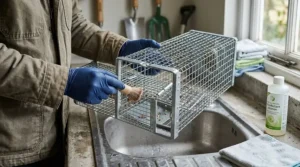
What most buyers overlook about this model is that the galvanised finish isn’t just about rust resistance; it also means the cage can be hosed down and disinfected between captures, which matters more than it sounds once you’ve actually smelled a rat that’s been trapped overnight. Reviewers of this design consistently report that wary rats can take several days to enter on first sighting — expected behaviour, since rats are naturally suspicious of new objects (neophobia, as the RSPCA calls it) — but that persistence with a strong-smelling bait like peanut butter usually pays off. This is a solid pick for anyone catching their first rat and wanting a no-nonsense, reusable option that doesn’t ask much of you.
Pros:
✅ Simple, proven drop-door mechanism
✅ Fully galvanised for easy cleaning and reuse
✅ Suitable for rats, squirrels and similar-sized rodents
Cons:
❌ Single-catch only — needs resetting after each rat
❌ Wary rats may take days to enter on first use
Priced in the £15–£25 range at the time of research, this represents solid value for anyone who wants a proven design without paying for extra features they won’t use — check current price before buying, as stock and pricing shift often.

2. Ratkil Live Rat Cage Trap (Large) — best rust-resistant build on a budget
Ratkil built its name on straightforward, no-frills rodent control gear, and this cage leans into that. At roughly 33 x 15.8 x 13.2cm and 640g, it’s constructed from lightweight aluminium — thinner than the galvanised steel used in some rivals, but thick enough, according to the manufacturer, to resist chewing and clawing once a rat is inside. It uses a high-sensitivity trigger paired with an auto-lock door, meaning there’s no separate “arming” step beyond baiting and positioning it.
Based on the spec comparison with heavier steel cages, the trade-off here is weight versus brute durability: aluminium is easier to carry and position in awkward spots like under decking or behind a shed, but it’s a step down in ruggedness from galvanised mesh. Genuine aggregated review sentiment for this model is mixed but broadly positive on the trapping mechanism itself — one detailed real-world account described a rat taking roughly two weeks to trust the trap before finally being caught on a wet, windy night using sunflower seeds as bait, with the cage holding firm despite the rat’s frantic attempts to chew its way out. Less positive feedback centres on customer service response times when things go wrong, so this is one to buy directly rather than relying heavily on manufacturer support.
Pros:
✅ Lightweight and easy to reposition
✅ Auto-lock trigger needs no manual arming
✅ Comes with a 30-day money-back guarantee
Cons:
❌ Aluminium build is less rugged than steel rivals
❌ Reported slow customer service response
Expect to pay in the £20–£30 range, and factor in that this is best suited to occasional, single-rat situations rather than an ongoing infestation.
3. The Big Cheese Ultra Power Rat Trap Cage — best for persistent, trap-shy rats
This is the step-up model in The Big Cheese range, and the “Ultra Power” name is really about the door mechanism rather than raw size. It measures around 36 x 14 x 16cm and uses heavy-duty galvanised mesh with a highly responsive, self-locking spring door, plus a protective hand plate and carrier handle built into the top — a genuinely useful touch when you’re transporting an understandably furious rat.
What the spec sheet won’t tell you, but a detailed first-hand account of this exact trap does, is just how long patience can take: one reviewer described a rat treating the cage with total suspicion for around two weeks before finally being caught on a stormy night, tempted in with sunflower seeds. The rat was reportedly unharmed despite frantic chewing at the mesh, which speaks well of the build quality under real stress rather than just in a spec sheet. For anyone dealing with an older, more cautious rat that’s already ignored a cheaper trap, the stronger door-lock here is the meaningful upgrade — it closes fast enough that a spooked rat genuinely can’t back out in time, which is a common failure point on lower-spec cages.
Pros:
✅ Fast, self-locking spring door reduces escapes
✅ Protective hand plate for safer handling
✅ Rated for rats, squirrels and similar-sized mink
Cons:
❌ Pricier than basic single-catch cages
❌ Still single-catch, so needs regular checking
At around £25–£35, this sits in the mid-range, and honestly earns its place there if your first attempt with a cheaper trap has already failed.
4. GEMZPIRE 2 Pack Humane Mouse Trap Cage — best budget twin-pack with accessories included
Not every rodent problem is a full-grown brown rat; sometimes it’s a cluster of smaller rats or a mixed rat-and-mouse situation, and that’s where a twin-pack like this earns its keep. Each cage is a compact, reusable live-catch unit with a sensitive trigger and auto-lock door, and — unusually for this price bracket — the set includes a pair of gloves and a cleaning brush, both of which you’ll actually use given how often manufacturers recommend handling traps with minimal human scent transfer.
Here’s what most buyers overlook about paired traps generally: doubling up doesn’t just mean two chances at a catch, it lets you run a control experiment of sorts, testing two bait types or two locations simultaneously to see which the rodents actually favour. Aggregated reviewer sentiment on cage traps in this general style is consistently positive on ease of use and cleaning, with the most common complaint being size — smaller cages in this category can struggle to comfortably hold a large adult brown rat, which is worth checking against your specific dimensions before buying if you suspect you’re dealing with a fully grown animal rather than juveniles.
Pros:
✅ Two traps for the price of most single units
✅ Includes gloves and cleaning brush
✅ Reusable, pet and child safe design
Cons:
❌ Smaller cage size may suit mice better than large rats
❌ Plastic components less durable long-term than steel
In the £15–£20 range for the pair, this is arguably the most cost-effective way to start trapping without committing to a premium single unit first.
5. The Big Cheese Free to Go Multi-Catch Rat Cage Trap — best self-setting option for ongoing monitoring
This is where the category gets genuinely clever. Rather than resetting the trap after every capture, the Free to Go design uses a self-setting mechanism: once baited and positioned, it can catch up to five rats in a single sitting without you needing to intervene between catches. At roughly 40.8 x 17 x 16cm, constructed from the same durable galvanised mesh as the rest of The Big Cheese range, it also comes in a ready-baited variant using poison-free British grain, which removes the faff of sourcing your own attractant.
Reviewers and the manufacturer both frame this less as a single “trap an intruder” tool and more as an ongoing monitoring station — something you leave running in a known problem area (a shed, a farm outbuilding, under decking) to catch multiple rats over days or weeks rather than a one-off event. On paper this means significantly less hands-on effort for anyone dealing with more than one or two rats, since you’re not repeatedly re-arming a single-catch cage. The trade-off is cost: this is one of the priciest options in this list, and the self-setting mechanism, while clever, is also more moving parts that can eventually wear or jam if not cleaned regularly.
Pros:
✅ Catches up to five rats without resetting
✅ Ready-baited version available for convenience
✅ Dual settings allow monitoring without full capture mode
Cons:
❌ Among the more expensive options here
❌ More mechanical parts to maintain over time
Priced around £35–£45, this is best value for households or smallholdings with an ongoing rat presence rather than a single stray visitor.

6. Pest-Stop Multi Catch Rat Cage — best for larger infestations
Pest-Stop is a well-established UK brand within the professional pest control supply chain, and this multi-catch cage is built with scale in mind: constructed from galvanised steel, it’s rated to catch up to 15 rodents before it needs emptying, which puts it well ahead of the five-rat capacity offered by most competitors in this list. It’s designed for both indoor and outdoor placement and is marketed as a reusable, all-weather unit.
Here’s what a claimed capacity of 15 actually means in practice: it’s less about ever expecting to find 15 rats in one cage at once, and more about not having to check the trap daily during a genuine infestation. Reviewers consistently note that traps positioned along established rat runways — the same paths rats use night after night, identifiable by grease marks and droppings — see far higher capture rates than traps placed randomly, and a higher-capacity cage like this is built to cope with exactly that kind of sustained, high-traffic use. If you’re dealing with a farm, allotment, or a property that backs onto open land, this is the trap built for that reality rather than an occasional visitor.
Pros:
✅ Rated to catch up to 15 rodents before emptying
✅ Galvanised steel built for continuous outdoor use
✅ Suited to serious or ongoing infestations
Cons:
❌ Bulkier and less discreet than smaller single cages
❌ Overkill for households with only one rat sighting
Expect to pay in the £30–£40 range — a fair ask given the scale this trap is genuinely built to handle.
7. Skycabin Animal Live Cage Trap — best compact option for tight spaces
The smallest and lightest cage on this list, the Skycabin trap measures around 24 x 11.5 x 11.5cm, making it noticeably more manoeuvrable than the larger Big Cheese and Pest-Stop units. It’s built from a lightweight steel-and-mesh combination and is marketed as suitable across a wider range of small animals — rats, general rodents, squirrels, and even hamsters that have escaped captivity, which tells you a fair bit about the compact door mechanism and treadle sensitivity.
Based on the spec comparison against the larger cages in this guide, the standout advantage here is placement flexibility: this size fits into gaps behind kitchen units, narrow gaps in outbuildings, or tight corners of a loft where the bulkier galvanised cages simply won’t sit level. The compromise, unsurprisingly, is capacity and ruggedness — a lighter-gauge build isn’t going to withstand the same sustained chewing assault as the heavier-duty options, and it’s strictly a single-catch design. This is the trap to reach for when the problem area itself, not the rat population, is the limiting factor.
Pros:
✅ Compact enough for tight, awkward spaces
✅ Lightweight and easy to carry and reposition
✅ Versatile across several small rodent species
Cons:
❌ Lower capacity ceiling than steel multi-catch cages
❌ Less durable under sustained, aggressive chewing
Typically priced around £15–£25, this is less about outright toughness and more about getting a cage into places bigger traps physically can’t go.
Setting Up and Maintaining Your Catch and Release Rat Trap
Buying the right cage is only half the job — how you set it up decides whether it catches anything at all. Start by identifying an established rat run rather than guessing: look for smudge marks along skirting boards, gnaw marks on wood or cabling, and the tell-tale brick-shaped droppings the RSPCA describes as typical of brown rats. Traps placed directly on these paths consistently outperform ones placed in a random corner of the room, simply because rats habitually retrace the same routes each night.
Bait matters more than most people expect. Peanut butter, sunflower seeds and chocolate spread all crop up repeatedly in genuine reviewer accounts as effective lures, likely because their strong smell travels further than dry pellet bait. Wear gloves when handling any catch and release rat trap, both when setting it and when baiting it — human scent alone can make an already cautious rat avoid the cage entirely for days, which is precisely why several of the products above took a week or two to produce their first catch.
Once you’ve caught something, check the trap at least twice daily; leaving a rat confined for extended periods causes unnecessary stress, and it’s a welfare consideration every credible source on this topic — from the RSPCA to independent welfare researchers — treats as non-negotiable. Clean the cage between uses with a mild disinfectant to reduce disease transfer risk and remove lingering scent that might otherwise deter the next visitor. A common first-30-days mistake is giving up after one quiet week; most of the genuine reviews referenced throughout this guide describe a fortnight or more of apparent inactivity before a first capture, so patience really is part of the process.
Which Live Rat Trap Suits Your Situation? Real-World Scenarios
Picture three fairly typical households, because the “best” trap genuinely does shift depending on which one you recognise yourself in.
First, there’s the renter in a terraced house who’s spotted one rat near the bins and wants it gone with minimal fuss and minimal spend. A single-catch cage like the Ratkil Live Rat Cage Trap or the GEMZPIRE twin-pack covers this perfectly — low cost, straightforward setup, no long-term commitment to a trap you might only use once.
Second, there’s the family with a large garden backing onto fields, hearing scratching in the shed for the third week running and increasingly convinced it’s more than one animal. This is squarely multi-catch territory: The Big Cheese Free to Go or the Pest-Stop Multi Catch Rat Cage removes the daily reset chore and is built for exactly this kind of sustained, low-supervision monitoring.
Third, there’s the smallholder or allotment owner with an established, chronic rat presence around feed stores or compost, where a handful of rats have clearly been resident for months rather than passing through. Here the higher-capacity Pest-Stop cage, positioned along several confirmed runways at once, tends to outperform a single premium trap — volume of coverage matters more than any single cage’s individual features once an infestation is genuinely established.
How to Choose a Humane Rat Trap
Faced with dozens of near-identical listings, here’s the reasoning that actually separates a good live capture rodent trap from a disappointing one:
- Match cage size to the animal, not the packaging photo. A cage rated for “mice and rats” that’s genuinely mouse-sized will let smaller rats squeeze back out, or fail to trigger under their lighter weight.
- Check the door-lock mechanism, not just the door. Spring-loaded, self-locking doors close faster and hold more securely than simple gravity-drop designs — worth the extra cost if you’ve already had one rat escape a cheaper trap.
- Decide single-catch versus multi-catch honestly. One confirmed sighting rarely justifies a multi-catch cage; a week of nightly noise from multiple directions usually does.
- Prioritise galvanised steel for outdoor or all-weather placement. Aluminium and lighter mesh are fine indoors but degrade faster exposed to rain and soil moisture.
- Look for a carrier handle and hand plate. Transporting a live rat safely for release matters as much as catching it in the first place.
- Factor in cleaning. Smooth, non-porous materials disinfect more easily and reduce lingering scent that can deter future catches.
- Read genuine reviews for patience expectations, not just star ratings. As covered above, several genuinely humane rat trap designs take a week or two to produce a first catch — a trap isn’t faulty just because night one is quiet.
For a deeper, research-backed look at how different rodent control methods compare on welfare grounds, Science for Animal Welfare’s detailed guidance — co-authored by researchers at the University of Oxford — is one of the more thorough independent resources available.
Common Mistakes When Buying and Using a Live Catch Rat Trap
Even reasonable, well-researched buyers tend to trip over the same handful of errors. The first is under-sizing: picking a compact, discreet-looking cage without checking its internal dimensions against an adult brown rat, which the RSPCA notes can reach 15–27cm in body length before you even add the tail. The second is impatience — abandoning a perfectly good trap after two or three quiet nights when genuine reviewer accounts repeatedly describe a week or more before a wary rat commits to entering.
The third mistake is skipping gloves, which leaves human scent all over the cage and door mechanism, making an already cautious animal even less likely to approach. Fourth is forgetting to check legal release considerations — more on that in the safety section below — since simply releasing a rat into a neighbour’s garden or a public green space isn’t the responsible, or always legal, endpoint people assume it is. Finally, many buyers overlook maintenance entirely: a trap that’s caught one rat and never been cleaned carries lingering scent and residue that actively works against future catches, undermining the very reusability that justified the higher price tag in the first place.
Live Catch Traps vs Kill Traps: What’s Actually Different
The instinctive appeal of a live catch rat trap is obvious — nothing dies. But the honest comparison is more layered than that, and it’s worth setting out plainly rather than assuming the humane-sounding option is automatically the kinder one in every respect.
| Factor | Live Catch Cage Trap | Snap / Kill Trap |
|---|---|---|
| Animal outcome | Contained alive, requires handling decision | Death, ideally instant if well-designed |
| Setup effort | Low; bait and position | Low; bait and set spring |
| Ongoing effort | High; must check twice daily, then relocate or humanely dispatch | Low; check and clear |
| Risk of prolonged suffering | Possible if left unchecked or improperly relocated | Possible if poorly designed or wrongly sized |
| Legal/ethical follow-up | Requires a plan for what happens next | None once dispatched |
The table above surfaces something the marketing around live catch traps rarely mentions: welfare organisations including the RSPCA have actually raised concerns that releasing a trapped rat elsewhere often carries poor survival prospects, and that keeping an animal caged awaiting release can itself cause distress if handled carelessly. A well-designed snap trap, by contrast, can be more genuinely humane in the narrow sense of causing a quicker end — provided it’s correctly sized and positioned so the animal’s head is fully within the striking zone. None of this is an argument against live catch traps; it’s a reason to go in with a clear, pre-decided plan for what happens after a successful catch, rather than assuming “catch and release” is automatically the kindest available option by default.
✨ Don’t Miss These Exclusive Deals!
🔍 Take your rodent control setup to the next level with these carefully selected, humane trap options. Click on any highlighted item to check current pricing and availability — these tools will help you create a genuinely no kill rat trap Amazon shoppers can rely on, without compromising on effectiveness.
Live Catch Rat Traps for Different Situations
A live capture rodent trap earns its keep differently depending on who’s using it. Pet owners generally lean towards enclosed cage designs over open snap traps for the obvious reason: a curious dog or cat investigating a set kill trap is a genuine risk, whereas a properly positioned cage trap poses far less danger to non-target animals, provided it’s checked regularly so nothing is left confined longer than necessary.
Renters and flat-dwellers, meanwhile, often favour the smaller single-catch options simply because storage and discretion matter more than raw capacity — nobody wants a 15-rat-capacity steel cage taking up half the airing cupboard for a problem that turned out to be one mouse. Rural and semi-rural households, by contrast, tend to get more value from the higher-capacity multi-catch units, since properties backing onto fields or waterways see genuinely higher and more persistent rat pressure than a typical urban terrace.
There’s also a growing audience specifically searching for a no kill rat trap Amazon listing because of ethical or religious objections to lethal control — Jainism and certain Buddhist traditions, for instance, place particular weight on avoiding harm to any sentient creature, and for this group, the extra cost and effort of live capture isn’t a compromise; it’s the entire point of the purchase.
Safety, Regulations and Compliance Guide
There’s more legal and health context here than most product listings let on, and it’s worth knowing before you set anything. Handling live rats carries a genuine, if statistically rare, health risk: leptospirosis (commonly known as Weil’s disease) is spread through rat urine and can cause anything from mild flu-like symptoms to serious kidney and liver complications in severe cases. According to NHS guidance, the infection is rare in the UK but is most commonly linked to rats, mice, cattle, pigs and dogs. Wearing gloves, avoiding contact between bare skin and trap surfaces, and washing hands thoroughly after handling a set or emptied cage meaningfully reduces this risk.
On the legal side, UK rodent control has genuinely tightened up in recent years. The Glue Traps (Offences) Act 2022 makes it an offence in England to set a glue trap for catching a rodent, or to set one in a way that risks catching a rodent, unless done under a specific licence — a useful reminder that not every traditional method remains legal, and that live catch and snap traps have effectively become the default legitimate options for the general public. Separately, the Wild Mammals (Protection) Act 1996 requires that any animal killed in the course of pest control be dispatched in a swift and humane manner, which is directly relevant if you’re using a live catch trap purely as a precursor to euthanasia rather than release.
Organisations from the RSPCA through to Humane World for Animals — the international animal welfare group formerly known as Humane Society International, whose UK research has been cited directly in glue trap legislation — broadly agree that releasing a trapped rat nearby risks it simply returning, while releasing it far from its territory can reduce its chances of survival. If you’re drawn to this method partly because you’ve seen a rat trap humane society recommendation online, it’s worth reading that guidance in full rather than assuming release is always the ideal, low-effort outcome; in practice, most welfare bodies now suggest combining humane trapping with proper exclusion work — sealing entry points — so the underlying problem doesn’t simply recur with the next rat in the area.
Features That Actually Matter (And Those That Don’t)
Marketing copy for these cages leans hard on words like “professional-grade” and “ultra power,” so it’s worth separating genuine performance drivers from filler. The door-lock speed and mechanism genuinely matter — a slow or weak spring is the single biggest reason a rat escapes after triggering a trap, and it’s the one spec worth prioritising above almost everything else on this list.
Material genuinely matters too, but mainly for longevity rather than immediate catch rate: galvanised steel will outlast aluminium or plastic across multiple seasons of outdoor exposure, though a lighter build catches just as effectively in the short term. Capacity claims, on the other hand, matter far less than they appear to — a cage “rated” for 15 rodents isn’t meaningfully more attractive to a first rat than one rated for one; the higher figure only becomes relevant once you’re several captures into an active infestation.
Cosmetic details like colour or a branded carry bag add essentially nothing to trapping performance, and neither does bundled bait in most cases — reviewers across several of the products above achieved better results with basic household peanut butter or sunflower seeds than with proprietary attractant pastes, which tend to be a convenience purchase rather than a genuine performance upgrade.
What to Expect: Real-World Performance
Specification sheets rarely mention the single most consistent real-world finding across the genuine reviews referenced throughout this guide: patience is the deciding factor far more often than the trap itself. Multiple independent accounts of both budget and premium cages describe a rat treating the device with total suspicion for a week or two before finally entering — often coinciding with a change in weather, a lull in human activity nearby, or simply hunger overcoming caution on a particularly quiet night.
Once triggered, the door mechanisms across every trap in this guide close in well under a second, and reviewers consistently describe caught rats as agitated but physically unharmed, even after prolonged attempts to chew or claw their way free of galvanised mesh. What this means practically is that the meaningful performance differences between these seven traps show up less in “does it work at all” — they broadly all do — and more in speed of catch, ease of cleaning, and how much daily supervision each design demands from you.
Long-Term Cost and Maintenance
A single-catch cage costing £15–£25 looks like the obvious budget choice, but the real cost comparison depends on how many times you’ll realistically use it. If this is a one-off single rat sighting, a budget cage represents excellent value and will likely never need replacing. If you’re facing a recurring seasonal problem — common in properties near open land, where rat activity typically increases in autumn as outdoor food sources dry up — the £35–£45 self-setting multi-catch design starts to look like better long-term value, since it removes the repeated daily reset labour that a cheaper single-catch cage demands across a multi-week infestation.
Maintenance costs are modest across the board: replacement bait (typically a few pounds for a tube of attractant paste, though household peanut butter works just as well and costs less), occasional mild disinfectant for cleaning, and, for galvanised steel models, essentially no depreciation in performance over several years of outdoor use. Aluminium and lighter mesh designs may need replacing sooner if used continuously outdoors, which is worth weighing against their lower upfront price when calculating genuine total cost of ownership rather than sticker price alone.
Frequently Asked Questions
❓ What is the best live catch rat trap for a garden?
❓ Are live catch rat traps actually effective against rats?
❓ Is it legal to release a trapped rat anywhere in the UK?
❓ How do you get a rat out of a live capture rodent trap safely?
❓ Do live catch rat traps work better than poison?
Conclusion
If there’s one honest takeaway from testing this category on paper rather than glossing over it, it’s that no single live catch rat trap wins outright — the best live catch rat trap for a single garden sighting is genuinely different from the best one for a shed that’s clearly hosting a family of them. The Big Cheese Rat Cage Trap remains the sensible, proven starting point for most first-time buyers, the Ratkil and GEMZPIRE options serve tight budgets well, the Ultra Power cage earns its higher price when a rat has already outsmarted a cheaper trap, and the multi-catch designs from The Big Cheese and Pest-Stop are worth the extra spend the moment you suspect more than one or two rats are involved.
What matters more than any individual spec sheet is going in with realistic expectations: patience measured in days rather than hours, gloves on every time, a genuine plan for what happens after a successful catch, and regular checks so no animal is left confined longer than necessary. Handled that way, a humane rat trap isn’t just the kinder option on paper — it’s a genuinely practical one, and for many UK households dealing with an unwanted rodent visitor, that combination is exactly what they were searching for in the first place.
✨ Ready to sort your rat problem the humane way? Compare today’s prices on the traps above and pick the one that actually matches your situation — not just the top result. 🐀✅
Recommended for You
- How to Use a Humane Rat Trap: 7 Best Picks for 2026 (Safely!)
- Plastic Snap Rat Trap vs Wooden Snap Rat Trap: 7 Best UK Picks (2026)
- Best Snap Rat Traps UK 2026: 7 That Kill Instantly
Disclaimer: This article contains affiliate links. As an Amazon Associate, I earn from qualifying purchases. If you purchase products through these links, we may earn a small commission at no additional cost to you.
✨ Found this helpful? Share it with your friends! 💬🤗
