
In This Article
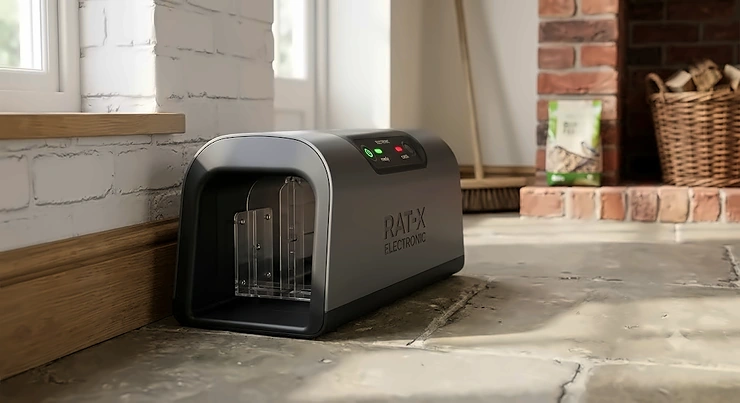
A rat doesn’t knock before it moves in. One night you hear scratching behind the skirting board, the next morning there’s a greasy smear along the wall and a suspiciously chewed corner of cereal box, and suddenly you’re standing in the kitchen at 2am googling “best electric rat trap” with your phone torch on. An electric rat trap is a battery or rechargeable device that lures a rat into an enclosed chamber and delivers a short, high-voltage shock that kills it in seconds, all without you ever touching the poison, the corpse, or the guilt of a snap trap gone wrong. It’s the electronic rodent killer equivalent of outsourcing an unpleasant job to a machine that doesn’t mind doing it twice. This guide walks through seven genuinely available electric rat traps sold on amazon.co.uk, ranging from pocket-money budget models to serious commercial-grade units, and explains, honestly, where each one earns its keep and where it falls short. Rats aren’t just an inconvenience, either: Weil’s disease, a form of leptospirosis, is spread through contact with rat urine, and while the risk in UK homes is low, it’s exactly the sort of thing you want dealt with quickly and hygienically rather than left to fester behind a fridge. Whether you’re dealing with a single opportunistic visitor or a shed that’s turned into rodent Airbnb, there’s a model on this list built for your situation.
Quick Comparison Table
Before diving into the deep-dive reviews, here’s the fast version for anyone who just wants an answer before their tea goes cold.
| Product | Best For | Power Source | Price Range |
|---|---|---|---|
| Victor Rat Zapper Ultra | Large rats & heavy infestations | 4 x D batteries | £45-£60 range |
| Victor M241 Electronic Rat Trap | All-round household use | 4 x C batteries | £30-£45 range |
| Pest-Stop PSERK Electronic Rat Killer | Multi-kill value | 4 x C batteries | £25-£35 range |
| PestBye Electronic Rat Killer | Open-tunnel design, bigger rats | 4 x C batteries | £20-£30 range |
| Racan Electronic Rat Killer | No-battery, USB rechargeable | USB rechargeable | £25-£35 range |
| Victor Rat Zapper Classic | Budget-friendly entry point | 4 x D batteries | Under £35 |
| OWLTRA Electric Rodent Trap | Waterproof indoor/outdoor use | Battery or USB | £20-£30 range |
Looking at the table, the pattern that jumps out is a straightforward budget-to-capability curve: the Rat Zapper Ultra costs more because its chamber and battery bank are built for repeated, larger kills, while the Rat Zapper Classic and OWLTRA trade some of that headroom for a friendlier price. If you’ve only ever seen one rat and you’re hoping it stays that way, the mid-range options like the M241 or Pest-Stop PSERK strike the most sensible balance between cost and capacity. Buyers dealing with a garage or shed infestation, where rats are bigger and bolder, should lean toward the Ultra or the PestBye’s open design rather than the compact indoor-only models.
💬 Just one click — help others make better buying decisions too!😊
Top 7 Electric Rat Traps: Expert Analysis
Here’s the exact same information Amazon’s spec sheet gives you, except with the “so what does that actually mean for my house” bit attached, because that’s the part that actually helps you decide.
| Product | Kill Capacity | Rating | Best For |
|---|---|---|---|
| Victor Rat Zapper Ultra | ~35-50 rats/battery set | 4.2/5 | Heavy infestations |
| Victor M241 | Up to 50 rats/battery set | 3.8-4/5 | General households |
| Pest-Stop PSERK | Up to 50 kills claimed | 4/5 | Value seekers |
| PestBye Electronic Rat Killer | Up to 12 kills/battery set | 3.7/5 | Big, bold rats |
| Racan Electronic Rat Killer | Up to 20 rats/charge | 4/5 | No-battery convenience |
| Victor Rat Zapper Classic | Up to 20 rats/battery set | 4/5 | Budget buyers |
| OWLTRA Electric Rodent Trap | Several kills/charge | 4.2/5 | Indoor/outdoor flexibility |
The manufacturer-claimed kill capacities above are worth reading with a pinch of salt, since they assume fresh batteries and ideal conditions, which real kitchens and garages rarely provide. What the table doesn’t show is that a higher claimed capacity usually correlates with a bigger, heavier chamber, which matters if you’re trying to tuck a trap discreetly behind a washing machine. For most domestic situations, the difference between “20 rats per charge” and “50 rats per charge” is academic, because you’ll be cleaning and re-baiting the trap long before you hit either number.
1. Victor Rat Zapper Ultra — best for large rats and heavy infestations
The standout here is sheer scale: this is the trap Victor built for rats that laugh at smaller chambers. Running on four D batteries, it delivers a continuous shock for around two minutes once a rat completes the circuit, which matters because rats can restart their hearts after a jolt that would finish off a mouse instantly. The kill chamber is noticeably roomier than the Classic model, so it comfortably swallows adult Norway rats rather than forcing them to squeeze halfway in. Based on the spec comparison with smaller electric traps, this one is clearly aimed at garages, sheds, farm outbuildings and anywhere pest pressure is genuinely serious rather than a single unlucky sighting. Reviewers consistently report that it works fastest when baited with something oily like bacon rind rather than the peanut butter the box suggests, and several mention the trap “just works” on the first night once positioned flush against a wall. A recurring complaint in user reviews concerns the D batteries draining faster than advertised in cold garages and outbuildings, and a handful of buyers note the chamber can be awkward to prise open for cleaning after a kill. It’s not a cheap option, but weighed against buying three cheaper traps that can’t handle a large rat, it’s arguably the more economical route for anyone with a real infestation.
Pros:
- ✅ Large chamber handles adult rats, not just mice
- ✅ Two-minute continuous shock reduces failed kills
- ✅ Sturdy build suited to sheds and outbuildings
Cons:
- ❌ D batteries drain quicker in cold conditions
- ❌ Chamber can be fiddly to open for cleaning
Sitting around the £45-£60 range at the time of research, the Rat Zapper Ultra earns its higher price through capacity rather than gimmicks, making it the sensible premium pick for anyone facing more than the occasional stray rat.
2. Victor M241 Electronic Rat Trap — best all-rounder for households
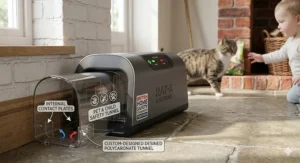
The M241’s standout feature is its no-touch, no-see disposal tunnel, a design so widely copied that it’s practically the industry template for household electric rat traps. Running on four C batteries, Victor rates it for up to 50 rats per set, and the trap uses a smart-circuit sensor that only fires once the rodent bridges all three internal plates, which cuts down on false triggers from insects or draughts. What most buyers overlook about this model is that the auto re-arming feature means it resets itself after a kill without you needing to do anything beyond eventually emptying it, so a busy household can genuinely forget about it between checks. Reviewers consistently note the LED indicator system, a blinking green light for a kill and a blinking red light for low battery, as one of the most useful quality-of-life touches on any trap in this category, since it removes the guesswork of “has it caught anything yet?” On the other hand, a recurring complaint is that a handful of unusually cautious rats learn to gnaw open the rear bait door rather than enter the tunnel, and some owners report the newer one-piece design is harder to clean thoroughly than the older two-piece version. For a typical semi-detached home dealing with one or two intruders, this is the trap most pest-control writers point to first, and it’s easy to see why.
Pros:
- ✅ No-touch, no-see disposal tunnel design
- ✅ Green/red LED indicators for catch and battery status
- ✅ Auto re-arm means less manual resetting
Cons:
- ❌ Occasional rats learn to raid the rear bait door
- ❌ Newer sealed design is harder to deep-clean
At around £30-£45 depending on pack size, the M241 represents the safest “just buy this one” recommendation for anyone without a serious infestation, balancing price, capacity and ease of use better than most rivals on this list.
3. Pest-Stop PSERK Electronic Rat Killer — best value multi-kill trap
Pest-Stop’s standout claim is 50 kills from a single set of batteries, positioning it as a genuine rival to Victor at a noticeably lower price point. It runs on four C batteries and uses the same principle as every trap here, a rodent completing a circuit across metal plates and receiving an instant high-voltage shock, but the compact housing keeps it discreet enough for a kitchen cupboard or under-stairs cupboard. Here’s what to weigh with this one: the battery compartment is genuinely tight, tight enough that some owners have reported difficulty fitting standard alkaline C cells without forcing the springs, which is more a manufacturing tolerance issue than a design flaw but worth knowing before you buy fresh batteries specifically for it. Reviewers consistently describe quick results once bait is correctly placed on the rear wall rather than near the entrance, with several noting a kill within a single night when using bacon rind or corn rather than the peanut butter mentioned in the instructions. A common complaint in user reviews concerns the buzzing or “arcing” sound some units make while armed, which a minority find unsettling in a quiet house at night, alongside occasional reports of durability issues after several months of continuous outdoor-adjacent use. Given the price gap to Victor’s equivalents, this is a strong pick for anyone testing the electric-trap waters before committing to a pricier model.
Pros:
- ✅ Claimed 50-kill capacity at a mid-range price
- ✅ Compact housing suits cupboards and skirting runs
- ✅ Reusable design with simple bait cup access
Cons:
- ❌ Battery compartment is a tight fit for C cells
- ❌ Some units develop a faint buzzing/arcing sound
At roughly £25-£35, the PSERK is where value-conscious buyers should start if they want Victor-style performance without the Victor-style price tag.
4. PestBye Electronic Rat Killer — best open-tunnel design for bigger rats
PestBye’s standout feature is its deliberately open entrance design, built specifically to accommodate larger rats rather than the narrower tunnels found on mouse-orientated traps. It runs on four C batteries, is rated for around 12 kills per set, and its makers pitch it directly at professional pest controllers as well as homeowners, which tells you something about how it’s built to handle a properly sized rodent. Based on the spec comparison with narrower-tunnel rivals, the wider opening means less chance of a rat simply refusing to commit to the trap, a genuine failure mode with some of the more mouse-focused electric traps on the market. Reviewers consistently praise how clean the disposal process is, with several specifically mentioning that tipping the trap into an outdoor bin avoids any contact with the carcass at all, and a few long-term users report catching multiple rats across a single set of batteries in busy sheds. The trade-off is a lower advertised kill count per battery set than some rivals, and a recurring complaint concerns inconsistent results, with some reviewers reporting weeks of untouched bait despite clear evidence of rat activity nearby, suggesting placement and patience matter more with this design than with tunnel-style traps. It’s a solid choice specifically for outbuildings and larger rodents rather than a first line of defence against a lone mouse-sized intruder.
Pros:
- ✅ Wide entrance suits larger, bolder rats
- ✅ Genuinely no-touch disposal via tip-and-empty design
- ✅ Favoured by some professional pest controllers
Cons:
- ❌ Lower rated kill count than tunnel-style rivals
- ❌ Mixed reports on consistency of catches
Typically priced in the £20-£30 range, this is worth considering specifically when previous narrower traps have failed to tempt a large, wary rat inside.
5. Racan Electronic Rat Killer — best rechargeable, no-battery option
The Racan’s standout feature is right there in the name: no batteries required, just a USB cable and a few hours of charging for up to around 20 kills per full charge. Its microelectronic circuit technology is built for low power draw, and the power unit detaches from the kill chamber entirely, meaning you can clean the plates with a damp cloth without worrying about water anywhere near the electronics. On paper this means lower running costs over time than any battery-powered rival on this list, since you’re never buying a fresh four-pack of C or D cells every few months. It also includes a safety protection switch that disengages the shock circuit whenever the chamber is opened, a sensible touch for households with children or pets who might investigate an unattended trap. Reviewers who’ve compared it to older battery models tend to highlight the convenience of simply plugging it in overnight rather than hunting for the right battery size, though the trade-off is a dependency on remembering to recharge it, since a flat unit obviously won’t zap anything at all. As with any newer entrant in the electronic rodent killer space, the review pool is smaller than Victor’s long-established lineup, so buyers should treat early feedback as a useful but not exhaustive signal. For anyone tired of the ongoing cost and hassle of battery replacement, it’s a genuinely refreshing alternative.
Pros:
- ✅ USB rechargeable, no ongoing battery costs
- ✅ Detachable power unit simplifies cleaning
- ✅ Safety switch disengages when chamber opens
Cons:
- ❌ Smaller, newer review pool than established rivals
- ❌ Requires remembering to recharge before use
Priced around £25-£35, this is the pick for anyone who values convenience and lower long-term running costs over an established brand name.
6. Victor Rat Zapper Classic — best budget-friendly entry point
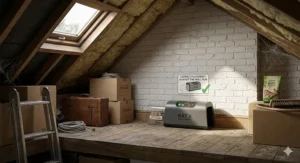
The Classic’s standout feature is doing the fundamentals well at the lowest price in Victor’s electric range, running on four D batteries and rated for up to 20 rats per set. It shares the same core mechanism as its pricier Ultra sibling, a continuous two-minute shock once the rodent completes the circuit, just housed in a smaller, less expensive chamber. What most buyers overlook about this model is that it’s specifically designed for indoor use only, so it’s not the right pick for a damp shed or an outdoor bin store, a distinction that matters because a handful of disappointed reviews stem from exactly that mismatch. Reviewers consistently note that the red flashing indicator light is a genuinely reliable “job done” signal, and several long-term owners describe getting years of use from a single unit before needing a replacement. On the downside, a common complaint is the smaller chamber struggling with unusually large rats compared to the Ultra, and some reviewers note the D batteries, while long-lasting, still represent an ongoing cost that adds up over a year of regular use. For a first-time buyer wanting to try electric trapping without a big financial commitment, this remains a sensible, low-risk starting point.
Pros:
- ✅ Lowest price point in Victor’s electric lineup
- ✅ Proven, well-reviewed core mechanism
- ✅ Reliable red-light kill indicator
Cons:
- ❌ Indoor use only, unsuitable for damp outbuildings
- ❌ Smaller chamber struggles with the largest rats
Sitting under £35 at the time of research, it’s the most accessible way to see whether electric trapping suits your household before spending more on a premium model.
7. OWLTRA Electric Rodent Trap — best waterproof indoor/outdoor hybrid
The OWLTRA’s standout feature is its IPX4 waterproof rating, a genuinely useful addition for anyone wanting to place a trap somewhere that isn’t bone dry, such as a covered patio, garage floor or damp utility room. It can run on batteries or USB power depending on the exact listing, and adds a sound-and-light alert alongside the usual LED indicator, which is handy if the trap ends up somewhere you won’t walk past every day. What the spec sheet won’t tell you, but reviewers note, is that the added weatherproofing does make the housing slightly bulkier than indoor-only rivals like the Rat Zapper Classic, a reasonable trade-off given what it’s protecting against. Reviewers consistently mention appreciating the flexibility of placing it in semi-exposed spots where a standard indoor electric trap would be a bad idea, and several highlight the dual alert system as useful for catching a kill notification from another room. A recurring theme in feedback is that, like most newer entrants to this space, the brand’s UK review history is thinner than Victor’s decades-old catalogue, so buyers are relying more heavily on general owner reports than long-term reliability data. It’s a smart pick specifically for borderline indoor/outdoor placements where a purely indoor trap would be the wrong tool for the job.
Pros:
- ✅ IPX4 waterproof rating suits damp locations
- ✅ Sound and light alert alongside standard LED
- ✅ Flexible battery or USB power options
Cons:
- ❌ Bulkier housing than indoor-only rivals
- ❌ Shorter UK review history than established brands
At around £20-£30, it’s a competitively priced option specifically worth choosing when your problem spot isn’t a dry indoor cupboard.
How to Set Up Your Electric Rat Trap for an Instant Kill
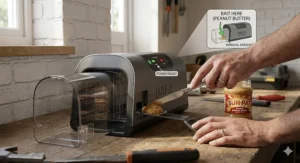
Getting an instant kill electric rat trap to actually deliver on that promise comes down to placement and patience more than the model you buy. Start by identifying an active run, look for smear marks, droppings or gnawed packaging along skirting boards, and place the trap directly in that path with its entrance flush against the wall, since rats travel by touch along vertical surfaces rather than crossing open floor. Bait sparingly: a pea-sized amount of peanut butter, bacon rind or dry pet food on the rear plate is plenty, because rats have an excellent sense of smell and a smeared, over-baited trap can let them reach the food without fully entering the kill zone. In the first 30 days, resist the urge to move the trap every few days if nothing happens; a common mistake is assuming a quiet week means failure, when in reality rats can take a week or more to overcome their natural caution around a new object in a familiar space, a behaviour pest controllers call neophobia. Check the trap every day or two rather than leaving it for a fortnight, both to catch any kill promptly and to top up bait that’s gone stale or been nibbled away without triggering the plates. For maintenance, wipe the metal contact plates with a damp cloth after every kill, since dried residue is one of the most common causes of a trap that stops sensing rodents correctly, and always remove batteries before any extended storage to prevent corrosion damage to the terminals.
Real-World Scenarios: Which Electric Rat Trap Suits Your Situation?
Picture three very different households, because the “best” trap genuinely depends on who’s asking. First, there’s the young family in a terraced house who spotted a single rat in the kitchen at night and want it gone without any risk to a toddler or a curious spaniel; for them, the Victor M241 makes the most sense, thanks to its enclosed tunnel design, automatic safety cut-off when opened, and gentle price point that doesn’t demand a big commitment for what might be a one-off visitor. Second, consider the allotment owner with a shed that’s become a rodent thoroughfare thanks to stored bird feed and compost bins nearby; here, the PestBye’s wide entrance or the Victor Rat Zapper Ultra’s larger chamber both make more sense than a compact indoor unit, since outdoor-adjacent rats tend to be bigger, bolder and less deterred by a narrow tunnel. Third, there’s the renter in a converted flat above a takeaway, dealing with recurring visitors month after month and unwilling to keep buying fresh batteries every few weeks; for that budget-conscious, frequency-driven situation, the Racan’s USB-rechargeable design removes an ongoing cost that would otherwise nibble away at the savings of choosing electric over poison. None of these buyers are wrong to want different things, and matching the trap to the actual environment, rather than just the cheapest or most popular option, is what separates a one-night success from a trap gathering dust in a cupboard.
How to Choose the Best Electric Rat Trap
Cutting through the marketing, here’s the honest shortlist of what actually matters when comparing models:
- Chamber size relative to your rodent. A cramped chamber built for mice will let a full-grown rat’s rear half hang outside the kill zone, reducing the trap’s effectiveness considerably.
- Power source and running cost. Battery-hungry models cost more over a year of use than rechargeable ones, even if the upfront price looks similar.
- Indoor-only versus weatherproof rating. Placing an indoor-only trap in a damp shed is one of the most common reasons owners report a “broken” unit that was never designed for that environment.
- Disposal method. Tip-and-empty designs genuinely avoid any contact with the carcass, whereas some fiddly chamber designs require more handling than the marketing suggests.
- Indicator clarity. A trap with a clear, unambiguous kill light saves you from opening the chamber unnecessarily and disturbing a functioning setup.
- Reusability and cleaning access. Sealed one-piece designs are harder to deep-clean than older two-piece chambers, which matters over multiple kills.
- Realistic kill capacity versus advertised figures. Manufacturer numbers assume fresh batteries and ideal conditions, so treat any “up to X kills” claim as a ceiling, not an average.
✨ Don’t Miss These Exclusive Deals!
🔍 Take your rodent control routine to the next level with these carefully selected products. Click on any highlighted item to check current pricing and availability. These tools will help you create a genuinely rat-free home your family will appreciate!
Battery Powered Rat Trap vs Rechargeable: What Actually Lasts Longer?
A battery powered rat trap has one significant advantage over rechargeable models: you can grab replacement C or D cells from almost any UK supermarket the moment they run out, with no waiting around for a charge cycle to finish. That convenience comes at a recurring cost, though, since four D batteries every few months adds up meaningfully over a year of steady use, particularly for households dealing with an ongoing rather than one-off problem. Rechargeable models like the Racan trade that instant-replacement convenience for a lower running cost and, arguably, a smaller pile of dead batteries heading to landfill or recycling. What most buyers overlook is that battery chemistry also affects performance in cold conditions; alkaline batteries lose capacity faster in an unheated shed or garage during winter, which is exactly when rat activity tends to spike as rodents seek warmth indoors. If your trap lives somewhere with easy access to a plug socket, a rechargeable unit is arguably the more sensible long-term choice, whereas an outbuilding with no power nearby makes battery power the only practical option regardless of running costs.
High Voltage Rat Trap Technology: How the Shock Actually Works
Every high voltage rat trap on this list works on the same basic principle: a rodent enters an enclosed chamber, steps onto or touches metal plates connected to a circuit, and completes that circuit with its own body, triggering a sudden, powerful electrical discharge. The voltage involved is considerably higher than household mains supply, though the current is carefully engineered to be brief and contained entirely within the sealed chamber, which is why manufacturers describe the mechanism as humane rather than simply forceful. Because rats have a genuine physiological ability to have their hearts restart shortly after an initial shock, several models, notably the Rat Zapper range, apply a continuous jolt for around two minutes rather than a single instantaneous pulse, specifically to prevent a rodent reviving and escaping. Safety switches that disable the circuit the instant the chamber is opened are a near-universal feature across every trap reviewed here, and they exist specifically to protect curious fingers, paws or small children from any risk of contact with live plates. It’s worth noting that despite the word “shock” sounding alarming, independent government guidance on Weil’s disease treats the humane, rapid dispatch of rodents as a genuinely beneficial pest-control outcome, since a quick kill reduces the time an infected rodent spends shedding bacteria in urine around your home.
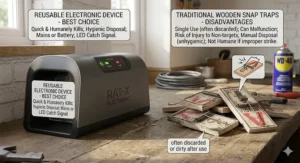
Electric Rat Trap vs Snap Traps and Poison: Which Wins?
The obvious rival to any electric rat trap is the humble wooden snap trap, and the honest answer is that both have a place depending on your tolerance for mess versus your tolerance for handling a mechanism yourself.
| Method | Speed of Kill | Mess Level | Reusability | Best For |
|---|---|---|---|---|
| Electric rat trap | Fast, humane shock | Low, tip-and-dispose | High, reusable for years | Squeamish owners, indoor use |
| Snap trap | Instant if triggered correctly | Higher, visible kill | Reusable but requires resetting | Budget buyers, outdoor sheds |
| Poison/rodenticide | Slow, days to work | Very low visible mess | Single-use bait | Serious infestations, professional use |
The data above tells a fairly clear story: electric traps sit in the sweet spot between the instant, visible unpleasantness of a snap trap and the delayed, secondary-poisoning risk of rodenticide, which is why local authorities increasingly caution against amateur poison use around gardens where pets, birds of prey and other wildlife might be affected. Snap traps remain cheaper and arguably faster to reset for high-volume infestations, but they demand you handle a triggered mechanism and a visible carcass, which is precisely the discomfort electric traps are designed to remove. Poison bait stations still have a role for severe, ongoing infestations best handled by a professional, but for the average household dealing with one to a handful of rats, an electric trap generally offers the best balance of speed, hygiene and control over exactly where the kill happens.
No-Mess Rat Trap Disposal: Why Electric Beats Traditional Methods
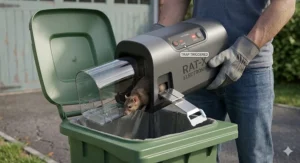
If there’s one feature that consistently sells people on switching to an electric option, it’s the no-mess rat trap disposal process. Rather than lifting a spring-loaded bar off a mangled carcass, most electric traps let you simply power off the unit, remove or tip the sealed chamber, and drop the rodent straight into an outdoor bin without your hand ever coming near it. This matters beyond squeamishness, too: minimising direct contact with a dead rodent reduces the already-small but real risk of picking up bacteria from its fur or any residual urine, which ties back to the same Weil’s disease concerns raised earlier in this guide. A common mistake among first-time electric trap owners is forgetting to clean the plates immediately after disposal, since dried blood or residue left on the contacts is one of the leading causes of a trap that stops sensing rodents reliably on subsequent uses. The fix is simple: a quick wipe with a damp cloth and mild soap, followed by thorough air-drying before batteries go back in, keeps the kill mechanism working as intended for years rather than months. For households that have previously abandoned pest control altogether purely because they couldn’t face handling a snap trap, this single feature is often the difference between finally dealing with the problem and simply living with it.
Common Mistakes When Buying and Using an Electric Rat Trap
Even a well-reviewed trap fails more often through user error than product fault, and a handful of mistakes come up again and again across owner reviews. Buying an indoor-only model for a damp shed is probably the single most common error, leading to premature corrosion and disappointed one-star reviews that are really about mismatched expectations rather than a faulty product. Over-baiting is another frequent issue: piling on peanut butter might seem generous, but it lets a cautious rat reach the food from just outside the entrance without ever stepping onto the kill plates. Placing the trap in the middle of a room rather than flush against a wall ignores natural rat behaviour, since rodents overwhelmingly prefer travelling along edges and vertical surfaces rather than crossing open floor space. Giving up after just a few days is also common, when in reality new objects in a rat’s territory often take a week or two to be investigated fully due to natural caution. Finally, neglecting to clean the plates after each kill quietly degrades sensitivity over time, turning a perfectly good trap into an apparently “broken” one through nothing more than dried residue.
Features That Actually Matter (And Those That Don’t)
Not every feature printed on the box translates into a meaningful real-world benefit, so it’s worth separating genuine value from marketing flourish. A clear, unambiguous LED indicator system genuinely matters, because it saves you from repeatedly opening a functioning trap just to check on it, which risks disturbing bait or resetting sensitivity unnecessarily. Chamber size relative to the rodents you’re actually dealing with matters enormously, since a trap rated for “50 kills” is meaningless if its tunnel is too narrow for the rat outside your door to fully enter. On the other hand, extremely high advertised kill counts per battery set are largely theoretical figures based on laboratory conditions, and real households rarely get anywhere near the ceiling before cleaning or re-baiting becomes necessary anyway. Waterproofing genuinely matters if your trap is going anywhere near a shed, garage floor or outdoor bin store, but it’s an irrelevant added cost for a trap that will live permanently in a dry kitchen cupboard. Branding, meanwhile, matters less than owner reviews suggest; several of the newer, less established names on this list perform comparably to Victor’s long-standing catalogue, simply with a smaller pool of UK reviews to draw confidence from.
Long-Term Cost & Maintenance of Electronic Rodent Killers
The upfront price of an electronic rodent killer is only part of the real cost equation, and it’s worth thinking in terms of total cost of ownership rather than the sticker price alone.
| Cost Factor | Battery-Powered Models | Rechargeable Models |
|---|---|---|
| Upfront price | Generally lower | Similar or slightly higher |
| Ongoing running cost | Regular battery replacement | Minimal, just electricity |
| Environmental impact | More disposable battery waste | Lower waste over time |
| Best for | Occasional or off-grid use | Frequent, ongoing rodent issues |
Over a full year of moderate use, a household replacing four C or D batteries every couple of months could easily spend as much on batteries alone as the rechargeable Racan cost to buy outright, which shifts the real value calculation in favour of rechargeable models for anyone expecting a recurring problem rather than a single isolated visitor. Maintenance-wise, every trap on this list benefits from the same basic routine: clean the contact plates after each kill, store with batteries removed if unused for extended periods, and periodically check that the safety switch still disengages correctly when the chamber is opened. None of this is expensive or time-consuming, but skipping it is the single biggest reason a perfectly good trap ends up labelled “stopped working” in an otherwise glowing review history.
Safety, Regulations & Humane Use in the UK
Electric rat traps sit in a comparatively unregulated corner of pest control compared with rodenticides, but that doesn’t mean anything goes. Local authorities in England and Wales have a statutory duty, under the Prevention of Damage by Pests Act 1949, to keep their districts free of rats so far as is practicable, and while this duty falls on councils rather than individual homeowners, persistent infestations reported to a local authority can trigger formal notices requiring action from property owners too. Every electric trap reviewed here includes a safety cut-off switch that disables the shock circuit the instant the chamber lid opens, a sensible standard feature given how many households use these devices with children or pets nearby, though none should ever be placed somewhere a toddler or curious dog could tamper with the unit while armed. Manufacturers consistently market the shock mechanism as humane specifically because it aims for rapid unconsciousness and death rather than the prolonged suffering associated with some older poison-based methods, a claim broadly supported by welfare-focused pest control literature. Always follow the specific manufacturer instructions for your model regarding battery type, indoor-versus-outdoor suitability, and cleaning procedures, since deviating from these, such as using a wet cloth with excessive water near the electronics, is one of the more common causes of premature device failure reported by owners.
Frequently Asked Questions
❓ Do electric rat traps really work?
❓ How many rats can an electric trap kill before needing new batteries?
❓ Are electric rat traps safe around pets and children?
❓ Can I use an indoor electric rat trap in my garden shed?
❓ What's the best bait for an electric rat trap?
Conclusion
Choosing the best electric rat trap really comes down to matching the device to your specific problem rather than chasing the highest-rated model on principle. A single indoor visitor calls for something like the Victor M241, budget-conscious first-timers can start with the Rat Zapper Classic, and anyone facing a genuine infestation in a shed or garage should look toward the Rat Zapper Ultra or PestBye’s wider-entrance design. Rechargeable options like the Racan deserve serious consideration for ongoing problems where battery costs would otherwise stack up, while the OWLTRA fills a useful niche for damp, semi-outdoor placements that indoor-only traps simply aren’t built for. Whichever model you land on, the fundamentals matter more than the marketing: correct placement along an active run, sparing bait, patience through the first week or two, and regular cleaning of the contact plates will do more for your success rate than any single spec on the box. Rats are a genuinely unpleasant houseguest, but a well-chosen electric trap, used correctly, remains one of the fastest, cleanest ways to show them the door for good.
✨ Ready to reclaim your home from unwanted rodent guests? Check current prices and availability on your chosen trap today! 💬🤗
Recommended for You
- How to Use a Humane Rat Trap: 7 Best Picks for 2026 (Safely!)
- Best Live Catch Rat Trap 2026: 7 Humane Picks Reviewed
- Plastic Snap Rat Trap vs Wooden Snap Rat Trap: 7 Best UK Picks (2026)
Disclaimer: This article contains affiliate links. As an Amazon Associate, I earn from qualifying purchases. If you purchase products through these links, we may earn a small commission at no additional cost to you.
✨ Found this helpful? Share it with your friends! 💬🤗
