
In This Article
There’s a particular kind of 3am dread that comes with a scratching sound in the skirting board. You lie there, doing the maths on how long it’s been since you last saw a mouse dart across the kitchen floor, and by breakfast you’re deep in a rabbit hole of forums debating traps versus poison versus “those plug-in things.” If that’s how you found this page, welcome — you’re in good company, and the good news is you don’t need to spend a fortune to fight back.
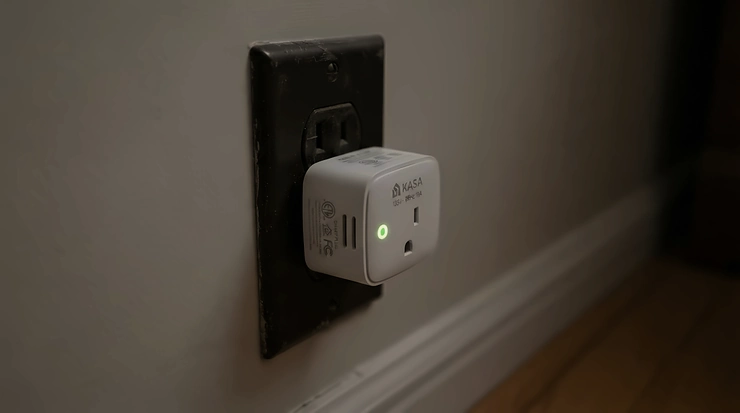
Mouse repellers under £30 have become the first line of defence for a lot of UK households precisely because they sidestep the mess of traps and the risk of poison around kids and pets. They’re cheap, they plug in or run on batteries, and in theory they make your home an unpleasant place for rodents to set up camp. Whether that theory holds up in practice is something we’ll dig into honestly, because a good buying guide shouldn’t just repeat manufacturer claims back at you.
A mouse repeller is a small electronic device — usually ultrasonic, sometimes combined with electromagnetic pulses — that emits sound frequencies above human hearing range in an attempt to make rodents uncomfortable enough to leave. According to Colchester City Council’s pest control advice, mice are drawn to UK homes chiefly by food access and shelter, especially as the weather turns in autumn and winter, which is exactly when these budget devices tend to fly off the shelves.
Below, we’ve dug through real products currently sold in the UK, aggregated genuine review sentiment, and worked out which of the sub-£30 options are actually worth your money — and which ones are better left in the “nice idea” pile.
Quick Comparison Table
Before the full breakdown, here’s a snapshot of how our seven picks stack up on the things that actually matter: coverage, power source, and who each one suits.
| Product | Type | Coverage | Price Range | Best For |
|---|---|---|---|---|
| PestBye Long Life Sonic Repellent | Battery | Up to 2,500 sq ft | £20-£25 | Sheds, garages, off-grid spaces |
| The Big Cheese Mouse Out | Battery | Room-sized | Under £20 | Portable, first-time buyers |
| ISOTRONIC Ultrasonic Repellent | Battery/plug | 40m² per unit | £18-£23 | Small flats, targeted rooms |
| REPELIX ARMOUR | Plug-in | 140m² per unit | £22-£27 | Multi-room houses, 3-mode control |
| Neatmaster 2026 Upgraded | Plug-in | 800-1,200 sq ft per unit | Under £25 | Whole-home value packs |
| TruSky Pro | Plug-in | 360° coverage | £20-£26 | Kitchens and utility rooms |
| PestBye Advanced Whole House | Plug-in (mains) | Up to 2,000 sq ft | £25-£30 | Dual-tech, single largest coverage |
Looking at the spread, the pattern that jumps out is coverage-per-pound rather than coverage alone. The Big Cheese Mouse Out and ISOTRONIC Ultrasonic Repellent are the cheapest entry points but cover the least ground, so you’ll likely need more than one for a whole house. Neatmaster 2026 Upgraded, sold as a four-pack, actually works out as the best value per square foot once you divide the price by the number of units. Meanwhile PestBye Advanced Whole House sits at the top of the budget bracket but justifies it with genuine dual-technology coverage that the plug-in-only competitors can’t match.
💬 Found a pick you like already? Bookmark it and compare it against the full breakdown below before you commit.
Top 7 Mouse Repellers Under £30: Expert Analysis
We’ve grouped these across budget, mid-range, and the upper edge of the £30 ceiling, covering battery and mains-powered designs so there’s an option whatever your setup looks like.
1. PestBye Long Life Sonic Rat and Mouse Repellent — best for unpowered spaces
The standout here is simple: no mains socket required, which instantly makes this the go-to for sheds, garages, and outbuildings where wiring a plug-in device isn’t practical. It runs on two 9V batteries and, according to the manufacturer, keeps going for eight to twelve months on continuous use.
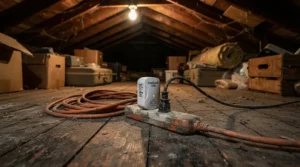
Specs-wise, it emits an ultrasonic pulse roughly every eight seconds across an unobstructed area of up to 2,500 sq ft. That figure matters more than it sounds — “unobstructed” is doing a lot of work, because ultrasound doesn’t travel through walls, furniture, or stacked boxes, so a cluttered garage will see a fraction of that theoretical range in practice.
Based on the spec comparison with battery-only rivals, this is one of the longer-lasting options in its category, and it’s aimed squarely at buyers who need protection somewhere the electrics don’t reach — a static caravan, an allotment shed, a loft without a socket. Reviewers consistently report that it’s straightforward to set up and that the long battery life is the main draw, though a subset of users note the device’s built-in test button can be unreliable, which sometimes leads people to wrongly assume the unit has failed out of the box.
Pros:
- ✅ Runs up to a year on two 9V batteries
- ✅ No mains socket needed — works anywhere
- ✅ Large theoretical coverage for a battery unit
Cons:
- ❌ Test button reliability complaints in reviews
- ❌ Batteries not included, adding to running cost
At around £20-£25, it’s a solid mid-budget entry, and the value verdict comes down to whether you actually need battery independence — if you do, little else in this price range competes on runtime.
2. The Big Cheese Mouse Out — best for total beginners
The Big Cheese Mouse Out leans on brand recognition — The Big Cheese is a well-known name in UK rodent control, better known for traps than repellers, which gives this one a slightly different pedigree to the generic imports flooding the market.
It’s a compact, battery-powered, portable unit rated for around three months of protection, marketed specifically for attics, sheds, and garages. The smaller footprint compared with whole-house units means it’s genuinely pick-up-and-place, no drilling or wiring, which is exactly what most first-time buyers want when they’re testing the waters with ultrasonic deterrents rather than committing to a full system.
What most buyers overlook about this model is that the three-month battery estimate is a manufacturer figure under ideal conditions — colder outbuildings and older battery stock can shorten that window. Still, for someone who just wants to try a repeller in one problem spot without much outlay or commitment, it’s a sensible starting point, and the brand’s reputation in traditional trap-and-bait products lends it a bit more trust than an unfamiliar name.
Pros:
- ✅ Trusted, established UK pest-control brand
- ✅ Genuinely portable — no fixed installation
- ✅ Simple single-button operation
Cons:
- ❌ Shorter battery life than PestBye’s long-life model
- ❌ Single-room coverage limits whole-house use
Priced under £20, it’s the cheapest way into this category from a recognisable brand, and the value verdict is straightforward: fine as a trial unit, less convincing as your only line of defence.
3. ISOTRONIC Ultrasonic Mouse Repellent — best for small flats
Sold as a two-unit pack, the standout feature is the tightly specified 40m² effective range per device — smaller than most competitors claim, but arguably more honest, since manufacturers who quote 1,600 sq ft per unit are rarely accounting for walls and furniture eating into that figure.
Each unit is designed for attics, basements, garages, and gardens, and the pack format means you get genuine two-room coverage out of the box rather than needing to buy multiples separately. On paper this means a smaller flat or a two-bedroom terrace could realistically be covered by a single pack, which isn’t something you can say about most single-unit budget repellers.
Here’s what the spec sheet won’t tell you, but user reports suggest: because ISOTRONIC’s quoted range is more conservative than rivals, buyers tend to report fewer “it didn’t work” complaints simply because expectations were better calibrated from the start. That’s not proof of superior effectiveness — it’s a lesson in how marketing copy shapes satisfaction as much as the hardware does.
Pros:
- ✅ Realistic, conservative coverage claims
- ✅ Two units cover two separate rooms
- ✅ Compact size fits tight spaces easily
Cons:
- ❌ 40m² per unit is modest for larger properties
- ❌ Limited independent long-term review data
At roughly £18-£23 for the pair, this is a smart pick for flats and smaller homes where you genuinely don’t need whole-house power.
4. REPELIX ARMOUR Indoor Ultrasonic Pest Repeller — best multi-mode control
The REPELIX ARMOUR distinguishes itself with three selectable modes and a per-unit coverage claim of 140m², sold as a pack of two, which pushes it toward the upper end of our budget bracket but still comfortably under £30 for the set.
The three-mode system — typically a fixed low setting, an automatic frequency sweep, and a heavy-duty mode — mirrors the kind of habituation-resistant design that pricier “advanced” repellers use, according to pest control industry commentary. The idea is that a static single-frequency device lets rodents adapt over time, whereas cycling frequencies keeps the environment genuinely uncomfortable for longer.
Reviewers consistently note that the plug-in build feels sturdier than some of the ultra-cheap imports, and the availability of a heavy-duty mode makes this one of the few devices in this price range that positions itself for garages and utility spaces alongside the kitchen. What most buyers overlook is that switching modes isn’t automatic — you have to manually escalate from low to sweep to heavy-duty as needed, so it rewards a bit of active management rather than a pure set-and-forget approach.
Pros:
- ✅ Three modes tackle light to heavy infestations
- ✅ 140m² per unit among the largest in this bracket
- ✅ Sturdier plug-in housing than budget rivals
Cons:
- ❌ Requires manual mode switching for best results
- ❌ Two-pack pricing sits near the £30 ceiling
Around £22-£27 for the pack, it’s a strong mid-range pick if you want more control than a basic single-mode plug-in offers.
5. Neatmaster 2026 Upgraded Ultrasonic Pest Repeller — best value four-pack
This is the value-pack champion of the group. Sold as a four-unit set, each rated for 800-1,200 sq ft, the standout is simply arithmetic: divide the total price by four rooms covered, and the per-room cost undercuts almost every single-unit competitor on this list.
The 2026 refresh reportedly improves on earlier Neatmaster models with a wider frequency range and a three-year warranty, which is a meaningfully longer guarantee period than most budget ultrasonic devices offer — many competitors provide 12 months or less, so this is one area where Neatmaster’s spec sheet genuinely earns commentary rather than just listing a number.
Based on the spec comparison, four separate emitters also sidestep the “ultrasound doesn’t cross walls” problem that dogs single-unit whole-house claims — instead of hoping one device reaches every room, you’re placing one per room from the start, which is a more realistic approach to genuine multi-room protection. Reviewers consistently flag the pack as good value, though as with most low-cost ultrasonic devices, independent verification of pest-deterrent efficacy remains limited industry-wide.
Pros:
- ✅ Four units mean genuine per-room coverage
- ✅ Three-year warranty beats most budget rivals
- ✅ Strong cost-per-room value
Cons:
- ❌ Individual unit coverage is modest (800-1,200 sq ft)
- ❌ Four sockets needed simultaneously across the home
Typically under £25 for the full four-pack, this is arguably the smartest buy on this list for anyone furnishing a whole house rather than a single problem room.
6. TruSky Pro Ultrasonic Pest Repeller — best for kitchens
TruSky Pro markets itself on 360-degree coverage and a three-mode system aimed at rodents, roaches, and mosquitoes alike, making it more of a general-purpose pest device that happens to include mice rather than a rodent specialist.
That versatility is the standout: if your household deals with more than just mice — say, the odd autumn spider invasion or kitchen ants in summer — a multi-pest device like this one avoids cluttering your sockets with several single-purpose gadgets. The three-mode dial gives you rough control over intensity, similar in concept to the REPELIX ARMOUR above.
What most buyers overlook about “all-in-one” pest devices like this is that broad-spectrum claims are inherently a trade-off — a repeller tuned to work across mice, roaches, and mosquitoes is unlikely to be optimally tuned to any single one of them, since different pests respond to different frequency ranges. Reviewers consistently report reasonable build quality, and a common complaint in user reviews is simply that the plug design can obstruct a second socket on a two-gang outlet, a minor but genuinely annoying practical issue for kitchens where socket space is already tight.
Pros:
- ✅ Covers mice alongside common insect pests
- ✅ 360° emission avoids directional blind spots
- ✅ Adjustable three-mode intensity dial
Cons:
- ❌ Bulky plug can block adjacent socket
- ❌ Broad-spectrum tuning may dilute rodent focus
At around £20-£26, it earns its place for households wanting one device to cover multiple minor pest annoyances rather than mice specifically.
7. PestBye Advanced Whole House Ultrasonic Rat & Mouse Rodent Repeller — best dual-technology coverage
Sitting right at the top of our £30 ceiling, PestBye Advanced Whole House is the most technically ambitious device here. Rather than relying purely on a speaker in one socket, it combines an ultrasonic emitter with electromagnetic pulses sent through your home’s ring main — in theory reaching behind skirting boards, under floors, and inside cavity walls that a single ultrasonic speaker simply can’t touch.
The claimed coverage is up to 2,000 sq ft, and it includes adjustable settings — constant, random, and variable frequency — designed to prevent the habituation problem we mentioned earlier. PestBye recommends running constant frequency for the first fortnight, then switching to random mode long-term so rodents don’t simply get used to a predictable pattern.
Here’s what the spec sheet won’t tell you, but industry reviewers note: the electromagnetic side of “whole-house” repellers is the more contested half of the claim scientifically, since it relies on your home’s wiring acting as an effective antenna, which varies enormously by property age and wiring layout. Aggregated customer feedback is generally positive on build quality and customer service, with PestBye backing the unit with a 60-day money-back guarantee — a genuinely useful safety net given the mixed evidence base for this entire product category. A minority of reviewers report the plug-in test light not activating, though PestBye’s support team appears responsive to these reports based on published customer service reviews.
Pros:
- ✅ Dual ultrasonic + electromagnetic technology
- ✅ Largest whole-house coverage claim on this list
- ✅ 60-day money-back guarantee included
Cons:
- ❌ Electromagnetic effectiveness varies by wiring
- ❌ Priced near the very top of the £30 bracket
At £25-£30, it’s the premium pick of this list — worth it if you want the broadest coverage claim and the reassurance of a longer return window.
Practical Usage Guide: Getting the Most From Your Repeller
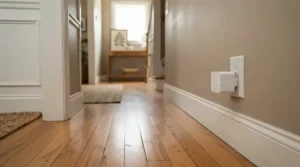
Buying the right device is only half the job — placement and habits do a surprising amount of the heavy lifting. Start by positioning any plug-in unit around 30cm above floor level, in open space, away from curtains, furniture, or cabinets that could absorb or block the sound waves. Ultrasound is directional and doesn’t bend around obstacles, so a unit tucked behind a sofa is doing far less than one on an open wall socket.
In the first 30 days, resist the urge to judge the device too quickly. Multiple manufacturers, including PestBye, actually recommend expecting a brief uptick in visible rodent activity before things improve, as disturbed mice initially scurry around before relocating. If you don’t see any change at all after four to six weeks, that’s the point to reassess rather than the first week.
A common mistake is treating a repeller as a single-device solution for a whole house. Because ultrasound doesn’t pass through walls, one unit genuinely only protects the room it’s plugged into — which is exactly why value packs like the Neatmaster 2026 Upgraded four-pack outperform single premium units for larger homes. Combine your repeller with basic proofing: sealing gaps over 5mm (mice can squeeze through remarkably small spaces), storing food in sealed containers, and clearing clutter that offers hiding spots. None of this costs anything beyond a bit of weekend effort, and it compounds whatever effect the ultrasonic device is having.
Real-World Scenarios: Which Repeller Fits Your Situation?
The renter in a one-bed flat. Sarah lives in a converted Victorian flat with an occasional scratching noise from the kitchen skirting board. She doesn’t want to drill anything or annoy the landlord, and her budget is tight. The ISOTRONIC Ultrasonic Mouse Repellent two-pack suits her perfectly: modest, realistic coverage for exactly the rooms she needs, low cost, and nothing permanent to install.
The family with a converted garage workshop. Tom’s garage has no mains socket near his workbench, and he’s spotted droppings near the stored bird feed. Here, the battery-powered PestBye Long Life Sonic Repellent is the obvious fit — no wiring required, and the long battery life means he isn’t swapping batteries every few weeks in a space he only visits at weekends.
The three-bed semi with a mixed pest problem. The Osei family gets the occasional mouse in autumn but also deals with garden spiders wandering in through the back door in summer. TruSky Pro‘s broader pest coverage suits their situation better than a rodent-only device, letting one gadget do double duty across seasons without cluttering every socket in the house.
How to Choose a Mouse Repeller Under £30
- Match coverage to room size, not house size. Check whether the quoted square footage is per unit or total, and remember ultrasound doesn’t pass through walls.
- Decide battery versus mains upfront. Outbuildings without power need battery units like the PestBye Long Life Sonic Repellent; kitchens and living rooms are fine with plug-in designs.
- Consider multi-mode devices for tougher problems. Units like the REPELIX ARMOUR with fixed, sweep, and heavy-duty settings give you room to escalate if a low setting isn’t cutting it.
- Factor in warranty length. A three-year warranty, as on the Neatmaster 2026 Upgraded, is unusually generous for this price bracket and worth weighing against a slightly cheaper rival.
- Check the money-back window. Given the mixed scientific evidence around ultrasonic effectiveness, a device like PestBye Advanced Whole House with a 60-day guarantee reduces your financial risk if it simply doesn’t work for your property.
- Buy value packs for multi-room homes. One device per room, using a set like Neatmaster’s four-pack, beats hoping a single “whole-house” unit reaches everywhere.
- Read aggregated reviews, not star ratings alone. Look specifically for repeated comments about build quality and customer service, since these tell you more than an average score.
Common Mistakes When Buying Mouse Repellers
The single biggest mistake is buying one unit and expecting it to cover an entire house. As covered above, ultrasound is blocked by walls and furniture, so a lounge-based repeller does nothing for a kitchen two rooms away — value packs exist precisely to solve this, and skipping them is the most frequent cause of disappointment in aggregated reviews.
A second common error is placing the device somewhere convenient rather than somewhere effective — behind a sofa, under a cabinet, or in a corner crowded with clutter. These positions muffle the sound waves and dramatically shrink the device’s real-world range compared with its rated coverage.
Finally, many buyers give up too early. Manufacturer guidance across PestBye, Neatmaster, and others consistently suggests results take two to six weeks, not two to six days — expecting overnight results from a £20 gadget sets you up to judge a working device as a failure prematurely.
Mouse Repellers vs Traditional Traps and Poison
It’s worth being honest about where budget ultrasonic devices sit relative to more established rodent control. Traditional snap traps and poison baits have a long track record and, when used correctly, offer more certain outcomes than ultrasonic deterrents — but they come with their own downsides: dealing with a trapped or dead rodent, or the risk poison poses to pets and children if not placed carefully.
According to a review of the scientific literature summarised by Homes & Gardens, ultrasonic repellents’ effectiveness depends heavily on the specific frequency used and correct placement, and results vary considerably between pests and properties. This isn’t a ringing endorsement, but it’s also not the outright dismissal some critics offer — the honest picture is “it depends,” which is precisely why the 60-day guarantee on the PestBye Advanced Whole House model is such a genuinely useful feature rather than just marketing filler.
In practice, many UK households treat ultrasonic repellers as one layer of defence alongside proofing and basic hygiene measures, rather than a standalone solution to an active infestation. For a confirmed, established infestation, traps or a professional pest controller remain the more reliable route; repellers work best as prevention and as a supplementary deterrent once an existing problem has been dealt with.
Energy Consumption: What Will a Mouse Repeller Cost to Run?
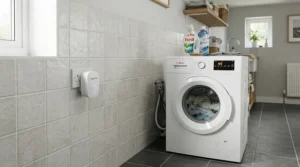
One appeal of ultrasonic repellers is how little power they draw. Plug-in units typically sit in the 2-5W range — for comparison, that’s roughly a tenth of what a standard LED lightbulb uses. Under the Ofgem price cap referenced by British Gas’s energy guide, the average UK electricity rate has recently sat at around 27.69 pence per kWh for direct debit customers, though this fluctuates with the quarterly price cap review.
Running a 4W device continuously for a full year works out to roughly 35 kWh — at current rates, that’s somewhere in the region of £9-£10 annually, less than the price of a single takeaway coffee round. Multiply that by a four-unit value pack like the Neatmaster 2026 Upgraded, and you’re still looking at under £40 a year to run the entire set continuously, which is a genuinely trivial running cost compared with the upfront price of the hardware.
Battery-powered units, like the PestBye Long Life Sonic Repellent and The Big Cheese Mouse Out, shift that cost from your electricity bill to periodic battery purchases instead — worth factoring in if you’re comparing total cost of ownership rather than just the sticker price on the box.
Coverage Area Explained: Why the Numbers on the Box Can Mislead You
Coverage claims are probably the most misunderstood spec in this entire category. When a box says “1,600 sq ft,” that figure almost always assumes a completely open, unobstructed space with nothing between the device and the target area — a scenario that essentially never exists in a real UK home full of furniture, doorways, and internal walls.
This is exactly why ISOTRONIC’s more conservative 40m² claim can actually be more useful in practice than a rival’s inflated square-footage figure — a realistic number lets you plan properly, buying enough units to cover each room individually rather than hoping one device magically reaches the whole house. As a rule of thumb, treat any manufacturer’s coverage figure as a best-case ceiling and plan for roughly half that in a normally furnished room.
The practical takeaway: multi-room homes are almost always better served by several smaller-coverage units, one per room, than by a single device claiming enormous whole-house range. This is the entire logic behind value packs, and it’s the reason products like the four-unit Neatmaster set consistently outperform single “whole-house” claims for genuine multi-room results.
Value Packs: When Buying Multiples Actually Saves Money
Value packs — typically two, four, or six units sold together — nearly always work out cheaper per unit than buying single devices repeatedly. But the real saving isn’t just financial; it’s functional, because of the coverage limitations discussed above.
If you’ve got a typical three-bedroom UK semi, a single repeller genuinely only protects the room it sits in. A four-pack like the Neatmaster 2026 Upgraded lets you place one unit in the kitchen, one in the utility room, one in a bedroom, and one in the garage — covering four distinct trouble spots for often less than the price of two premium single units bought separately.
The trade-off is socket availability and, as covered above, a modest increase in overall running cost. For most households dealing with more than one room of concern, though, the maths comes out clearly in favour of a value pack over a single high-spec unit, however impressive that unit’s individual coverage claim looks on paper.
Buyer’s Decision Framework
If you only have one problem room and a tight budget, choose a single compact unit like ISOTRONIC or The Big Cheese Mouse Out, because paying for whole-house coverage you won’t use is wasted money.
If you’re covering an entire house with multiple entry points, choose a value pack like the Neatmaster 2026 Upgraded, because per-room placement consistently outperforms a single “whole-house” claim.
If you’ve got an outbuilding with no power source, choose a battery unit like the PestBye Long Life Sonic Repellent, because mains-only devices simply aren’t an option there.
If you want the broadest possible coverage and a safety net if it doesn’t work, choose PestBye Advanced Whole House, because its dual technology and 60-day guarantee offset some of the category’s inherent uncertainty.
Safety, Regulations and Compliance
Ultrasonic mouse repellers sold in the UK must meet UKCA (or CE, during the transitional recognition period) marking requirements for electrical safety, covering things like insulation, plug standards, and electromagnetic compatibility with other household electronics. All seven products featured here are designed for standard UK three-pin sockets or standard battery compartments, and reputable sellers will display the relevant marking on the packaging or product listing.
It’s worth noting the manufacturer guidance across most brands, including PestBye, that these devices may affect pet rodents such as hamsters, gerbils, and chinchillas, since the same ultrasonic frequencies that target wild mice don’t discriminate between wild and domestic rodents. If you keep pet rodents, plug-in and battery repellers should be kept in separate rooms from their enclosures. As Clackmannanshire Council’s pest advice notes, mice themselves pose genuine hygiene risks through contamination of stored food, which is worth weighing against any hesitation about using a repeller — the health case for reducing rodent activity in food storage areas is well established, even where the repeller technology itself remains scientifically contested.
What to Expect: Real-World Performance
Translating specs into lived experience: expect the first one to two weeks to feel inconclusive, and possibly slightly worse if disturbed mice become briefly more visible before relocating. By week three or four, aggregated reviewer sentiment across most of these products suggests a genuine reduction in scratching noises and droppings for a meaningful share of users — though, in fairness, a consistent minority report no noticeable change at all, which tracks with the broader scientific uncertainty around this entire product category.
Noise-wise, none of these devices should be audible to most adults, though younger children, teenagers, and some pets occasionally report a faint high-pitched sound near the unit — usually within the first metre or so. If anyone in your household reports hearing something unpleasant, relocating the unit to a less-frequented room is the simplest fix.
Long-Term Cost & Maintenance
Beyond the running costs covered above, maintenance for these devices is minimal by design — there’s no bait to replenish, no trap to reset, and no chemicals to dispose of safely. Plug-in units need nothing beyond an occasional wipe to keep the vents free of dust, which can otherwise muffle the ultrasonic output over time.
Battery units carry the ongoing cost of replacements: at roughly £2-£4 for a pair of 9V batteries every eight to twelve months for the PestBye Long Life Sonic Repellent, or more frequent swaps for shorter-life units like The Big Cheese Mouse Out. Over a three-year span, a plug-in unit’s total cost of ownership — hardware plus electricity — typically undercuts an equivalent battery unit’s hardware-plus-batteries total, which is worth factoring in if you’re choosing between formats for a space that does have mains access.
Features That Actually Matter (And Those That Don’t)
Multi-mode frequency switching, as seen on the REPELIX ARMOUR and TruSky Pro, is a genuinely useful feature — it directly addresses the habituation problem that’s one of the more credible criticisms of single-frequency devices. A longer warranty, like Neatmaster’s three years, matters because it reduces your risk on a category where individual results are inherently variable.
What matters less than the marketing suggests: extremely high square-footage claims on single units, LED strobe lights bundled onto some rival products (more gimmick than proven deterrent), and multi-pest “kills everything” branding, which as discussed with TruSky Pro likely dilutes rather than enhances effectiveness against any single pest, mice included.
Frequently Asked Questions
❓ Do ultrasonic mouse repellers really work?
❓ How many mouse repellers do I need for a 3-bed house?
❓ Are mouse repellers safe around pets?
❓ How much does it cost to run a plug-in mouse repeller?
❓ What's the difference between ultrasonic and electromagnetic repellers?
Conclusion
Mouse repellers under £30 won’t replace a determined pest controller for a serious, established infestation, and it’s worth going in with realistic expectations rather than marketing-fuelled ones. What they offer is a genuinely low-cost, low-effort, chemical-free layer of prevention — and for a lot of UK households dealing with the odd seasonal scratching noise rather than a full-blown problem, that’s exactly the right level of intervention.
If you’re covering a single room on a tight budget, ISOTRONIC or The Big Cheese Mouse Out get the job done without overspending. For whole-house coverage, the value-pack maths on Neatmaster’s 2026 Upgraded four-pack is hard to beat, while PestBye Advanced Whole House remains the pick if you want the broadest technology and a safety net built in. Whichever you choose, pair it with basic proofing — sealed gaps, stored food, tidy clutter — because no £25 gadget works as well alone as it does alongside a bit of common-sense prevention.
Recommended for You
- Professional Strength Mouse Bait: 7 Best UK Picks (2026)
- Outdoor Mouse Bait Stations: 7 Best UK Picks (2026)
- Pet Safe Mouse Bait Stations: 7 Best Locking Picks UK (2026)
Disclaimer: This article contains affiliate links. As an Amazon Associate, I earn from qualifying purchases. If you purchase products through these links, we may earn a small commission at no additional cost to you.
✨ Found this helpful? Share it with your friends! 💬🤗
