In This Article
Ant killer powder for patio paving cracks is a dry, ready-to-use insecticide dust, usually sold in a puffer pack. You apply it directly into joints, nest entrances and ant runs between slabs. Ants walk through the fine particles and carry some of them back underground, and the residual dust keeps working after the first kill.
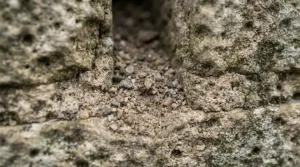
Your patio is basically an ant Airbnb. Sun-warmed slabs, free-draining sand joints and a steady supply of dropped barbecue crumbs make a five-star stay. Black garden ants (Lasius niger) nest happily under paving, and the tiny volcano-shaped heaps of fine sand in the cracks give them away. The RHS guide to ants makes a fair point that ants are a normal, useful part of garden biodiversity, mostly a nuisance rather than a destructive pest, and most active between April and October. So the first question isn’t “which powder?” but “do these ants actually need to go?”
Sometimes they do. Maybe the trail now reaches your back door, or the sand heaps keep reappearing on the dining area. Or a slab has started to dip because the soil underneath has been quietly excavated.
This guide compares seven real UK-available powders. It uses their published specifications, safety data sheets and the buyer feedback that could be verified. We also cover how to dust properly, how to protect pets, ponds and pollinators, and how to stop the ants returning. Prices are given as ranges only, because they change constantly. Always check the current price on Amazon UK before buying.
Quick Comparison: 7 Ant Killer Powders at a Glance
| Product | Active ingredient (as listed) | Pack size | Best For |
|---|---|---|---|
| Nippon Ant Killer Powder 300g | Permethrin (about 0.5%) | 300g puffer | All-round patio nests |
| Nippon Fast Acting Ant Killer Powder 400g | Permethrin or deltamethrin (check pack) | 400g puffer | Larger runs and repeat treatments |
| Zero In Ant Killer Powder 300g | Permethrin (check pack) | 300g puffer | Tight budgets |
| Zero In Ant Killer Powder 450g | Permethrin | 450g puffer | Big patios and long joints |
| Raid Ant & Insect Killer Powder 250g | See label | 250g | Small, spot-treated areas |
| Deadfast Ant Killer Plus Powder 150g | Natural pyrethrins (about 0.11%) | 150g | Plant-derived preference |
| PestShield Ant Killer Powder 150g | Permethrin (about 0.5%) | 150g | Occasional, light use |
Looking at the table, the two Nippon options and the Zero In pair share the same basic chemistry, so the real differences are pack size, applicator design and label claims. Deadfast Ant Killer Plus Powder 150g is the only plant-derived option, which changes how often you’ll need to dust. Raid Ant & Insect Killer Powder 250g is the most restricted for outdoor use, with a stated outdoor treatment cap. Buyers who want fewer decisions should start with Nippon Ant Killer Powder 300g.
💬 Just one click — help others make better buying decisions too!😊
How to Choose Ant Killer Powder for Patio Paving Cracks
The best ant killer powder for patio paving cracks has a UK authorisation number on the label and a narrow-nozzle puffer pack. It should also be rated for outdoor use on dry surfaces, with an active ingredient that suits your household, pets and nearby water. Choose a pack size that matches the length of joints you need to treat.
- Check the label for an authorisation number. Ant powders are biocides, and HSE explains in its garden and home pesticide guidance that it regulates them. Look for a number such as “HSE 5499” on the pack. It’s the quickest legitimacy test.
- Identify the active ingredient. Permethrin and deltamethrin are synthetic pyrethroids, while pyrethrins come from chrysanthemum flowers. RHS notes that product names can survive after an active ingredient changes, so read the pack rather than trusting the brand.
- Match it to your household. Permethrin is a particular concern around cats, and at least one retailer listing for a permethrin powder says not to use it where cats can reach.
- Pick the right applicator. A puffer with a dip tube and narrow nozzle lets you place a fine veil of dust into joints rather than dumping a heap.
- Read residual claims sceptically. “Up to six months” is a ceiling, not a promise on an open patio.
- Size the pack to the job. A handful of cracks needs 150g to 300g. A whole driveway edge needs more.
- Check the forecast. These are dry powders, so buy when you’ll get a dry window, not the night before a storm.
Top 7 Ant Killer Powders for Patio Paving Cracks: Expert Analysis
Everything below is based on published specifications, safety data sheets, retailer product information and the buyer feedback that could be verified. No hands-on testing is claimed. Where reviews couldn’t be verified, that is stated rather than papered over.
1. Nippon Ant Killer Powder 300g — the long-running UK benchmark
Few shed shelves carry as much history as Nippon, and Expert Reviews credits it with around half a century of track record. That’s a long time for a puffer pack to stay in business.
The active ingredient is permethrin at roughly 0.5% on a talc base. The manufacturer’s safety data sheet gives a figure of 0.488%, and the pack carries HSE authorisation number 5499. In practice, the talc carrier is what makes a powder behave: it clings to ants’ legs and stays put in cracks where a spray would run straight off. Retailer copy claims up to six months of control, but treat that as a best-case figure for sheltered joints rather than a rain-lashed patio.
Based on the spec comparison, this is the sensible first choice when you can see a clear nest in the joints. Dust the entrance generously, as the label advises when a nest can’t be reached, then leave it alone. What most buyers overlook is the puffer design. A small nozzle forces accurate dosing, which matters because the product is very toxic to aquatic life.
Expert Reviews names it the best powder-style ant killer in its roundup. Buyer reviews describe fast results and repeat purchases over several summers, though one reviewer suggests a liquid or gel is cleaner and easier to handle.
Pros:
- ✅ Long UK track record and wide availability
- ✅ Puffer nozzle suits narrow paving joints
- ✅ Clear authorisation number on the pack
Cons:
- ❌ Very toxic to aquatic life, so care needed near drains
- ❌ Permethrin is a concern for cat owners
Price range: around £4-£6, so check current price. Verdict: the safest all-rounder value for patio nests.
2. Nippon Fast Acting Ant Killer Powder 400g — extra 100g for longer joint runs
The larger Nippon Fast Acting pack is the obvious step up when one tub of the standard size would run out halfway along a driveway edge. The extra 100g isn’t a trivial bonus when you’re treating a line of joints rather than a single nest.
One retailer listing for the 400g pack describes a 0.5% permethrin formula. It quotes a maximum of 2g per nest and up to five nests per outdoor application. Treat that as a useful rule of thumb, but always defer to the label on your own pack. Here’s the catch the spec sheet won’t shout about. A separate safety data sheet for a “Fast Acting” Nippon powder lists a different active, deltamethrin at about 0.05%, under its own authorisation. In other words, the name stayed while the formulation evidently changed over time, so read the pack in your hands.
On paper, the larger size makes the most sense for repeat treatments, such as dusting nests in spring and again after a wet spell. If you only have one nest, you’re paying for dust you may never use.
I couldn’t verify a distinct review base for this exact 400g pack, so any sentiment here would be borrowed from its smaller sibling. That’s a reason to read current Amazon UK reviews before buying.
Pros:
- ✅ Bigger pack suits long runs and repeat visits
- ✅ Familiar brand and puffer application
- ✅ Stated per-nest rate helps avoid overdosing
Cons:
- ❌ Active ingredient may differ between batches
- ❌ Overkill for a single small nest
Price range: typically under £10, so check current price. Verdict: good value if you’ll genuinely use the extra powder.
3. Zero In Ant Killer Powder 300g — the budget pick with a precision puffer
If the goal is to spend as little as possible without buying something obscure, Zero In is the obvious candidate. Expert Reviews names it its best budget ant killer.
Retailer listings describe 0.5% permethrin, a dip-tube-to-puffer system and a child-resistant cap. That design sounds like marketing until you think about paving. A narrow nozzle lets you puff powder into a hairline joint rather than blasting the whole slab. Be aware, though, that the claims vary between listings. Coverage is quoted as 15m² by some retailers and 30m² by others. Residual protection is quoted anywhere from six to twelve weeks. One retailer even lists a different active ingredient on the same product code. The sensible reading is “somewhere in the middle, and check your pack”.
Who is it for? Anyone treating a handful of joints near a back door. Based on the numbers, it works out cheaper per treatment than most rivals. One reviewer reports using it in a conservatory against ants arriving from the garden, but the verifiable review pool is thin, so don’t treat that as a verdict.
Pros:
- ✅ Among the cheapest options in this category
- ✅ Narrow puffer nozzle for hairline cracks
- ✅ Child-resistant cap on the pack
Cons:
- ❌ Coverage and residual claims vary by listing
- ❌ Permethrin: not for areas cats can reach
Price range: around £2-£5, so check current price. Verdict: top value for small jobs, provided you read the label.
4. Zero In Ant Killer Powder 450g — built for bigger patios
Step up to the Zero In 450g pack and the arithmetic changes. Retailer copy quotes coverage of up to 45m² and about six weeks of control. That’s a very different scale from the 300g tub.
The formulation is again permethrin, in a ready-to-use puffer with a positive-flow dip tube. The practical meaning is consistency: a pack that releases an even puff each squeeze is easier to dose along a long line of block-paving joints than a tub you shake. The listing also carries a plain warning that the product isn’t suitable for areas accessible to cats or other pets. That is the kind of detail worth noticing before buying for a family garden.
What the spec sheet won’t tell you, but the label logic implies, is that a larger area doesn’t mean a larger dose. The same per-nest restraint applies. The bigger pack simply spares you a second trip to the shops.
I couldn’t verify a robust set of reviews specifically for this 450g version, so there’s no honest sentiment to report. The overlap with the smaller Zero In pack suggests similar behaviour, but that’s inference, not evidence.
Pros:
- ✅ Generous 450g size for long joint runs
- ✅ Even-flow puffer design
- ✅ Clear pet-safety warning on the listing
Cons:
- ❌ Not suitable where cats or pets can reach
- ❌ Too much powder for a single nest
Price range: typically under £10, so check current price. Verdict: sensible for driveways and large terraces.
5. Raid Ant & Insect Killer Powder 250g — the cautious spot-treatment option
Raid brings a household name and a very specific outdoor limit. The label says that when used outdoors, you apply it to a maximum surface area of 2m².
That cap is the key spec. It’s not a blanket powder. It’s a spot treatment for a few cracks by the back door, a patio corner or the gap beside a threshold. The manufacturer’s claim is that it kills insects within 30 minutes, with dust particles picked up by the insect. As ever, take speed claims as best-case figures rather than guarantees. The pack is made by SC Johnson and lists a UK customer helpline, which is a small but real reassurance when you have label questions.
On balance, the restricted outdoor allowance suits flat dwellers, balcony gardens and anyone with one irritating nest rather than a colony sprawl. Joybuy’s roundup highlights its flexibility, as the powder is suitable indoors and out.
I couldn’t verify a meaningful pool of buyer reviews for this exact pack, so I won’t paraphrase one. Check current Amazon UK ratings before buying.
Pros:
- ✅ Recognisable brand with UK customer helpline
- ✅ Suitable for indoor and outdoor spot use
- ✅ Fast-acting claim on the label
Cons:
- ❌ Outdoor use capped at about 2m²
- ❌ Little verifiable review data
Price range: typically under £10, so check current price. Verdict: a tidy choice for one or two problem cracks.
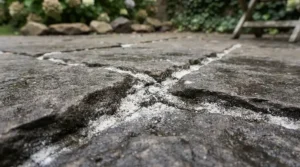
6. Deadfast Ant Killer Plus Powder 150g — plant-derived pyrethrins
Deadfast takes a different chemical route. The active is natural pyrethrum extract from chrysanthemum flowers at about 0.11% w/w, with the pack carrying HSE number 10712.
The product page for the 150g pack describes use on hard surfaces outdoors, and retailer instructions say to puff the powder gently into nests or between cracks in paving or decking. It’s for dry use only and should not be applied in windy conditions. The label guidance suggests about 10g on nests around buildings on paved areas. Application is weekly while ants are active in the nest, usually mornings and evenings. The headline claim is that one application can destroy a nest within three weeks.
So what does that mean in practice? Pyrethrins generally break down faster in sunlight than synthetic pyrethroids, which is a plus for people who want less persistence but a minus if you want a long-lasting barrier. Expect to repeat the dusting. It’s still labelled toxic to aquatic life, so the pond caution stands.
I couldn’t verify a solid pool of buyer reviews for this specific pack, so any sentiment here would be guesswork.
Pros:
- ✅ Plant-derived active for those wanting a gentler route
- ✅ Label guidance specific to paved areas and cracks
- ✅ Retailer states it can be used near food premises
Cons:
- ❌ Needs repeated applications
- ❌ Smaller pack for larger areas
Price range: around £3-£5, so check current price. Verdict: a thoughtful choice if you prefer a plant-derived active.
7. PestShield Ant Killer Powder 150g — the light-use, low-cost option
PestShield sits at the lean end of the market. The listing describes a 0.5% w/w permethrin powder for indoor and outdoor use, supplied in a compact 150g pack weighing just under 200g with packaging.
The spec sheet is thin, which is fine for a basic product but means you’ll be leaning heavily on the label. A 150g pack covers a few joints and a nest or two, not a whole terrace. It’s most sensible as a cupboard backup for occasional ant visits rather than a main campaign tool. Seller listings I found were on marketplace-style retail sites, so confirm who is selling and shipping before you buy from Amazon UK.
I couldn’t verify a meaningful review pool for this pack, so there is no honest sentiment to summarise. That’s the main trade-off compared with the established brands. You save money but lose the track record.
Pros:
- ✅ Compact pack for occasional use
- ✅ Same listed 0.5% permethrin strength as bigger names
- ✅ Handy size for storage
Cons:
- ❌ Limited verifiable reviews or track record
- ❌ Small pack for larger areas
Price range: typically under £10, so check current price. Verdict: a minimalist backup purchase.
Top 7 Side by Side
| Product | Pack | Key label claim | Review signal | Best For |
|---|---|---|---|---|
| Nippon Ant Killer Powder 300g | 300g | Up to six months (retailer copy) | Strong, long-running | Dependable all-rounder |
| Nippon Fast Acting Ant Killer Powder 400g | 400g | Per-nest rate quoted | Not separately verified | Long joint runs |
| Zero In Ant Killer Powder 300g | 300g | Six to twelve weeks (varies) | Thin but positive | Budget buyers |
| Zero In Ant Killer Powder 450g | 450g | Up to six weeks, 45m² | Not separately verified | Large patios |
| Raid Ant & Insect Killer Powder 250g | 250g | Outdoors max 2m² | Not verified | Small spot jobs |
| Deadfast Ant Killer Plus Powder 150g | 150g | Nest in about three weeks | Not verified | Plant-derived preference |
| PestShield Ant Killer Powder 150g | 150g | Indoor and outdoor | Not verified | Occasional light use |
Prices for the established options generally sit well under £10, but check current price on Amazon UK. The table shows that the strongest evidence of buyer satisfaction belongs to Nippon Ant Killer Powder 300g and, on cost, Zero In Ant Killer Powder 300g. Those two are the easiest to recommend with a straight face. The remaining five are defensible but depend more on label reading, so treat them as situational picks.
✨ Ready to Take Back Your Patio?
🔍 Click on any highlighted product name to check current pricing and availability on Amazon UK. Prices may vary, so confirm the active ingredient on the pack before you commit.
Practical Usage Guide: How to Dust Paving Cracks Safely and Effectively
This is the part Amazon listings skip. Here’s a workflow that fits the label guidance found across these products.
Step 1: Pick a dry, still day. These are dry powders, and the Deadfast Ant Killer Plus Powder 150g label is explicit about dry use only and no windy conditions. Rain turns powder into paste and washes it into drains.
Step 2: Time it for early morning or evening. The same label points out that ants are mostly in the nest then, so the dust meets the colony rather than a few scouts.
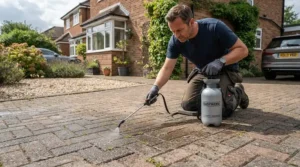
Step 3: Gear up. Use gloves, wash hands afterwards and keep pets and children off the treated area while you work.
Step 4: Find the entrances. Look for the sand mounds and the spots where trails disappear into joints.
Step 5: Puff, don’t dump. A thin veil along the crack beats a mound. The nozzle on Nippon Ant Killer Powder 300g or Zero In Ant Killer Powder 300g is there so you can place small amounts exactly.
Step 6: Leave it undisturbed. Don’t sweep, hose or pressure-wash for several days.
Step 7: Check after 48 hours. If activity continues, repeat per the label rather than doubling the dose.
Common mistakes in the first 30 days: treating only the visible ants, dusting just before rain, over-applying in the belief that more means faster, and forgetting to store the pack out of reach in its original container. Pouring boiling water into nests is another myth. Gardening writers note it can scorch surrounding grass and soil while doing little to the colony.
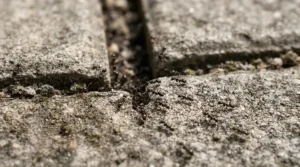
Real-World Scenarios: Which Powder for Which Patio?
Here are three profiles matched to the products above, with reasoning rather than invented stories.
Scenario 1: the compact terrace courtyard. A 12m² sandstone patio with two active joints near the back door and a neighbour’s cat that wanders through. The budget is low, use is occasional, and the priority is gentler chemistry plus precise placement. Deadfast Ant Killer Plus Powder 150g suits this best on paper. Its plant-derived active and paved-area guidance fit, though weekly reapplication is the trade-off. Keep the cat well clear regardless and read the label.
Scenario 2: the sunny block-paved driveway. About 40m² of block paving with a south-facing edge where nests keep returning each spring. Budget is modest but the area is large, and use is seasonal. Zero In Ant Killer Powder 450g or Nippon Fast Acting Ant Killer Powder 400g make sense here because the pack size matches the job. Watch run-off towards drains.
Scenario 3: the balcony or tiny courtyard. One stubborn crack beside a door, a few ants per week and no wish to stock a shed. Raid Ant & Insect Killer Powder 250g fits its outdoor 2m² cap neatly. PestShield Ant Killer Powder 150g is the cheaper alternative if you accept limited track record.
The pattern is simple: match pack size to the length of joints, match chemistry to your household, and match your expectations to the label’s weather-dependent claims.
Paving Slab Gaps: How to Stop Ants Coming Back
Killing a colony is only half the job. Paving slab gaps are the real estate ants are after, so the long game is making them less attractive.
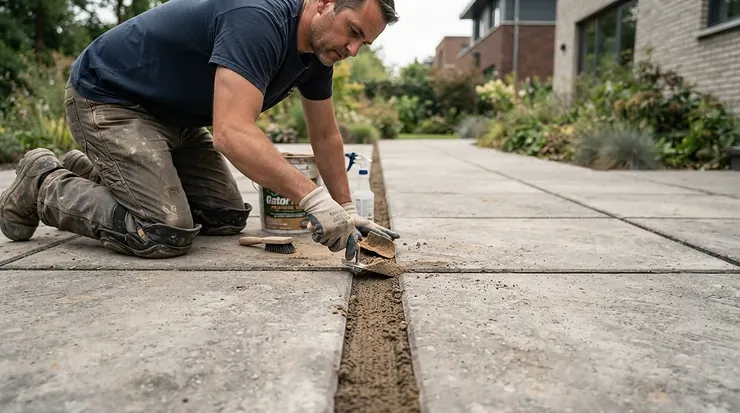
The National Pest Technicians Association notes that ants can dislodge soil or sand around paving, which is why sinking and uneven slabs sometimes follow heavy activity. A freshly dusted joint is also a freshly vacated joint, and RHS warns that when a colony is destroyed, incoming queens may simply claim the territory. In other words, a vacancy sign invites new tenants.
Here’s what helps:
- Clear the loose material. After the ants are gone, brush out disturbed sand from the joints.
- Refill with a firm material. Landscapers commonly recommend polymeric sand or a mortar-style joint filler, because a set joint is harder to excavate than loose sand.
- Fix drainage. Ants favour warm, dry, free-draining spots, so address any slab that has sunk or tilted.
- Remove the buffet. Sweep crumbs, wipe sticky drinks spills and keep pet food bowls off the patio.
Used together, these steps turn a temporary kill into a sustained change. If you want to extend the barrier effect, a periodic light dusting of Nippon Ant Killer Powder 300g at joint edges in spring is the type of low-key maintenance many owners adopt.
Residual Dust Formula: What Actually Matters
A residual dust formula is simply a dry insecticidal powder designed to stay active on surfaces after application. Marketing departments love to shout about it, so here’s how to read it.
Three things define it: the active (permethrin, deltamethrin or pyrethrins), the concentration (about 0.5% for permethrin powders such as Nippon Ant Killer Powder 300g) and the carrier (talc or silica). The carrier matters because it determines how well the powder clings to ants and sits in joints.
Residual claims vary wildly. Nippon copy says up to six months. Zero In Ant Killer Powder 300g listings say six to twelve weeks. Deadfast Ant Killer Plus Powder 150g instructs weekly reapplication during active nesting. Those aren’t contradictory, they’re describing different realities. A powder in a dry, sheltered wall crevice lasts far longer than the same powder in a patio joint that gets hosed and rained on.
The practical interpretation: treat any residual dust formula claim as a ceiling, then discount for weather, foot traffic and washing. And never assume that a longer claim means you can apply more. The label’s dose is the legal dose.
Ant Powder for Driveway and Paving Joints
Ant powder for driveway and paving joints faces tougher conditions than a courtyard. Block paving relies on compacted sand-filled joints. Cars add weight and heat, surface water runs towards drains, and pressure washing blasts joints clean.
That changes the shopping list. A bigger pack such as Zero In Ant Killer Powder 450g or Nippon Fast Acting Ant Killer Powder 400g makes sense for long runs. The concern is run-off. Permethrin products carry very toxic to aquatic life warnings, and a driveway can feed surface water drains, so dust in dry weather and avoid treating where heavy rain is forecast.
A practical routine for ant powder for driveway and paving joints:
- Treat edges and expansion joints where nests tend to start, rather than every joint.
- Use small, targeted puffs per nest entrance.
- Skip pressure washing for several days afterwards.
- Re-sand joints once the activity has stopped.
Ant powder for driveway and paving joints also benefits from good housekeeping: sweep sand back into gaps, repair erosion early and keep vegetation at the edges trimmed so the area stays less appealing.
Ant Killer Dust for Garden Walls
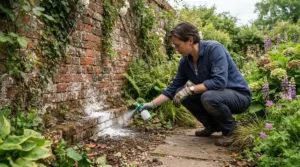
Garden walls are the sneaky cousin of patios. Dry-stone, brick and loosely pointed walls offer endless cracks, warm stone and shelter. Ant killer dust for garden walls works well here because dust reaches crevices a spray can’t.
A few cautions apply. Pointing and wall faces vary, so use the narrow nozzle on a puffer such as Nippon Ant Killer Powder 300g or Zero In Ant Killer Powder 300g to place tiny amounts only. Avoid dusting above flowering plants where bees visit, since a Nippon safety data sheet warns permethrin is very toxic to bees. Wall cavities can also shelter wildlife. The Deadfast Ant Killer Plus Powder 150g label reminds users that bats are protected and to consult the statutory nature agencies before treating structures they use.
When ant killer dust for garden walls isn’t working, the problem may be access. Nests behind stonework are hard to reach, which is why some guides suggest gel baits for wall cavities instead. If crumbling mortar is giving ants a front door, re-pointing may do more than any dust.
Outdoor Ant Nests: Spot Them Before You Dust
Outdoor ant nests are bigger than they look. RHS notes that nests occupy a much larger volume of soil than the surface mounds suggest, so killing visible foragers rarely clears the colony. Gardeners’ World similarly cautions that many ant killers handle strays better than complete nests.
Spotting outdoor ant nests is detective work:
- Look for fine soil heaps in joints and along edges.
- Follow trails backwards at dusk, when more ants are heading home.
- Watch for winged ants on warm, humid days. RHS says these are new queens and males leaving established nests in summer.
- Note the pattern. Several entrances may belong to a single large nest.
Once you know where the outdoor ant nests are, you can aim the powder. Dust entrances rather than the whole paved area, and accept that dozens of ants might wander about afterwards. That’s usually the colony taking the dust home, not a sign of failure.
And here’s the honest wrinkle. If the ants aren’t bothering anyone, leaving them alone may be a legitimate choice, because RHS leans towards tolerance unless nests are troublesome.
Powder vs Baits, Gels and Nematodes: Which Wins for Paving?
Powder isn’t the only weapon. Here’s how it stacks up against the alternatives.
| Method | Strength in paving cracks | Weakness | Best For |
|---|---|---|---|
| Dry powder such as Nippon Ant Killer Powder 300g | Reaches fine joints, quick on-contact action | Weather-sensitive, aquatic toxicity | Visible nests in dry weather |
| Bait gel or station | Workers carry bait back to the colony | Slow, can be washed away | Nests under slabs or in wall cavities |
| Nematodes (Steinernema feltiae) | Biological, no chemical residue | Needs warm, moist soil and several weeks | Chemical-averse gardeners |
| Liquid nest killer | Soaks into soil around nests | Needs access to the nest, risk of run-off | Accessible nests in beds and lawns |
| Repointing with polymeric sand | Prevents re-nesting | Doesn’t kill existing colony | Prevention after treatment |
Powder wins when you can see the entrance and the weather is dry. Baits and gels win when you can’t reach the nest, since the workers do the delivery. Nematodes are the gentle route, and RHS notes they are sold for treating ant nests in lawns and flower beds, though results take weeks. Interestingly, the RHS does not recommend or support pesticide use and says to treat approved products as a last resort used strictly to the label, per its guidance on chemical use.
Diatomaceous earth is another popular dry option. One home-and-garden outlet recommends it as an all-natural patio remedy. It generally works only while dry and can be dusty to apply, so it’s less suited to wet patios.
Safety, Regulations and Environment: A UK Guide
In the UK, ant powders are regulated as biocides. HSE’s biocides guidance says everyone who uses biocides is responsible for using them correctly, and authorised products carry a number on the label. You must read the label and use the product only for its stated purpose.
Practical points that matter on a patio:
- Water. Permethrin and pyrethrin powders carry aquatic toxicity warnings. Keep powder away from ponds, ditches and surface drains, and don’t rinse leftover dust down the drain.
- Pets. Permethrin is a particular concern for cats. Keep animals away until the label’s guidance is satisfied.
- Pollinators. Avoid dusting around flowering plants or where bees forage.
- Storage and disposal. Keep products in original containers and dispose of waste powder and empty packs as the label directs.
- Honesty in marketing. HSE doesn’t endorse products, so no genuine listing should claim “HSE approved”. A number on the label means authorised, not endorsed.
HSE also warns that gardeners sometimes rely on home-made remedies that aren’t authorised, and recommends sticking to labelled products. When in doubt, don’t improvise.
FAQ
❓ How soon will ants die after dusting paving cracks?
❓ Can I use ant killer powder for patio paving cracks if rain is forecast?
❓ Is ant powder safe around cats and dogs?
❓ Will ant powder harm plants or lawn edges beside the patio?
❓ How often should I reapply ant powder in paving joints?
Conclusion
The best ant killer powder for patio paving cracks isn’t the one with the boldest residual claim. It’s the one with a clear authorisation number, a puffer nozzle that fits your joints and an active ingredient that suits your household. On the evidence found, Nippon Ant Killer Powder 300g is the safest first pick, thanks to its long UK track record and strong expert and buyer feedback. Zero In Ant Killer Powder 300g is the budget alternative, and Zero In Ant Killer Powder 450g or Nippon Fast Acting Ant Killer Powder 400g suit larger areas. Raid Ant & Insect Killer Powder 250g is a neat spot-treatment option, and Deadfast Ant Killer Plus Powder 150g is the plant-derived choice, while PestShield Ant Killer Powder 150g is a light-use backup.
Whatever you buy, the winning routine is the same. Find the nests, dust lightly in dry weather, keep powder out of water, then refill the joints so ants can’t simply move back in. And remember that if the ants aren’t causing trouble, RHS-style tolerance is a perfectly respectable strategy.
Recommended for You
- Pet Safe Cockroach Killer For Homes With Cats: 7 Proven Picks (2026)
- Cockroach Fogger For Whole Room Treatment: 7 Best Picks (2026)
- Boric Acid Cockroach Powder For Behind Appliances: 7 Best Buys (2026)
Disclaimer: This article contains affiliate links. As an Amazon Associate, I earn from qualifying purchases. If you purchase products through these links, we may earn a small commission at no additional cost to you.
✨ Found this helpful? Share it with your friends! 💬🤗
