In This Article
Nobody sits down for a cup of tea and thinks, “I hope I hear scratching in the loft tonight.” Yet here you are, and that’s fair enough — rats have a way of turning a quiet Tuesday into a full-blown crisis. If you’ve searched for how to repel rats naturally, you’re probably trying to avoid poison, snap traps, or an eye-watering call-out fee from a pest controller, and honestly, that instinct makes sense. Natural deterrents won’t solve a full-blown infestation overnight, but used correctly and consistently, they can make your home a genuinely unattractive prospect for rats looking for food, warmth and a place to nest.

So, what is the best natural rat repellent? In short, it’s a combination of strong-scented plant oils (chiefly peppermint), physical exclusion (blocking entry points), and habit changes (removing food and clutter) — no single spray or gadget does it alone. This guide walks through seven real, currently available UK products, honest analysis of what actually works, and practical DIY methods you can try this weekend.
We’ve dug into the specs, the regulatory context, and genuine aggregated customer feedback for each pick below, rather than just repeating what’s printed on the packaging. Rats are cautious, food-driven animals with an extraordinary sense of smell — which is exactly why scent-based deterrents can work as one layer of a wider strategy, though they’re rarely a silver bullet on their own. Let’s get into it.
Quick Comparison Table
| Product | Type | Best For | Price Range |
|---|---|---|---|
| Karlsten Anti Rat and Mice Spray 500ml | Peppermint spray | Budget indoor use | Under £15 |
| CHEMOLOGY Rat and Mouse Repellent Spray 1L | Peppermint spray | Larger indoor areas | £15-£20 range |
| Karlsten 600ml Hyper Power Rat & Mouse Spray | Peppermint spray | Sheds, garages, lofts | Around £15-£18 |
| The Big Cheese Mouse Out Peppermint Granules | Granules | Cupboards, skirting gaps | Under £10 |
| Ready Steady Defend Rat & Mouse Repellent Sachets | Sachets | Cars, drawers, static caravans | Under £12 |
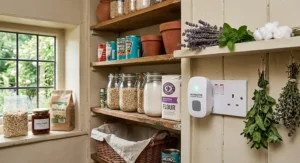
| PestBye Battery Operated Ultrasonic Repeller | Ultrasonic device | Lofts and outbuildings | £20-£25 range |
| PestBye Advanced Mains-Powered Repeller | Ultrasonic device | Whole-house coverage | Around £30-£35 |
Looking at the table, sprays and granules dominate the budget end and work fastest around known entry points, while the two PestBye devices trade a higher upfront price for zero ongoing reapplication. If you’re dealing with a single problem area like a garden shed, a spray such as the Karlsten 600ml Hyper Power Rat & Mouse Spray is the more targeted choice; for a whole property, pairing a device like the PestBye Advanced Mains-Powered Repeller with spot-treatment sprays tends to cover more ground.
💬 Found a method that’s worked for you? Share this guide with a neighbour who’s fighting the same battle!
What Is the Best Natural Rat Repellent?
Put simply, the best natural rat repellent is any plant-derived scent — most commonly peppermint oil, but also citronella, eucalyptus, and capsaicin (chilli) — strong enough to overwhelm a rat’s sense of smell at the concentrations they’re most sensitive to, applied consistently at entry points and food sources. There is no single “best” product; effectiveness depends on the size of the area, how fresh the application is, and whether you’ve also removed the food and shelter drawing rats in.
Rats (most commonly the brown rat, Rattus norvegicus, which dominates UK urban and rural populations) rely heavily on smell to navigate, forage and detect danger. That’s precisely why strong essential oils disrupt their behaviour — not because the scent is toxic, but because it’s overwhelming and associated with unfamiliar, potentially risky territory. What most buyers overlook is that this effect fades fast: peppermint oil evaporates within a day or two indoors and even quicker outdoors in wind or rain, which is why reapplication frequency matters more than which specific brand you choose.
Natural ingredients that repel rats generally fall into a few categories: essential oils (peppermint, eucalyptus, clove), pungent plant matter (chilli flakes, garlic), and predator-scent products (though these are harder to verify and less commonly sold in the UK). Peppermint remains the most extensively used and most consistently reported effective option in aggregated consumer reviews, which is why it appears in the majority of products in this guide.
Top 7 Natural Rat Repellent Products: Expert Analysis
1. Karlsten Anti Rat and Mice Spray 500ml — best budget entry point for first-time buyers
The Karlsten Anti Rat and Mice Spray 500ml is the sort of product you grab when you’ve spotted droppings once and want to act before things escalate. It’s a peppermint-oil-based formula designed for direct application along skirting boards, behind appliances and around loft hatches. The 500ml bottle covers a decent stretch of a small-to-medium property, and the non-staining formula means you’re not gambling with your carpets or upholstery — a real consideration if you’re spraying near soft furnishings.
Based on the spec comparison with pricier alternatives, this bottle sits firmly at the accessible end without cutting obvious corners: it’s still peppermint-oil-led rather than watered-down synthetic fragrance, which matters because diluted scent products simply don’t carry the same deterrent punch. It’s best suited to renters, first-time buyers testing whether natural deterrents suit their situation, and anyone dealing with early-stage rat activity rather than an established infestation. Reviewers consistently note a strong initial peppermint scent that mellows within a day, alongside reports that reapplication every few days works better than a single spray-and-forget approach.
Pros:
- ✅ Genuinely peppermint-oil-based, not synthetic fragrance
- ✅ Non-staining formula safe near fabrics and worktops
- ✅ Accessible price point for first-time users
Cons:
- ❌ Scent fades within 24-48 hours indoors
- ❌ Bottle size limits coverage in larger properties
Priced under £15, it’s solid value as a first line of defence rather than a standalone solution for a confirmed infestation.

2. CHEMOLOGY Rat and Mouse Repellent Spray 1L — best UK-made option for larger spaces
The CHEMOLOGY Rat and Mouse Repellent Spray 1L doubles the coverage of most competitors in this list simply by volume, and being manufactured in the UK gives it a slight edge on traceability and formulation consistency. It’s built around natural peppermint oil and is marketed as safe around family and pets when used as directed, which matters if you’re treating a kitchen, utility room or family garage rather than an isolated outbuilding.
What the spec sheet won’t tell you outright is that a 1L bottle is genuinely more cost-effective per application than smaller 500ml bottles once you factor in a realistic reapplication schedule — you’re not rationing it the way you might with a smaller bottle. This makes it a sensible pick for anyone treating a larger terraced house, a semi with a loft conversion, or a small business premises where several rooms need covering. Aggregated customer sentiment points to reliable non-staining performance, though a portion of reviewers note the strong scent can be more noticeable to sensitive noses in enclosed spaces for the first hour after application.
Pros:
- ✅ Larger 1L volume suits multi-room properties
- ✅ Made in the UK with clear ingredient labelling
- ✅ Non-staining and pet-conscious formulation
Cons:
- ❌ Strong initial scent in small, unventilated rooms
- ❌ Higher upfront cost than 500ml bottles
Sitting in the £15-£20 range, it represents better long-term value per application than smaller bottles for anyone treating more than one or two rooms.
3. Karlsten 600ml Hyper Power Rat & Mouse Spray — best for sheds, garages and lofts
Where the standard Karlsten bottle suits indoor living spaces, the Karlsten 600ml Hyper Power Rat & Mouse Spray is pitched squarely at the rougher, larger spaces where rats actually love to nest: garages, lofts, barns and machinery-heavy areas. Karlsten markets a “5 metre” strength claim on this formula, and while any distance claim on a scent product deserves healthy scepticism, the higher concentration formula does appear to hold its potency for longer than the standard-strength spray in the same range.
Here’s what to weigh: this isn’t the product for your kitchen or living room — it’s a heavier-duty tool for spaces where you don’t mind a more assertive scent lingering for longer. Based on the spec comparison, the increased volume and strength claim make it a genuinely different product from a standard indoor spray, not just a bigger bottle of the same thing. Reviewers commonly mention it holding up well against damp, cooler outbuilding conditions where cheaper sprays lose potency fast, though several also note that heavy rat activity in a loft space needs pairing with exclusion work (sealing gaps) rather than spray alone.
Pros:
- ✅ Higher-strength formula for tougher, larger spaces
- ✅ Performs well in damp or cold outbuildings
- ✅ Larger 600ml bottle for extended coverage
Cons:
- ❌ Too strong-scented for regular indoor living spaces
- ❌ Distance claims should be treated as marketing, not guarantee
At around £15-£18, it’s a reasonable step up for anyone whose rat problem is specifically in outbuildings rather than the main house.
4. The Big Cheese Mouse Out Peppermint Granules — best for cupboards and tight gaps
Sprays are brilliant for open surfaces, but they’re clumsy for stuffing into the back of a cupboard or scattering along a skirting gap — that’s where The Big Cheese Mouse Out Peppermint Granules earn their place in this list. Being a well-established name in UK pest control retail (The Big Cheese line is widely stocked in DIY and garden centres), the brand recognition here carries some genuine reassurance around consistent manufacturing standards.
The granule format means you scatter rather than spray, which is genuinely useful in areas where a liquid spray would be impractical or messy — think loft insulation, behind kitchen units, or inside a shed’s wall cavities. What most buyers overlook about granules generally is that they need topping up more visibly than a spray, since you can physically see when the pile has degraded or been disturbed, which oddly makes them easier to monitor than a spray you can’t see once it’s dried. Aggregated reviews describe a genuinely strong, long-lasting peppermint scent from the granules, with a common theme being that they work best combined with entry-point sealing rather than as a stand-alone fix — a pattern echoed across almost every product in this guide.
Pros:
- ✅ Ideal for gaps sprays can’t easily reach
- ✅ Visually easy to monitor and top up
- ✅ Established, widely trusted UK brand
Cons:
- ❌ Can scatter or get disturbed by drafts and pets
- ❌ Less immediate impact than a direct spray application
At under £10, this is one of the more budget-friendly options for targeted, low-mess application in tight spaces.
5. Ready Steady Defend Rat & Mouse Repellent Sachets (Pack of 5) — best for cars, drawers and caravans
If your rat problem is less “house” and more “car engine bay” or “static caravan left over winter,” sachets solve a problem sprays and granules don’t: you need something that stays put without spraying anything on delicate electronics or fabric interiors. The Ready Steady Defend Rat & Mouse Repellent Sachets (Pack of 5) are formulated with a high concentration of peppermint oil combined with corn cob filler and cotton, giving each sachet a slow, sustained release rather than a single burst of scent.
Based on the ingredient breakdown, the corn cob base is a clever inclusion — it’s absorbent enough to hold the oil for longer release than granules alone, addressing the “how long does this actually last” question that dogs most natural repellents. This makes the sachets particularly well suited to static, low-airflow spaces: glove compartments, drawer units, and enclosed engine bays where rodents chew wiring for warmth and material. Reviewers frequently report success placing them in car engine compartments over winter storage, with a recurring caveat that outdoor or high-airflow placements shorten the sachets’ working life considerably compared with sealed indoor spaces.
Pros:
- ✅ Slow-release format ideal for enclosed, static spaces
- ✅ No spraying near electronics or fabric interiors
- ✅ Pack of 5 covers multiple problem zones at once
Cons:
- ❌ Shorter lifespan in ventilated or outdoor placements
- ❌ Less effective across large open areas
Priced under £12 for the pack, it’s excellent value for anyone protecting a car, caravan or small enclosed unit rather than a whole property.

6. PestBye Battery Operated Ultrasonic Rat & Mouse Rodent Repeller — best chemical-free option for lofts
Stepping away from scent entirely, the PestBye Battery Operated Ultrasonic Rat & Mouse Rodent Repeller takes a different approach: it emits an ultrasonic pulse roughly every eight seconds, inaudible to humans, designed to make the surrounding area uncomfortable for rodents. Being battery-powered rather than mains-wired, it’s built for exactly the spaces where sprays are inconvenient to maintain — lofts, garages, sheds and outbuildings without an accessible socket.
Here’s the honest caveat that matters: independent pest-control commentary is genuinely split on ultrasonic devices as a category, and the evidence base for their standalone effectiveness is thinner than manufacturers imply — no major UK pest body treats ultrasonic repellers as a proven, sole solution. What most buyers overlook is that this device is best framed as one layer in a wider strategy (alongside exclusion and scent deterrents) rather than a replacement for them. Where it does score well in aggregated reviews is convenience: no reapplication, no mess, and a “set and forget” battery life that many users report lasting many months per set of batteries, with the trade-off being some reviewers noting reduced effectiveness in larger, open loft spaces compared with smaller enclosed rooms.
Pros:
- ✅ Zero reapplication — genuinely set-and-forget
- ✅ No scent, mess or staining risk indoors
- ✅ Ideal for lofts and sheds without power sockets
Cons:
- ❌ Independent evidence for ultrasonic effectiveness is limited
- ❌ Performance drops in large, open, or obstructed spaces
At £20-£25, it’s a reasonable investment for hands-off maintenance, provided you treat it as a supplement rather than a complete solution.
7. PestBye Advanced Mains-Powered Ultrasonic Pest Repeller — best for whole-house coverage
The premium pick here, the PestBye Advanced Mains-Powered Ultrasonic Pest Repeller, differentiates itself from cheap plug-in units by using your home’s existing electrical wiring to propagate a pulse throughout the property from a single wall socket, supplemented by a direct ultrasonic speaker. On paper this means broader theoretical coverage than a single-room plug-in device, since it isn’t limited to line-of-sight from one socket.
What the spec sheet won’t tell you, but independent pest-control reviewers do, is that “best overall” in this category currently means “most established and best-engineered,” not “scientifically validated” — the wider evidence base for ultrasonic technology remains disputed among pest professionals, a point worth internalising before treating this as a guaranteed fix. Where it earns its premium positioning is build quality and the variable frequency feature, which addresses a known weakness of fixed-frequency devices: rodents adapting to a constant tone over time. Reviewers who’ve run it for several months report a genuine reduction in visible activity when paired with basic exclusion work (blocking gaps), though almost none report it working as a total standalone solution for an established infestation.
Pros:
- ✅ Whole-property coverage from a single socket
- ✅ Variable frequency reduces rodent habituation
- ✅ No ongoing consumable costs after purchase
Cons:
- ❌ Premium price versus single-room plug-in units
- ❌ Best results still require pairing with exclusion work
Around £30-£35, it’s the more considered investment for anyone wanting broad coverage without the labour of regular spraying.
How to Make a Homemade Rat Deterrent: DIY Rat Repellent Spray
If you’d rather not buy anything before trying a homemade rat deterrent first, a basic DIY rat repellent spray is genuinely simple to put together, and it uses the same active principle as most commercial sprays on this list: concentrated peppermint oil disrupting a rat’s sense of smell. Mix roughly 15-20 drops of pure peppermint essential oil with 250ml of water in a spray bottle, shake thoroughly (oil and water don’t blend permanently, so it needs a shake before every use), and apply along skirting boards, behind appliances, and around any suspected entry points.
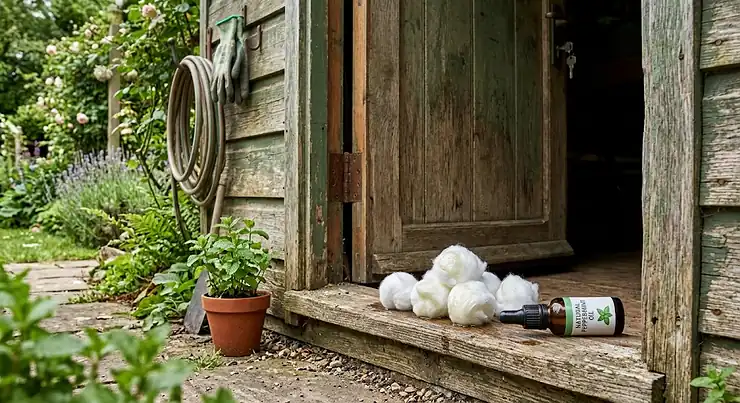
Cotton wool balls soaked in neat peppermint oil and tucked into gaps, vents or cupboard corners work as a lower-mess alternative to spraying, and they’re particularly useful in spaces where a liquid spray risks staining, like near soft furnishings or wooden surfaces. Reviewers of commercial peppermint sprays and DIY mixes alike report the same limitation: homemade versions using standard essential oil concentrations are typically weaker and shorter-lasting than commercial formulas designed for pest deterrent strength, which usually means more frequent reapplication — every 2-3 days rather than weekly. Combining a DIY spray with granules or sachets in harder-to-reach gaps tends to outperform a spray-only approach, since you’re covering both open surfaces and cavity spaces at once.
✨ Prefer not to mix your own? These ready-made peppermint sprays do the hard work for you — check current availability today.
Real-Life Scenarios: Matching the Right Method to Your Situation
The renter in a terraced house: if you’ve spotted droppings but can’t drill or seal permanently (landlord restrictions), a combination of the Karlsten Anti Rat and Mice Spray 500ml for daily-use rooms and The Big Cheese Mouse Out Peppermint Granules tucked into non-permanent gaps gives you a reversible, deposit-safe setup.
The homeowner with a rat-active loft: for an established loft problem, pair the PestBye Advanced Mains-Powered Ultrasonic Pest Repeller for continuous whole-house coverage with the Karlsten 600ml Hyper Power Rat & Mouse Spray applied directly at loft hatch edges and eaves — the combination addresses both the broad area and the specific entry points.
The car or caravan owner storing over winter: rats chewing engine wiring for warmth is a genuinely common and expensive problem; the Ready Steady Defend Rat & Mouse Repellent Sachets (Pack of 5) tucked into the engine bay and glove box is a low-mess, no-spray solution built exactly for this static, enclosed scenario.
How to Choose the Best Natural Spray to Keep Rats Away
- Check the active ingredient concentration first. A spray listing peppermint oil high on the ingredient list will outperform one relying mostly on water and synthetic fragrance.
- Match bottle size to your space. A 500ml bottle suits a single problem room; a 1L bottle like the CHEMOLOGY Rat and Mouse Repellent Spray 1L suits multi-room properties.
- Consider the surface you’re spraying. Non-staining formulas matter near fabric, wood or worktops — always check the label before spraying near soft furnishings.
- Factor in reapplication frequency. Peppermint scent fades within days indoors and faster outdoors, so budget for regularly topping up rather than a one-off spray.
- Think about the environment, not just the pest. A damp garage needs a higher-strength formula than a dry kitchen cupboard, which is why products like the Karlsten 600ml Hyper Power Rat & Mouse Spray exist as a distinct tier.
- Pair scent with exclusion. No spray, however strong, out-competes a genuine gap in brickwork or a torn air brick — sealing entry points always multiplies a spray’s effectiveness.
- Read aggregated reviews for realistic timeframes. Genuine customer feedback usually reveals how long a scent actually lasts in practice, which matters more than marketing copy.
Features That Actually Matter (And Those That Don’t)
Marketing copy on rodent deterrent packaging loves big claims — “5 metre range,” “instant results,” “guaranteed protection” — and it’s worth filtering the signal from the noise here. What actually matters: genuine peppermint oil concentration, non-staining formulation, and bottle or pack size relative to your space. What matters less than the marketing suggests: exact “metre range” figures on ultrasonic devices (these are best-case, obstruction-free claims rarely matched in a real cluttered loft) and multi-pest claims (a spray marketed against spiders, rats and ants simultaneously is rarely optimised for any single one).
Based on the spec comparison across all seven products here, the genuinely useful differentiator is consistency of active ingredient rather than novelty features. A basic, honestly labelled peppermint spray like the Karlsten Anti Rat and Mice Spray 500ml will often outperform a more expensively marketed product with a diluted formula. Reviewers consistently reward straightforward, clearly labelled products over ones making the boldest claims — a useful pattern to keep in mind while comparing options.
Common Mistakes When Trying to Repel Rats Naturally
A recurring theme across aggregated reviews and pest-control commentary is that natural deterrents fail not because the ingredients don’t work, but because of how they’re applied. The most common mistake is treating a single spray application as a permanent fix — peppermint scent genuinely does fade within days, and skipping reapplication is the single biggest reason people report “it didn’t work.”
The second common error is spraying or scattering deterrent without addressing the food source or entry point that attracted rats in the first place — bins without secure lids, pet food left out overnight, or an unsealed air brick will undermine even the strongest deterrent. Third, many buyers apply products meant for enclosed spaces (like sachets designed for a car engine bay) across large open areas where scent simply disperses too fast to be effective. Finally, some households mix multiple ultrasonic devices from different brands on different frequencies, unintentionally creating gaps in coverage rather than reinforcing it — a single well-placed unit like the PestBye Advanced Mains-Powered Ultrasonic Pest Repeller typically outperforms several mismatched cheaper units.
Natural Rat Repellents vs Poison and Traps
| Factor | Natural Repellents | Poison (Rodenticides) | Traps |
|---|---|---|---|
| Pet/child safety | Generally safer | Higher risk if ingested | Physical hazard risk |
| Kills rats? | No — deters only | Yes | Yes |
| Best For | Prevention, early activity | Confirmed heavy infestations | Confirmed sightings, targeted removal |
| Ongoing effort | Regular reapplication | Careful monitoring, disposal | Regular checking, disposal |
The clearest takeaway from this comparison is that natural repellents and traps or poison aren’t really direct competitors — they solve different stages of the same problem. Natural methods excel at prevention and early-stage deterrence, while poison and traps are genuinely necessary tools once an infestation is established, since no scent-based product removes rats already living in a structure. Households with children or pets often reasonably prioritise natural deterrents as the first line of defence specifically because of the reduced ingestion risk, while reserving traps for confirmed, targeted removal.
It’s also worth noting that UK rodenticide use carries its own regulatory framework precisely because of the poisoning risks to non-target wildlife and pets, which is a significant part of why natural deterrents have grown in popularity as a first response rather than an afterthought.
What to Expect: Real-World Performance
In practice, natural rat repellents work best as a noticeable reduction in activity rather than an overnight disappearance. Expect fewer droppings and less audible scratching within the first week of consistent application if the deterrent is genuinely disrupting foraging routes, but don’t expect complete elimination if rats already have an established nest nearby — that requires exclusion and, in serious cases, professional intervention.
Ultrasonic devices like the PestBye Battery Operated Ultrasonic Rat & Mouse Rodent Repeller tend to show gradual rather than immediate results, with most genuine reviewers reporting a noticeable difference over two to three weeks rather than days. Sprays and granules act faster in the specific spot they’re applied but need consistent reapplication to maintain that effect. The realistic expectation, backed by aggregated review patterns across every product type in this guide, is a layered reduction in activity over several weeks — not a single dramatic event.
Rat Prevention Tips for Home and Garden: Natural Rodent Control
Prevention beats reaction every time, and most rat prevention tips come down to removing what attracts them in the first place. Secure bin lids, clear fallen fruit and bird seed spillage promptly, and store pet food in sealed containers rather than open bags — rats are opportunistic foragers, and an easy meal will draw them back night after night regardless of how much peppermint spray you’ve applied.
For natural rodent control in the garden specifically, planting strong-scented herbs like mint, lavender or rosemary around the perimeter can act as a mild, ongoing deterrent alongside your other efforts, though living plants are a supplement to — never a replacement for — dedicated products. According to the British Pest Control Association’s guidance on brown rats, rats can cause significant structural damage and carry genuine disease risks, which is exactly why garden-level prevention (sealing compost bins, raising bird feeders, keeping decking areas clear of debris) matters just as much as anything sprayed indoors. Checking air bricks, gaps around pipework, and shed foundations regularly closes off the physical access points that no amount of scent alone can fully block.
Safety, Regulations and Compliance for Rodent Control in the UK
Rats are a genuine public health consideration, not just a nuisance — they’re linked to the spread of leptospirosis (Weil’s disease), salmonella and other pathogens transmitted through urine and droppings. According to official UK guidance on leptospirosis, the infection ranges from mild flu-like symptoms to severe, occasionally fatal illness, and anyone who has had contact with an area of known rat activity and later develops symptoms should mention this to a healthcare professional.
This is precisely why hygiene matters alongside any repellent strategy: wash hands thoroughly after handling deterrent products or cleaning areas with rat activity, and avoid direct contact with droppings or nesting material without gloves. The Health and Safety Executive’s guidance on Weil’s disease recommends covering cuts and grazes, washing hands regularly, and taking breaks away from affected areas during any clean-up work — sound advice for domestic situations too, not just construction sites. On the product side, always use natural repellents as labelled: essential-oil-based sprays are broadly low-risk, but concentrated oils should still be kept away from pets that metabolise certain oils poorly (cats in particular can be sensitive to concentrated essential oils), so ventilate treated rooms and avoid direct application to pet bedding.

Frequently Asked Questions
❓ Does peppermint oil really repel rats?
❓ How often should I reapply natural rat repellent spray?
❓ Do ultrasonic rat repellers actually work?
❓ Can natural rat repellents get rid of an existing infestation?
❓ Is homemade rat repellent spray as effective as shop-bought?
Conclusion
Repelling rats naturally isn’t about finding one magic product — it’s about layering the right tools for your specific situation. A budget spray like the Karlsten Anti Rat and Mice Spray 500ml might be all you need for early-stage activity in a single room, while a confirmed loft problem calls for pairing something like the PestBye Advanced Mains-Powered Ultrasonic Pest Repeller with targeted spraying at entry points. Granules and sachets fill the gaps sprays can’t reach, and a homemade peppermint spray is a genuinely reasonable starting point if you’d rather test the waters before buying.
Whatever combination you choose, remember that scent and sound are deterrents, not solutions to an existing infestation — pairing them with basic hygiene, secure food storage and sealed entry points is what actually makes the difference over weeks rather than days. Start with the option that matches your specific space, be consistent with reapplication, and give it a fair few weeks before judging results.
✨ Don’t Miss These Exclusive Deals!
🐀 Ready to take back control of your home or garden naturally? Click through to check current pricing and availability on today’s top-rated peppermint sprays, granules and ultrasonic repellers before stock changes!
Recommended for You
- Best Natural Rat Repellent 2026: 7 Top Picks That Actually Work
- Do Ultrasonic Rat Repellers Really Work? 7 Devices Tested (2026)
- Best Ultrasonic Rat Repeller UK 2026: 7 Top Picks Reviewed
Disclaimer: This article contains affiliate links. As an Amazon Associate, I earn from qualifying purchases. If you purchase products through these links, we may earn a small commission at no additional cost to you.
✨ Found this helpful? Share it with your friends! 💬🤗
