
In This Article
A pet safe cockroach killer for homes with cats removes the insects while keeping the active ingredient out of your cat’s reach. It does this with tucked-away gel baits, mechanical dusts and non-toxic monitoring traps, rather than sprays built on pyrethroid chemistry. “Pet safe” describes how you use a product as much as what is inside it.
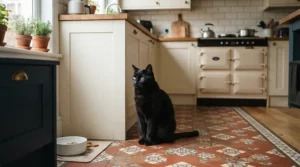
Picture it: 2am, kitchen light on, a cockroach sprinting for the gap behind the cooker, and your cat watching with professional interest. Your first instinct is to reach for the biggest can under the sink. Resist it. In Britain you will most likely meet the German or Oriental cockroach, and both are stubborn. Many of the sprays that kill them quickly are the ones vets worry about most, because cats lack the protein needed to break permethrin down, a pyrethroid found in many pest products.
So this guide takes a different route. I’ve compared seven real products available to UK households, sorted what actually works from what merely sounds gentle, and explained where each one should (and shouldn’t) go. You’ll also find sections on odourless cockroach treatment for bedrooms, low odour pest control, and what food businesses need to know.
Quick Comparison: 7 Options at a Glance
Here’s the lay of the land before we go deep. Remember that no product is automatically safe, because placement does half the work.
| Product | Type | Cat-home verdict | Best For |
|---|---|---|---|
| Pest Expert Formula IC Cockroach Killer Gel (6 x 10g) | Gel bait (imidacloprid) | Use only in cat-proof cracks and voids | Active infestations |
| HOY HOY Trap-A-Roach (Box of 5) | Sticky monitor | Non-toxic, but glue can catch paws | Tight gaps and monitoring |
| Cockroach Sticky Traps with Bait (12 Pack) | Sticky monitor | Fold-together shape limits access | Whole-home mapping |
| Entopest 1kg Diatomaceous Earth Powder | Mechanical dust | Thin, dry layer in voids only | General crawling insects |
| Natural Sources Diatomaceous Earth Pest Control Grade 1kg | Mechanical dust | Fine dust; keep out of paw reach | Budget wall-void dusting |
| Organ-X Desi-Dust Diatomaceous Earth (450g) | Mechanical dust | Marketed for animal areas | Small, odourless top-ups |
| InsectoSec Crawling Insect Killer (1kg) | Mechanical dust | Brand cites UK approval; check label | Cautious dust users |
Read that table as a toolkit rather than a league table. The Pest Expert Formula IC Cockroach Killer Gel (6 x 10g) is the only treatment that works on a colony, while both sets of sticky traps tell you whether anything is working at all. The three diatomaceous earth powders are supporting acts, useful in dry voids but too slow to rescue a serious infestation alone.
💬 Just one click — help others make better buying decisions too!😊
Top 7 Pet Safe Cockroach Killers for Cat Owners: Expert Analysis
An honest note first: the genuinely cat-appropriate palette is narrow. It consists of baits placed out of reach, mechanical powders and non-toxic traps, and that is why four of the seven entries below are variations on a theme. I’ve explained how they differ so you can pick the right one rather than the one with the loudest packaging.
1. Pest Expert Formula IC Cockroach Killer Gel (6 x 10g) — strongest option for an active infestation
Gel is the only format in this round-up that reaches the colony, which is why it opens the list. The pack supplies six 10g syringes with an applicator, and the listing names imidacloprid as the active. You place pin-head dabs in cracks instead of misting open surfaces.
On paper, that format suits cat owners. A dab the size of a lentil behind the fridge plinth puts the insecticide inside the harbourage, not on the lino your cat patrols. Imidacloprid does appear, in different doses and formulations, in some veterinary flea products. But a bait is engineered to be eaten, so placement is the real safety lever. The listing details I could review name the active and target species but say little about where to put it, so the label governs.
Based on the spec comparison, this suits households with a confirmed problem and a cat that can be walled out of the treated voids. What most buyers overlook is the waiting game: gel works slowly by design, and trap counts tell you more than one dead cockroach does.
I couldn’t verify enough genuine reviews for this exact listing to summarise them honestly, so I won’t. Skim the recent reviews on the page before buying.
Pros:
- ✅ Treats the colony, not just visible insects
- ✅ Six syringes plus an applicator included
- ✅ Tiny dabs mean minimal surface residue
Cons:
- ❌ Must be placed where cats cannot reach
- ❌ Slow, so patience (and trap counts) required
Check current price, as it varies by seller. Value verdict: baits in this category generally cost less than a single professional call-out, so it is good value for a confirmed problem.
2. HOY HOY Trap-A-Roach (Box of 5) — fuss-free monitoring for tight spots
Sometimes the smartest purchase is the one that kills nothing. HOY HOY Trap-A-Roach (Box of 5) is a bait-and-glue trap, so it works as your early-warning system rather than your treatment.
Five traps is enough to cover the classic hotspots: behind the cooker, under the sink, beside the washing machine and by the bathroom pipework. A trade review of the same trap lists roughly 30 days of efficacy, which is a sensible replacement rhythm. The crucial limitation is that trapped insects don’t carry poison back to the nest, so traps alone will not clear a colony.
Here’s what to weigh for a cat home. The trap itself contains no insecticide, which removes the poisoning worry, but glue and curious paws are a poor combination. Wedge traps into gaps and behind appliances rather than leaving them in open floor space.
I couldn’t verify a trustworthy review summary for this listing, so I’m leaving ratings out rather than guessing. What I can say is that the trap’s job is data: counts before treatment, counts after, and the location of the busiest corner.
Pros:
- ✅ No insecticide, so no poisoning pathway
- ✅ Shows where activity is heaviest
- ✅ Compact size fits behind appliances
Cons:
- ❌ Glue can catch an inquisitive paw
- ❌ Does not eliminate a colony alone
Under the £12 range at the time of research; check current price. Value verdict: cheap and clever, but only as part of a plan.
3. Cockroach Sticky Traps with Bait (12 Pack) — best-value monitoring coverage
Twelve traps buy you something five can’t: a proper map. The Cockroach Sticky Traps with Bait (12 Pack) comprises fold-together sticky traps with bait pellets, listed for kitchen corners, cupboards, cabinets and behind furniture. The listing’s brand row reads Rentokil while the manufacturer row reads Trapro, so you may see either name in the details.
The maker describes the trap material as non-toxic, with a glue coating attributed to BASF. In a cat home, the fold-together design is quietly useful: once assembled, the glue sits inside a tent-like shape, which gives paws less direct access than a flat board. A determined cat can still get at it, so the tuck-it-away rule still applies.
Use them in the first week to find hotspots, and again in week three to see whether the trend is falling. That before-and-after comparison is the evidence a gel or dust is working, and it’s the same logic university extension guidance uses when it describes sticky traps as your eyes in the property.
I couldn’t verify review data for this listing, so treat any star rating you see as the starting point for your own reading, not mine.
Pros:
- ✅ Twelve traps cover several rooms
- ✅ Non-toxic trap material, per the maker
- ✅ Fold-together shape limits paw access
Cons:
- ❌ Glue risk if left in open spaces
- ❌ Monitoring only, with no colony kill
Check current price; packs like this generally sit under the £15 mark. Value verdict: the cheapest way to turn guesswork into data.
4. Entopest 1kg Diatomaceous Earth Powder — easiest all-rounder powder
Diatomaceous earth (DE) is fossilised algae ground to a fine dust. It kills by abrading and dehydrating insects rather than poisoning them. Entopest 1kg Diatomaceous Earth Powder is listed as insect-grade, manufactured by Fort Products Limited.
Because the action is physical, cockroaches can’t develop resistance to it, and a thin dry layer in wall voids, behind kickboards and under appliances can keep working for a long time. The catch is that it must stay dry, so it suits bone-dry voids rather than kitchen floors. A deal-tracking site puts the listing’s Amazon rating in the mid-4s out of 5 across several hundred reviews, though that figure moves.
Reviewers of DE products commonly report two things: a little goes a very long way, and a proper dust mask is worth having. That matches the physics. The powder is non-toxic, but fine dust irritates airways in people and cats alike, so apply it with a puffer where the cat won’t be walking or sleeping.
On analysis alone, this is the best first powder for most households: generous quantity, simple use, no odour.
Pros:
- ✅ Mechanical action means no resistance
- ✅ One kilo lasts a very long time
- ✅ Odourless and easy to puff into voids
Cons:
- ❌ Dust irritates airways if inhaled
- ❌ Loses effect when damp
Around the £10-£20 range, depending on deals; check current price. Value verdict: excellent cost per use if you stay disciplined with thin layers.
5. Natural Sources Diatomaceous Earth Pest Control Grade 1kg — mineral-rich fine powder for wall voids
This one is sold as pest control grade, and the seller describes it as food-grade and enriched with trace minerals. Treat the mineral claim as marketing, because trace minerals don’t change how DE kills cockroaches. The grade is what matters, and you should always check the label to confirm you’re buying uncalcined DE, not the pool-filter kind.
Natural Sources Diatomaceous Earth Pest Control Grade 1kg is superfine, which helps it travel into narrow cracks. That same fineness has a downside, and reviewers repeatedly mention it: it is messy and hard to clean up, and one even warned that it can clog household vacuum cleaners. Another reviewer simply called it a natural bug killer that works as described, which is about right for a DE.
In a cat home, that mess factor is the real consideration. A cloud of fine dust in the air is the thing you want to avoid. Dust in short, controlled puffs into voids, keep the room closed to the cat for a short while, and wipe stray powder from floors before your cat’s next patrol.
As an honest read of the evidence, this is a perfectly sensible budget alternative to the Entopest, with a slightly messier profile.
Pros:
- ✅ Superfine texture reaches narrow cracks
- ✅ Seller describes it as food-grade
- ✅ Large 1kg tub for the price
Cons:
- ❌ Messy, and can clog vacuum cleaners
- ❌ Needs mask and careful puffing
Roughly the £10-£20 range; check current price. Value verdict: good, provided you handle the dust with care.
6. Organ-X Desi-Dust Diatomaceous Earth (450g) — odourless formula with an animal-friendly pedigree
Organ-X is a familiar name in poultry keeping, and Organ-X Desi-Dust Diatomaceous Earth (450g) carries that pedigree. UK suppliers describe it as non-chemical, safe in areas where animals are present, and suitable for direct application to animals. A major UK retailer lists an odourless formula suitable for sensitive areas, with a dispenser for direct application.
That animal-area positioning is reassuring for cat owners, and the small tub is ideal if a kilo feels like overkill. One caveat matters: the brand markets mainly for red mite and other crawling insects, so cockroaches are not the headline claim. Read the label for cockroach use before buying, and check Amazon availability, as stock varies and it is widely sold elsewhere.
Because insects can’t build immunity to a mechanical dust, repeat dusting is a maintenance tool, not a one-off. Treat it as the top-up for a void you’ve already filled, or as the gentler dust for a bedroom skirting.
I couldn’t verify a reliable review summary for this specific Amazon listing, so I’m not quoting ratings.
Pros:
- ✅ Described as safe where animals live
- ✅ Odourless and non-chemical
- ✅ Small tub suits modest jobs
Cons:
- ❌ Cockroaches aren’t its headline target
- ❌ Smaller quantity covers less ground
Typically under the £10 range at UK retailers; check current price on Amazon. Value verdict: low outlay, best as a supporting player.
7. InsectoSec Crawling Insect Killer (1kg) — natural dust from a brand that cites UK approval
InsectoSec Crawling Insect Killer (1kg) is a natural diatomaceous earth powder from Andermatt Home & Garden, aimed at a range of crawling insects. The brand states that it is legally approved for use in the UK and argues that not all DE is equal. That’s a claim to read on the label rather than take on trust, but it signals a more regulated supply chain than anonymous bulk powder.
The same company sells a pet-care version, which suggests the DE itself is designed with animals in mind. The storefront shows only three reviews, all positive, including one from a customer who used it on ants getting in through decking. That is too small a sample to prove anything, and I’d rather say so than dress it up.
Sold direct by the maker, with UK-only shipping, so check whether it’s currently on Amazon.co.uk before assuming it is. For a cat home, treat it exactly like the other DEs: thin, dry, out of paw reach, mask on.
My read of the analysis: it’s the pick for someone who wants a cautious, brand-backed powder and doesn’t mind paying slightly more for the paperwork.
Pros:
- ✅ Brand cites UK regulatory approval
- ✅ Natural DE with no insecticide
- ✅ Same maker offers a pet-care range
Cons:
- ❌ Very small review base
- ❌ Amazon availability may vary
Around the £10-£15 range at the maker’s store; check current price. Value verdict: reasonable for a brand-backed dust.
How to Choose a Pet Safe Cockroach Killer for Homes With Cats
Follow these steps in order and you’ll avoid most of the expensive mistakes.
- Read the active ingredient, not the front label. Words like “natural” and “family safe” are marketing. Look for permethrin, cypermethrin and other pyrethroids, then put that product back.
- Choose baits and dusts over sprays. University extension guidance consistently rates baiting, growth regulators and HEPA vacuuming above spraying.
- Match the format to where your cat can’t go. Gels belong in cracks and voids, and powders belong in dry wall cavities and under fitted units.
- Check the DE grade. You want uncalcined, insect- or food-grade diatomaceous earth, never the pool-filter type.
- Start with traps. Counting catches first tells you where to bait and later whether it’s working.
- Respect the label. Consumer insecticides are sold on the condition that you use them as directed.
- Know when to call a professional. Daylight sightings or activity in several rooms usually means a bigger problem than a shelf product can solve.
✨ Don’t Miss These Exclusive Deals!
🔍 Take your cat-friendly pest plan to the next level with these carefully selected products. Click on any highlighted item to check current pricing and availability. These tools will help you create a calm, cockroach-free home your whole family, whiskers included, will love!
Why Cats Change the Rules: The Pyrethroid Problem
Cats are not small dogs, and the pest aisle often forgets it. PDSA explains that permethrin is common in dog flea treatments and that cats can’t break it down, so it builds up and causes poisoning. Signs include drooling, twitching and seizures, usually within hours, though they can take up to 36 hours to appear. Vets Now reports seeing numerous permethrin cases every month.
Why does this matter for cockroaches? Several popular consumer sprays on UK listings name pyrethroids. In the listings I reviewed, one names permethrin with D-allethrin, and others name cypermethrin. Household sprays are weaker than dog spot-ons, but a cat grooms its paws and fur, so residue on skirting boards and floors becomes a swallowing route. That is why the cautious route is simply to avoid the pyrethroid family wherever a cat lives.
Foggers, smoke bombs and fumers deserve extra suspicion. They spread product indiscriminately, they settle on surfaces cats walk across, and university guidance warns they can repel and scatter cockroaches without killing them.
If you suspect exposure, don’t wait. Phone your vet immediately and take the product packaging with you, because the active ingredient and concentration help them decide what to do next.
Odourless Cockroach Treatment for Bedrooms
Cockroaches usually live where there’s warmth, food and moisture, so seeing one in a bedroom often signals spread from the kitchen or bathroom. An odourless cockroach treatment for bedrooms has a different brief from a kitchen plan, because you spend eight hours a night breathing the room’s air.
Gel baits, traps and mechanical dusts are naturally odourless, which makes them the sensible trio for bedrooms. Sprays and fumers fail twice: they smell, and they leave residue on surfaces you and your cat touch constantly.
Practical placement matters more than product choice. Put sticky traps along skirting boards and behind furniture to establish whether you really have activity. If you need bait, place small dabs inside the gap behind a wardrobe or bed-frame void, where the cat cannot reach and where bedding won’t brush against it. Avoid dusting around the bed base, because airborne powder is a bad bedfellow, especially for anyone asthmatic. Extension guidance links cockroach allergens with asthma risk, which is another reason to treat bedroom activity seriously.
An odourless cockroach treatment for bedrooms should also be paired with sleeping-space hygiene: no food in the bedroom, a sealed bin, and crumb-free surfaces.
Non Toxic Roach Killer for Pets: What the Label Really Means
“Non toxic” is a marketing phrase, not a regulatory badge. A non toxic roach killer for pets usually means the product kills mechanically or has low mammalian toxicity, not that it is harmless if licked, inhaled or eaten in quantity.
Diatomaceous earth is the clearest example. It kills by abrasion, so there’s no poison to metabolise. But sources agree the dust irritates airways when inhaled, and cats groom enough to make accidental intake plausible. Grade matters too: use uncalcined insect or food grade, never pool-filter DE.
Boric acid is where advice splits. Some pet-safety guides rate it low toxicity, while others warn that it can burn the nose, mouth and eyes and be dangerous if swallowed. With a cat in the house, when experts disagree, the sensible reading is to skip it.
Glue traps are non-toxic too, yet the risk is mechanical: a paw stuck to a board is miserable and sometimes needs a vet. Gel baits are the reverse case, since they are low-concentration but deliberately designed to be eaten. That is why a genuinely non toxic roach killer for pets is rarer than the packaging suggests, and why placement beats promises.
Low Odour Pest Control: Features That Actually Matter (And Those That Don’t)
Low odour pest control is attractive in a flat where windows don’t open much and a cat sleeps on the sofa. Just don’t let “low odour” stand in for “low risk”.
Features that matter:
- Format. Gels, dusts and traps are inherently low odour pest control, because there’s no solvent or propellant.
- The active ingredient. This decides cat safety, whatever the scent.
- Residue behaviour. You want little or no residue on cat-walked surfaces.
- Placement control. Syringe applicators and puffers let you target voids precisely.
Features that don’t:
- “Low odour” on its own. One spray kit on Amazon.co.uk is listed as low-odour and non-staining, yet its description names cypermethrin and pyriproxyfen. The Pest Expert Cockroach Killer Kit (Advanced) is a good example of why a gentle smell and cat safety are separate questions.
- Long-lasting residue claims. The same listing promises residue protection for up to 12 weeks. That is exactly the feature you don’t want where a cat grooms its paws.
- “Natural” wording. Pyrethrins are plant-derived, and the natural form is still toxic to cats.
In short, low odour pest control and cat safety overlap only when the format is bait, dust or trap.
Pet Safe Cockroach Killer vs Traditional Sprays and Foggers
The big difference is philosophical. Sprays treat what you can see, whereas baits and dusts treat where cockroaches live.
| Approach | How it works | Risk in a cat home | Best For |
|---|---|---|---|
| Gel bait | Eaten, then insects return to harbourage | Low if out of reach; high if licked | Pest Expert Formula IC Cockroach Killer Gel (6 x 10g) |
| Mechanical dust | Abrades and dehydrates | Low toxicity; dust irritates airways | Entopest 1kg Diatomaceous Earth Powder |
| Sticky monitor | Glue captures insects | Paw-sticking risk | HOY HOY Trap-A-Roach (Box of 5) |
| Spray, fogger or smoke bomb | Contact kill plus residue | Highest: residues cats groom | Avoid in cat homes |
Professional practice backs the bait-first approach. In a British Pest Control Association report on an independent trial, a professional gel bait was the only product tested that left no cockroach activity at all four sites after eight weeks. Several other gels and treatments reduced activity but didn’t reach zero.
Read that carefully: it says baiting beats spraying, and that product choice within baiting matters, but it doesn’t make a high-street spray a good plan for a cat home. A pet safe cockroach killer for homes with cats is almost always bait-and-dust-based, so the sensible comparison is baits against baits, not baits against aerosols.
Cockroach Killer for Restaurants and Takeaways
A cockroach killer for restaurants and takeaways is a different animal from a household product, because the legal stakes are higher. Under retained Regulation (EC) 852/2004, food businesses must have adequate procedures to control pests. Environmental health officers can act where there is an imminent risk to health, and councils have closed premises until it is removed.
The Food Standards Agency’s Safer Food, Better Business pack includes a pest control safe method covering signs to look for and what to do. Cambridge University’s catering guidance goes further, advising that contractors should be members of the British Pest Control Association.
What role do consumer products play, then? Sticky monitors are legitimate support tools between professional visits, and a pet-safe approach matters for takeaways run from a flat above, or for the many home-based caterers who share a kitchen with a cat. But a bag of DE and a tube of gel is not a pest control contract.
Two practical rules apply. First, never place bait where food or food-contact surfaces could be touched. Second, record every sighting and trap count, because inspectors care about evidence of control as much as the absence of insects.
Cockroach Treatment for Commercial Kitchens
Cockroach treatment for commercial kitchens is a programme, not a product. It begins with inspection and monitoring, adds targeted baiting in cracks and voids, and ends with sanitation fixes and documentation. Warm equipment, grease, floor drains and delivery boxes make commercial kitchens near-ideal habitat.
Professionals favour gel baits heavily. Syngenta’s own research claims pest professionals use gels in over 80% of cockroach infestations. The UK’s leading gel, Advion Cockroach Gel, is listed as professional use only, meaning only people trained and required to use pesticides at work can buy it. That’s a good reason to hire a competent contractor rather than hunt for the same product on a shelf.
A sound commercial plan typically includes:
- Monitors at every harbourage, checked and logged.
- Bait placed in cracks away from food and contact surfaces.
- Rotation of active ingredients over time, because Syngenta’s technical guidance recommends it to guard against resistance.
- Fixes to leaks, gaps and waste handling.
Whatever you do, cockroach treatment for commercial kitchens should come with paperwork you can show an inspector. If a cat lives on-site, say so when the contractor visits, so bait stations go where the cat can’t.
Long-Term Cost & Maintenance
The cheapest approach is rarely the cheapest outcome. Here is how the options stack up for a typical household.
| Product | Typical outlay | What it covers | Value note |
|---|---|---|---|
| Pest Expert Formula IC Cockroach Killer Gel (6 x 10g) | Check current price | Several kitchens’ worth of dabs | Best for treating, not monitoring |
| HOY HOY Trap-A-Roach (Box of 5) | Under £12 range | Five hotspots | Replace roughly monthly |
| Cockroach Sticky Traps with Bait (12 Pack) | Check current price (typically under £15) | Whole-home mapping | Best monitoring value |
| Entopest 1kg Diatomaceous Earth Powder | £10-£20 range | Many voids over time | Lowest cost per use |
| Natural Sources Diatomaceous Earth Pest Control Grade 1kg | £10-£20 range | Similar to Entopest | Mess is the trade-off |
| Organ-X Desi-Dust Diatomaceous Earth (450g) | Under £10 range | Small jobs and top-ups | Cheap supporting player |
| InsectoSec Crawling Insect Killer (1kg) | £10-£15 range | Many voids over time | Brand-backed option |
For context, one council’s published pest fees put residential cockroach treatment at around £100-£130, with a follow-up visit built in. That council also advises against DIY treatment, citing risks to people and pets, which is worth hearing. Everything above is therefore best seen as a first-line effort and a maintenance kit, not an automatic substitute for professional help in a serious infestation.
Maintenance is modest: refresh sticky traps about monthly, re-check dust in dry voids every few weeks, and keep counting.
Practical Usage Guide: Your First 30 Days
Days 1-3: map it. Put sticky traps in every hotspot (kitchen, bathroom, utility, and bedroom if sightings occurred). Fix leaks and bin the cardboard.
Days 3-7: clean and seal. Degrease behind the cooker, empty crumb-trap cupboards, seal food in tubs, and caulk obvious gaps. Cleaning first improves gel uptake.
Week 2: bait or dust. Read the full label. Apply gel in small pin-head dabs inside cracks and voids; where roaches visibly run, several small dabs generally beat one large blob. Use DE only in dry voids, lightly. Keep your cat out of the room while you work, and shut it away until dust settles.
Weeks 2-3: watch the traps. If counts haven’t started falling after a week or more, don’t panic; baits are slow. If they fall, keep going.
Week 4: maintain. Replace traps, refresh only what’s been consumed or disturbed, and hoover cracks.
Common first-month mistakes include baiting before cleaning, applying too much, leaving bait where the cat can reach it, and switching to a spray in a panic, which can scatter the very insects you were baiting.
Real-World Scenarios: Matching Products to Households
These are illustrative profiles, not case histories.
The renter with one cat (tight budget, one-bed flat). Sightings are limited to the kitchen at night. Start with the Cockroach Sticky Traps with Bait (12 Pack) to confirm where they are, then use the Pest Expert Formula IC Cockroach Killer Gel (6 x 10g) inside the cooker and fridge voids. Re-check traps weekly for a month and tell the landlord if activity continues, since shared buildings often need a wider fix.
The family house with two cats and a toddler (mid budget, open-plan). Sightings in two rooms. Everything must sit behind fixed panels or inside voids, because small hands and curious paws share the floor. Combine monitoring traps with a thin layer of Entopest 1kg Diatomaceous Earth Powder inside the kickboard void, and keep the gel to sealed gaps. If daylight sightings appear, call a professional.
The takeaway owner living above the shop (cat upstairs). Sightings downstairs mean a professional contract with documented monitoring is non-negotiable. Upstairs, the HOY HOY Trap-A-Roach (Box of 5) and Organ-X Desi-Dust Diatomaceous Earth (450g) help protect the living space without scent, and the cat stays out of the kitchen during any treatment.
Problem → Solution Guide
Problem: my cat keeps sniffing the gel spots. Move the bait deeper into cracks, behind panels or inside fixed voids. If a cat can reach it, it’s in the wrong place, and the label’s placement rules apply.
Problem: DE dust is everywhere. You used too much. Apply a barely visible film through a puffer, wipe stray powder from floors, and wear a mask.
Problem: still seeing cockroaches after two weeks. Check the traps before panicking. If counts are flat, look for food, water and gaps you’ve missed, and consider professional help.
Problem: a hygiene inspection flagged pests at my food business. Regulation (EC) 852/2004 requires adequate pest control procedures. Engage a British Pest Control Association member, keep monitoring records, and fix structural gaps.
Problem: my cat seems unwell after pest treatment. Call your vet straight away with the product packaging to hand. Don’t wait to see whether symptoms settle.

FAQ: Pet Safe Cockroach Killer for Homes With Cats
❓ Is diatomaceous earth safe for cats when treating cockroaches?
❓ Can I use cockroach gel in a bedroom with a cat?
❓ How long does cockroach bait take to work?
❓ Can a takeaway use shop-bought cockroach killer instead of a pest contract?
❓ What is the best non toxic roach killer for pets in the UK?
Conclusion: A Calm Plan Beats a Chemical Blitz
Choosing a pet safe cockroach killer for homes with cats comes down to three habits: choose format over fragrance, placement over promises, and evidence over hope. In practice that means monitoring with sticky traps, treating with a carefully placed gel, supporting with thin layers of diatomaceous earth in dry voids, and keeping pyrethroid sprays, foggers and smoke bombs away from your cat’s territory.
If you remember only one thing from the seven picks above, make it this: the Cockroach Sticky Traps with Bait (12 Pack) tell you what is happening, the Pest Expert Formula IC Cockroach Killer Gel (6 x 10g) is the treatment, and the Entopest 1kg Diatomaceous Earth Powder is the quiet backup in your walls. And when activity spreads across rooms, or you run a food business, call a qualified professional. There’s no prize for fighting it alone.
Recommended for You
- Cockroach Fogger For Whole Room Treatment: 7 Best Picks (2026)
- Boric Acid Cockroach Powder For Behind Appliances: 7 Best Buys (2026)
- Sticky Cockroach Traps For Monitoring Activity: 7 Best Picks (2026)
Disclaimer: This article contains affiliate links. As an Amazon Associate, I earn from qualifying purchases. If you purchase products through these links, we may earn a small commission at no additional cost to you.
✨ Found this helpful? Share it with your friends! 💬🤗
