
In This Article
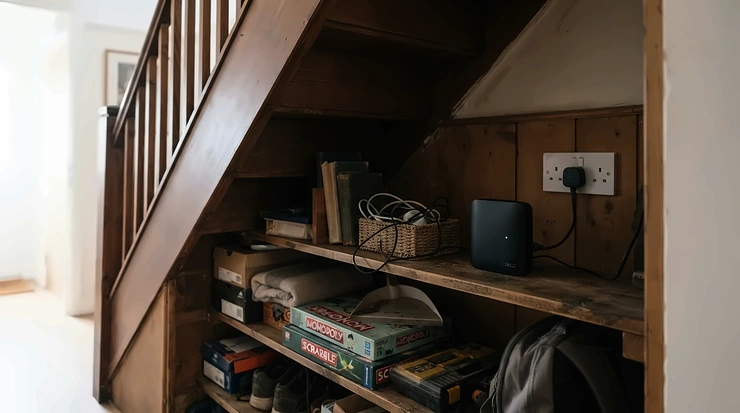
A plug in mouse repeller is a small mains-powered gadget that pushes high-frequency sound, above the range of human hearing, into a room. The idea is that mice find the noise unpleasant and stay away. It slots into a standard UK socket, needs no batteries, and runs around the clock without any fuss.
That’s the sales pitch. Now the awkward bit. Rodents can certainly hear ultrasound, as Wikipedia’s overview of electronic pest control explains, but hearing a sound and being evicted by it are two very different things. Most pest professionals and researchers are sceptical, and I’ll be straight with you about that throughout this guide.
So why write a buying guide at all? Because millions of British households still plug these things in, and plenty of them will do so this autumn when the temperature drops and mice start eyeing your airing cupboard. If you’re going to buy one, you should buy it with your eyes open. Here’s what’s coming:
- Seven real listings currently sold on amazon.co.uk, with their specs translated into plain English.
- A frank look at each socket mouse repeller’s claims versus what the evidence supports.
- Practical guidance on multi-room coverage, running costs, pets, and how to use a mains rodent repeller alongside methods that demonstrably work.
Think of a repeller as a supporting actor, never the lead. Used that way, it can be a cheap, tidy extra. Used as your only defence against an established infestation, it will probably let you down.
Plug in Mouse Repeller Quick Comparison
Here’s the shortlist at a glance. Coverage figures are the manufacturers’ own open-space claims, which I’ve converted to square metres where the listing used square feet. Treat them as ceilings, not promises.
| Product | Pack | Listed modes | Listed coverage claim | Best For |
|---|---|---|---|---|
| AMZ BRAND 2-Pack | 2 units | 3 | 140 m² per unit | Big open-plan rooms |
| Gecool 4-Pack | 4 units | 4 | Up to ~1,600 sq ft (approx. 149 m²) on the Gecool range | Pet households wanting a gentler setting |
| REPELIX ARMOUR 2-Pack | 2 units | 3 | 140 m² per unit | Small flats and simple setups |
| DOBWGXZ 4 Pack | 4 units | Varies by listing | Varies by listing | Lowest listed power draw |
| K&J 6 Pack | 6 units | 3 | Up to 1,100 sq ft (approx. 102 m²) | Whole-house multi-room coverage |
| LOPHE 4Pcs | 4 units | Not verified | Up to 1,600 sq ft (approx. 149 m²) | Four-room starter set |
| British Lux Repel Lab | 1 unit | Dual-wave | Up to 1,200 sq ft (approx. 111 m²) | Trying one room first |
Looking at the table, the K&J 6 Pack and DOBWGXZ 4 Pack deliver the most units for the money, which matters because ultrasound doesn’t pass through walls and you’ll need roughly one device per room. The AMZ BRAND 2-Pack and REPELIX ARMOUR 2-Pack claim identical coverage per unit, so the choice between them comes down to features and price on the day. If you’re unsure this will work in your home, the single-unit British Lux Repel Lab is the cheapest way to find out.
💬 Just one click — help others make better buying decisions too!😊
Top 7 Plug in Mouse Repeller Picks: Expert Analysis
A quick word on method. Everything below comes from published listing specifications, manufacturer claims and aggregated customer-review sentiment, not from hands-on testing. Where I couldn’t verify something, I say so. There’s no true “premium” tier in this category, so I’ve grouped picks by what they offer rather than pretending otherwise. Prices shift constantly, so all bands below are rough guides; check current price before you buy.
1. AMZ BRAND 2-Pack — best for large open-plan rooms
Big open spaces are where this pair earns its keep. Its listing quotes 140 m² of coverage per unit, three working modes, and a wide frequency sweep that retailer copy places somewhere between 25 kHz and 100 kHz.
That top end matters. Mice can hear up to roughly 90 kHz, so a sweep this wide overlaps their whole hearing range rather than just the lower slice. The trade-off is power: retailer descriptions quote 8W per unit, which is noticeably hungrier than rivals (more on that in the running-costs section).
Based on the spec comparison, this suits a large kitchen-diner, a garage with a mains socket, or an open landing. To its credit, the listing itself positions the pair as a complement to traps, poisons and bait stations, which is the honest framing.
Reviewers’ feedback is thin on mouse-specific evidence. The listing warns results can take four to five weeks, and one UK reviewer credited it with keeping flies out of a room over summer, which is a different job entirely.
Pros:
- ✅ Very wide frequency range for its class
- ✅ Three modes, including a steady silent option
- ✅ Listing openly recommends pairing with traps
Cons:
- ❌ Highest listed power draw of the group
- ❌ Little verifiable mouse-specific review evidence
Expect a budget-tier two-pack price, generally well under £40 in my research; check current price. Reasonable value if you have one or two big rooms, poorer value for a terraced house full of small ones.
2. Gecool 4-Pack — best for gentle, adjustable settings
Choice of intensity is this pack’s party trick. The Gecool range advertises four modes, a dual-wave design pairing ultrasound (around 20-60 kHz) with an electromagnetic element, and low consumption of about 3-5W per unit.
What does that mean in practice? Four modes give you room to dial things down if a dog or cat seems bothered, since dogs can hear up to about 40 kHz and cats up to around 60 kHz. It also has silent-style options for sensitive households. The electromagnetic claim is the part I’d treat with caution: I couldn’t find independent evidence that it does anything meaningful to mice.
Overall, this is a sensible pick for a pet-owning family who want to experiment without committing to a fixed frequency. The manufacturer says visible results appear within one to two weeks, which is optimistic compared with the four to five weeks other brands quote.
Amazon’s own review summary for the range describes mixed opinions on effectiveness: some buyers say it works wonders, others report no effect at all. That split is typical for the whole category.
Pros:
- ✅ Four modes for tuning around pets
- ✅ Low listed power draw of 3-5W
- ✅ Four units cover a small home’s main rooms
Cons:
- ❌ Electromagnetic claims lack independent support
- ❌ Reviewer opinion is sharply divided
Budget-tier pricing, likely comfortably under £40 for four; check current price. Good value if the adjustable modes matter to you.
3. REPELIX ARMOUR 2-Pack — best for a simple, no-fuss pair
Simplicity is the appeal here. The listing headline promises 140 m² per device, three modes, and a pack of two, aimed at mice, rats and assorted insects.
Notice that 140 m² is precisely the figure quoted by the AMZ BRAND 2-Pack. That’s a useful reminder that these numbers are open-space claims from spec sheets, not measured performance in your hallway with its coats, radiators and closed doors. A realistic reading is one unit per room, whatever the box says.
I could only verify title-level specifications for this pair, so I can’t tell you the frequency range or wattage with confidence. That’s worth flagging: a listing that leaves out its own power draw makes fair comparison harder, and you may want to check the full product page before ordering.
On paper, this suits a one-bedroom flat or a small house where you want two devices, one for the kitchen and one for the hallway or bedroom, without buying a large multi-pack you’d never fill.
I couldn’t verify detailed review themes for this listing, so I won’t guess at customer sentiment.
Pros:
- ✅ Compact two-unit pack for small homes
- ✅ Three modes for some flexibility
- ✅ Clear per-device coverage claim in the title
Cons:
- ❌ Wattage and frequency need checking on the listing
- ❌ Review evidence not verifiable
Sits in the budget-to-mid band for a pair; check current price. Fair value, provided the full specs check out.
4. DOBWGXZ 4 Pack — best for low power draw
Frugal running is this brand’s selling point. Listings quote just 3W per unit, dual ultrasonic and electromagnetic technology, and results in one to two weeks.
Three watts running continuously works out at about 26 kWh a year per unit, so a four-pack costs less to run than one of the eight-watt rivals. Several listing variants exist (different colours and slightly different copy, including coverage claims that reach around 1,700 sq ft, or roughly 158 m²), so check exactly which version you’re buying.
What this really suggests is a sensible option for renters or anyone building multi-room coverage on a tight budget. Four units will handle a typical two-bed flat with one spare.
Reviewers on the listings report noticing fewer pests within a couple of weeks, and one buyer bought them for an elderly parent troubled by field mice. Anecdotes like these deserve a pinch of salt, though: pest activity rises and falls seasonally, and people often tidy up food storage at the same time as plugging in a device.
Pros:
- ✅ Lowest listed power draw at 3W
- ✅ Four units suit a two-bed flat
- ✅ Several colour options for visible sockets
Cons:
- ❌ Multiple listing variants cause spec confusion
- ❌ Positive anecdotes may reflect seasonal decline
Budget-tier pricing, usually under £40 for four in my research; check current price. Strong value on running cost alone.
5. K&J 6 Pack — best for whole-house room counts
Sheer quantity defines this pack. Six units, three switchable modes, a dual ultrasonic and electromagnetic design, and a listed coverage of up to 1,100 sq ft (roughly 102 m²) each.
Six devices is exactly what a family home needs if you follow the “one per room” rule: kitchen, hall, living room, two bedrooms and the loft. The listing also claims resistance to humidity and temperature swings, which matters for garages, basements and lofts. It even suggests installing multiple units in larger spaces, a refreshingly realistic note.
Availability is worth watching. During my research one K&J six-pack variant showed as unavailable, while others were in stock from different sellers, so confirm the exact listing.
The trade-off is clutter: six glowing, buzzing-adjacent boxes across your sockets. If you’re the sort who notices such things, factor that in.
I couldn’t verify detailed review sentiment for these listings, so treat this as a specification-led recommendation only.
Pros:
- ✅ Six units cover a whole family home
- ✅ Suited to lofts, garages and basements
- ✅ Advice to add units in larger areas
Cons:
- ❌ Some variants show as unavailable
- ❌ Six sockets occupied at once
A larger outlay than a two-pack, but low per-unit cost; check current price. Best value here if you truly need six.
6. LOPHE 4Pcs — best for a four-room starter set
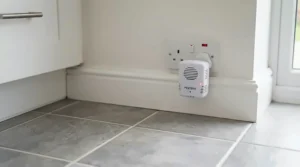
Round and unassuming, this set sells the classic idea: four units, no batteries, and claimed coverage of up to 1,600 sq ft (around 149 m²) each in large rooms.
The listing stresses “no radiation”, a marketing phrase aimed at nervous buyers. Ultrasound and electromagnetic output from a small plug-in gadget isn’t the alarming thing the phrase implies, but it does reinforce how differently sellers pitch identical technology. I couldn’t confirm the exact number of modes, so check the full listing.
Practical point: a round body can overhang a neighbouring socket on a double-gang faceplate. Measure your clearances before you order, particularly in kitchens where every socket is spoken for.
This suits a small terraced house or a flat with a kitchen, living room, bedroom and hall. Four is the sweet spot for first-time buyers who want enough units to try a room-by-room approach without a six-pack commitment.
Review sentiment for this specific listing wasn’t verifiable in my research, and it’s sold by a third-party seller, so read recent feedback before buying.
Pros:
- ✅ Four units for four core rooms
- ✅ High per-unit coverage claim
- ✅ Simple plug-and-forget operation
Cons:
- ❌ Mode count not verifiable
- ❌ Round shape may crowd double sockets
Budget-tier pricing; check current price. Decent value for a first experiment.
7. British Lux Repel Lab — best for testing one room first
Buying one unit before committing to six is the cautious way to do this, and it’s why this single-unit listing earns a slot. It’s sold as a single piece in white or black, with dual-wave ultrasonic and electromagnetic output and a claimed 1,200 sq ft (about 111 m²) of coverage.
The listing leans on a “British brand” pitch and simple UK socket use. A brand’s origin doesn’t change how ultrasound behaves, so I’d weigh it lightly. What I like is the logic: put one in the room where you actually saw droppings, give it a month, and watch what happens before spending more.
A related listing under the ISEEKLIKE label offers the same design in a two-piece pack, handy if you want a pair. Be aware the wording on some listings mentions fleas, which is a different pest with different biology; ignore that and judge it as a mouse deterrent.
If a single unit visibly makes no difference after a month, you’ve saved yourself the cost of a large pack. That’s a decent outcome for a modest outlay.
Review themes weren’t verifiable, so this pick rests on the specs and the trial-first logic.
Pros:
- ✅ Single unit limits your outlay
- ✅ Dual-wave design with a fair coverage claim
- ✅ Available in white or black
Cons:
- ❌ Only covers one room
- ❌ Review evidence not verifiable
Lowest entry cost in the group; check current price. Good value as an experiment.
Plug in Mouse Repeller Specs Compared
Here’s how the same seven stack up on the details that affect your day-to-day experience.
| Product | Pack size | Listed power | Price band (approx.) | Review evidence | Best For |
|---|---|---|---|---|---|
| AMZ BRAND 2-Pack | 2 | ~8W (retailer copy) | Budget | Thin, mouse-specific gaps | Large open rooms |
| Gecool 4-Pack | 4 | ~3-5W | Budget | Mixed (Amazon summary) | Households with pets |
| REPELIX ARMOUR 2-Pack | 2 | Not verified | Budget-to-mid | Not verified | Small flats |
| DOBWGXZ 4 Pack | 4 | ~3W | Budget | Anecdotal positives | Lowest running cost |
| K&J 6 Pack | 6 | Not verified | Budget-to-mid | Not verified | Whole houses |
| LOPHE 4Pcs | 4 | Not verified | Budget | Not verified | First-time buyers |
| British Lux Repel Lab | 1 | Not verified | Low entry cost | Not verified | Single-room trial |
What jumps out is how much is missing. Half of these listings don’t state their wattage clearly, and review evidence is patchy across the board. The DOBWGXZ 4 Pack and Gecool 4-Pack are the most transparent on power, while the AMZ BRAND 2-Pack is the thirstiest. If running cost and clarity matter, that pushes the two four-packs ahead of the rest.
How to Set Up a Plug in Mouse Repeller Properly
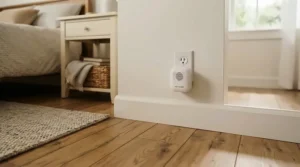
Placement matters more than model. Ultrasound behaves like light: it travels in straight lines, bounces off hard surfaces, and gets soaked up by soft ones. Sofas, curtains and carpets swallow it, and walls stop it dead.
Follow this sequence:
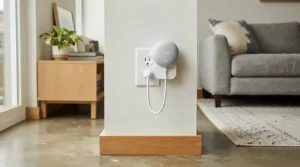
- Choose the right socket. Pick one with open space in front of it, not tucked behind a sofa or curtain. Listings vary on ideal height, from roughly 30 cm off the floor to about 80-120 cm, so check your manual.
- Place one per room. Don’t rely on a device to cover two rooms through a wall.
- Aim at activity. Put it near where you’ve seen droppings, gnaw marks or scuttling, such as behind the kettle or beside the airing cupboard.
- Track results. Note droppings weekly for four to six weeks. Without a baseline, you can’t tell whether anything changed.
- Keep it running. Manufacturers advise leaving units on continuously.
Some sellers claim pest activity rises at first as animals “flee”, then falls. I’d treat that as unproven. If activity keeps climbing, don’t wait indefinitely; escalate to proofing and traps.
Common first-30-day mistakes: hiding units behind furniture, plugging a device into a socket that’s routinely switched off, buying one for the whole house, and skipping food storage. Mice respond to food and warmth far more than sound.
✨ Ready to build your setup?
🔍 Compare the seven options above and click any highlighted product name to check current pricing and availability. A sensible starting kit is one unit per problem room, plus traps and proofing to do the heavy lifting!
Multi-Room Coverage: A Practical Plan for Real Homes
“Covers 1,600 sq ft” sounds impressive, until you remember that your home is full of doors. Multi-room coverage is a counting exercise, not an area calculation. Here are three realistic scenarios.
Scenario 1: renter in a one-bed flat. Mouse sightings in the kitchen only. A budget of about £20. Best fit: the single-unit British Lux Repel Lab in the kitchen, or a small pair such as the REPELIX ARMOUR 2-Pack for kitchen plus bedroom. Frequency of use: continuous, reviewed monthly.
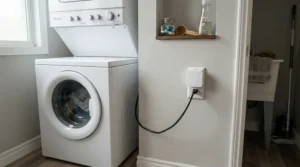
Scenario 2: family in a three-bed semi with a loft. Droppings in the loft, the kitchen and behind the washing machine. Budget of £30-£40. Best fit: the K&J 6 Pack, allocating one unit each to kitchen, hallway, loft, and the two bedrooms closest to the loft hatch, with the sixth in the utility area. The listing’s humidity-resistant claim is relevant for the loft.
Scenario 3: home with a mains-fed garage. Mice nesting among boxes, close to stored bird seed. Budget flexible. Best fit: the AMZ BRAND 2-Pack, whose wider frequency sweep suits a large open space, with sealed containers for seed being the real fix.
The pattern is clear. Match units to rooms where you’ve actually seen activity, not to square footage. Every closed door is effectively a new “space”, and a device on the wrong side of it does nothing.
Mice Still Turning Up? A Problem-and-Solution Guide
Sooner or later, someone reads this and says, “I bought one and I still hear scratching.” Here are the usual culprits.
Problem 1: Nothing has changed after four weeks. Solution: assume the device isn’t your answer and find the entry point. Mice can squeeze through gaps of around 5-6 mm, roughly a pencil’s width. Council pest advice, such as Test Valley Borough Council’s guidance for householders, recommends sealing gaps around pipes, checking vents and using wire mesh on larger holes.
Problem 2: My dog seems restless. Solution: switch to a quieter mode on something like the Gecool 4-Pack, move the unit out of the dog’s sleeping room, or unplug it for a few days and see if behaviour changes.
Problem 3: I can hear a faint noise. Solution: some people are sensitive to the upper audible range. Try a lower mode or relocate the unit. The AMZ BRAND 2-Pack listing itself suggests this.
Problem 4: The device is blocking my socket. Solution: use a single socket or check clearance before buying, especially with round designs like the LOPHE 4Pcs.
The theme throughout: a repeller can support a plan, but it can’t replace one.
How to Choose a Plug in Mouse Repeller
What should you look for in a plug in mouse repeller? Prioritise a genuine UK plug, one unit per room you need to protect, a quiet or silent mode, clearly stated power draw, and honest listing claims. Then treat it as one layer alongside proofing, food hygiene and traps.
Work through these steps:
- Count rooms, not square metres. Ultrasound stops at walls, so unit count beats coverage claims.
- Check the plug. Insist on a UK three-pin (BS 1363) fitting and UKCA or CE marking, so you’re not relying on a travel adapter.
- Look for adjustable or silent modes. These help if you have pets or noise-sensitive family members.
- Compare stated wattage. A 3W unit and an 8W unit differ by around £10 a year each in electricity.
- Read the fine print on claims. Phrases like “guaranteed” or “eliminates pests in days” are red flags.
- Check returns and seller. Third-party sellers vary; confirm you can return it.
- Plan the backup. Have traps and proofing ready if activity continues.
Socket Mouse Repeller Features That Actually Matter (And Those That Don’t)
Every socket mouse repeller listing shouts about features. Some are useful; most are noise, literally.
Features that matter:
- Multiple modes. A silent or fixed mode for bedrooms, a sweeping mode for kitchens.
- Stated wattage. It tells you your running cost.
- Compact body. A slim unit leaves the neighbouring socket usable.
- Sensible pack size. Buy the number you’ll actually plug in.
Features that don’t:
- “Covers 30+ pests”. A device claiming to handle mice, cockroaches, mosquitoes and spiders is a red flag. The evidence for insects is weaker still.
- Electromagnetic waves. Many listings tout this “dual-wave” extra, and I couldn’t find independent evidence that it does anything for mice. It’s harmless to ignore, but shouldn’t drive your choice.
- “Radiation free” labels. They play on fears rather than telling you anything useful.
- Coverage in square feet. Impressive, and largely irrelevant once doors are closed.
This is where honest commentary helps. Take any mains rodent repeller listing, strip out the adjectives, and you’re left with a frequency range, a wattage and a pack size. Those three numbers tell you nearly everything.
Mains Rodent Repeller vs Traps, Proofing and Pest Controllers
Let me lay out the trade-offs plainly. A mains rodent repeller is passive and humane, and it costs little to run. What it isn’t, based on the evidence I reviewed, is a proven eradication method. Rentokil, for instance, says ultrasonic devices are unlikely to give reliable long-term control, since mice tolerate them if food and shelter are available.
Traps work by killing or capturing mice you already have. Proofing works by denying entry. Professional treatment combines both with expertise. The Universities Federation for Animal Welfare, in its detailed humane rodent control advice, stresses proofing and food hygiene as the foundations, with control measures used where mice are already inside.
| Approach | Effort | Evidence | Best For |
|---|---|---|---|
| Plug in mouse repeller | Very low | Weak and disputed | Quiet rooms as a supporting layer, e.g. K&J 6 Pack |
| Trapping | Moderate | Strong | Active sightings |
| Proofing (mesh, sealant) | Moderate to high | Strong | Prevention and long-term control |
| Professional pest controller | Low for you | Strong | Established infestations |
The table makes the point neatly. A repeller wins on effort but loses badly on evidence. If your problem is “I saw a mouse once and want to feel proactive”, a DOBWGXZ 4 Pack as a supporting layer is a proportionate response. If mice are already nesting, go straight to traps, proofing or a professional.
No Battery Pest Deterrent Running Costs and Standby Power Use
A no battery pest deterrent sounds effortless, and it is, but it isn’t free. Because it needs mains power around the clock, the electricity adds up.
Strictly speaking, these devices aren’t in standby; they’re actively drawing power all the time. Still, the same maths applies as with standby power use. Here’s how it works with an illustrative 25p per kWh (check your own tariff):
- A 3W unit like the DOBWGXZ 4 Pack: about 26 kWh a year, roughly £6.50.
- A 5W unit at the top of the Gecool 4-Pack range: about 44 kWh, roughly £11.
- An 8W unit like the AMZ BRAND 2-Pack: about 70 kWh, roughly £17.50.
Multiply by your unit count and it becomes real money: six 5W units cost around £66 a year. That’s on top of the purchase price, and it’s the sort of hidden cost that turns a “cheap” gadget into a mid-priced one.
For context, the Energy Saving Trust figures quoted by Smart Energy GB suggest households can save around £45 a year by switching appliances off standby. Your repeller runs constantly, so the sensible approach is to run only the units you need, in the rooms that matter, and retire any that aren’t earning their keep. If activity has clearly stopped for a couple of months, consider unplugging rather than leaving them running forever.
Night Light Combo Devices: Handy or Gimmick?
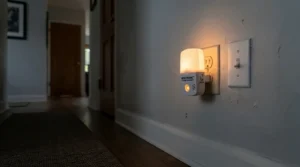
Search amazon.co.uk and you’ll find several listings for night light combo devices, pairing an ultrasonic emitter with a small LED. It’s a neat idea: one socket, two jobs, particularly useful on a landing or in a child’s room.
Here’s how I’d weigh them.
The upside: you save a socket and get a soft glow for night-time trips. In a hallway, that can genuinely be useful.
The downsides: light in a bedroom can be unwelcome, and some designs tie the light to a power button, so check whether the ultrasonic function stays on when the light is off. One seller’s answer on an Amazon Q&A said the ultrasonic function keeps running regardless, but that’s a single seller’s claim, so confirm it on your listing.
A separate point worth knowing: the light does nothing for mice. There’s no reliable evidence that a light bulb makes a repeller work better, so don’t pay a premium for it.
Even those without a light usually have a small LED indicator to show the unit is powered, which is often bright enough to be irritating at night. Whatever you buy, think about where the glow will land before you choose the socket.
For rooms where you’d fancy a night light anyway, a combo makes sense. For everywhere else, stick with the simpler, cheaper options above.
Safety, Pets and UK Compliance
A plug in mouse repeller is generally considered safe for people, but pets deserve a thought.
Pets: Cats can hear up to about 60 kHz and dogs up to around 40 kHz, so a sweeping unit may reach frequencies they notice. Small pet rodents such as hamsters, guinea pigs and rabbits are more at risk, since they hear well into the ultrasonic range and can become distressed. If you keep any of these, keep repellers out of their rooms or choose another method entirely.
Human exposure: The UK’s Health Protection Agency has published guidance recommending limits on airborne ultrasound exposure for the general public. Consumer devices are designed to sit within such limits, but if anyone in the house feels headaches or unease near a unit, unplug it.
UK compliance: Buy from listings that state UK plug compatibility, with a proper BS 1363 three-pin fitting, and look for UKCA or CE marking. Avoid overloading multi-way extension leads with several units and other appliances.
Other safety habits: Don’t cover units with fabric, don’t use them in damp areas unless the listing says it’s suitable, and unplug them if they get unusually warm. If you’re ever unsure, unplug and ask the seller for documentation.
Bottom line: a well-made unit from a reputable seller with clear compliance information is low-risk, but “low-risk” isn’t the same as “proven to work”.
Common Mistakes When Buying a Plug in Mouse Repeller
Here are the pitfalls I’d steer you away from.
Buying on coverage claims. A box promising 1,600 sq ft doesn’t account for walls. Count rooms.
Believing “guaranteed results”. No honest seller can guarantee this. Where listings admit results vary, that’s a point in their favour.
Ignoring the running cost. Eight watts, twenty-four hours a day, adds up.
Skipping the basics. If food is accessible and gaps are open, mice will stay regardless of sound. Store food in sealed containers and close entry points first.
Expecting an overnight fix. Manufacturers quote anything from one to six weeks, and even then results aren’t assured.
Buying too many too soon. Start with one or two units where you’ve actually seen activity, then expand if you notice a difference.
Forgetting pets. Check the room, the pet and the mode before plugging in.
Avoid these, and even a modest device becomes a sensible small addition instead of an expensive disappointment.
FAQ
❓ How many socket mouse repeller units do I need for a three-bedroom house?
❓ Can a plug in mouse repeller upset my dog, cat or hamster?
❓ Can I use a no battery pest deterrent on an extension lead or timer?
❓ How long before I know whether a mains rodent repeller is working?
❓ Will a plug in mouse repeller work in a loft or garage?
Conclusion
So, is a plug in mouse repeller worth buying? It depends on what you expect from it. As a low-effort, low-cost supporting layer, particularly in rooms where you’re worried about mice but haven’t seen any, it’s a reasonable small gamble. As your only weapon against an established infestation, the evidence says you’ll probably be disappointed.
Here’s the short version of my advice. For big open rooms, the AMZ BRAND 2-Pack is worth a look, if you can live with the higher power draw. For pet households wanting flexibility, the Gecool 4-Pack and its four modes make sense. The DOBWGXZ 4 Pack is the running-cost champion at around 3W a unit. For a whole family home, the K&J 6 Pack gives you the unit count, while the LOPHE 4Pcs suits a first four-room trial. A simple flat might only need the REPELIX ARMOUR 2-Pack. And if you’re sceptical, start with the single British Lux Repel Lab and judge for yourself after a month.
Whichever you pick, remember the real work: seal gaps, store food properly, keep traps handy, and call a professional if you see repeated signs. Do that, and a plug-in gadget can sit quietly in the background as insurance rather than a promise.
Recommended for You
- Electronic Mouse Deterrent For Home: 7 Honest Picks (2026)
- Ultrasonic vs Electronic Mouse Repellents: 7 Picks (2026)
- Ultrasonic Mouse Repeller: 7 Best UK Picks That Actually Help (2026)
Disclaimer: This article contains affiliate links. As an Amazon Associate, I earn from qualifying purchases. If you purchase products through these links, we may earn a small commission at no additional cost to you.
✨ Found this helpful? Share it with your friends! 💬🤗
