
In This Article
There’s a particular kind of dread that comes with hearing a scratch behind the skirting board at 11pm. You freeze, the telly goes quiet in your head, and a small voice says: please be the pipes. It usually isn’t. If you’ve landed here, chances are you’ve already had that moment, and now you’re doing the sensible thing — looking for mouse traps under £20 rather than panic-buying whatever’s nearest the tills at the garden centre.
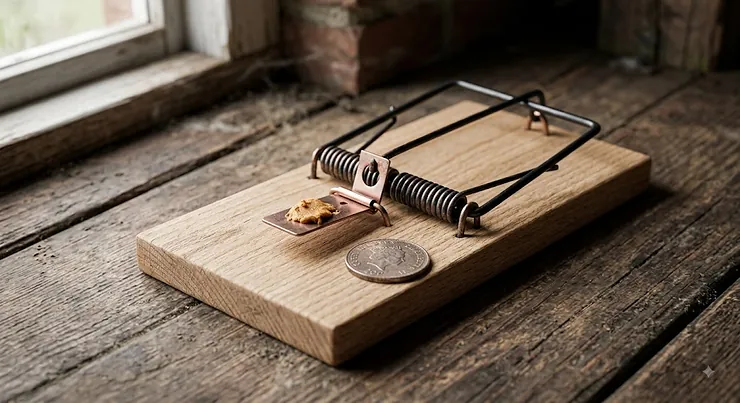
Here’s the good news: you genuinely don’t need to spend a fortune to deal with a mouse problem. A mouse trap, in the simplest sense, is a device designed to catch or kill a rodent, and the earliest recorded designs go back centuries — the mechanism hasn’t changed nearly as much as the marketing has. What has changed is choice. UK shoppers can now pick between wooden snap traps that would look familiar to a Victorian gamekeeper, tamper-resistant plastic kits, humane live-catch boxes, and galvanised steel multi-catch units — most of them sitting comfortably under the £20 mark, several multipacks for well under a tenner.
This guide walks through seven real, currently available products, all priced under £20, covering budget, mid-range and higher-spec options within that ceiling. We’ll look at what each one actually does well (and where it falls short), how UK reviewers rate them, and how to match a trap to your specific situation — because a single mouse behind the fridge and a loft full of scratching are two very different jobs, and the British Pest Control Association would tell you as much. Prices mentioned throughout are approximate ranges at the time of research — always check the current price before buying, since Amazon pricing shifts daily.
Quick Comparison Table
Before the deep dive, here’s the shape of the market at a glance. Every trap listed below sits under £20 and is genuinely available on Amazon UK.
| Trap | Type | Approx. Price | Reusable? | Best For |
|---|---|---|---|---|
| Pest-Stop PSTTB Trip Trap | Humane live-catch | Under £10 | Yes | First-time humane trappers |
| Pest-Stop Little Nipper | Wooden snap | Under £10 (multipack) | Yes | Tightest budget, proven design |
| ROSHIELD 6 x Mouse Trap | Heavy-duty snap (6-pack) | £13–£15 range | Yes | Multiple placement points fast |
| ROSHIELD 2 X Humane Mouse Traps | Humane live-catch | Under £10 | Yes | Kids/pets in the house |
| The Big Cheese Ultra Power Kit | Lockable bait-station trap | £6–£13 range | Yes | Tamper-resistant placement |
| SWISSINNO PRO SuperCat | No-touch snap + bait syringes | £13–£19 range | Yes | Hygiene-conscious buyers |
| Pest-Stop Multi Catch Metal | Galvanised multi-catch | £15–£20 range | Yes | Heavier, ongoing infestations |
A pattern emerges fast: reusability is basically standard at this price point now, so the real decision isn’t “cheap versus durable” — it’s “kill versus catch-and-release,” and “one mouse at a time versus several.” The Pest-Stop Little Nipper and Pest-Stop PSTTB Trip Trap anchor the budget end, the ROSHIELD and Big Cheese options occupy sensible middle ground, and the SWISSINNO PRO SuperCat and Pest-Stop Multi Catch Metal push toward the £20 ceiling in exchange for extra engineering or capacity. None of this tells you which is right for your house yet — that’s what the rest of this guide is for.
💬 Just one click — help others make better buying decisions too!😊
Top 7 Mouse Traps Under £20: Expert Analysis
We’ve picked these seven specifically to cover the realistic spread of what a UK household actually needs: quick kill, humane release, tamper-resistant placement around children or pets, and multi-catch capacity for worse infestations. Every product below is real, currently listed, and priced under £20 at the time of research.
1. Pest-Stop PSTTB Trip Trap — best humane starter trap
If you want to deal with a mouse without ending its life, this is usually the first product that turns up in UK search results, and there’s a reason for that. Amazon’s own listing shows it as a consistent Amazon’s Choice pick in this category, which tells you something about sustained demand rather than a flash-in-the-pan trend.
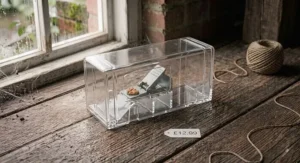
The trap is a small clear-plastic box, roughly 50mm high, 180mm wide and 55mm deep, with ventilation holes and a trip mechanism that closes the door the instant a mouse steps far enough in to reach the bait. In practice, that means you’re not relying on a spring-loaded kill bar to work cleanly — you’re relying on a door catch, which is a far gentler mechanism and one far less likely to injure a mouse partially or fail outright.
Who should buy this? Anyone who’s squeamish about kill traps, anyone with young kids who might find a trap before you do, and anyone who just prefers not to deal with disposal. Reviewers consistently describe it as well suited to animal lovers who want the mouse gone but not harmed, which lines up with its design intent. The trade-off is that you have to actually release the mouse somewhere appropriate, ideally well away from the house, or it’ll simply let itself back in through the same gap it used the first time.
Pros:
- ✅ No kill mechanism — genuinely humane by design
- ✅ Clear body makes checking for a catch effortless
- ✅ Reusable indefinitely with just a rinse
Cons:
- ❌ Requires daily checking so the mouse isn’t left stressed
- ❌ Doesn’t solve repeat entry unless you also block gaps
Priced comfortably under £10 at the time of research, this sits at the very affordable end of the market. For a single mouse or light activity, it’s hard to beat on value — you’re paying for a simple, well-tested mechanism rather than anything flashy.
2. Pest-Stop Little Nipper Mouse Trap — best classic wooden snap trap
This is the trap your grandad probably used, and there’s a genuine reason it’s still on shelves 128 years after Procter Bros first made it in 1897: the raised treadle design just works. The mouse has to physically step onto a slightly raised wooden platform to reach the bait, and that small amount of movement is enough to trigger a fast, powerful spring mechanism.
What the spec sheet won’t tell you, but decades of pest-control use suggest, is that treadle-style traps tend to out-perform flat-pedal designs specifically because mice have to commit their full weight to the trigger zone rather than nibbling from the edge. That reduces the “bait theft without a catch” problem that plagues cheaper flat-pan traps. It’s a kill trap, so it’s not for everyone — but it is fast, and a fast kill is generally considered the more humane outcome for a trap that isn’t catch-and-release.
Based on the spec comparison with pricier reusable snap traps on this list, the Little Nipper’s main selling point is sheer value: sold in small multipacks, the per-trap cost is often the lowest on this entire list. Reviewers commonly mention it working on the very first setting and being straightforward even for people who’ve never handled a mousetrap before, alongside consistent praise for build quality relative to the price.
Pros:
- ✅ Lowest per-trap cost of any product here
- ✅ 128-year-old design with a genuinely high catch rate
- ✅ Reusable wooden base survives repeated use
Cons:
- ❌ Exposed spring mechanism, unsuitable near curious pets
- ❌ Not humane — this is a kill trap, not catch-and-release
At well under £10 for a small multipack, this is about as budget pest control for mice as it gets without compromising on a design that’s actually proven. If your only criterion is “get rid of them as cheaply as possible,” this is probably your trap.
3. ROSHIELD 6 x Mouse Trap — best for covering multiple rooms fast
Roshield’s heavy-duty snap trap leans into a straightforward pitch: professional-grade components at consumer prices, sold as a 6-pack so you can hit every likely entry point in one go rather than trickling traps out one at a time.
The headline feature here is the welded kill bar paired with a high-strength spring — a detail that matters more than it sounds. Cheaper snap traps sometimes use a folded or crimped bar that can bend or slip under repeated use; a welded bar holds its shape and its snap force far more reliably across dozens of resets. Combined with a sensitive trigger mechanism, this trap is built more for consistent performance over many catches than for looking neat in the packet.
Here’s what most buyers overlook about buying a 6-pack instead of a single trap: mice rarely travel in a straight, predictable line, and a single trap in the “obvious” spot behind the bin often just gets ignored while activity continues elsewhere. Six traps let you cover the skirting boards in the kitchen, behind the fridge, near the airing cupboard and along a loft joist simultaneously, which is a genuinely different strategy to placing one trap and waiting.
Pros:
- ✅ Welded kill bar holds snap force over repeated resets
- ✅ Six traps cover multiple rooms in one purchase
- ✅ Used within the professional pest-control trade
Cons:
- ❌ Kill trap — not an option if you need catch-and-release
- ❌ Six at once means six to check and reset daily
Sitting in the £13–£15 range for six traps, the per-trap cost lands in the middle of this list — more than the Little Nipper, but you’re paying for a sturdier mechanism and, crucially, the ability to blanket-cover a property rather than guess at one location.
4. ROSHIELD 2 X Humane Mouse Traps — best for households with pets or kids
This is Roshield’s answer to the “I don’t want to kill anything” brief, and it’s aimed squarely at families. The pitch is a reusable, live-catch trap that’s explicitly marketed as pet- and child-friendly, with a sensitive trigger designed to close quickly once a mouse commits to entering.
Reviewers describe results that line up with a well-designed humane trap: fast setup, generally within a couple of minutes, and catches reported within hours of placement in kitchens and under sinks where droppings had already been spotted. One recurring theme in aggregated feedback is a genuinely positive balance between effectiveness and animal-friendly design — not always a given with budget humane traps, some of which trade a gentle mechanism for a much lower success rate.
Here’s the honest trade-off, though: humane traps by design don’t offer the instant, visible confirmation a snap trap does. You still need to check it at least once, ideally twice, a day — leaving a live mouse trapped for 24+ hours is neither kind nor, frankly, great for your house, since a frightened animal doesn’t stop being a pest just because it’s contained.
Pros:
- ✅ Designed specifically with children and pets in mind
- ✅ Reported catches within hours in real household use
- ✅ Fully reusable, no consumable parts to replace
Cons:
- ❌ Needs frequent checking to avoid distressing the mouse
- ❌ Sold as a pair, so limited coverage for a bigger space
At under £10 for the pair, this pairs neatly with the Pest-Stop Trip Trap above as one of the more affordable rodent traps on this list if a no-kill approach is the priority — the two brands are genuinely comparable on price and mechanism, so the choice often comes down to trap shape and how they’ll fit your specific spaces.
5. The Big Cheese Ultra Power Ready-Baited Mouse Trap Kit — best for tamper-resistant placement
The Big Cheese has been a recognisable name in UK rodent control for over three decades, and this kit reflects that professional pedigree scaled down for domestic use. Rather than a bare snap trap sitting exposed on the floor, this is a lockable plastic housing containing an internal Ultra Power trap, pre-baited with a poison-free, prune-based attractant.
The lockable housing is the point here. Reviewers and the manufacturer both flag it as suitable for placement in child- and pet-accessible areas precisely because the mechanism itself is enclosed — you’re not leaving a live spring mechanism exposed on a kitchen floor where a toddler or a curious dog could reach it. The trade-off for that safety is a slightly bulkier footprint than a bare snap trap, so it’s less discreet if you’re trying to tuck something into a tight gap.
What the spec sheet doesn’t spell out clearly is the “no-touch” disposal angle: because the kill mechanism sits inside the housing, you never have to handle a dead mouse directly to reset it — you simply open the unit, tip the catch out, and rebait. For anyone who finds the disposal step the worst part of trapping (which, honestly, is most people), that’s a meaningfully better user experience than a standalone wooden snap trap.
Pros:
- ✅ Fully enclosed mechanism, safe near children and pets
- ✅ No-touch disposal avoids direct contact with the catch
- ✅ Refillable with widely available attractant paste
Cons:
- ❌ Bulkier housing than a bare snap trap
- ❌ Refill bait sold separately for repeat use
Depending on pack size, pricing on this one ranges from around £6 up to roughly £13 for multi-unit kits, which keeps it squarely in budget pest control territory while adding a genuine safety feature the bargain-basement snap traps simply don’t offer.
6. SWISSINNO Mousetrap PRO SuperCat — best engineered no-touch snap trap
If there’s a “premium” tier within a £20 ceiling, this is it. SWISSINNO builds its reputation on two decades of Swiss pest-control engineering, and the PRO SuperCat is a patented design that aims to solve the two things people dislike most about traditional snap traps: touching the trigger area while setting it, and touching the trap again to reset it after a catch.
The mechanism uses a covered bait chamber with a precision-calibrated striking force — strong enough for an instant, humane kill, but engineered specifically not to require you to get anywhere near the working parts with your fingers. It ships with reusable food-bait syringes filled with a peanut butter-based attractant, which solves the fiddly “smear peanut butter on with a toothpick” step that trips a lot of first-time trap users up.
Here’s what most buyers overlook when comparing this to the cheaper wooden options on this list: the SuperCat’s washable, hygienic build means it holds up better to repeated resetting without the wood swelling, staining or absorbing odour the way a traditional pine treadle trap eventually will. Based on the spec comparison, it’s genuinely the more durable long-term option — the catch is that you’re paying roughly double the Little Nipper’s per-unit cost for that durability.
Pros:
- ✅ No-touch setting and resetting by design
- ✅ Reusable bait syringes remove the mess of hand-baiting
- ✅ Washable plastic build resists odour and staining
Cons:
- ❌ Highest price point on this list, near the £20 ceiling
- ❌ Overkill for a single, one-off mouse sighting
Priced in the £13–£19 range depending on pack size, this is the trap to pick if you’d rather buy once and not think about it again for a couple of years, rather than replace cheaper traps as they wear out.
7. Pest-Stop Multi Catch Metal Mouse Trap — best for an active, ongoing infestation
Every other trap on this list catches one mouse at a time. This one is built to catch up to ten in a single setting, which changes the maths considerably if you’re dealing with more than a stray individual. It’s a galvanised steel box with multiple entry points, a clear plastic lid so you can see activity without opening it, and extra ventilation to reduce stress on anything caught inside before you check it.
This is genuinely the trap professional pest controllers reach for when a property has established, ongoing activity rather than a single wandering mouse — and it’s worth being honest about why: a house with real mouse activity rarely has just one mouse. Mice breed quickly, and a single-catch trap that needs resetting after every catch simply can’t keep pace with a growing population the way a multi-catch unit can.
What most single-catch traps can’t tell you is how bad your actual infestation severity is — you catch one, reset, and have no sense of whether that was the last mouse in the house or the first of thirty. A multi-catch trap left overnight gives you a far more honest read on the scale of the problem, which matters when you’re deciding whether DIY traps will be enough or whether it’s time to call in a BPCA-registered professional.
Pros:
- ✅ Catches up to ten mice in a single setting
- ✅ Humane design with no kill mechanism involved
- ✅ Rust-resistant galvanised steel built for repeated use
Cons:
- ❌ Larger footprint than any single-catch trap here
- ❌ Needs checking every few hours, not once a day
At the £15–£20 mark, this sits right at the ceiling of this list’s budget — but for genuine, ongoing activity rather than a one-off sighting, it’s arguably the single best value-for-money pick here, since it can replace what would otherwise be five or six single-catch traps.
Practical Usage Guide: Setting Up Your Trap for Success
Buying the right trap is only half the job — placement and bait technique do more heavy lifting than most people expect. Start with bait: peanut butter consistently outperforms cheese in UK trials and professional use, largely because its stronger scent travels further and its stickiness forces a mouse to properly interact with the trigger rather than nibbling and retreating. Use a pea-sized amount; overloading the bait plate lets a mouse feed from the edges without ever setting off the mechanism.
Positioning matters just as much. Mice are neophobic — genuinely wary of new objects — so a trap dropped into open floor space in the middle of a room will often be ignored for days. Instead, place traps flush against skirting boards, with the trigger end facing into the room, since mice naturally travel along walls rather than across open space. In the first 30 days, resist the urge to move a trap that hasn’t caught anything after a day or two; give it three to four days in a genuine activity zone (look for droppings or gnaw marks) before relocating it.
A common early mistake is under-trapping: one trap for an entire house rarely reflects how mice actually move. Aim for a trap every couple of metres along known routes, and always position at least one in the kitchen and one near any loft hatch or airing cupboard, since these are consistently the most active zones. Check traps at least once daily, both to reset kill traps and to avoid leaving anything caught in a humane trap for longer than necessary.
Real-World Scenarios: Matching the Right Trap to Your Situation
The renter with a single mouse sighting. You’ve seen one mouse, once, and you’d rather not commit to anything permanent. A pair of Pest-Stop PSTTB Trip Traps or the ROSHIELD 2 X Humane Mouse Traps makes sense here — low cost, no kill mechanism to explain to a landlord, and easy to store away afterwards if the problem doesn’t recur.
The family with young kids and a cat. Safety around curious hands and paws is the priority. The lockable, enclosed design of The Big Cheese Ultra Power Kit or the fully covered mechanism on the SWISSINNO PRO SuperCat both keep the working parts away from small fingers, which matters more here than raw catch rate.
The homeowner with established loft or kitchen activity. Droppings in multiple rooms, gnawed packaging, scratching at night — this points to more than one mouse. The Pest-Stop Multi Catch Metal Mouse Trap, potentially paired with a ROSHIELD 6 x Mouse Trap 6-pack for problem rooms, gives you both capacity and coverage, which single traps simply can’t match against a genuine infestation.
The budget-conscious first-timer. If cost is the only real constraint and you’re comfortable with a kill trap, the Pest-Stop Little Nipper remains the benchmark: proven mechanism, lowest per-unit price on this list, and a design that’s survived over a century of use for good reason.
Problem → Solution: Fixing Common Mouse-Trapping Mistakes
Problem: the bait keeps disappearing but nothing gets caught. This almost always means too much bait or the wrong bait entirely. Switch to a pea-sized amount of peanut butter pressed firmly onto the trigger plate itself, not balanced loosely on top.
Problem: you’ve caught nothing after a week. The trap is probably in the wrong spot. Move it to a wall-hugging route with visible droppings nearby rather than the centre of a room, and try a different room entirely — mice don’t distribute evenly through a house.
Problem: you keep catching the same one or two mice, but the noise continues. You likely have more mice than your single-catch trap can process fast enough. This is the point to switch to a Pest-Stop Multi Catch Metal Mouse Trap or add multiple units from a ROSHIELD 6 x Mouse Trap pack rather than persevering with one trap.
Problem: a humane trap has caught something but you’re not sure how far to release it. Release at least 100 metres from the property, ideally near hedgerow or field, otherwise there’s a strong chance the same mouse simply finds its way back in through the gap it used originally.
Problem: traps keep getting caught by pets before mice find them. Switch to enclosed, lockable designs like The Big Cheese Ultra Power Kit, which physically prevents access to the trigger mechanism while remaining fully functional against mice.
How to Choose Mouse Traps Under £20
Picking between seven decent options comes down to a handful of genuinely practical criteria:
- Decide kill or catch-and-release first. This single decision eliminates half the shortlist immediately and is worth settling before you compare anything else.
- Match trap count to suspected infestation severity. One or two traps for a single sighting; a multi-catch unit or a 6-pack for ongoing, multi-room activity.
- Check for enclosed mechanisms if kids or pets are in the house. Lockable, covered designs cost a little more but remove a genuine safety consideration.
- Factor in reusability, not just sticker price. A £6 single-use style trap can end up costing more over a year than a £15 reusable one, so Which?’s guidance on persistent, repeated trapping is worth reading before you commit to one purchase.
- Consider bait convenience. Pre-baited kits and syringe-fed traps remove a fiddly step that puts some first-time buyers off entirely.
- Think about placement constraints. A bulkier, enclosed trap won’t fit every gap a slim snap trap will, so measure the space before ordering a pack.
- Set a realistic budget band, not just a ceiling. Under £10, £10–£15 and £15–£20 each represent genuinely different feature sets on this list, not just the same product with a higher price tag.
Infestation Severity: Matching Trap Type and Numbers to Your Problem
Not every mouse problem is the same problem. A single mouse spotted once, with no droppings found since, is a fundamentally different scenario to nightly scratching in three separate rooms — yet a lot of first-time buyers grab the same one or two traps regardless of which situation they’re actually in.
Light activity — one sighting, minimal or no droppings — genuinely only needs one or two traps, humane or kill, placed in the room where the mouse was seen. Moderate activity, meaning droppings in a couple of locations and occasional noise, generally calls for four to six traps spread across those active zones; this is where a 6-pack like the ROSHIELD 6 x Mouse Trap earns its keep. Severe, established activity — droppings in multiple rooms, gnawed packaging, and noise most nights — is where a multi-catch unit like the Pest-Stop Multi Catch Metal Mouse Trap genuinely outperforms a scattering of single-catch traps, simply because it can process several catches without you resetting it constantly.
If you’re still catching mice after two to three weeks of consistent trapping at this scale, that’s usually the signal to stop treating it as a DIY job and bring in a BPCA-registered pest controller, since persistent activity at that point often points to an entry route you haven’t found yet.
Trap Placement Tips: Where Mice Actually Travel
Mice are creatures of habit in a way that works entirely in your favour once you understand it. They rarely cross open floor space; instead, they hug walls, skirting boards and pipe runs, using their whiskers to navigate in near-darkness. That single fact should dictate almost every placement decision you make.
Put traps flush against a wall, at right angles to it, with the entrance or trigger facing outward into the likely travel route. Kitchens, especially behind and under appliances, are consistently the most productive spot in a UK home, followed closely by airing cupboards, loft hatches and anywhere pipework passes through a wall cavity. Avoid placing traps in the dead centre of open rooms — mice will generally avoid crossing that exposed space entirely, meaning a perfectly good trap in the wrong spot can sit untouched for weeks.
Space multiple traps roughly two metres apart along a known route rather than clustering them in one spot; mice tend to explore several access points before settling on a favourite, so spreading traps improves your odds of intercepting them regardless of which route they choose on a given night.
Cheap Mouse Traps vs Affordable Rodent Traps: Is There Really a Difference?
Technically, no — but the phrasing often signals two slightly different buyer priorities, and it’s worth being honest about that distinction rather than pretending it doesn’t exist. Cheap mouse traps, in the way most people search for the term, generally means the absolute lowest sticker price: think multipacks of the Pest-Stop Little Nipper, where the per-unit cost is the entire pitch.
Affordable rodent traps, by contrast, tends to describe something slightly different — products that aren’t necessarily the cheapest on the shelf, but that deliver strong value once you factor in reusability, safety features, or reduced hassle. The ROSHIELD 2 X Humane Mouse Traps or The Big Cheese Ultra Power Kit fit this bracket better: not rock-bottom priced, but priced sensibly for what they include.
In practice, everything on this list qualifies as both, since all seven sit under £20. The real question worth asking yourself isn’t which phrase describes your search better — it’s whether you’re optimising for the lowest possible spend today, or the lowest total cost and hassle across the life of a genuine mouse problem, which sometimes points to spending a little more upfront.
Benefits vs Traditional Alternatives
How do budget traps stack up against the alternatives people often reach for instead — poison bait, professional call-outs, or simply doing nothing and hoping the problem resolves itself?
| Approach | Upfront Cost | Speed | Safety Around Pets/Kids | DIY Suitable? |
|---|---|---|---|---|
| Budget traps (this list) | Under £20 | Fast, often same week | Good with enclosed designs | Yes |
| Poison bait blocks | Low–moderate | Slower, delayed effect | Requires locked bait stations | Partially |
| Professional pest control | £80–£150+ per visit | Fast, expert-led | Very good | No |
| No action | £0 | Never resolves | Poor — infestation worsens | N/A |
The comparison makes a genuinely strong case for trapping as a first response. Traps like the Pest-Stop Multi Catch Metal Mouse Trap and ROSHIELD 6 x Mouse Trap deliver much of the speed of professional intervention at a fraction of the cost, without the delayed-action risk that comes with poison bait, which can leave a mouse dying somewhere inaccessible and unpleasant. The trade-off, honestly, is your own time and willingness to check and reset traps daily — something a professional visit removes from your plate entirely, which is worth factoring in if the infestation turns out to be more severe than expected.
✨ Don’t Miss These Exclusive Deals!
🔍 Take your pest control setup to the next level with these carefully selected traps. Click on any highlighted product to check current pricing and availability — these tools will help you deal with the problem quickly and affordably.
Budget Pest Control for Mice: Building a Complete Strategy Under £20
A single trap, however good, is rarely a complete strategy on its own. Genuinely effective budget pest control for mice usually combines three things: trapping, exclusion, and hygiene — and only the first of those costs anything on this list.
Exclusion means physically blocking the gaps mice are using to get in, which is worth doing alongside trapping rather than after it. Mice can squeeze through gaps as small as a pencil’s width, so check around pipework, under doors, and where cables enter the property, sealing anything found with wire wool or a proper sealant rather than expanding foam alone, which mice can chew straight through.
Hygiene is the free part of the strategy: sealed food storage, regularly emptied bins, and not leaving pet food out overnight all reduce the incentive for mice to stay once they’ve found their way in. Combined with even the most basic trap from this list, a household that also seals entry points and removes easy food sources will generally see faster, more lasting results than trapping alone — and the total added cost, beyond the trap itself, is often just a tube of sealant and an evening’s work.
Value for Money: Cost-Per-Catch and Price Range Analysis
| Trap | Price Range | Reuses Before Replacement | Rough Cost-Per-Catch* |
|---|---|---|---|
| Pest-Stop Little Nipper | Under £10 | Dozens | Lowest on this list |
| Pest-Stop PSTTB Trip Trap | Under £10 | Indefinite | Very low |
| ROSHIELD 2 X Humane Mouse Traps | Under £10 | Indefinite | Very low |
| The Big Cheese Ultra Power Kit | £6–£13 range | Indefinite | Low, refill needed |
| ROSHIELD 6 x Mouse Trap | £13–£15 range | Dozens each | Low across 6 units |
| SWISSINNO PRO SuperCat | £13–£19 range | Indefinite | Moderate, high durability |
| Pest-Stop Multi Catch Metal | £15–£20 range | Indefinite | Lowest per-catch at scale |
*Estimated, based on reusability and typical catches per unit rather than a single-use assumption.
Looking at the table, the picture that emerges is that price and value for money don’t move in a straight line here. The Pest-Stop Little Nipper wins on raw upfront cost, but the Pest-Stop Multi Catch Metal Mouse Trap, despite sitting near the £20 ceiling, likely delivers the lowest actual cost-per-catch if you’re facing genuine multi-mouse activity, since one unit can do the work of several single-catch traps. For a single, isolated sighting, though, spending more simply buys you features — enclosed safety, no-touch resetting, longer service life — that a light infestation doesn’t need to justify the extra spend.
Common Mistakes When Buying Mouse Traps Under £20
The most frequent misstep is buying a single trap for what turns out to be a multi-mouse problem, then concluding traps “don’t work” when really the tool was simply undersized for the job. A close second is ignoring bait type entirely — grabbing whatever’s in the cupboard rather than peanut butter, which consistently outperforms alternatives in UK conditions.
Buyers also commonly overlook reusability when comparing sticker prices. A £6 trap that needs replacing after one catch can cost more over six months than a £15 reusable design used repeatedly. Similarly, skipping over safety features to save a few pounds is a mistake in households with pets or young children — an exposed spring mechanism is a real risk, not a theoretical one, and the lockable options on this list exist specifically to remove that risk.
Finally, plenty of people buy a trap and never move it, even after a week of no activity. Mice explore selectively, and a trap sitting in the wrong spot will simply never get used, however good the mechanism inside it is.
Safety, Regulations & Compliance: What UK Law Says About Traps
This is worth knowing before you buy anything, not after: glue traps are now illegal for general public use in England. The Glue Traps (Offences) Act 2022 made it an offence to set a glue trap without a specific licence from Natural England, with the remaining provisions fully in force since mid-2024. None of the seven products on this list are glue traps, so this doesn’t affect anything recommended here — but it’s a genuinely useful thing to know if you’ve seen glue boards advertised elsewhere at a tempting price, since using one without a licence carries real legal consequences.
Beyond that specific law, property owners in England and Wales have a general legal duty under the Prevention of Damage by Pests Act 1949 to keep premises free of rodents where they pose a risk to health or nearby properties. This mostly matters for landlords and anyone running a food business, but it underlines why acting promptly on a mouse sighting isn’t just about comfort — there’s a legal dimension too, particularly for anyone letting out a property.
On the humane side, if you’re using one of the live-catch traps on this list, good practice (and basic decency) means checking it at least once, ideally twice, daily, and releasing any catch well away from the property rather than simply letting it go in the garden, where it will likely just come straight back in.
Frequently Asked Questions
❓ What is the most effective mouse trap under £20?
❓ Are humane mouse traps as effective as kill traps?
❓ How many mouse traps do I need for one house?
❓ What is the best bait for a mouse trap in the UK?
❓ Is it legal to use glue traps for mice in England?
Conclusion
Dealing with a mouse doesn’t require an expensive call-out or a trip round three different shops — the seven traps covered here prove that a genuinely effective solution, humane or otherwise, comfortably fits under £20. What matters more than the exact product you choose is matching that choice to your actual situation: a single sighting calls for something as simple as the Pest-Stop PSTTB Trip Trap, while established, multi-room activity is better met with the capacity of the Pest-Stop Multi Catch Metal Mouse Trap or a full ROSHIELD 6 x Mouse Trap pack spread across the house.
Placement and bait technique will do as much work as the trap itself, so treat those as part of the purchase, not an afterthought. And if, after a few consistent weeks of trapping, the activity hasn’t slowed, that’s a reasonable point to bring in professional help rather than persevering indefinitely — a BPCA-registered technician has access to tools and expertise that go well beyond anything sold to the public.
Whichever trap you land on from this list, you’re starting from a genuinely well-tested design rather than a gimmick, at a price that won’t make the decision feel like a gamble.
✨ Don’t Miss These Exclusive Deals!
🔍 Take your pest control results to the next level with these carefully selected traps. Click on any highlighted product to check current pricing and availability. These picks will help you sort a real mouse problem without blowing the budget!
Recommended for You
- Does Peppermint Oil Really Repel Rats? 7 Options Ranked for 2026
- Peppermint Rat Repellent UK: 7 Best Options Tested for 2026
- How to Repel Rats Naturally: 7 Proven Methods for 2026
Disclaimer: This article contains affiliate links. As an Amazon Associate, I earn from qualifying purchases. If you purchase products through these links, we may earn a small commission at no additional cost to you.
✨ Found this helpful? Share it with your friends! 💬🤗
