
In This Article
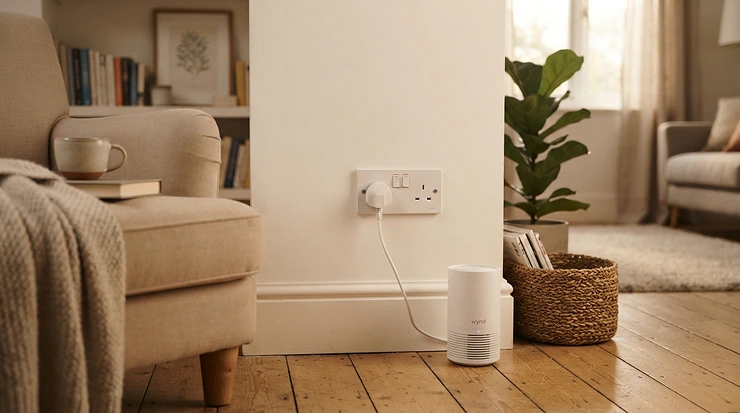
Somewhere behind your kitchen skirting board, something is scratching at 2am, and you have landed on this page trying to work out whether a small plastic box plugged into the wall socket is actually going to fix it. The debate over ultrasonic vs electronic mouse repellents shows up in almost every UK pest-control forum thread, and the honest answer is messier than either camp wants to admit: “ultrasonic” and “electronic” are not even two separate technologies most of the time, they are two halves of the same product line, and understanding that distinction is the difference between buying something useful and wasting £30 on a nightlight that hums.
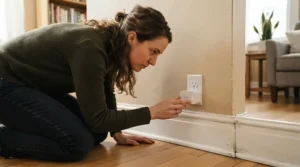
Ultrasonic devices emit high-frequency sound above 20kHz, pitched deliberately beyond human hearing but squarely inside a mouse’s audible range. Electronic (or electromagnetic) repellers instead pulse a low-frequency signal through your existing household wiring, aiming to make the space inside your walls and under your floors uncomfortable rather than the open air of a room. Most products marketed today, including several from PestBye and The Big Cheese, actually combine both signals in one plug, which is exactly the kind of detail that gets lost in marketing copy. Government health guidance on rodent-borne disease makes clear why this matters beyond mere annoyance — the risks from wild rodent exposure documented by GOV.UK are real enough that getting your deterrent strategy right, or knowing its limits, genuinely matters. This guide walks through seven real UK-available repellers, what independent testing actually shows about each technology, and where walls, budgets and expectations should shape your choice.
Quick Comparison Table
| Product | Technology | Coverage | Power Source | Best For |
|---|---|---|---|---|
| The Big Cheese Mini-Sonic Mouse Repellent | Ultrasonic only | Small room | Mains plug-in | Discreet single-socket use |
| PestBye Long Life Battery Operated Sonic Repellent | Ultrasonic only | Up to 2,500 sq ft | 2x 9V battery | Sheds, garages, no mains |
| The Big Cheese Sonic Mouse & Rat Repeller | Ultrasonic only | Up to 37m² | Mains plug-in | Mid-size single rooms |
| ROSHIELD Advanced Ultrasonic Mice Repeller | Ultrasonic only | Room-level | Mains plug-in | Budget multi-room setups |
| The Big Cheese Advanced Pest Repeller | Combined ultrasonic + electromagnetic | Up to 37m²/400 sq ft | Mains plug-in | Single problem room with wall activity |
| PestBye Advanced Whole House Repellent | Combined ultrasonic + electromagnetic | Up to 2,000 sq ft | Mains plug-in | Whole-house 4-bed coverage |
| PestBye High Powered Professional Repeller | Combined ultrasonic + electromagnetic | Large rooms/commercial | Mains plug-in | Pubs, offices, bigger footprints |
Looking at the spread here, the pattern that jumps out is structural rather than brand-based: every pure ultrasonic device tops out around 37m² to 2,500 sq ft of open, unobstructed space, while every combined-technology unit claims whole-house coverage specifically because the electromagnetic half travels through the wiring rather than the air. That does not mean the combined units are automatically the better buy — the honest read of the manufacturer coverage figures against independent testing later in this piece complicates that story considerably. Budget shoppers doing a single small room are paying for square footage they will never use if they jump straight to the whole-house units.
Found this comparison useful? A quick share helps someone else skip the 2am scratching-in-the-wall spiral too.
Top 7 Mouse Repellers: Expert Analysis
1. The Big Cheese Mini-Sonic Mouse Repellent — smallest footprint for tight spaces
The standout here is genuinely the size: this is built to sit flush against a wall socket without blocking the second plug beside it, which matters more than it sounds once you are trying to protect a kitchen with limited sockets. It runs pure ultrasonic frequency-swept sound, has a halo LED and test button so you can confirm it is actually running, and is rated safe for use around cats and dogs.
What the spec sheet won’t tell you is that its small size also means a smaller emitter, so real-world range sits at the lower end of what ultrasonic devices generally manage — this is a single-room, line-of-sight tool, not a whole-flat solution. It suits renters and small-flat dwellers who want something discreet in one problem corner rather than broad coverage.
Reviewer sentiment on this line of Big Cheese products consistently describes it as “worth trying alongside proper exclusion work” rather than as a standalone fix, which lines up with what the wider evidence base says about ultrasonic devices generally. Buyers should treat it as a supplementary layer, not a replacement for blocking entry points.
Pros:
- ✅ Compact design does not block adjacent socket
- ✅ Test button confirms the unit is actually working
- ✅ Pet-safe rating for cats and dogs
Cons:
- ❌ Smaller emitter means shorter real-world range
- ❌ No electromagnetic component for in-wall activity
Price sits in the budget bracket, typically under £20, and at that price it is a reasonable low-risk add-on rather than a serious investment.

2. PestBye Long Life Battery Operated Sonic Rat and Mouse Repellent — best for sockets you don’t have
What stands out immediately is the battery operation: two 9V batteries rated for 8 to 12 months of continuous use, which solves the one problem every plug-in device shares — no mains socket in a shed, static caravan or detached garage means no protection. It emits an ultrasonic pulse roughly every eight seconds and claims coverage up to 2,500 sq ft in unobstructed space, a figure worth treating cautiously given how directional ultrasonic waves are in practice.
Based on the spec comparison against mains units, the trade-off is clear: you gain total placement freedom and lose the electromagnetic layer that mains-wired devices use to reach wall cavities. It is the obvious pick for outbuildings, allotment sheds, or anyone in a rental who cannot rewire anything and just needs something battery-powered near the compost bin.
Aggregated review sentiment for this PestBye line skews positive on battery longevity specifically, with fewer complaints about running costs than plug-in equivalents, though the same reviewers echo the wider caveat that results build gradually over weeks rather than overnight.
Pros:
- ✅ No mains socket required — works anywhere
- ✅ Long battery life rated 8 to 12 months
- ✅ Genuinely portable between outbuildings
Cons:
- ❌ No electromagnetic function for wall cavities
- ❌ Battery replacement is an ongoing running cost
Expect a price in the low-to-mid £20s range, with batteries as an additional recurring cost most buyers forget to budget for.
3. The Big Cheese Sonic Mouse & Rat Repeller — constantly shifting frequency to reduce habituation
The headline feature is the frequency-sweeping design: rather than emitting one fixed pitch, it constantly varies its ultrasonic output, which is the manufacturer’s answer to the well-documented problem of rodents habituating to a static tone over time. Coverage is rated up to 37m, with a halo-red LED and test button carried over from the smaller Mini-Sonic in the same range.
Here’s what to weigh: frequency-sweeping is a genuinely sound engineering response to a real behavioural issue, but it does not solve the more fundamental limitation that ultrasonic sound simply does not bend around furniture or pass through walls, so a repeller in the kitchen does nothing for a nest in the loft. This suits households already past the “we might have mice” stage and into “we know they are in this one room” — a hallway, a single infested kitchen, a pantry.
Reviewers commonly note it is best deployed once an infestation is already largely under control through trapping or exclusion, used as maintenance rather than as first response, which matches the manufacturer’s own stated use case.
Pros:
- ✅ Frequency-sweeping technology reduces rodent habituation
- ✅ Test button and LED confirm operation at a glance
- ✅ Safe around children, cats and dogs
Cons:
- ❌ Ultrasound blocked by furniture, doors and walls
- ❌ Best used for maintenance, not active infestations
Priced typically in the £15 to £25 range, it represents reasonable value as a secondary layer rather than a primary control method.
4. ROSHIELD Advanced Ultrasonic Mice Repeller — budget multi-pack for room-by-room coverage
The advantage that jumps out is affordability at scale: ROSHIELD’s plug-in units are commonly sold in multi-packs, which matters because the single biggest limitation of any ultrasonic device is that it does not travel between rooms, so covering a whole house properly means one unit per room rather than one heroic unit doing everything. It runs on standard mains ultrasonic emission with the usual claims around effectiveness against mice, rats, and assorted crawling insects layered on top.
On paper this means a household can kit out a kitchen, utility room and hallway for roughly what a single premium whole-house unit costs, provided expectations about per-room-only coverage are set correctly from the outset. What most buyers overlook about multi-pack ultrasonic sets is that buying five units for five rooms is often better value and better actual coverage than buying one expensive “whole house” claim from a single socket, because ultrasound genuinely cannot turn corners.
Review feedback for budget multi-room ultrasonic brands broadly echoes the wider pattern in this category: initial optimism, followed by mixed reports on longer-term effectiveness once the novelty period passes.
Pros:
- ✅ Multi-pack pricing suits room-by-room coverage
- ✅ Simple plug-in setup with no wiring
- ✅ Works alongside traps, poison and bait stations
Cons:
- ❌ Requires one unit per room for real coverage
- ❌ No independent lab verification of claimed range
Multi-packs typically fall in the £20 to £35 range for two units, which is competitive once you account for needing several to cover a property properly.
5. The Big Cheese Advanced Pest Repeller — dual-signal design reaching wall cavities
This is where the category gets genuinely interesting: the Advanced Pest Repeller combines swept ultrasound with an electromagnetic signal that pulses through the property’s existing wiring, specifically engineered to reach nest sites within walls, ceilings and cavities that airborne sound simply cannot penetrate. Coverage is rated at 400 sq ft for a single room, with continuous output claimed above 100dB at swept frequencies inaudible to humans and pets.
The real-world meaning here is significant: if your problem is scratching behind plasterboard rather than mice visibly crossing open floor, the electromagnetic half is doing work the ultrasonic half physically cannot, since sound waves lose most of their energy trying to pass through a stud wall.
Reviewers running this model in older properties with cavity walls report it as one of the more credible options in the category specifically for that reason, though the same reviewers are consistent in flagging that it will not touch an infestation that has already established food access inside a kitchen. It suits anyone hearing activity in walls or ceilings rather than seeing mice in the open.
Pros:
- ✅ Electromagnetic signal reaches wall and ceiling cavities
- ✅ Dual-technology design addresses two failure points at once
- ✅ Test button and LED indicator included
Cons:
- ❌ Single-room coverage despite dual technology
- ❌ Does not remove existing food sources drawing mice in
Expect a price in the £25 to £40 range, reasonable for households specifically dealing with in-wall activity rather than open-floor sightings.
6. PestBye Advanced Whole House Rat and Mouse Repellent — combined tech rated for a full four-bed property
The standout claim is scale: rated to cover houses up to 2,000 sq ft, roughly a four-bedroom property, by combining electromagnetic interference through the household wiring with ultrasonic noise from the unit itself, and it can be plugged into any room, loft or basement to work its way through the whole circuit. PestBye states it costs under 1.5p per day to run continuously, a genuinely low running cost compared to ongoing bait or professional callout fees.
Based on the spec comparison against single-room units, the logic of whole-house electromagnetic coverage is sound in principle, since mains wiring runs through every wall in a way a single ultrasonic emitter cannot replicate acoustically — but this is precisely the claim independent testing bodies have pushed back on hardest, and it deserves the scepticism covered later in this piece rather than being taken purely on the manufacturer’s word.
It will not affect other electrical equipment, computers or burglar alarms, and PestBye backs it with a satisfaction guarantee. This suits homeowners in a full house rather than a flat, particularly older four-bed properties with the kind of extensive wall cavities where a single-room ultrasonic device would be hopelessly outmatched.
Pros:
- ✅ Whole-house coverage claim for up to four bedrooms
- ✅ Extremely low running cost under 1.5p per day
- ✅ Backed by a manufacturer satisfaction guarantee
Cons:
- ❌ Whole-house electromagnetic claims lack independent verification
- ❌ Single plug point may not reach isolated ring circuits evenly
Pricing typically sits in the £30 to £50 range, which is modest against a single professional pest-control callout, though it should be weighed as a complement to proofing work rather than a replacement for it.
7. PestBye High Powered Professional Rat and Mouse Repeller — stepped-up output for commercial-scale spaces
The defining feature is raw output: this is PestBye’s higher-powered sibling to the Whole House model, designed explicitly for larger-scale environments like pubs, offices, restaurants and hotels where a domestic-strength signal would be spread too thin. It mixes the same ultrasonic and electromagnetic combination but at increased intensity, aimed at properties or commercial units too large for the standard whole-house model to service properly.
What most buyers overlook is that “high powered” in this context means power sufficient for a larger square footage, not a stronger guarantee of effectiveness per square metre — the underlying physics of ultrasonic dead zones and electromagnetic signal degradation over long wiring runs still apply regardless of the unit’s rated output.
It has not been found to affect cats, dogs, birds, reptiles or amphibians, though PestBye notes it may affect pet rodents like gerbils, hamsters or chinchillas kept in the same building, which is a genuinely important safety note for anyone running a business with an in-house mascot or a home with pet rodents nearby. This suits landlords, small commercial operators or anyone with a genuinely large detached property beyond what the standard whole-house unit is rated for.
Pros:
- ✅ Higher output suited to commercial-scale properties
- ✅ Combined technology reaches wiring-adjacent cavities
- ✅ Confirmed safe around common household pets
Cons:
- ❌ Premium pricing versus the standard whole-house model
- ❌ Can affect pet rodents housed on the same premises
This sits at the premium end, typically in the £40 to £60 range, justified mainly for larger footprints where the standard model would be under-specified.
How Do Mouse Repellers Actually Work?
A mouse repeller is a plug-in or battery-powered device that emits either high-frequency ultrasonic sound above human hearing, a pulsed electromagnetic signal through household wiring, or both, aiming to make an area uncomfortable enough that rodents avoid it without traps or poison. The mechanism sounds simple, but the two halves work completely differently in practice.
Ultrasonic devices exploit the fact that mice can hear frequencies well above 20kHz, the rough upper limit of human hearing, and use that gap to create sound that is genuinely irritating or disorienting to a mouse while being silent to the household. The catch is that ultrasound behaves like light more than like the lower-frequency sound your speakers produce — it travels in a relatively straight line, loses energy quickly with distance, and gets blocked almost entirely by furniture, doors, and internal walls. Electromagnetic devices take a different approach entirely: rather than emitting sound into open air, they pulse a signal through your home’s existing electrical wiring, aiming to disturb the environment inside wall cavities and ceiling voids that ultrasound cannot reach at all. Because most household wiring runs through every room, this in theory offers broader reach than a single ultrasonic emitter, though as the independent testing section below explains, “in theory” is doing a lot of work in that sentence.
Sound Based vs Electromagnetic Repellers: What’s Actually Different
The distinction between sound based and electromagnetic repellers comes down to what medium carries the signal, and that single difference cascades into almost every practical limitation each type has. Sound based repellers push ultrasonic pressure waves through the air of a room, which means their effective range is defined entirely by line of sight — a doorway, a sofa, or a stack of boxes can create a dead zone just a few feet from the unit itself. This is why manufacturer coverage figures like “up to 2,500 sq ft” always come with the caveat “unobstructed,” a qualifier that rarely survives contact with an actual furnished home.
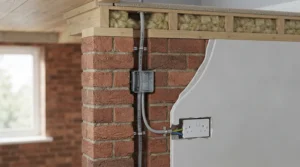
Electromagnetic repellers sidestep the air-travel problem by using the copper wiring already running through your walls as the delivery medium, which is genuinely clever engineering when it works as intended. Reviewers consistently note that electromagnetic-based claims are harder to verify subjectively than ultrasonic ones, precisely because you cannot hear or otherwise sense the electromagnetic signal working, unlike the (inaudible to you, but theoretically confirmable via a phone’s ultrasonic-detecting app) ultrasonic tone. What most buyers overlook is that a property with older wiring, multiple separate ring circuits, or extensions added at different times may not carry an electromagnetic signal evenly across the whole building, meaning a single plug in the hallway will not necessarily protect a detached garage on its own circuit. Sound based technology suits confirmed single-room problems where you can directly observe the treated space; electromagnetic technology is pitched at the harder problem of activity you can hear in the structure but cannot see.
Combined-Technology Devices: Do Two Signals Beat One?
Combined-technology devices — the PestBye Advanced Whole House Rat and Mouse Repellent, PestBye High Powered Professional Rat and Mouse Repeller, and The Big Cheese Advanced Pest Repeller all sit in this category — bundle ultrasonic and electromagnetic output into a single plug on the theory that stacking two different discomfort mechanisms covers more failure modes than either alone. The logic has genuine merit: ultrasonic handles the open room, electromagnetic handles the wall cavity, and a mouse trying to establish a nest has fewer comfortable options left. What the spec sheet won’t tell you is that “combined” does not mean each half performs at full strength — running two systems from one unit, often one no larger than a standard ultrasonic-only device, involves genuine engineering trade-offs in power allocation that most product listings gloss over entirely.
Based on the spec comparison across the seven products above, combined units consistently claim larger coverage areas than pure ultrasonic devices, which is logically consistent with the electromagnetic signal’s ability to travel further through wiring than sound travels through air. However, aggregated review sentiment for combined-technology devices is notably more mixed than for simpler single-technology units, with a recurring theme being that buyers expected the “whole house” language to mean elimination rather than deterrence, and adjusted their expectations only after weeks of continued but reduced activity. The honest verdict is that combined devices are a reasonable hedge against the specific failure modes of each individual technology, but they are not a multiplier on effectiveness, and anyone expecting double the results for roughly double the price of a basic ultrasonic unit is setting themselves up for disappointment regardless of which specific product they choose.
What Independent Testing Data Actually Shows
This is the section most manufacturer pages would rather you skip, so it is worth being direct about it. The evidence base on ultrasonic pest devices generally is not kind to the category. A widely cited peer-reviewed study published via PubMed Central tested nine separate ultrasonic devices against a live pest species under controlled conditions and found repellency rates below 19.5% — nowhere near sufficient to recommend the technology as a standalone control method, and while that particular study concerned ticks rather than rodents, the underlying mechanism being tested (whether ultrasonic sound reliably drives away a target pest) is the same one at issue with mouse-specific marketing claims. Historically, the US Federal Trade Commission issued warning letters to more than 60 manufacturers in a single enforcement wave over unsubstantiated ultrasonic pest-control efficacy claims, a regulatory history that the wider industry has never fully shaken off.
None of this means ultrasonic and electromagnetic repellers are worthless, but it does mean the “independent testing data” secondary buyers specifically search for tends to show inconsistent, modest, short-term behavioural effects rather than the dramatic clearance results implied by product photography. Which? Conversation’s own consumer guidance on humane pest control for mice reflects this same cautious framing, treating plug-in deterrents as one layer among several rather than a solution in isolation. The honest reading of the data is that these devices can meaningfully complement exclusion and hygiene work, particularly at the “we think there might be an early problem” stage, but should never be the only line of defence once mice have established feeding routes inside a property.
Wall Material Interference: Why Your Repeller Might Be Failing
Wall material interference is one of the most common reasons a mouse repeller that worked in a neighbour’s house does nothing in yours, and it applies differently to each technology. Ultrasonic sound is absorbed and scattered by soft materials — plasterboard, insulation, carpet, upholstered furniture — and reflects unpredictably off hard surfaces like tile or brick, meaning the actual coverage pattern in a real room rarely resembles the tidy circle implied by manufacturer diagrams. A kitchen with a run of fitted units and a tiled splashback will behave very differently to an open-plan living room with bare walls, even with an identical device in an identical-sized space.
Electromagnetic devices face a different but equally real interference problem: their signal depends on the property’s own wiring acting as an effective conductor throughout, and older UK housing stock with mixed wiring generations, rewired extensions on separate circuits, or properties split into multiple electrical consumer units can all create gaps where the signal simply does not reach. Solid stone or thick period-property walls with cavity insulation retrofitted at different times add a further layer of inconsistency that no amount of unit wattage fully resolves. If you own an older property, particularly a converted or extended one, testing the device in the specific room with the actual problem — not just anywhere convenient near a socket — is the only reliable way to know whether wall material and wiring history are working for or against you. This is precisely why manufacturer coverage claims are best treated as best-case ceilings rather than realistic expectations.
Repellent Technology Comparison: Reading Past the Marketing Claims
| Claim | What It Usually Means | What To Actually Check |
|---|---|---|
| “Covers up to X sq ft” | Best-case, unobstructed, open-plan test conditions | Your actual room shape, furniture density and wall materials |
| “Whole house coverage” | Relies on wiring continuity, not a stronger signal | Whether your home has one continuous ring circuit or several separated ones |
| “Frequency-sweeping technology” | Varies pitch to reduce habituation over time | Whether it is paired with a test button to confirm ongoing operation |
| “Safe for pets” | Verified against cats and dogs typically | Whether you keep pet rodents, which most brands flag separately |
The pattern across every repellent technology comparison worth taking seriously is that coverage and safety claims are usually technically accurate under laboratory or best-case conditions, but rarely translate directly to a specific furnished home with its own quirks of wall type, wiring age and floor plan. Reading the small print around “unobstructed” and “may vary by environment” tells you more about likely real-world performance than the headline square footage figure ever will. Buyers who treat the marketed coverage as a rough ceiling rather than a guarantee, and who plan for one device per genuinely separated space, end up far less disappointed than those who buy a single “whole house” unit expecting it to behave like a described 2,000 sq ft dome of protection.
How to Choose Between Ultrasonic and Electronic Mouse Repellents
- Identify where the activity actually is — open floor sightings point toward ultrasonic devices, while scratching inside walls or ceilings points toward electromagnetic or combined units.
- Measure the real space, not the marketing category — a single open-plan kitchen-diner needs different coverage than three small separated rooms.
- Check your property’s wiring layout — multiple consumer units or recently added circuits will limit electromagnetic reach regardless of unit power.
- Decide whether mains power or battery operation suits the location — sheds, garages and caravans usually need battery units regardless of how good a plug-in device looks on paper.
- Set expectations around timeline — most manufacturers and independent reviewers alike describe gradual behavioural change over two to six weeks, not instant results.
- Budget for it as one layer, not the whole solution — pair any repeller with entry-point sealing and hygiene changes for a realistic chance of lasting results.
- Confirm pet compatibility if you keep gerbils, hamsters or chinchillas, since several products in this category explicitly warn they may affect pet rodents.

Common Mistakes When Buying a Mouse Repeller
The single most common mistake is buying one unit and expecting it to cover an entire multi-room property, when the underlying physics of both ultrasonic sound and electromagnetic signal degradation make that an unrealistic ask from a single plug point. A close second is judging the device a failure after only a few days — the manufacturer guidance and aggregated reviewer sentiment across nearly every product in this category consistently point to a two-to-six-week window before any behavioural shift becomes noticeable, and abandoning the approach on day four tells you nothing useful either way.
Another frequent error is placing the unit somewhere convenient rather than somewhere relevant — behind a sofa, inside a cupboard, or in a spare room nobody uses — which defeats ultrasonic devices immediately given how easily furniture blocks the sound. Buyers also routinely skip the most basic complementary step: leaving food sources accessible while relying entirely on a repeller to solve what is fundamentally a food-and-shelter problem. Finally, many buyers overlook the pet rodent warnings that PestBye and other manufacturers specifically flag, running an electromagnetic device in a home with a pet hamster or gerbil without checking the product’s own safety notes first.
Practical Placement and Setup Guide
Getting genuine value from any of these seven products depends heavily on setup discipline in the first thirty days. Start by placing ultrasonic-only units at height where possible, roughly a third of the way up a wall, with a clear line of sight across the room rather than tucked behind furniture — this single change accounts for more performance difference between two identical units than almost any other factor. For combined-technology devices, plug into a socket that sits on the same ring circuit as the affected room wherever your consumer unit layout allows, since the electromagnetic signal needs continuous wiring to reach the target cavity.
Run a test-button check weekly for the first month on any unit that has one, since a device silently failing is worse than no device at all if it gives false reassurance. Pair the repeller from day one with basic exclusion work — steel wool in gaps around pipework, sealed bins, and no food left on worktops overnight — because none of the seven products reviewed here claim to work as a standalone fix, and the manufacturers themselves generally recommend combining repellers with traps or bait stations for anything beyond an early-stage concern. Reassess after four to six weeks rather than four to six days, and if battery-operated, mark a calendar reminder at the eight-month point given PestBye’s own stated 8-to-12-month battery life range.
Real-World Scenarios: Matching the Device to Your Home
Consider a first-floor rental flat in a converted Victorian terrace, one bedroom, gas hob, and the occasional scratching sound behind the kitchen units at night but no actual sightings yet. This is close to the ideal case for The Big Cheese Mini-Sonic Mouse Repellent — a single confirmed room, no wall-cavity concerns yet, a renter who cannot alter wiring, and a budget that does not justify a whole-house unit for a problem that has not been confirmed as structural.
Now picture a detached four-bedroom family home built in the 1930s, with visible droppings in the loft and scratching audible in two separate downstairs rooms. This is a much stronger case for the PestBye Advanced Whole House Rat and Mouse Repellent, given the property size matches its stated 2,000 sq ft rating and the multi-room activity suggests the electromagnetic wiring-based approach has more to work with than a single ultrasonic emitter ever could. Finally, imagine a small business owner running a pub kitchen where evening service has been interrupted twice by mice near the bins — here the PestBye High Powered Professional Rat and Mouse Repeller matches both the commercial-scale space and the higher stakes of a food business, where government guidance on rodent control in food-handling premises underlines just how seriously food-safety inspectors treat any sign of rodent activity on licensed premises.
Long-Term Cost & Maintenance
Running costs across this category are genuinely modest compared to the alternative of repeated professional callouts. PestBye states its Advanced Whole House unit costs under 1.5p per day to run continuously, which works out to under £5.50 a year in electricity — trivial against even a single £80 to £150 professional pest-control visit. Battery-operated units like the PestBye Long Life model carry a different cost structure: two 9V batteries every 8 to 12 months, typically £8 to £12 a year depending on battery quality, still far cheaper than mains electricity concerns might suggest but a genuine recurring cost that buyers comparing “cheap” battery units against “more expensive” mains units often forget to include in total cost of ownership.
The bigger long-term cost consideration is replacement cycle rather than running cost. Plug-in units generally carry one to two year manufacturer guarantees, and reviewers note that continuous 24/7 operation over several years can shorten a unit’s working life versus intermittent use. Factoring in an eventual £20 to £50 replacement every few years alongside the trivial running costs still leaves this category dramatically cheaper over a five-year horizon than recurring professional treatments, provided the underlying expectation stays realistic: these are a deterrent layer, not a cure, and the real long-term cost saving comes from combining them with proper proofing rather than relying on them in isolation indefinitely.
Mouse Repellers for Renters, Homeowners and Small Businesses
Renters face a specific constraint set: no permission to alter wiring, often limited sockets, and a landlord who may or may not act quickly on a pest report. Battery-operated ultrasonic units like the PestBye Long Life model, or compact plug-ins like the Big Cheese Mini-Sonic, suit this situation because they require no structural changes and can move with the tenant. Homeowners have more flexibility and, in older or larger properties, more genuine need for the wiring-based reach that combined-technology units offer, making the PestBye Advanced Whole House Repellent or The Big Cheese Advanced Pest Repeller better matches once a specific wall-cavity problem is confirmed rather than merely suspected.
Small businesses, particularly food-handling premises, sit under a different pressure entirely. Beyond comfort and nuisance, gov.uk’s rodent control code of practice reflects the level of scrutiny food businesses face over rodent evidence, and while that specific code targets poultry premises, the underlying regulatory logic extends across UK food hygiene inspection generally. For a pub kitchen or small café, a repeller such as the PestBye High Powered Professional unit is reasonably positioned as one part of a documented pest-management approach, but should sit alongside professional pest contracts and proper hygiene logs rather than replace them, given the compliance stakes involved.

FAQ
❓ Do ultrasonic mouse repellers really work?
❓ Is electromagnetic or ultrasonic better for mice in walls?
❓ How long does it take for a mouse repeller to work?
❓ Can I use an ultrasonic repeller with pet rodents at home?
❓ Do I still need traps if I have a mouse repeller?
Conclusion
The ultrasonic vs electronic mouse repellents question turns out not to be a straight either-or once you look past the marketing language: pure ultrasonic units like The Big Cheese Sonic Mouse & Rat Repeller and ROSHIELD’s plug-in range suit confirmed single-room, open-floor activity, while combined-technology devices like the PestBye Advanced Whole House Rat and Mouse Repellent and The Big Cheese Advanced Pest Repeller earn their higher price by reaching wall cavities that sound alone cannot touch. Independent testing data urges real caution about treating any of these seven products as a standalone cure, but as one layer in a broader approach that includes sealing entry points and removing food access, they represent a genuinely low-cost, low-effort addition worth trying. Match the product to your actual wall type, wiring layout and confirmed activity location rather than the biggest square-footage number on the box, give it the full four-to-six-week window before judging results, and keep expectations grounded in what the evidence actually shows rather than what the packaging promises.
Recommended for You
- Ultrasonic Mouse Repeller: 7 Best UK Picks That Actually Help (2026)
- Mouse Repellers Under £30: 7 Best Budget Picks (2026)
- Professional Strength Mouse Bait: 7 Best UK Picks (2026)
Disclaimer: This article contains affiliate links. As an Amazon Associate, I earn from qualifying purchases. If you purchase products through these links, we may earn a small commission at no additional cost to you.
✨ Found this helpful? Share it with your friends! 💬🤗
