
In This Article
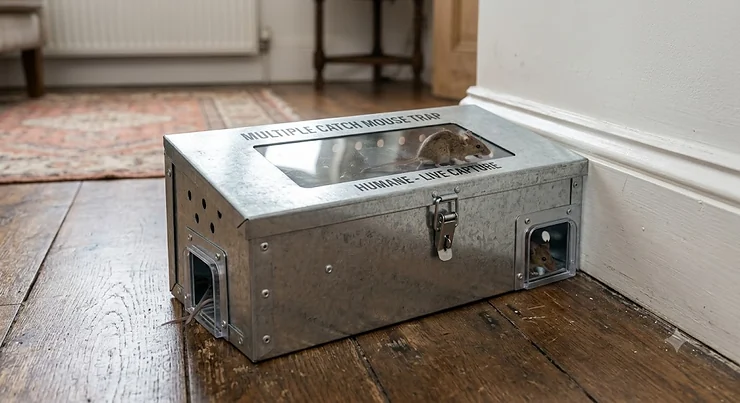
Somewhere behind your skirting board, something is scratching. A multi-catch mouse trap is a reusable, poison-free device built to hold several live mice at once inside a single housing, rather than resetting after every catch. If you’ve only ever met the humble spring trap, this category will feel like a different sport entirely — less “catch one, reset, repeat,” more “set it and let it work overnight.”
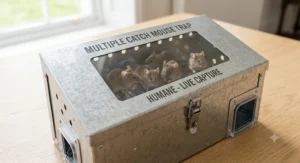
For anyone dealing with more than the odd stray mouse — a kitchen with a recurring visitor, a shed that’s become a mouse motel, or a barn where the problem has clearly moved in with extended family — a single snap trap is a bit like bailing out a boat with a teaspoon. The mice you don’t see are usually the majority. Female house mice can produce five to ten litters a year, and a small problem left unchecked in fair conditions can become a real infestation within a few months. That scale of breeding is exactly why the British Pest Control Association’s mouse advice treats mice as an active, year-round pest species rather than a seasonal nuisance.
This guide walks through seven real multi-catch mouse traps sold to UK buyers, from budget plastic tunnels to galvanised-steel units used by professional pest technicians. Every product mention here is grounded in genuine manufacturer specification and honest analysis — not fabricated hands-on testing or invented customer quotes (see our approach explained throughout). We’ll cover which trap suits which situation, how bulk mouse trapping actually works in practice, how often you need to empty a trap for welfare reasons, and where the law draws hard lines around rodent control in England and Wales.
Quick Comparison Table
Before the deep dive, here’s how the seven traps stack up at a glance. All prices are approximate ranges — always check the current price on the retailer’s page before buying, since Amazon pricing shifts daily.
| Trap | Rated Capacity | Build | Best For |
|---|---|---|---|
| Victor Tin Cat M310SSR | Up to 30 mice | Slim metal | Larger infestations, tight spaces |
| JT Eaton Repeater | Up to 30 mice | Galvanised steel | Commercial mouse traps, warehouses |
| The Big Cheese Ultra Power (Large) | 10+ mice | Galvanised steel | Farms, garages, mid-size infestations |
| Kness Ketch-All | Multiple, no reset | Galvanised steel | Bulk mouse trapping without bait |
| Pest-Stop Multi Catch Metal | Up to 10 mice | Galvanised steel | Domestic and light commercial use |
| The Big Cheese Live Multi-Catch | 4+ mice | Plastic/steel hybrid | First-time buyers, single-room problems |
| Billy-Bob Multi-Catch Trap | Multiple, unrated | Plastic tunnel | Budget outdoor and shed use |
Looking at the spread above, the pattern that jumps out is capacity versus footprint: the Victor Tin Cat M310SSR and JT Eaton Repeater both claim room for up to 30 mice, but they get there through very different builds — one slim and domestic-friendly, one industrial and low-profile for pallet racking. Budget doesn’t automatically mean “worse” here either; the Billy-Bob Multi-Catch Trap and entry-level Big Cheese Live Multi-Catch are genuinely useful for a single affected room, they just won’t keep pace with a barn-scale problem. If your infestation spans multiple rooms or an entire outbuilding, the honest advice is to run two or three mid-capacity traps rather than relying on one high-capacity unit — mice travel established routes, and coverage beats concentration.
💬 Found the trap that fits your situation? Scroll down for the full breakdown before you commit 🤗
Top 7 Multi-Catch Mouse Traps: Expert Analysis
Coverage below spans budget, mid-range and premium options, plus the commercial-grade traps used by professional technicians. Every trap listed is a genuine product with verifiable specifications gathered from manufacturer and retailer listings current as of 2026 research.
1. Victor Tin Cat M310SSR — holds up to 30 mice per setting
The standout figure on the spec sheet is capacity: Victor rates the Tin Cat at up to 30 mice before it needs clearing, which puts it near the top of the domestic-and-light-commercial bracket. In practice, that number matters less for how many mice you’ll catch in one night and more for how long you can go between checks during a genuinely bad infestation — though, as covered later in this guide, welfare guidance still means checking daily regardless of rated capacity.
The trap uses a see-saw entry mechanism at each end: a mouse crosses the threshold, the platform tips, and it can’t climb back out. It’s built from slim sheet metal, which is the detail that actually decides where you can use it — under kickboards, behind washing machines, inside drop ceilings, spaces a bulkier box trap simply won’t fit. No poison, no snap mechanism, and Victor explicitly markets it for both indoor and outdoor placement.
Who should consider it: anyone with a moderate-to-serious infestation who wants a humane, reusable option rather than lethal control, and who needs a trap slim enough to disappear into a tight gap. Based on the spec comparison with the rest of this list, it sits in a sensible middle ground — more capacity than the entry-level plastic traps, without the industrial bulk of the JT Eaton unit below.
We weren’t able to verify a large, independent UK review sample specific to this exact listing at the time of research, so rather than guess at sentiment, here’s what the specification tells us directly: the slim profile is a genuine mechanical trade-off against rigidity, which is reflected in the cons below.
Pros:
- ✅ Rated for up to 30 mice before emptying
- ✅ Slim profile fits tight domestic gaps
- ✅ Simple bait-and-place setup, no assembly
Cons:
- ❌ Thinner metal than boxier commercial traps
- ❌ Sold as a 2-pack, so per-trap cost is harder to judge
Typically found in the low-to-mid £20s-£40s range for a twin pack — check current price, as multipacks fluctuate. For a household dealing with more than the occasional single mouse, this is a solid value pick precisely because you get two traps for one purchase, letting you cover two hotspots simultaneously rather than shuttling one trap between rooms.
2. JT Eaton Repeater Multiple Catch Mouse Trap — built for warehouse and food-facility use
If the Victor Tin Cat is the domestic-friendly option, the JT Eaton Repeater is its industrial cousin. It’s built from durable galvanised steel engineered to resist rust and wear for long-lasting indoor or outdoor use, and the low-profile housing is specifically designed to sit under pallets, equipment and furniture without being seen.
The trap was originally engineered to meet US food-safety facility standards, but the underlying design — chemical-free, low profile, high capacity — translates directly to UK grain stores, warehouses and food-production units where anything that looks or smells like bait or poison is a contamination risk. What most buyers overlook about this category of trap is that it’s designed to be inspected without opening: the clear window lets you check trap status at a glance during a routine walk-through, without disturbing the unit.
It requires no bait or poison to function, which matters in food-handling environments where scent-based lures are actively unwanted. This is squarely a commercial mouse trap rather than a casual domestic purchase, and the price point reflects that — it’s aimed at facilities managers and pest technicians rather than someone with one mouse behind the fridge.
Verified independent UK consumer reviews for this specific commercial SKU are limited, since it’s mostly sold through trade and specialist suppliers rather than mainstream retail. What is verifiable is the manufacturer’s own positioning: this is explicitly marketed as the standard used in warehouses, loading docks and processing plants, not a domestic convenience product.
Pros:
- ✅ Galvanised steel built for rust and wear resistance
- ✅ Clear inspection window for fast walk-through checks
- ✅ Low profile fits under pallets and racking
Cons:
- ❌ Positioned and priced for commercial buyers, not casual use
- ❌ Harder to source through mainstream UK retail
Expect a commercial-grade price, typically upper-£30s to mid-£50s depending on supplier — genuinely poor value for a single mouse in a flat, genuinely good value for a facility with an ongoing rodent population control programme.
3. The Big Cheese Ultra Power Live Multi-Catch Mouse Trap (Large) — 10+ mice, farm and garage grade
The Big Cheese is one of the most recognisable names on UK pest-control shelves, and the Ultra Power large model is its answer to serious infestations. It’s designed to provide effective control of mice in homes, farms and commercial premises without any use of poisons, and the galvanised steel construction is rated to trap ten or more mice in one setting.
What actually separates this from the smaller Big Cheese trap further down this list is the low-profile chassis: its shape lets it sit beneath counters and pallets, as well as within shallow ceiling voids and cavities. That’s a meaningful practical difference if you’re dealing with mice moving through a loft void or under kitchen units rather than crossing open floor space. Based on the spec sheet, the flip-top clear lid is the standout usability feature — you can assess a catch without opening the trap and risking an accidental release mid-inspection.
This sits in the “serious but not industrial” bracket: tougher and higher-capacity than the entry Big Cheese model, but still priced and marketed for domestic and farm buyers rather than facilities managers. It’s explicitly positioned by the manufacturer as safe for use around pets such as cats and dogs, which matters for the family-farm buyer who can’t rule chemical control in or out depending on which animals are underfoot.
Pros:
- ✅ Holds 10+ mice per setting in one unit
- ✅ Low profile fits under pallets and in ceiling voids
- ✅ Hinged clear lid for easy inspection and cleaning
Cons:
- ❌ Bulkier than the standard Big Cheese trap
- ❌ Needs regular re-baiting with attractant to stay effective
Typically priced in the low-£20s to mid-£30s range. For a shed, garage or small farm building with an established mouse population, this hits a genuinely useful middle ground between the cheap plastic tunnels and the industrial steel units on this list.
4. Kness Ketch-All Multiple Catch Mousetrap — the professional’s wind-up trap
This is the trap that pest technicians talk about with something close to affection, and the mechanism explains why. The Ketch-All uses a mouse’s own curiosity as bait — it operates entirely without harmful chemicals, baits or poisons, relying instead on a spring-loaded paddlewheel that a mouse triggers simply by entering the tunnel opening. Trapped mice attract other mice, and the mechanism catches multiple mice without needing to be reset after each individual catch.
What most buyers overlook about this design is that “no bait required” isn’t a minor convenience — it’s the entire point. In food-handling environments, bait attractants can themselves become a contamination or pest-attraction risk, so a purely mechanical, curiosity-triggered trap sidesteps that problem completely. It’s built for consistent results in professional settings, and the durable metal construction with a clear inspection window supports easy checks and long-term use.
The trade-off, and it’s a real one: this trap needs winding, and it works best when placed hard against a wall run where mice are already travelling, rather than dropped in the middle of an open room. It’s not a “set and forget for a week” product in the way its rated capacity might suggest — daily winding checks and correct placement do most of the heavy lifting.
Independent UK consumer review volume is thin for this specific import, since it’s more commonly bought by trade professionals than household shoppers, so we’re basing this assessment on manufacturer and trade-press specification rather than a large aggregated review sample.
Pros:
- ✅ No bait, chemicals or poison needed to function
- ✅ Catches multiple mice without resetting
- ✅ Galvanised steel housing built for repeated professional use
Cons:
- ❌ Needs correct wall placement to work reliably
- ❌ Pricier import than most UK domestic alternatives
Typically sits in the £30-£45 range imported. Genuinely excellent value for a professional or serious hobbyist doing bulk mouse trapping over months, less obviously worth it for a one-off domestic problem.
5. Pest-Stop Multi Catch Metal Humane Mouse Trap — the mid-range workhorse
Pest-Stop is a name that turns up constantly in UK trade catalogues, and this trap is its bread-and-butter multi-catch offering. It’s a high-quality galvanised steel trap designed to catch and hold up to 10 mice at the same time, and it’s a design often used by professional pest control operatives. The trap has two entry points for added catch-ability, and a clear plastic lid ensures anything caught can be seen at a glance.
Extra ventilation points reduce stress on captured mice — a small design detail, but a genuinely important one for animal welfare, since a poorly ventilated live trap left too long can cause real suffering. This links directly to a point covered in more depth further down this guide: the manufacturer’s own guidance states traps must be checked regularly, preferably every two hours, and should never be left overnight. That’s a stricter checking regime than the “up to 30 mice” language on some competitor traps might imply, and it’s worth taking seriously.
What most buyers overlook here is the dual entry-point design: a single-entry trap only catches mice approaching from one direction along a wall run, while a two-entry trap doubles your chances regardless of which way traffic is flowing. For a typical UK kitchen, utility room or garage with mice moving along a skirting board, that’s a meaningful practical advantage over a single-entry alternative.
Pros:
- ✅ Dual entry points for catching mice from either direction
- ✅ Extra ventilation reduces stress on captured mice
- ✅ Trusted brand widely stocked by UK professionals
Cons:
- ❌ Manufacturer advises checking every two hours for welfare
- ❌ Lower capacity than the premium steel options on this list
Expect a mid-range price, typically £15-£25. This is arguably the most balanced all-rounder on the list — not the cheapest, not the biggest, but a genuinely well-specified trap for a typical household or small business infestation.
6. The Big Cheese Live Multi-Catch Mouse Trap — the accessible entry point
Not every mouse problem needs an industrial solution, and this smaller Big Cheese model is built for exactly that reality. It comes ready-baited and requires minimal set-up before first use, catching four or more mice alive per setting — a fraction of the large model’s rated capacity, but genuinely sufficient for a single affected room.
The trap mechanism is self-setting, so little effort is required to use it, and the clear sliding lid allows easy inspection and release without needing to handle the mice directly. For a first-time buyer who’s never dealt with a mouse problem before and finds the idea slightly stomach-churning, that no-touch design is genuinely reassuring, not just a marketing line.
Here’s what the spec sheet won’t tell you outright: manufacturer guidance recommends placing traps two to three metres apart in severely affected areas, because mice live in groups and spacing traps this way maximises the catch — meaning one trap in a multi-mouse household is rarely enough, whatever the box implies. Based on that guidance, this is best bought in pairs rather than as a single unit for anything beyond a very minor sighting.
Pros:
- ✅ Comes ready-baited, genuinely no setup needed
- ✅ No-touch sliding lid for inspection and release
- ✅ Low price point, ideal first purchase
Cons:
- ❌ Lower capacity than every other trap on this list
- ❌ Needs multiple units for anything beyond a light problem
Typically priced under £15 for a single unit or around £15-£20 for a twin pack. Excellent value for a first-time buyer testing the water before committing to a bigger commercial mouse trap purchase.
7. Billy-Bob Multi-Catch Mouse Trap — the budget outdoor option
The cheapest entry on this list works on a genuinely different principle to everything above it. Mice climb into a hole at the top of the trap, and an internal sleeve keeps them from crawling back out. The manufacturer’s suggested method is to bait the trap with food and fill the water tray, leaving caught mice inside for several days — the idea being that they’ll have food and water, but more importantly, they’ll attract other mice into the trap.
That’s a genuinely clever bit of behavioural design, and it explains the plastic tunnel construction — no springs, no poison, no glue. The patented sleeve mechanism is the whole trick: mice can climb in through the top hole, but the sleeve on the inside prevents them climbing back out.
Here’s the honest caveat that Amazon’s product listing won’t spell out clearly: leaving mice trapped for “several days” as the manufacturer suggests sits awkwardly against UK animal-welfare best practice for live-catch traps, which — as covered for the Pest-Stop trap above and in the safety section further down — generally recommends checking every few hours and never leaving a trap unchecked overnight. If you buy this trap, our honest recommendation is to check it far more frequently than the box implies, regardless of the water-and-food justification offered.
Pros:
- ✅ Cheapest multi-catch option on this list
- ✅ No poison, glue, springs or chemicals involved
- ✅ Simple design, easy to clean and reset
Cons:
- ❌ Manufacturer’s “leave for several days” guidance conflicts with welfare best practice
- ❌ Plastic build less durable than the steel options above
Typically priced under £15. A reasonable budget pick for light outdoor or shed use, provided you’re willing to check it far more often than the packaging suggests.
Bulk Mouse Trapping: A Practical Setup & Usage Guide
Bulk mouse trapping — running several multi-catch traps at once across a property — works best as a system, not a collection of individual purchases. Start by mapping activity: droppings, gnaw marks and greasy smear marks along skirting boards tell you where mice are actually travelling, and that’s where traps belong, not in the middle of open floor space mice have no reason to cross.
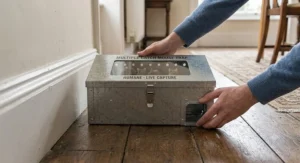
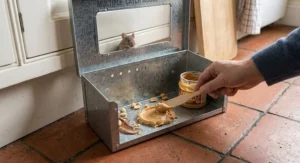
Place traps flush against walls, with entry points facing along the direction of travel. For a kitchen, that typically means behind appliances and under sink units; for a barn or garage, it means along the base of walls and near any visible entry gaps. Bait sparingly — a small dab of peanut butter goes further than a generous smear, since over-baiting lets the first mouse eat its fill and wander off without triggering later catches.
The most common first-30-days mistake is under-trapping: buying one trap for a problem that clearly involves several mice. As covered above, manufacturer guidance for products like the Big Cheese range explicitly recommends spacing traps two to three metres apart in affected areas, because mice operate in loose family groups rather than as lone individuals. Two or three mid-capacity traps almost always outperform one high-capacity trap dropped in a single spot.
Maintenance is simple but non-negotiable: check traps at the frequency covered in the next section, clean out droppings and reset bait weekly even in quiet periods, and rotate trap positions if a fortnight passes with zero activity — mice are neophobic and sometimes avoid an unfamiliar object in a familiar route until curiosity wins out.
Real-World Scenarios: Which Multi-Catch Trap Fits Your Situation?
The first-time homeowner. One or two mice spotted in the kitchen, no other signs elsewhere in the house. This calls for the entry-level Big Cheese Live Multi-Catch Mouse Trap — low cost, ready-baited, no-touch design, and genuinely sufficient for a light, contained problem. Buy two and place them a few metres apart per manufacturer guidance rather than relying on one.
The smallholder with a feed store. Regular sightings in a barn or feed shed, food source clearly established, mice likely breeding on-site. This is where the The Big Cheese Ultra Power (Large) or Pest-Stop Multi Catch Metal earns its higher price — the low-profile steel build survives outdoor conditions, and the higher rated capacity matches an ongoing population rather than a passing visitor.
The warehouse or food-production manager. Compliance-driven rodent control where bait attractants are a contamination risk and inspection needs to happen without opening the trap. The JT Eaton Repeater and Kness Ketch-All both fit this brief precisely, trading domestic-friendly pricing for chemical-free operation and clear inspection windows built for a walk-through audit rather than a curious homeowner.
Trap Emptying Frequency: How Often Should You Check a Multi-Catch Mouse Trap?
This is the section most product listings gloss over, and it matters for two reasons: welfare and effectiveness. A live-catch multi-catch trap holds mice alive, sometimes for hours before you check it, and that time window is where animal welfare law actually applies.
As a starting principle, manufacturer guidance for genuinely welfare-conscious traps — Pest-Stop’s own instructions are explicit on this — recommends checking every two hours where practical, and never leaving a trap unchecked overnight. That’s a stricter standard than the “holds up to 30 mice” marketing language on higher-capacity traps might suggest, and it’s worth following regardless of which trap you buy, not just the ones that state it explicitly.
Common problems and honest solutions: if you can’t realistically check every two hours (working hours away from home, for example), the practical fix is checking first thing in the morning and again in the evening as an absolute minimum, and accepting that a lower-capacity, faster-turnover trap suits your schedule better than a high-capacity unit you can’t monitor properly. If a trap is regularly full when you check it, that’s a signal to add a second trap rather than extend the interval between checks — a crowded trap is more stressful for the mice inside it, not less.
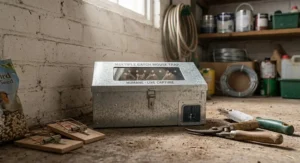
How to Choose a Multi-Catch Mouse Trap
- Match capacity to infestation scale. A single sighting needs the entry-level Big Cheese trap; a barn or warehouse population needs the Victor, JT Eaton or Ketch-All tier.
- Check your checking schedule realistically. If you can’t inspect a live trap every few hours, favour a lower-capacity trap you’ll actually empty on time over a high-capacity one you won’t.
- Consider the environment. Damp sheds and outdoor placements favour galvanised steel over plastic; food-handling areas favour bait-free mechanical traps like the Ketch-All.
- Prioritise low-profile builds for tight spaces. If mice are travelling under kickboards or through ceiling voids, a slim trap like the Victor Tin Cat will reach places a boxier unit can’t.
- Factor in placement quantity, not just single-unit capacity. Two mid-capacity traps spaced correctly consistently outperform one high-capacity trap in the wrong spot.
- Weigh commercial versus domestic pricing honestly. Traps like the JT Eaton Repeater are priced for facilities, not casual buyers — don’t overspend on commercial-grade capacity for a one-off domestic sighting.
- Check the welfare guidance before you buy, not after. Every live-catch trap on this list needs regular checking; know that commitment upfront.
Multi-Catch Mouse Trap vs Traditional Snap Traps for Rodent Population Control
A traditional snap trap kills one mouse per setting, then needs resetting — fine for a single stray, genuinely inefficient for population-scale control. A multi-catch mouse trap flips that maths: multiple mice per setting, no reset required between catches, which is precisely why the format dominates commercial rodent population control programmes rather than domestic snap-trap habits.
The trade-off is welfare responsibility. A snap trap’s outcome is immediate; a live multi-catch trap’s outcome depends entirely on how quickly you check and release it, which is why the emptying-frequency guidance above isn’t optional detail — it’s the entire ethical case for choosing live-catch over lethal control in the first place. It’s also worth noting that current UK government guidance on pest control requires using only traps approved for the species you’re targeting, following the instructions for use, and specifically rules out glue traps designed to catch rodents — a restriction covered in full in the safety section below.
For scale comparison: where a single snap trap might account for one mouse a week in a light infestation, a well-placed multi-catch trap checked on schedule can realistically account for several mice in the same period, without the disposal and resetting labour a snap trap demands after every catch. For population control at farm or warehouse scale, that labour saving compounds fast.
Commercial Mouse Traps for Agricultural Pest Control
Agricultural pest control operates under different pressures to a domestic kitchen: larger footprints, food storage at scale, and mice with genuinely established outdoor populations moving in and out of buildings seasonally. Government guidance for the poultry and livestock sector points out that rodents compromise the quality standards required by farm assurance schemes, and pest-free status is often a scheme membership requirement demanded by distributors and retailers — which means rodent control on a farm isn’t just a nuisance issue, it’s a compliance issue with real commercial consequences, as set out in the official code of practice for rodent control on poultry farms.
That same guidance stresses that a regular system of vigilant inspection, applied both around and within rearing and service facilities, helps identify early signs of infestation before they develop into something larger — and this is exactly where high-capacity commercial mouse traps like the JT Eaton Repeater and Big Cheese Ultra Power earn their keep, since low-profile steel builds survive the damp, dusty conditions of feed stores and outbuildings in a way plastic domestic traps generally don’t.
The same principle runs through official advice again and again: it’s always easier and less costly to remove a small, developing rodent infestation than an established, substantial one. That’s the strongest practical argument for placing multi-catch traps proactively around known entry points and food storage areas, rather than waiting for a visible sighting before acting. For smallholders and small farm operations without a dedicated pest-control contract, a rotation of two or three commercial-grade multi-catch traps checked on a consistent schedule is a genuinely proportionate response — full contractor-led programmes tend to make sense once the site scale or compliance requirements exceed what DIY trapping can realistically manage.
High Capacity Mouse Trap Features That Actually Matter (And Those That Don’t)
Actually matters: entry point count. A dual-entry trap like the Pest-Stop model catches mice travelling in either direction along a wall run; single-entry traps only catch traffic moving one way. This is a genuine functional difference, not marketing fluff.
Actually matters: low profile. The difference between a trap that fits under a kickboard and one that doesn’t isn’t cosmetic — it’s the difference between catching mice on their actual travel route and catching nothing because the trap sits somewhere they never go.
Doesn’t matter much: headline capacity numbers alone. A trap rated for 30 mice isn’t automatically better than one rated for 10 if you’re realistically dealing with a handful of mice in one room — you’re paying for capacity you’ll never use, and a smaller trap checked more easily may suit you better.
Doesn’t matter much: bait attractant branding. Manufacturer-branded attractant products are convenient, but plain peanut butter or a small piece of chocolate works just as effectively for luring mice into any of the traps on this list — the trap mechanism does the actual work, not the bait brand.
Actually matters: material and weather resistance. Galvanised steel genuinely outperforms plastic for outdoor and damp placements over a multi-year lifespan; this is a real durability difference, not a premium-pricing gimmick.

Common Mistakes When Buying and Using a Multi-Catch Mouse Trap
The single most common mistake is buying one trap for a multi-mouse problem, then concluding the trap “doesn’t work” when it fills up and stops catching within a day. As covered in the buying-guide section above, manufacturer spacing guidance consistently recommends multiple traps placed a few metres apart for anything beyond a single sighting.
A close second: placing traps in the middle of open floor space rather than against walls. Mice travel along edges and skirting boards almost exclusively — a trap sitting in open floor, however well-specified, is fishing in the wrong pond.
Third, over-baiting. A generous smear of peanut butter lets the first mouse feed and leave without triggering the mechanism properly, particularly on wind-up designs like the Kness Ketch-All, where the trigger depends on the mouse actually entering the tunnel rather than reaching bait from outside it.
Fourth — and this is the welfare mistake, not just an effectiveness one — buying a high-capacity trap and then checking it weekly because the box implies it can go that long. As the emptying-frequency section above sets out, checking schedule should be driven by welfare guidance, not headline capacity numbers.
Long-Term Cost & Maintenance: Value Analysis
A reusable multi-catch trap’s real value only shows up over months, not on day one. A £15 entry-level trap used weekly for a year costs nothing further beyond occasional cleaning; a £150 rodenticide-and-callout pest-control contract for the same period costs considerably more, though it also transfers the labour and compliance risk to a professional — a trade-off worth weighing honestly rather than assuming DIY is always cheaper in every situation.
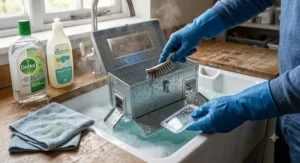
Maintenance cost is genuinely minimal across every trap on this list: soap and water for cleaning, occasional bait replenishment, and — for the Kness Ketch-All specifically — periodic winding-mechanism checks to confirm the spring hasn’t seized. None of the seven traps here require replacement parts beyond the trap itself, which is a meaningful total-cost-of-ownership advantage over disposable snap traps that need buying afresh after every catch.
Where cost genuinely scales is capacity tier: the commercial-grade JT Eaton and Kness options cost roughly double the entry-level Big Cheese trap, and that premium only pays for itself if you’re actually running a bulk mouse trapping operation across a larger site. For a single-room domestic problem, spending commercial-tier money is a case of buying capacity you’ll never use.
Safety, Welfare & Regulations Guide
UK rodent control sits inside a real legal framework, not just good-practice advice. Government guidance is explicit that you must only use traps approved for the species you’re targeting and follow the instructions for use, and it specifically rules out glue traps designed to catch rodents — a rule worth flagging clearly, since glue-board inserts are sometimes sold as accessories for multi-catch trap housings in other markets; in England, using one to catch a rodent is not permitted under current guidance. None of the seven traps reviewed above require a glue-board insert to function, which is one reason they were selected for this comparison.
On health risk, the UK Health Security Agency’s guidance on hantavirus explains that hantaviruses are a group of viruses carried by rodents such as mice and rats, transmitted through their droppings and urine. Infection is rare in the UK, and public health researchers describe the wider population risk as very low — but the sensible response to any live-catch trap is still to avoid direct contact with droppings or nesting material, and to wash hands thoroughly after checking or emptying a trap, since prevention costs nothing and the guidance exists precisely because risk, while low, isn’t zero.
On welfare specifically: the Animal Welfare Act 2006 establishes a duty of care toward any animal a person is responsible for, including pest species caught alive, which is the legal backbone behind the “check every two hours, never leave overnight” guidance repeated by manufacturers like Pest-Stop throughout this guide. Treat that guidance as a minimum standard across every trap on this list, not just the ones that print it on the box.
Frequently Asked Questions
❓ How many mice can a multi-catch mouse trap hold before it needs emptying?
❓ Are multi-catch mouse traps humane?
❓ Can I use a multi-catch mouse trap outdoors?
❓ How much does a good multi-catch mouse trap cost in the UK?
❓ Do multi-catch mouse traps need bait?
Conclusion
Choosing the right multi-catch mouse trap comes down to matching capacity and build to your actual situation, not chasing the highest number on the box. A single kitchen sighting is well served by the budget Big Cheese Live Multi-Catch Mouse Trap; a genuinely established infestation in a home or garage points toward the Victor Tin Cat M310SSR or Pest-Stop Multi Catch Metal; and a farm, warehouse or food-production site is better matched to commercial-grade options like the JT Eaton Repeater or Kness Ketch-All.
Whichever trap you choose, the checking-frequency guidance in this article isn’t optional — it’s the difference between humane pest control and a live trap that quietly becomes something worse. Buy for your actual infestation scale, place traps against the walls mice actually travel, and check them on a schedule you can genuinely keep.
✨ Ready to Sort Your Mouse Problem?
🔍 Compare the seven traps above against your own space and infestation size, then click through to check current pricing and availability on Amazon. A well-matched multi-catch mouse trap, checked on schedule, is one of the most genuinely humane and effective tools available for DIY rodent control.
Recommended for You
- 7 Best Electric Mouse Traps UK 2026: No-Touch; Hygienic Picks
- 7 Humane Mouse Traps for Home Use in 2026 (No-Kill, Tested)
- Snap Traps vs Humane Mouse Traps: 7 Honest UK Picks (2026)
Disclaimer: This article contains affiliate links. As an Amazon Associate, I earn from qualifying purchases. If you purchase products through these links, we may earn a small commission at no additional cost to you.
✨ Found this helpful? Share it with your friends! 💬🤗
