
In This Article
Expanding foam for sealing mouse gaps is a moisture-curing polyurethane sealant that swells to fill cracks, holes and pipe surrounds where rodents sneak in. On its own it stops draughts, light and insects. It does not reliably stop determined teeth. The best results come from pairing it with wire wool or copper mesh, which builds a layered barrier that mice find miserable to chew.
Mice are astonishingly good at squeezing through small spaces. The British Pest Control Association says they need a gap of only about 5mm to gain entry. That is roughly the width of a pencil, and it describes most of the loose gaps around a typical kitchen waste pipe, boiler flue or cable entry. Proofing those gaps is the cheapest pest control you will ever buy. It is also the only kind that keeps working after the traps come out.
So which foam should you pick? That depends on where the gap is, how wide it is and whether you want a can or a gun. It also depends on how honest you want to be about what foam can and cannot do. This guide compares seven real, UK-available products and takes a straight look at the question every DIYer eventually asks: do mice eat expanding foam? You will also get a step-by-step method, a problem-solving guide and a cost breakdown.
Think of foam as the mortar between the bricks of your defence, not the bricks themselves. Get that framing right and everything else in this guide falls into place.
Quick Comparison: Best Expanding Foam for Sealing Mouse Gaps at a Glance
| Product | Type | Applicator | Best For |
|---|---|---|---|
| The Big Cheese Mouse Out Barrier Foam | Pest-marketed PU foam, 400ml | Can with precision nozzle | Best For: budget, purpose-built mouse holes |
| DAP Mouseshield Foam | Pest-resistant PU foam | Reusable adapter plus straw | Best For: indoor gaps and garages |
| Soudal Genius Gun Gap Filling Expanding Foam | General PU foam, 500ml | Trigger can | Best For: one-handed pipe surrounds |
| Gorilla Weatherproof Expanding Foam | Weatherproof PU foam, 500ml | Can with straw | Best For: exterior walls and brickwork |
| Soudafoam Gap Filler Hand Held | PU foam, 500ml | Hand-held can | Best For: pairing with copper mesh |
| Soudal B2 Fire Rated Expanding Foam (Gun Grade) | B2 fire-class PU foam, 750ml | Foam gun required | Best For: service penetrations, larger jobs |
| fischer Triple X Hand Foam | Rapid-hardening PU foam, 560g | Hand can | Best For: budget bulk filling |
Looking at the table, the The Big Cheese Mouse Out Barrier Foam and DAP Mouseshield Foam are the only two pitched specifically at pests. The other five are general-purpose polyurethane foams that earn their place through build quality and applicator design. Buyers filling lots of gaps should note that Soudal B2 Fire Rated Expanding Foam (Gun Grade) only makes sense if you already own, or are happy to buy, a foam gun.
💬 Just one click — help others make better buying decisions too!😊
Top 7 Expanding Foam for Sealing Mouse Gaps: Expert Analysis
Prices below are ranges from retailer listings at the time of research, so check the current price before you buy. Where I could not verify a meaningful pool of real reviews, I say so rather than guess.
1. The Big Cheese Mouse Out Barrier Foam — purpose-built mouse-hole filler
This is the most on-the-nose option here. The 400ml can is sold as a non-toxic barrier for pipe entries and awkward corners, with weather and moisture resistance for indoor or outdoor use. A precision nozzle matters more than it sounds: most failed foam jobs come from over-filling and then hacking away the excess.
The marketing says rodents “can’t chew through” it. Treat that as a manufacturer claim, because I found no independent chew-test evidence. The sensible reading is that this is a decent polyurethane foam in pest-themed packaging, and the real value is the clear instruction to pair it with the brand’s wire wool kit.
Review evidence was thin at the time of research. Major retailer listings I checked carried little or no verified customer feedback, so I can’t summarise sentiment honestly. The price sits well under £10, which makes it a low-risk first purchase for a single kitchen gap.
Pros:
- ✅ Marketed specifically for rodent entry points
- ✅ Precision nozzle suits tight pipe gaps
- ✅ Sold alongside a matching wire wool kit
Cons:
- ❌ Chew-proof claim lacks independent testing
- ❌ Few verified reviews to lean on
Price range and verdict: under £10, so good value as a starter can, provided you add mesh.
2. DAP Mouseshield Foam — pest-resistant formula for indoor gaps
The listing describes a pest-resistant formulation that discourages mice, rats, birds and insects. It is also frank that the foam does not kill rodents. It comes with a reusable adapter and a bonus straw, and the listing says the can can be re-used within about three weeks if stored upright.
Here is the catch: it is interior use only. That makes it ideal for lofts, garages, utility rooms and under-sink voids, but wrong for a gap on a sunny outside wall. It is also described as Class 1 fire rated, though that is a surface-spread style rating and not a firestopping approval. Application is recommended between roughly 16 and 38°C, so a cold-garage winter job needs warming up first.
I couldn’t find a body of UK reviews, and one UK stockist showed it out of stock, so availability may be patchy. The price sits in the £15-£20 range, roughly double a standard can.
Pros:
- ✅ Pest-resistant claim on an indoor-safe formula
- ✅ Reusable adapter reduces waste
- ✅ Off-white finish blends with interiors
Cons:
- ❌ Interior use only
- ❌ Premium price and patchy UK stock
Price range and verdict: £15-£20; worth it only for indoor gaps where the deterrent claim matters to you.
3. Soudal Genius Gun Gap Filling Expanding Foam — trigger can with six-week reuse
The patented trigger cap turns an ordinary 500ml can into a one-handed applicator. You hold a torch, a pipe or a ladder in the other hand. Retailer specs say the applicator can be re-used for up to six weeks. The foam expands to around 35 times its liquid volume and can be cut after roughly half an hour.
On paper, the one-handed control is the headline for mouse work. Most gaps live behind a sink or boiler, where you are contorted and your second hand is busy. The manufacturer says to fill only about a third of the void and let it expand. It is also not UV resistant, so cover cured foam with paint, sealant or plaster.
A sample marketplace listing at the time of research showed strongly positive ratings. One buyer said it suited filling mouse holes. That is only a snippet, not a systematic sample. Pricing falls in the £7-£10 range.
Pros:
- ✅ One-handed trigger for awkward spaces
- ✅ Reusable for up to six weeks
- ✅ High yield from a 500ml can
Cons:
- ❌ Not UV resistant once cured
- ❌ General-purpose, not rodent-specific
Price range and verdict: £7-£10; a strong all-rounder if you will do several gaps.
4. Gorilla Weatherproof Expanding Foam — weather-tough for exterior walls
This 500ml can is aimed at large cracks in stone, wood, brick and metal. It expands on contact and hardens into an airtight, weatherproof seal that dries within roughly a day. The weatherproof branding is why it suits entry points exposed to rain: the gap where a gas or soil pipe passes through brickwork, for instance.
Real-world feedback is useful here. One reviewer filled a roughly two-inch gap around a kitchen sink pipe running through a cavity wall, specifically to keep mice and rats out. They used a whole can and pushed steel wool into the gap before the foam set. They liked how well it expanded but found the can’s trigger tube flimsy and needed force to dispense. Another buyer used it to seal a conduit around a cold water pipe.
The takeaway: the foam performs, but the dispenser is the weak link. Expect to pay under £10 for a single can.
Pros:
- ✅ Weatherproof formulation for outside gaps
- ✅ Strong expansion fills deep voids
- ✅ Cuts, sands and paints once hard
Cons:
- ❌ Flimsy straw trigger per one reviewer
- ❌ Sticky on gloves and hard to clean
Price range and verdict: under £10; good value for exterior pipe gaps if you buy gloves and a gun-style dispenser.
5. Soudafoam Gap Filler Hand Held — pairs naturally with copper mesh
A trade supplier lists this 500ml hand-held polyurethane foam as suitable for gaps where rats, mice, squirrels and birds might enter. It says the foam can be combined with copper Stuf-Fit mesh for a gnaw-proof solution. It is not gun grade and not fire rated, so it fits small DIY jobs but not bulk or regulated work.
The honest value here is the pairing advice rather than the foam itself. Copper mesh is the part rodents struggle with, and the foam locks it in place while sealing the draught path around it. The CFC-free propellant is a pleasant plus, though common across modern cans.
I could not verify a pool of customer reviews, so I will not characterise sentiment. A supplier price near £8-£9 per can suggests mid-range pricing.
Pros:
- ✅ Supplier explicitly recommends copper mesh pairing
- ✅ Simple hand-held can for small jobs
- ✅ CFC-free propellant
Cons:
- ❌ Not gun grade or fire rated
- ❌ No verifiable review pool found
Price range and verdict: around £8-£10; sensible if you plan a foam-and-copper-mesh job.
6. Soudal B2 Fire Rated Expanding Foam (Gun Grade) — fire class for service penetrations
This 750ml gun-grade can is rated DIN 4102 B2, with fire resistance of up to two hours depending on joint configuration. Listings also quote a 58 dB acoustic rating and a 36 mW/mK insulation factor, and say it expands around 35 to 40 times its volume. That is a lot of foam from one can.
For pipe entry points this is the “grown-up” option. If a gap sits in a wall that must hold fire for a period, such as a flat or a party wall, standard foam could be the wrong tool. Do check the data sheet for your wall type, pipe material and joint width, because the B2 class is a foam classification and not a blanket certification of your whole penetration. Many plastic pipes need intumescent collars as well.
I found no review set I could summarise with confidence. A major trade retailer lists it at a price within the £8-£12 range, plus the cost of a foam gun.
Pros:
- ✅ B2 fire class for regulated penetrations
- ✅ Huge yield per 750ml can
- ✅ Interior and exterior use
Cons:
- ❌ Needs a foam gun to apply
- ❌ Overkill for one small mouse hole
Price range and verdict: £8-£12 plus a gun; best for multiple penetrations or flats.
7. fischer Triple X Hand Foam — rapid-hardening budget workhorse
This 560g can is pitched as rapid-hardening, rot-resistant and noise-reducing. Rapid hardening matters for mouse work because the quicker the foam skins over, the sooner you can trim it and move on. The listing also notes that using an applicator pistol allows economical dosing, so check whether you are buying a hand can or a gun-compatible one.
It is a solid choice for the practical middle of a proofing job: filling the bulk of a larger void before finishing the outer layer with mesh and sealant. Buyers should note that nothing in the listing is rodent-specific, so the barrier has to come from what you pack into the gap first.
Verifiable review depth was limited. Listings place it in the £5-£10 range, making it among the cheapest here.
Pros:
- ✅ Rapid-hardening saves waiting time
- ✅ Rot-resistant once cured
- ✅ Low entry price
Cons:
- ❌ No rodent-specific claims
- ❌ Can type needs checking before purchase
Price range and verdict: £5-£10; good value as a bulk filler under a mesh layer.
Top 7 at a Glance: Specs and Price Ranges
| Product | Size | Applicator | Price range | Best For |
|---|---|---|---|---|
| The Big Cheese Mouse Out Barrier Foam | 400ml | Precision nozzle | Under £10 | Best For: first-time buyers |
| DAP Mouseshield Foam | Not stated | Adapter plus straw | £15-£20 | Best For: indoor-only jobs |
| Soudal Genius Gun Gap Filling Expanding Foam | 500ml | Trigger can | £7-£10 | Best For: one-handed work |
| Gorilla Weatherproof Expanding Foam | 500ml | Straw | Under £10 | Best For: outdoor gaps |
| Soudafoam Gap Filler Hand Held | 500ml | Hand-held | £8-£10 | Best For: copper-mesh combos |
| Soudal B2 Fire Rated Expanding Foam (Gun Grade) | 750ml | Gun required | £8-£12 | Best For: fire-rated walls |
| fischer Triple X Hand Foam | 560g | Hand can | £5-£10 | Best For: bulk filling |
The spread is narrow: five of the seven sit under about £12 a can. That means the decision hinges on applicator, location and rating, not cost. DAP Mouseshield Foam is the outlier on price, and you only pay that premium if you value a deterrent claim for an indoor gap. For everyone else, a decent can plus a metal-mesh layer wins on value.
Do Mice Eat Expanding Foam?
This is the question that sends people to forums at midnight. The short answer is that mice do not treat cured polyurethane foam as food, but they will gnaw through it if it blocks something they want.
Foam has no nutritional appeal. Rodent incisors, however, never stop growing, so gnawing is a habit as well as a means of access. A council advice leaflet notes that mice will eat or chew almost anything, including candle wax and window putty. One forum poster described mice that chewed through a water pipe’s plastic and then the copper inside it, which led to a wall being opened up. Another said fitters told them foam alone “doesn’t tend to work”.
Does that mean foam is useless? No. A cured plug in a 6mm gap is still a physical obstacle, and mice often take the path of least resistance. The danger is false confidence. A foam-only seal around a pipe that mice use daily is simply a puzzle they will eventually solve.
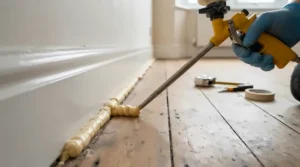
The fix is layering. Council proofing guides suggest pushing wire wool into holes before sealing over. Foam then holds that metal in place and closes the draught path around it, which is where it does its best work.
How to Choose Expanding Foam for Sealing Mouse Gaps
Choosing is easier with a checklist. Work through these steps in order.
- Measure the gap first. Anything over about 5mm is a mouse door. Anything wider than a finger needs mesh before foam, because foam alone bridges poorly across big voids.
- Decide indoor or outdoor. Cured foam degrades in sunlight, so exposed gaps need either a weatherproof formulation or a protective coat. Interior-only products like DAP Mouseshield Foam suit sheltered spots.
- Pick your applicator. A trigger can such as Soudal Genius Gun Gap Filling Expanding Foam suits a handful of gaps. A gun-grade can such as Soudal B2 Fire Rated Expanding Foam (Gun Grade) suits many.
- Check fire requirements. If the gap passes through a fire-separating wall, use a fire-rated product and read the data sheet carefully.
- Plan the metal layer. Budget for stainless steel wool or copper mesh. This is the part that actually resists teeth.
- Consider cleaning and reuse. Foam cures in the nozzle, so reusable adapters save waste only if you clean them promptly.
- Check age restrictions. Aerosol foam is commonly age-restricted in the UK, so expect ID checks or age verification at delivery.
Rodent-Deterrent Expanding Foam: Does the Bitter Stuff Work?
Rodent-deterrent expanding foam is the idea that a foam can be both a barrier and a bad-tasting one. In the US, pest-block foams are sold on the basis that an added distasteful agent discourages chewing. UK shelves have fewer true equivalents, with DAP Mouseshield Foam and The Big Cheese Mouse Out Barrier Foam the main pest-marketed names I found.
What the evidence supports is modest. A bittering agent may make a nibble less appealing, and that could help against casual curiosity. It is unlikely to defeat a hungry mouse that has found warmth and food on the other side. I found no independent test showing otherwise, so treat the deterrent claim as a nice-to-have, not a guarantee.
Practical interpretation: buy deterrent foam if the price premium is small and the gap is sheltered. Otherwise spend that money on mesh. A £5 can of fischer Triple X Hand Foam over a copper-mesh plug will likely outperform a pricier foam used alone. Think of the deterrent as seasoning, not the meal.
Gap Filler Foam With Pest Barrier: The Layered Method Step by Step
Gap filler foam with pest barrier simply means foam combined with a metal layer. Here is the method most forum users and council guides describe, in order.
Step 1: Find and measure. Look for droppings, greasy smears and gnawed packaging near pipes, then check every service entry. Use a pencil as a gauge.
Step 2: Clean the gap. Remove dust, old filler and debris. Foam bonds poorly to dirty surfaces.
Step 3: Pack the metal. Push stainless steel wool or copper mesh in firmly. One forum contributor suggests teasing wire wool into a puffy, see-through shape so foam can expand through it. Plain steel wool can rust, so stainless or copper lasts longer.
Step 4: Foam over it. Fill only about a third of the remaining space, because the foam expands up to roughly 35 times. A reviewer of Gorilla Weatherproof Expanding Foam applied wool before the foam set, and the foam covered it completely.
Step 5: Let it cure, then trim. Cutting time is around 30 minutes for several products, with full hardening taking about 24 hours.
Step 6: Protect the surface. Paint, caulk or render over exposed foam to guard it against UV.
Step 7: Recheck in a week. Look for fresh gnawing or droppings.
Pest-Proof Foam for Pipe Entry Points
Pest-proof foam for pipe entry points has to cope with movement, heat and sometimes fire rules. Pipes expand and contract. Hot pipes warm the foam. Waste pipes are also the classic mouse highway, because the gap around them is usually just wide enough.
Under the sink: the gap is typically a rough hole larger than the pipe. Pack mesh, foam lightly, then finish with a ring of flexible sealant. A trigger can like Soudal Genius Gun Gap Filling Expanding Foam makes this easier in cramped cabinets.
Boiler and flue gaps: keep foam away from hot flues and follow the boiler manufacturer’s clearances. Use mesh and a non-combustible finish instead.
Fire-separating walls: in flats or party walls, Soudal B2 Fire Rated Expanding Foam (Gun Grade) offers a B2 classification, but plastic pipes may still need intumescent collars. If in doubt, check Building Regulations guidance or ask a competent installer.
External pipes: use a weatherproof formulation such as Gorilla Weatherproof Expanding Foam and finish with render or exterior paint.
✨ Ready to Seal Those Gaps?
🔍 Take your mouse-proofing to the next level with these carefully selected products. Click on any highlighted product name to check current pricing and availability. A little foam, a little mesh and an hour of effort can keep your home pest-free through winter!
Polyurethane Expanding Foam: Types, Limits and Safety
Polyurethane expanding foam is the chemistry behind every product in this guide. Mostly sold as one-component cans, it reacts with moisture in the air, expands and hardens. Reference sources note that expanding spray foams can grow 30 to 60 times their liquid volume, though can-grade foams for DIY use sit toward the lower end.
Types you will meet:
- General-purpose (often B3): fine for most gaps.
- Fire-rated (B2): for regulated penetrations.
- Gun grade versus hand-held: a difference of applicator, not chemistry.
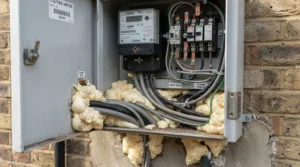
Safety matters. Uncured foam contains isocyanates, which are respiratory sensitisers and skin irritants that can contribute to occupational asthma. Listings also warn that the aerosols are extremely flammable and may burst if heated. Wear gloves and eye protection, ventilate the area, and never use foam near hot flues or open flames.
Practical limits: foam is not a structural filler, it degrades under UV, and it cannot be dissolved once cured. Mechanical removal is the only way, so aim carefully.
Foam Gun vs Can Applicator
Foam gun vs can applicator is the decision that changes your day more than the foam itself.
| Feature | Basic can with straw | Trigger can | Gun-grade can with gun |
|---|---|---|---|
| Control | Low | Medium | High |
| Reuse | Poor | Up to about six weeks | Weeks, with cleaning |
| Up-front cost | Lowest | Low | Highest |
| Best For: | One-off hole | A few gaps | Many gaps or pro work |
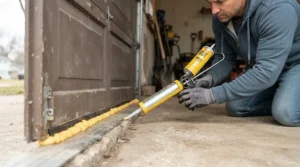
A basic straw can, like the one supplied with Gorilla Weatherproof Expanding Foam, is fine for a single hole. As the reviewer noted, you may need to hold it upside down and press hard. A trigger can such as Soudal Genius Gun Gap Filling Expanding Foam costs little more and adds one-handed control and a re-sealable cap. A gun-grade can like Soudal B2 Fire Rated Expanding Foam (Gun Grade) gives the best dosing but needs a gun and cleaner.
For most householders sealing three to six gaps, the trigger can is the sweet spot. Buy a gun only if you expect a bigger job or repeated proofing.
Expanding Foam vs Traditional Mouse-Proofing Alternatives
| Method | Gnaw resistance | Ease | Best For |
|---|---|---|---|
| Foam alone | Low | Easy | Draughts, insects, low-pressure gaps |
| Foam plus wire wool or copper mesh | Medium to high | Moderate | Most pipe gaps |
| Wire wool plus mortar or cement | High | Harder | Masonry holes |
| Metal plate or stainless mesh | Very high | Hardest | Permanent exclusion |
Foam alone is the weakest, which fits the forum reports above. Adding mesh transforms it into a practical middle ground. Masonry holes deserve mortar where possible, while the strongest option for large openings remains metal. Buyers who want a quick, tidy, draught-stopping seal should still use foam, provided it is the finishing layer, not the whole defence.
Real-World Scenarios: Which Foam for Which Home?
Scenario 1: The renter with a kitchen mouse. A tenant finds a pencil-wide gap behind the sink, budget under £15, one-off job. The Big Cheese Mouse Out Barrier Foam plus wire wool covers it. Check tenancy rules before making permanent changes.
Scenario 2: The Victorian terrace. An older house has several pipe entries in the cellar, damp walls and a bigger budget. A trigger can such as Soudal Genius Gun Gap Filling Expanding Foam works with copper mesh and a mortar finish on masonry. Repeat inspection each autumn.
Scenario 3: The loft-conversion flat. Multiple service penetrations through fire-separating walls call for Soudal B2 Fire Rated Expanding Foam (Gun Grade) and, where needed, intumescent collars. A competent installer should confirm compliance.
Scenario 4: The garden shed or garage. Exposed timber, rain and sunlight call for Gorilla Weatherproof Expanding Foam plus a painted or sealed finish, using a few cans a season.
Match foam to the building, not the other way round. The cheapest can is wrong in a fire wall, and the premium can is wasted in a shed.
Problem → Solution Guide for Foam-Sealed Mouse Gaps
Problem 1: Mice chewed my fresh foam. Solution: add metal mesh beneath it and wait for full cure before you stop checking. Fresh foam is soft and invites investigation.
Problem 2: The foam crumbled or yellowed outside. Solution: UV is the culprit. Cover with paint, render or sealant. A weatherproof product like Gorilla Weatherproof Expanding Foam still benefits from a coating.
Problem 3: I feel unwell after using foam. Solution: stop, ventilate and wash skin. Uncured foam contains isocyanates, which HSE-aligned guidance flags as respiratory and skin sensitisers. Use gloves, goggles and good ventilation, and seek medical advice if symptoms persist.
Problem 4: The can clogged. Solution: clean the nozzle promptly with the manufacturer’s cleaner. Reusable systems like DAP Mouseshield Foam and Soudal Genius Gun Gap Filling Expanding Foam only save money if you do this.
Problem 5: The foam bulged my frame. Solution: fill only about a third of the void and use low-expansion foam near windows and doors.
Long-Term Cost and Maintenance
A single can of foam costs far less than a pest controller’s call-out, and a can of fischer Triple X Hand Foam will fill many small gaps. Add mesh, gloves and sealant and a typical household job lands in the £20-£40 range. The one-off cost is modest compared with repairing gnawed pipes or cables, which one forum poster found out the hard way.
Maintenance schedule:
- Autumn: inspect all entry points before cold weather drives mice indoors.
- After storms: check exterior foam for cracks or lifting.
- Yearly: repaint or reseal exposed foam.
- Whenever you add services: reseal new pipe or cable holes the same day.
Reusable adapters, such as the six-week window quoted for Soudal Genius Gun Gap Filling Expanding Foam, only help if you finish the work in that time. For most people a smaller can used in one session beats a half-used can left to cure.
FAQ
❓ What is the best expanding foam for sealing mouse gaps on a budget?
❓ Can I buy rodent-deterrent expanding foam in the UK?
❓ Is a foam gun worth buying for one job?
❓ How long does sealed foam last outside?
❓ Can I use expanding foam around a boiler flue?
Conclusion
Expanding foam for sealing mouse gaps works best as the finishing layer of a barrier, not the barrier itself. Mice squeeze through gaps around 5mm wide, they chew far more than they should, and foam alone is easy prey. Metal packed beneath the foam changes the equation.
If you want a purpose-built starter can, The Big Cheese Mouse Out Barrier Foam is the budget pick. For sheltered indoor gaps where a pest-resistant formulation appeals, DAP Mouseshield Foam is worth the premium. For versatility, Soudal Genius Gun Gap Filling Expanding Foam is the sweet spot. Gorilla Weatherproof Expanding Foam handles outdoor gaps, Soudafoam Gap Filler Hand Held suits copper-mesh combinations, and Soudal B2 Fire Rated Expanding Foam (Gun Grade) is the choice for fire-rated walls. fischer Triple X Hand Foam fills the bulk cheaply.
Work through the layered method above, protect the finished foam from sunlight, and inspect every autumn. That small routine is the difference between a one-off fix and a house mice learn to avoid.
✨ Ready to Mouse-Proof Your Home? 🐭
🛠️ Pick the foam that suits your gaps, add a metal layer, and click through to check current pricing and availability. Your pipes, cables and peace of mind will thank you!
Recommended for You
- Galvanised Wire Mesh For Rodent Proofing: 7 Proven Picks (2026)
- Steel Wool For Mouse Holes: 7 Tough Picks For UK Homes (2026)
- Steel Wool Vs Expanding Foam For Mice: 7 Proven Fixes (2026)
Disclaimer: This article contains affiliate links. As an Amazon Associate, I earn from qualifying purchases. If you purchase products through these links, we may earn a small commission at no additional cost to you.
✨ Found this helpful? Share it with your friends! 💬🤗
