In This Article
Galvanised wire mesh for rodent proofing is zinc-coated steel mesh, usually welded, with holes of around 6mm, fitted over the gaps rodents use to get into buildings. The zinc coating slows rust, while the tight aperture and rigid wire stop mice squeezing through or gnawing their way past.
A mouse is, anatomically speaking, a furry liquid. Its skeleton is so flexible that only the skull limits where it can go. A mouse information sheet from Watford Borough Council says mice can squeeze through 6mm holes and advises blocking them with wire wool or mesh, then filling with cement or expanding foam. That is why a mesh with holes you could slip a finger through is a bad idea, however sturdy it looks.
This guide cuts through the marketing. You’ll get seven real products, from a small 6mm galvanised mesh roll to stainless air brick covers, with analysis of what each spec means in practice. It also covers aperture size and wire gauge, fitting methods, and where galvanised wire mesh for rodent proofing beats stainless, and where it doesn’t. It is written for British homes, sheds and outbuildings.
Quick Comparison: 7 Rodent-Proofing Products at a Glance
| Product | Aperture / Material | Format | Price Range | Best For |
|---|---|---|---|---|
| Metex Proofing Mesh | 6mm galvanised steel | 6m x 300mm roll | Mid-£20s | Metex Proofing Mesh suits small gaps, vents and pipe surrounds |
| Roshield Mesh | 6mm x 6mm galvanised | 6m x 300mm roll | Around £35-£45 | Roshield Mesh suits air brick fronts and larger vents |
| Rodent Proof Weldmesh | 6.5mm x 6.5mm, 22G galvanised | 0.9m x 6m roll | High £20s to around £60, depending on supplier | Rodent Proof Weldmesh suits sheds, decking skirts and wide panels |
| Mesh Direct Extra Heavy | 6mm hole, 0.8mm hot-dip galvanised wire | 90cm x 10m roll | Check current price (carriage extra) | Mesh Direct Extra Heavy suits rat-prone sites |
| Metex Ventguard | 2mm stainless mesh in UV-stabilised plastic | Air brick cover | Low £10s | Metex Ventguard suits broken or vulnerable air bricks |
| Metex Vermiguard | 5mm stainless steel | 5m x 50mm strip | High £20s | Metex Vermiguard suits eaves, fascias and weep holes |
| Metex RatTape | 5mm stainless in butyl tape | 1m x 50mm | Around £10-£12 | Metex RatTape suits cracks and pipe gaps |
Read across the table and a pattern emerges. The galvanised rolls (Metex Proofing Mesh, Roshield Mesh, Rodent Proof Weldmesh, Mesh Direct Extra Heavy) give you the most mesh per pound and the most rigidity. The stainless products (Metex Ventguard, Metex Vermiguard, Metex RatTape) are specialist problem-solvers. If your budget is tight and the gap is wide, start with a galvanised roll. If the gap is awkward, fiddly or sits in a wet spot, stainless earns its premium.
💬 Just one click — help others make better buying decisions too!😊
Top 7 Galvanised Wire Mesh for Rodent Proofing Products: Expert Analysis
1. Metex Bird, Rabbit, Rodent & Squirrel Proofing Mesh 6m x 300mm — the sensible small-job 6mm roll
Most rodent jobs are small ones, a gap round a pipe or a vent that needs covering, and a narrow roll avoids paying for mesh you’ll never use.
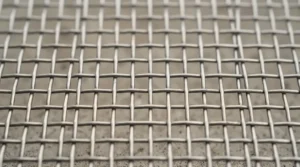
This is a 6mm galvanised mesh roll, 300mm wide and 6m long, giving about 1.8 square metres of coverage. The 6mm x 6mm holes match the aperture trade advice treats as the upper limit for mice, so you’re not gambling on a borderline size. The listing says it can be cut with heavy-duty mesh cutters, which suggests rigid welded wire rather than floppy netting.
Based on the spec comparison, this is the roll to choose when you’re covering several small entry points rather than lining a whole structure. The narrow width means you can fold it into an L-shape to protect a corner without wasting offcuts. The trade-off is cost per square metre, which is noticeably higher than the 0.9m-wide rolls.
On reviews, I couldn’t verify a large independent pool for this exact listing. Comparable 6mm rolls from other sellers are commonly praised for being easy to cut and effective, so read current ratings yourself before buying.
Pros:
- ✅ 6mm holes match the mouse threshold
- ✅ Narrow width means little waste on small jobs
- ✅ Suitable for squirrels, birds and rabbits too
Cons:
- ❌ Expensive per square metre versus wide rolls
- ❌ Too narrow for shed floors or panels
Priced in the mid-£20s, Metex Proofing Mesh is good value for patching and poor value for anything big.
2. Roshield Rodent Proofing Mesh 6m x 300mm — retail-ready roll for vents and air bricks
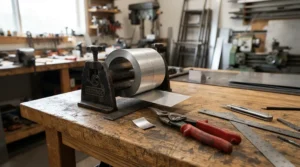
Roshield’s selling point is use case: its product listing specifically names the front of air bricks, larger vent openings and pipework.
The mesh has 6mm x 6mm holes in galvanised steel and is described as suitable for both internal and external use. In practice, that “internal and external” claim means it can bridge the wall-to-loft journeys rodents take, not just the outside perimeter. The listing recommends fitting it as a preventative measure after an active infestation has been dealt with, which is sound advice: mesh locks mice out, but it can also lock them in if you fit it over an occupied entry.
What most buyers overlook is that this is the same aperture and roughly the same size as Metex Proofing Mesh, but at a higher price band. You’re paying for brand positioning and distribution, not a visible spec advantage, so compare carefully.
For reviews, the picture is similar to product 1: I couldn’t verify a robust review pool, and a comparable 400mm x 6m roll I found drew comments about easy cutting and good rodent cover, plus one buyer who used it to repair a rabbit cage the rabbit had chewed through.
Pros:
- ✅ Listed for use over air bricks and vents
- ✅ Consistent 6mm x 6mm galvanised aperture
- ✅ Flexible enough to shape around pipework
Cons:
- ❌ Priciest of the narrow galvanised rolls
- ❌ No spec advantage over cheaper 6mm rolls
At around £35-£45, Roshield Mesh is fine, but only worth it if stock or convenience matters more than the cost.
3. Rodent Proof Weldmesh 6.5mm x 6.5mm 22G Galvanised Steel (0.9m x 6m) — best value per square metre
This is the workhorse. Several UK trade suppliers sell it, and it’s the roll to buy when you’ve got a shed floor, a decking skirt or a raised-bed base to cover.
The spec is 22 gauge prime galvanised steel with a 6.5mm square aperture, supplied 0.9m wide in 6m or 30m lengths. At 5.4 square metres, a 6m roll covers a shed floor with room to spare. Suppliers recommend side cutters for cutting and weldmesh clips for fixing. The roll is also flexible enough to wrap a post or a corner.
Here’s the catch: 6.5mm sits half a millimetre above the 6mm figure in the council guidance. For adult mice it will usually do the job, but for very young mice I’d prefer 6mm. Supplier pricing also varies widely, with the same 0.9m x 6m roll appearing from the high £20s to nearly £60, so shop around.
I couldn’t verify independent reviews for this unbranded listing, so treat the supplier descriptions as claims rather than proof.
Pros:
- ✅ Lowest cost per square metre of the group
- ✅ Wide roll covers floors and panels
- ✅ Clips and side cutters make fitting simple
Cons:
- ❌ 6.5mm aperture is marginal for juvenile mice
- ❌ Big price variation between suppliers
At roughly £27-£60 depending on the seller, Rodent Proof Weldmesh is the value pick if you buy at the low end.
4. Mesh Direct Extra Heavy 6mm Galvanised Mesh (0.8mm wire, 90cm x 10m) — heavier wire for rat-prone sites
Wire thickness is the unsung hero of rodent proofing, and this is the heavy option.
Mesh Direct sells a standard 22 gauge version with 0.65mm wire, described as suitable for mice and moles, and an extra heavy hot-dip galvanised version with 0.8mm wire and 6mm holes. The extra heavy version is the one marketed for both rats and mice. A thicker wire resists gnawing and holds its shape when pushed, which matters more than aperture once rats are involved, since they will chew at an edge.
My analytical take: choose this over the standard 22G rolls if you’ve had rats, keep poultry or store feed. The 10m length is useful for long runs around an outbuilding. The downside is that Mesh Direct quotes carriage separately by email, so the true cost depends on delivery, and the heavier wire is harder to cut and shape.
I couldn’t verify independent reviews for this listing. The retailer also offers a stainless 6mm option, which is worth considering if you’re fitting in a damp spot.
Pros:
- ✅ 0.8mm wire resists gnawing better
- ✅ Hot-dip galvanised finish for outdoor use
- ✅ Marketed for rats and mice
Cons:
- ❌ Carriage quoted separately by email
- ❌ Heavier wire is harder to cut and form
Check current price, since carriage changes the maths. Mesh Direct Extra Heavy is the one I’d choose where rats are the realistic threat.
5. Metex Ventguard Airbrick Vent Cover — stainless fix for broken air bricks
Sometimes the neatest mesh solution is not a roll at all.
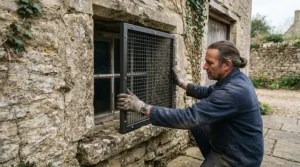
The Metex Ventguard is a UV-stabilised plastic frame with 2mm stainless steel mesh, designed to fit over existing air bricks while keeping ventilation open. It can be screwed or glued, with a glue groove for stronger adhesion, and comes in white, grey, brown and black. The 2mm aperture is far tighter than a 6mm roll, so it blocks crawling insects as well as rodents.
Based on the spec sheet, the tight mesh is both the strength and the risk. It’s excellent for broken or oversized air brick holes, but fine mesh can clog with dust and cobwebs, and underfloor voids need airflow. Check it every year and clear debris. Because it fits over rather than into the wall, it’s also a quicker job than cutting and fixing a flat panel.
I couldn’t verify a robust independent review pool for the individual colour variants, so check current ratings.
Pros:
- ✅ Fits over existing air bricks quickly
- ✅ 2mm stainless mesh also blocks insects
- ✅ Colour options blend with brickwork
Cons:
- ❌ Fine mesh can clog and reduce airflow
- ❌ Only suits standard air brick openings
At around £12-£13 each, Metex Ventguard is cheap insurance for a vulnerable air brick.
6. Metex Vermiguard Rodents & Small Mammal Proofing Mesh 5m x 50mm — flexible stainless for awkward gaps
Where flat galvanised panels can’t go, a thin flexible strip can.
This is a 5mm stainless steel mesh strip, 50mm wide and 5m long, with a wider 150mm option. The listing recommends it for tiles, ridge tiles, fascia boards, weep holes, air bricks and pipe openings, and says it cuts with scissors and can be folded or rolled. That flexibility makes it the best choice for eaves, where gaps are irregular and rigid welded mesh simply won’t conform.
The 5mm aperture gives a comfortable margin under the 6mm mouse threshold, and the stainless finish suits spots that stay damp. The honest limitation is that thin, soft-folding mesh isn’t a structural barrier. A determined rat can push through a loosely fixed strip, so fix it securely at the edges.
I couldn’t verify a large independent review pool for this listing, so treat flexibility claims as the maker’s description.
Pros:
- ✅ 5mm aperture leaves a safety margin
- ✅ Scissor-cuttable, foldable and rollable
- ✅ Stainless suits damp and exposed spots
Cons:
- ❌ Costly per metre for the width
- ❌ Not rigid enough for large openings
At roughly the high-£20s for the 50mm width, Metex Vermiguard is a specialist buy for tricky spots.
7. Metex RatTape Rodent Proofing Tape 1m x 50mm — peel-and-stick fix for cracks and pipes
Imagine duct tape with a steel backbone.
Metex RatTape is a 5mm stainless steel mesh sandwiched between two layers of sticky butyl, 1m long and 50mm wide. The maker says it bonds to wood, PVC, brick and concrete, can be cut with tin snips and can be painted to blend in. Because the mesh is embedded, you get a chew-resistant patch without drilling, which suits rented properties and pipe surrounds where fixings would be awkward.
The analysis: it’s ideal for hairline cracks and small gaps, but weak as a primary barrier on large openings. Surfaces must be clean, dry and dust-free, or the butyl won’t grip, and I’d treat it as a supplement to mortar rather than a replacement. For bigger defects the maker suggests overlapping strips.
I couldn’t verify independent reviews, so check Amazon UK ratings before ordering.
Pros:
- ✅ No drilling needed for fitting
- ✅ Waterproof, paintable butyl backing
- ✅ 5mm stainless mesh resists chewing
Cons:
- ❌ Only 1m length per pack
- ❌ Needs perfectly clean, dry surfaces
At around £10-£12, Metex RatTape is a cheap problem-solver for small gaps.
How to Fit Galvanised Wire Mesh for Rodent Proofing: A Step-by-Step Guide
Buying the right roll is half the job. Fitting it properly is the other half, and where most DIY attempts fail.
- Survey first. Use a torch and the pencil test: if a pencil goes in, a mouse can follow. Check pipe entries, gaps under doors, eaves, and the base of walls.
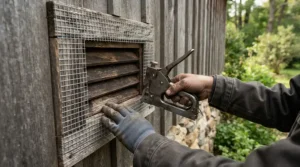
- Measure, then cut. Cut with side cutters or tin snips and wear gloves, because cut wire ends are sharp. Leave a 25-50mm overlap beyond the gap on all sides.
- Fix it firmly. Weldmesh clips, or screws with washers into sound masonry or timber, work well. Trade guidance warns that mesh held by only a few edge fixings gets pushed through by a determined rat, so space fixings closely.
- Seal the edges. Fill remaining gaps with mortar or sealant. Foam and sealant alone are soft enough for rodents to chew, so use them behind the mesh, not instead of it.
- Treat cut ends. Cutting exposes bare steel. A dab of cold galvanising spray helps protect it.
- Don’t block ventilation. Designing Buildings’ guide to air bricks notes that wire mesh or purpose-made covers over air bricks can keep pests out, while the Watford sheet warns against blocking air vents. Use a mesh that lets air through and keep it clear.
- Inspect twice a year. Look for rust, bent wire and fresh gnaw marks after winter.
Real-World Scenarios: Which Mesh for Which Job?
The allotment shed owner (budget £50, outdoor, constant use). Mice are nibbling seed packets. A 0.9m-wide roll such as Rodent Proof Weldmesh lines the floor and the bottom 30cm of the walls, with Metex RatTape patching cracks around the door frame. Clips and side cutters are the only tools needed.
The 1930s semi-detached homeowner (budget £100, suspended floor, annual checks). Two air bricks are cracked and mice are using them. Fit Metex Ventguard covers on the air bricks and a run of Metex Vermiguard along the eaves gaps. Clear the covers each spring so airflow isn’t compromised.
The chicken keeper (budget £100+, rat pressure, daily use). Rats are after the feed. Mesh Direct Extra Heavy with its 0.8mm wire lines the run’s base and skirts the coop, buried or turned outwards at the foot. The heavier wire is worth the delivery cost here.
How to Choose Galvanised Wire Mesh for Rodent Proofing
Choosing mesh comes down to five decisions. Get these right and the rest follows.
- Pick the aperture first. Aim for 6mm or smaller for mice. Anything above that is a gamble, as the aperture, not the brand, decides whether a mouse gets through.
- Match wire thickness to the pest. Thin 22G wire (around 0.65mm as sold by some suppliers) suits mice, while heavier 0.8mm wire is the better pick for rats.
- Check the coating. Hot-dip galvanisation forms a zinc layer that slows corrosion, but cut edges and damp spots will eventually rust, so consider stainless where moisture is constant.
- Choose a format that fits the gap. Narrow rolls for pipes and vents, wide rolls for floors and panels, tape or strips for awkward cracks.
- Check fixing and airflow needs. Plan your fixings and make sure the mesh doesn’t choke ventilation.
- Work out cost per square metre. A narrow roll can cost two to three times as much per square metre as a wide one.
What Mesh Size Stops Mice?
The short answer: 6mm or smaller. The Watford Borough Council sheet gives 6mm as the hole size mice can squeeze through, and one UK trade knowledge base puts the mouse threshold at 6-7mm and brown rats at roughly 12-13mm. These figures are guides rather than laws of nature, so aim for a margin.
That’s why the 6mm galvanised rolls here market themselves at mice, and why 6.5mm weldmesh sits right on the edge. Mice are opportunists, and juveniles are smaller than adults. The old rule of thumb, “if a biro fits through the hole, so does a mouse”, is deliberately conservative, and it’s a good one to follow.
Bigger mesh isn’t useless, just mis-targeted. 13mm mesh like the pet-run rolls sold at DIY chains won’t stop mice at all, and it only just holds back adult rats. If your problem is mice, buy 6mm or finer. If it’s rats, prioritise thicker wire and secure fixing as well.
Aperture Size and Wire Gauge: What the Numbers Actually Mean
Aperture is the clear gap between wires. Wire gauge is the wire’s thickness. Both matter, and they pull in different directions: finer apertures stop smaller animals, thicker wire resists chewing and bending.
| Mesh Aperture | Mice | Rats | Best For |
|---|---|---|---|
| 2-5mm (stainless covers and strips) | Comfortable margin | Stopped | Air bricks, eaves, tight gaps |
| 6mm | Standard limit | Stopped | General mouse proofing |
| 6.5mm | Marginal for juveniles | Stopped | Sheds where cost matters |
| 13mm | Passes through | Only adults held | Pet runs, not rodent proofing |
| 25mm | Passes through | Passes through | Garden fencing only |
Gauge is trickier. 22 gauge is a common description for fine mesh, but suppliers quote different thicknesses, such as 0.65mm for one 22G product, so compare millimetres rather than gauge numbers. The take-away: choose aperture to stop the animal and wire thickness to stop the chewing. For mice, 6mm and 0.65mm will do; for rats, step up to 0.8mm or heavier.
Galvanised vs Stainless Mesh: Which Lasts Longer in the UK?
Stainless wins on corrosion; galvanised wins on price. For most dry, sheltered jobs, galvanised is entirely sensible.
| Factor | Galvanised | Stainless |
|---|---|---|
| Cost | Lower | Higher |
| Rust resistance | Good until coating wears or cut edges rust | Excellent |
| Rigidity | Stiff welded panels | Often flexible strips and covers |
| Best For | Sheds, floors, dry walls | Damp spots, air bricks, eaves |
Galvanised steel gets its protection from a zinc layer, and the UK galvanizing industry says coatings can last 50 years or more maintenance-free in most UK atmospheres. That figure is for structural steel with thick coatings, so thin mesh with a lighter coating will not last that long, especially at cut ends. Some trade sources say galvanised mesh corrodes in damp areas and can reopen gaps, which is why damp spots justify stainless.
In practice: use galvanised for shed floors, dry-wall panels and runs. Use stainless for ground-level air bricks, coastal sites and anywhere that stays wet. That’s why Metex Ventguard, Metex Vermiguard and Metex RatTape all use stainless.
Welded Wire Mesh for Sheds and Outbuildings: Where Rodents Get In
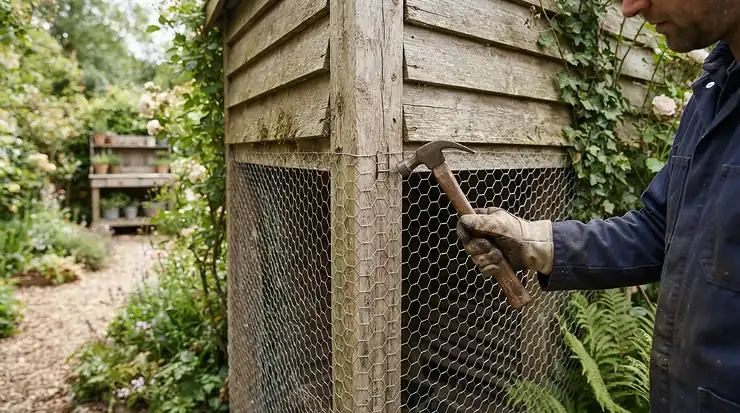
Sheds are rodent hotels with excellent catering: dry, quiet and full of seed, feed and cardboard. Welded wire mesh for sheds and outbuildings is the standard fix, because it’s rigid, cheap and easy to fix.
Check the usual weak points: gaps where floorboards meet walls, door bottoms, eaves, vent holes, and the underside of raised sheds. A wide galvanised roll like Rodent Proof Weldmesh can line the floor underneath or cover vent holes, while the heavier wire of Mesh Direct Extra Heavy suits sites with rat pressure. Overlap panels and fix at the edges so a determined rodent can’t lift a corner.
Don’t forget the door. A mesh-lined bottom edge or a brush strip stops the easiest route in. Keep feed and seed in lidded metal or heavy-duty plastic containers, because mesh protects the shed but doesn’t remove the reason rodents want in.
Rodent-Proof Mesh for Air Bricks and Eaves: Airflow, Bats and Birds
Rodent-proof mesh for air bricks and eaves has to do two things at once: block animals and let air through. That’s trickier than it sounds.
Air bricks ventilate suspended floors, and Approved Document C sets minimum ventilation of 1500mm² per metre run of external wall or 500mm² per square metre of floor area. NHBC guidance on air bricks to underfloor voids stresses keeping them clear of obstructions. A fine 2mm cover like Metex Ventguard protects well, but clogged mesh cuts airflow, so inspect it annually.
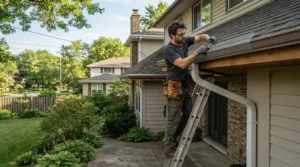
At the eaves, Metex Vermiguard can be folded into gaps beneath tiles and behind fascias. But check before you seal. Bats and their roosts are legally protected in the UK, and nesting birds shouldn’t be disturbed, so if you suspect either, seek advice first and avoid sealing during nesting season.
Long-Term Cost & Maintenance
Cost per square metre tells the real story. A narrow 6m x 300mm roll covers about 1.8 square metres, working out at roughly £12-£16 per square metre, while a 0.9m x 6m roll covers 5.4 square metres at roughly £5-£11 per square metre, depending on the supplier.
| Product | Role | Price Range | Value Verdict |
|---|---|---|---|
| Rodent Proof Weldmesh | Wide-area cover | £27-£60 by supplier | Best value for large areas |
| Metex Proofing Mesh | Small gaps | Mid-£20s | Fair for patching |
| Roshield Mesh | Vents and air bricks | Around £35-£45 | Premium for convenience |
| Mesh Direct Extra Heavy | Rat-prone sites | Check current price | Best for durability |
| Metex Ventguard | Air bricks | Low £10s | Cheap insurance |
Maintenance is light but real: inspect twice yearly, clear debris from fine mesh, touch up cut edges with galvanising spray, and replace anything bent or rusted. Spending slightly more on thicker wire or stainless where it’s damp usually costs less than re-doing a failed job in two years.
FAQ
❓ Can mice chew through galvanised wire mesh?
❓ Is chicken wire good enough for rodent proofing?
❓ Will galvanised mesh rust in coastal parts of the UK?
❓ How do you fix mesh to brickwork?
❓ Where can I buy a 6mm galvanised mesh roll in the UK?
Conclusion
Rodent proofing isn’t glamorous, but it’s among the most satisfying jobs you can do around a house. One afternoon with a roll of mesh, a pair of cutters and some mortar can end months of midnight scratching.
The decision framework is simple. If you want the best value for sheds and outbuildings, Rodent Proof Weldmesh covers the most area for the least money. If you need narrow, ready-to-fit coverage for vents and pipes, Metex Proofing Mesh or Roshield Mesh do the job. If rats are the realistic threat, Mesh Direct Extra Heavy gives you the sturdiest wire. For air bricks, Metex Ventguard is the quick fix, Metex Vermiguard handles awkward eaves, and Metex RatTape plugs the cracks that nothing else reaches.
Whatever you choose, remember the three rules: aim for 6mm or finer, fix it firmly, and never choke ventilation. Done properly, galvanised wire mesh for rodent proofing is a cheap, quiet and long-lasting alternative to poison.
✨ Ready to seal the gaps?
🔍 Pick the mesh that fits your problem, check current pricing and availability on Amazon UK, and give the mice a very firm “no vacancy” sign. 🛠️
Recommended for You
- Steel Wool For Mouse Holes: 7 Tough Picks For UK Homes (2026)
- Steel Wool Vs Expanding Foam For Mice: 7 Proven Fixes (2026)
- Rodent Proofing Products: 7 Proven UK Picks That Work (2026)
Disclaimer: This article contains affiliate links. As an Amazon Associate, I earn from qualifying purchases. If you purchase products through these links, we may earn a small commission at no additional cost to you.
✨ Found this helpful? Share it with your friends! 💬🤗
