
In This Article
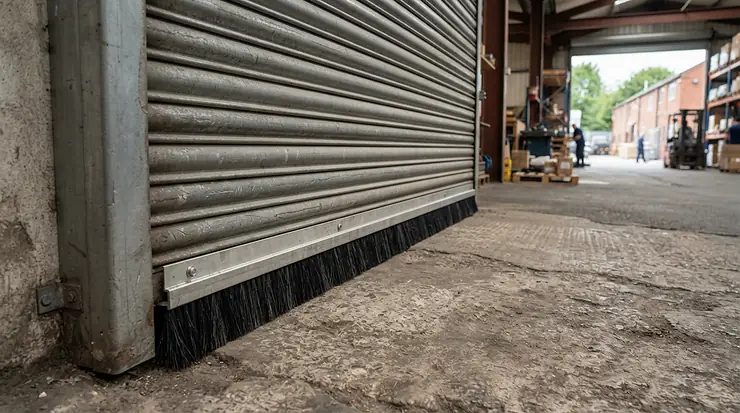
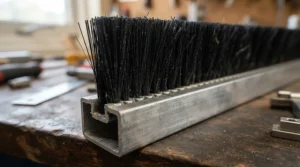
A door brush strip to keep mice out is a bristle-faced seal, fixed along the bottom or edge of an external door, that closes the gap rodents use to slip indoors. Dense nylon or polypropylene bristles flex around uneven floors, so the door still swings freely but no pencil-width opening is left for a mouse.
Here’s the uncomfortable bit. The British Pest Control Association advises focusing on low-level gaps first, because that’s where mice most often enter. It also recommends fitting door sweeps or brush strips to exterior doors where the gap is bigger than roughly 4mm. A sagging back door, a worn threshold, or a garage door that hasn’t sat flush since the last decade is an open invitation.
The fix is cheap, and it’s one of the few pest-proofing jobs you can finish in a single Saturday morning with a hacksaw and a screwdriver. The trick is matching the strip to your actual gap, your door type and your fixing surface. A strip that’s too short, too stiff or stuck on with optimistic tape won’t do the job.
This guide covers seven real, UK-available strips, from budget pile tape to heavy-duty aluminium garage brushes. It’s analysis, not a lab test: everything below rests on published specifications, pest-control guidance and the review data I could verify. Where I couldn’t verify something, I say so. As an Amazon Associate I earn from qualifying purchases (full disclaimer at the end).
Quick Comparison: Door Brush Strip to Keep Mice Out at a Glance
| Product | Fixing | Rated gap | Best For |
|---|---|---|---|
| Stormguard Brush Pile | Self-adhesive | Around 3–5mm | Frame and side gaps |
| AFAXINRIE Brush Strip | Self-adhesive | Around 4–9mm | Tight budgets, small gaps |
| Stormguard PVC 914mm | Screw-fix | Up to 25mm | Budget bottom-of-door seal |
| Stormguard Heavy Duty 838mm | Screw-fix | Up to 25mm | Tougher aluminium carrier |
| Stormguard Concealed Fix | Screws plus adhesive strip | Up to 25mm | Neat, hidden fixings |
| KOTARBAU Brush Strip | Screw-on | Check listing | Garage and utility doors |
| Stormguard Garage 2134mm | Screw-fix | Check listing | Wide garage doors |
Looking at the table, the three Stormguard bottom-of-door strips tolerate gaps up to 25mm, far more than a mouse needs to get through. That headroom is useful on old, uneven thresholds. The self-adhesive options, Stormguard Brush Pile and AFAXINRIE Brush Strip, are best treated as frame sealers or a fix for narrow gaps. For wide garage doors, Stormguard Garage 2134mm is the only one sized to cover a full up-and-over door in a single length.
💬 Just one click — help others make better buying decisions too!😊
Top 7 Door Brush Strip to Keep Mice Out Picks: Expert Analysis
1. Stormguard Self Adhesive Brush Pile Weather Strip — best for sealing side and frame gaps
This slim pile tape does its best work down the hinge and closing edges of a door, where mice often slip through unnoticed.
It comes in 5m and 15m rolls with a concealed adhesive backing, so you need no pins or screws. It’s rated for gaps of roughly 3–5mm. That ceiling sits right at the width mice exploit, so it suits tight frame gaps rather than a visible 10mm gap under a door. A 15m roll covers about three standard doors once cut, so the cost per door is tiny.
Based on the spec comparison, it’s a supporting act rather than the star. It suits anyone who already has a decent bottom seal and wants to close the frame, a loft hatch or the edge of a sliding door. Adhesive on an exterior frame is the weak link through a damp British winter, so surface preparation matters (more on that later).
I couldn’t retrieve a verifiable body of Amazon reviews for this exact listing at the time of research, so I won’t summarise sentiment. When you check current reviews, scan for comments on cold-weather adhesion, because that decides how long a self-adhesive strip lasts.
Pros:
- ✅ Closes narrow frame and edge gaps neatly
- ✅ Long rolls cover several doors
- ✅ No drilling or visible fixings
Cons:
- ❌ Too short-piled for large under-door gaps
- ❌ Adhesive may struggle on cold, damp frames
Price: under £10 for 5m–15m rolls at the time of research; check current price. Verdict: excellent value as a frame sealer, but not a standalone answer.
2. AFAXINRIE Draft Excluder Self-Adhesive Brush Strip — widest gap tolerance among the self-adhesive options
A thicker 9mm profile gives this roll more reach than basic pile tape, so it stretches further across slightly sloppy gaps.
The strip is 5m long, 9mm wide and 9mm thick, and its listing says it fills gaps of 4–9mm around doors and windows. In practical terms, that’s the band where a mouse can already squeeze through, so it’s relevant to this job. The bristles are soft and elastic, which helps them spring back after the door closes.
On paper, this suits renters and anyone who can’t drill into a uPVC or composite door. It also fits a gap that’s too big for fine pile tape but too small to justify a metal carrier. It’s still self-adhesive, so I’d treat it as a frame, window and internal-door fix, not the only barrier on a heavily used back door.
A deals-aggregator page showed a rating of around 4.3 out of 5 across more than 1,200 Amazon reviews. I couldn’t verify individual review themes, so check recent reviews for how well the adhesive held.
Pros:
- ✅ Covers gaps up to roughly 9mm
- ✅ Easy to cut to length
- ✅ Large review pool to scrutinise
Cons:
- ❌ Adhesive-only fixing limits external-door use
- ❌ Plastic bristles can be gnawed if mice persist
Price: around £5–£10 range at the time of research; check current price. Verdict: great value for small gaps, frames and windows.
3. Stormguard Bottom of Door Draught Excluder Brush Strip 914mm (PVC) — best budget screw-fix bottom seal
This is the entry point to proper under-door sealing: a screwed-on carrier with real bristles at a sensible length.
It uses a 25mm polypropylene brush in a PVC carrier, rated for door gaps up to 25mm, and screws are included. That 25mm figure means it can bridge a worn threshold with plenty of margin, and the bristles overhang to meet the floor. It’s cut to your door width with a hacksaw, and a 914mm length covers most single doors (it’s cut down, not stretched up).
Analytically, it’s the sensible first buy for a back door or utility door. The PVC carrier is the compromise: it’s cheaper and lighter than aluminium, but it’s softer, so it may suit sheltered doors better than exposed, high-traffic ones.
Retailer listings I found offer multi-packs, which is handy if you’re doing several doors. I couldn’t verify an Amazon review count, so check recent reviews for comments on bristle stiffness.
Pros:
- ✅ Rated for gaps up to 25mm
- ✅ Screw-fix is more secure than tape
- ✅ Cheap enough to fit every external door
Cons:
- ❌ PVC carrier is less robust than aluminium
- ❌ Limited colour choice
Price: around £6–£12 range per strip, depending on pack; check current price. Verdict: strong value for most domestic doors.
4. Stormguard Heavy Duty Aluminium Bottom of Door Brush Strip 838mm — tougher carrier for busy doors
An aluminium carrier gives the bristles a rigid backbone, which matters on a door slammed twenty times a day.
It pairs a polypropylene brush with a flexible aluminium carrier, suits hinged, sliding and folding doors, and is rated for gaps up to 25mm. It comes in aluminium, gold or white finishes. Stormguard’s fitting notes recommend cutting to door width minus 5mm, then crimping the cut end to stop the bristles unravelling. That tip is worth knowing, because a frayed cut end is a classic weak spot.
Based on those specifications, this is my pick for a kitchen back door where mice are most likely to pass. Metal won’t flex and sag the way a PVC carrier can, and it’ll hold its line against the floor.
I couldn’t verify a review count for this listing at the time of research. Look specifically for reviews from owners of older, uneven doors.
Pros:
- ✅ Rigid aluminium carrier holds shape
- ✅ Suits hinged, sliding and folding doors
- ✅ Rated for gaps up to 25mm
Cons:
- ❌ Needs a hacksaw and crimping to fit
- ❌ Costs more than PVC alternatives
Price: expect roughly the low-to-mid £10s range, though I couldn’t confirm a live Amazon price; check current price. Verdict: the best-balanced all-rounder for everyday doors.
5. Stormguard Concealed Fix Bottom of Door Brush Strip 838mm — neatest finish with hidden screws
Clip-on covers hide the screws, which gives you a neat result on a front door where appearance counts.
It has a 25mm brush height, handles gaps up to 25mm, and comes in chrome, gold, light oak and white. An adhesive strip is included for extra fixing, and the listing mentions a 4-year guarantee. In practice, that dual fixing, screws plus adhesive, gives it a firmer hold than tape alone, and you can adjust the brush higher or lower to match the gap.
The analysis here is simple. If you want a strip that doesn’t look like a workshop fix, this is the one. The covers add a little cost and a few more minutes of fitting, but a visible row of screw heads on a front door is a common reason people don’t bother.
One retailer review snippet noted it suited a wider-than-standard door. That’s a single data point, not a trend, so check Amazon’s current reviews for a fuller picture.
Pros:
- ✅ Screw covers give a cleaner look
- ✅ Four finishes, including light oak
- ✅ Four-year guarantee listed
Cons:
- ❌ More fiddly to fit than basic strips
- ❌ Finishes may not match every door
Price: roughly mid-range, around the mid-£10s to £20 range (unconfirmed); check current price. Verdict: worth the premium for visible front or side doors.
6. KOTARBAU Door Brush Strip, Aluminium, 1m — garage-friendly metal strip, screw-on
A straight aluminium carrier with a long brush gives this strip the stripped-back, workshop look that suits a garage or shed.
The listing describes a 1m silver aluminium strip with a 60mm dimension, screw-on fixing, and a mention of insect protection. I’d read that 60mm as the profile size, but check the listing’s drawing before buying, because specifications on marketplace pages can be ambiguous. A longer brush copes better with the dips and cracks common in poured concrete, which is exactly where garage gaps form.
On balance, this is a sensible buy for a side-door garage, workshop or shed where appearance doesn’t matter and bristle reach does. It isn’t a product to buy blind, so confirm the brush length and rated gap against your measurements.
I couldn’t verify a review count for this marketplace listing, so treat it with the usual care for third-party sellers.
Pros:
- ✅ Metal carrier suits garages and sheds
- ✅ Longer profile copes with uneven concrete
- ✅ Screw-on fixing is secure
Cons:
- ❌ Specifications need checking before buying
- ❌ Plain finish won’t suit a front door
Price: roughly the £10–£25 range (unconfirmed); check current price. Verdict: good value for utility spaces if the specification fits.
7. Stormguard 50mm Heavy Duty Aluminium Garage Door Brush, 2134mm — made for wide garage doors
At 2134mm, this is the only strip here long enough to span a full-width garage door in one piece.
The listing describes it as a 50mm heavy-duty aluminium brush marketed as a draught and vermin excluder. The length matters more than it sounds, because every join is a potential gap, and single-piece coverage removes that weak point. A 50mm brush gives plenty of room to flex over a rough floor.
Analytically, this is the pick if your main entry point is an up-and-over garage door. If you only need to seal a pedestrian door, it’s overkill. It’s also a reminder that garage doors need checking for gaps at the corners, which no strip alone will close.
I couldn’t verify review data for this listing at the time of research, so read recent reviews for fitting experiences on specific door types.
Pros:
- ✅ Single piece spans a wide garage door
- ✅ Heavy-duty aluminium carrier
- ✅ Longer bristles flex over rough floors
Cons:
- ❌ Overkill for standard pedestrian doors
- ❌ Long length is awkward to cut and carry
Price: probably the £20–£40 range (unconfirmed); check current price. Verdict: sensible for wide garage doors, poor value for anything smaller.
Will a Brush Strip Stop Mice?
The honest answer to “will a brush strip stop mice?” is yes for the gap, but not forever against a determined chewer.
Pest-control guidance is consistent on the gap. A Watford Borough Council information sheet says mice can squeeze through holes of about 6mm and lists gaps under external doors as a typical way in. It recommends draught-excluding brush or bristle strips as a fix. The BPCA puts the figure closer to 5mm, and Rentokil’s door-proofing literature cites roughly 6.5mm. The numbers differ slightly, but the message is the same: if you can slide a pencil under the door, a mouse can follow.
A dense strip that touches the floor along its full length removes that gap. What it can’t do is resist gnawing. The Rentokil literature notes that rodents will try to enlarge a gap if it’s almost big enough, and plastic bristles are softer than metal. That’s why I’d choose a metal carrier, check bristle condition regularly, and, if you already have a mouse problem, add a steel kick plate or stainless wire wool at known weak spots.
Think of a brush strip as a drawbridge, not a portcullis. It keeps casual intruders out, but a persistent resident will test it. The best results come from fitting a strip and then removing the reasons mice are interested: accessible food, clutter against the wall and gaps elsewhere.

How to Choose a Door Brush Strip to Keep Mice Out
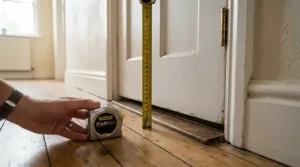
- Measure the gap at three points. Check the hinge side, middle and latch side with a ruler or feeler gauge. Doors rarely sit level, and the biggest measurement is what counts.
- Pick a strip rated above your largest gap. A 25mm-rated strip comfortably covers a 10–12mm gap, whereas a 5mm-rated pile tape won’t.
- Prefer a metal carrier for high-risk doors. Aluminium resists flexing and gnawing at the fixing line better than PVC.
- Match the fixing to the surface. Screws suit timber and aluminium; adhesive suits frames you can’t drill. Self-adhesive vs screw-fix strips is covered further below.
- Check the length. Measure the door width and allow for cutting to width minus a few millimetres, as Stormguard’s fitting notes advise.
- Think about door direction. Outward-opening doors need the strip on the outside face, and inward-opening doors on the inside face.
- Buy for the worst-case door first. Start with the back door, garage and any door near the kitchen or bins, then expand.
Threshold Gap Size: How Big Is Your Gap and Which Strip Fits?
Threshold gap size is the single most important number when buying a door brush strip to keep mice out, and most people never measure it. A strip rated for 5mm won’t seal a 12mm gap, however well it’s fitted.
Local authority pest guidance supports using bristle strips for narrow gaps. A West Lothian Council proofing guide says gaps under doors down to around 5mm can be sealed effectively with nylon bristle strip. Larger gaps need a longer brush or, better still, fixing the door or threshold itself.
| Measured gap | What it means | Suitable strip |
|---|---|---|
| Under 4mm | Fine for most mice, monitor only | Stormguard Brush Pile (frames) |
| 4–5mm | Borderline, seal it | AFAXINRIE Brush Strip |
| 5–9mm | Clearly mouse-sized | Stormguard PVC 914mm |
| 10–25mm | Needs a proper bottom seal | Stormguard Heavy Duty 838mm, Stormguard Concealed Fix |
| Over 25mm | Door or threshold repair first | Stormguard Garage 2134mm, KOTARBAU Brush Strip (check listings) |
Looking at the table, most domestic back doors land in the 5–25mm bands, which is why the Stormguard screw-fix strips dominate the list. If your gap is under 5mm, the cheaper self-adhesive options are adequate for frames. If it’s over 25mm, fix the underlying problem, because bristles can’t compensate for a door that has dropped.
Self-Adhesive vs Screw-Fix Strips
Self-adhesive vs screw-fix strips is a trade-off between convenience and permanence, and for external doors that trade-off usually favours screws.
Self-adhesive strips like Stormguard Brush Pile and AFAXINRIE Brush Strip go on in minutes with no tools beyond scissors. They’re ideal for renters, uPVC frames and anywhere you don’t want to drill. The downside is adhesion: cold, damp or dusty surfaces weaken the bond, and a strip that lifts at one end leaves exactly the gap you wanted to close. Some pest-proofing guides go as far as calling adhesive-only fixing inadequate for external doors, and for a bottom-of-door strip that takes daily abuse, I’d agree.
Screw-fix strips, such as Stormguard Heavy Duty 838mm and KOTARBAU Brush Strip, take longer. You’ll need a hacksaw, a bradawl and a drill or screwdriver. In exchange, you get a fixing that survives door slams and cold snaps. Stormguard Concealed Fix splits the difference with screws plus an adhesive strip.
My rule of thumb: adhesive for frames and sheltered doors, screws for bottoms of external doors and garages. If you must use adhesive, clean and degrease the surface, fit it on a dry, mild day, and press firmly along the full length.
✨ Ready to Mouse-Proof That Door?
🔍 Take your home’s defences up a level with these carefully selected strips. Click any highlighted product name to check current pricing and availability, and give mice one less reason to visit your kitchen!
Garage Door Bottom Seal for Rodents
A garage door bottom seal for rodents has a tougher job than a house door seal: bigger gaps, rougher floors and corners that never quite meet.
Up-and-over garage doors rarely close flush on poured concrete. The floor slopes for drainage, the door drops slightly over the years, and the corners leave odd-shaped gaps. Rubber bulb seals look neat but struggle over uneven floors, because they only seal where they touch. A long, flexible brush follows the floor’s contours, which is why brush strips suit garages so well.
For a wide garage door, Stormguard Garage 2134mm gives you a one-piece strip across the full width. For a narrower door or a pedestrian door in the garage, KOTARBAU Brush Strip is easier to handle and cut. If the gap exceeds the rated brush length, fix the door or add a threshold ramp first.
Remember the corners and sides. A brush along the bottom does nothing about a 10mm gap where the door meets the frame. Stormguard Brush Pile along the frame edges is a sensible complement. If mice are already in the garage, store food, pet feed and bird seed in sealed metal or thick plastic bins, because no seal beats a nest built against a bag of seed.
Brush Draught Excluder for External Doors
A brush draught excluder for external doors does two jobs: it blocks draughts and it blocks pests, and the best ones do both without making the door hard to close.
Front doors, back doors, patio doors and side doors all need different thinking. Hinged timber doors suit a screwed bottom strip like Stormguard Heavy Duty 838mm. uPVC and composite doors often suit adhesive or concealed-fix strips such as Stormguard Concealed Fix. Sliding patio doors usually need a side or track seal, and Stormguard Brush Pile is designed for that kind of frame work.
Older properties deserve extra attention. Rentokil Boecker’s prevention advice highlights bristle strips for doors where the fit isn’t snug, which describes most pre-war back doors. If you rent, check what your tenancy agreement says about fixings, because adhesive options avoid drilling.
Don’t forget the less obvious gaps: the top of the door, the letterbox and the junction where the threshold meets the frame. A mouse doesn’t care which gap is the official entrance. Walk around each door at night with a torch and look for light, because light means a gap. Fix those first, and use a bottom strip to deal with the rest.
Door Gap Sealing Strip: Features That Actually Matter (And Those That Don’t)
Not every feature on a door gap sealing strip listing earns its place. These are the ones that count when mice are the target.
Features that matter:
- Bristle density. Thin, sparse bristles leave see-through gaps. Hold the strip up to the light before fitting.
- Carrier material. Aluminium keeps its shape, while PVC can bend and sag over time.
- Brush length versus your gap. A 25mm brush can’t cover a 30mm gap, however it’s marketed.
- Cut-to-length design. A strip that can be trimmed neatly to door width, like Stormguard PVC 914mm, makes a flush fit.
- Warranty. Stormguard Concealed Fix lists a 4-year guarantee, which is a useful signal of confidence.
Features that don’t:
- Colour and finish. Gold, chrome and light oak look nice, but a mouse isn’t impressed.
- Energy-saving claims. A seal will reduce draughts, but no listing can promise a specific saving without knowing your house.
- “Universal” labels. Check the rated gap and mounting style rather than trusting a generic claim.
The best door gap sealing strip is the one that matches your measured gap, fits your door and survives a winter. Spend your money on carrier quality and correct sizing, not on cosmetic extras.
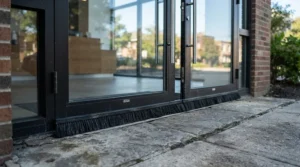
Brush Strips vs Other Ways to Block Door Gaps
A brush strip isn’t the only option, and understanding the alternatives shows why it’s usually the best first move.
| Option | Bridges uneven floors | Gnaw resistance | Best For |
|---|---|---|---|
| Brush strip | Yes | Medium (metal carrier helps) | Stormguard Heavy Duty 838mm |
| Rubber or PVC sweep | Poor | Low | Smooth, level thresholds |
| Steel kick plate | N/A (covers door face) | High | Doors already gnawed |
| Wire wool in gaps | Fills small voids | Medium-high | Pipe holes, small cracks |
| Threshold ramp or repair | Fixes the cause | High | Dropped or worn thresholds |
Looking at the table, a brush strip wins on adaptability because it follows an uneven floor, which rigid options can’t. It loses on gnaw resistance, which is where a steel kick plate or repair comes in. In practice, many pest controllers combine them: a strip such as Stormguard Heavy Duty 838mm for the gap, plus metal protection where gnawing has already started. Wire wool is excellent for pipe penetrations, but for a door gap a bristle seal is far more practical.
How to Fit a Door Brush Strip to Keep Mice Out
A good strip fitted badly is worse than an average strip fitted well. This is the routine I’d follow, based on manufacturer fitting guidance.
- Measure the door width and gap. Use the largest gap you found along the threshold.
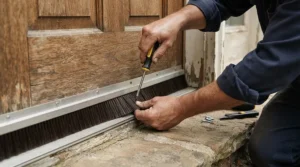
- Cut to size. With a screw-fix strip like Stormguard Heavy Duty 838mm, Stormguard advises cutting to door width minus 5mm and checking that a screw hole sits within 50mm of the cut end.
- Crimp the cut end. Pinch the end with pliers after removing the bristles, to stop them unravelling.
- Position it on the right face. Fit it to the inside base of inward-opening doors, or the outside for outward-opening ones, so the bristles overhang and touch the floor.
- Mark and fix. Start holes with a bradawl, then screw it on. For Stormguard Concealed Fix, add the adhesive strip and clip on the covers.
- Test it. Close the door in the evening with the lights on inside and look for any light at the bottom.
- Check after 30 days. Look for lifted ends, flattened bristles and fresh gaps at the sides.
Council pest teams advise the same basic approach. Birmingham City Council’s mice advice leaflet tells householders to check for gaps under doors and use brush or bristle strips. For adhesive strips, clean the surface with a degreaser, let it dry fully and press firmly along the whole length.
Real-World Scenarios: Which Strip Suits Which Home?
The Victorian terrace back door. A timber door, a threshold worn into a shallow dip and a 12mm gap in the middle. The kitchen is two paces away. Stormguard Heavy Duty 838mm is the sensible match: its aluminium carrier holds shape, and its 25mm rating covers the gap with margin. Add Stormguard Brush Pile down the latch side if you can see light.
The rented new-build with patio doors. The landlord bans drilling, the doors are uPVC, and the gaps are small. AFAXINRIE Brush Strip and Stormguard Brush Pile fit the brief: no drilling, easy to remove, and rated for gaps up to roughly 9mm and 5mm respectively. Clean the frame well and expect to replace them every so often.
The detached garage workshop. A wide up-and-over door on uneven concrete, bags of seed stored in the corner, and visible daylight under the door. Stormguard Garage 2134mm handles the width, and KOTARBAU Brush Strip suits the side door. Move the seed into metal bins, because a seal can’t compete with a free meal.
In all three cases, the strip is only part of the answer. Matching it to the door, the gap and the household’s constraints is what makes it work.
Common Mistakes When Buying a Door Brush Strip to Keep Mice Out
- Buying by length alone. A strip that’s long enough but rated for 5mm won’t seal a 15mm gap. Measure the gap first.
- Leaving bristles short of the floor. If the bristles hover above the surface, you’ve fitted a decoration. They should overhang and touch.
- Trusting adhesive on a back door. Daily use and cold weather break the bond. Use screws on the bottom of external doors.
- Sealing only the front. Mice prefer the quiet back or side door. Check every external door, including the garage.
- Ignoring the sides and top. A bottom strip doesn’t close a frame gap. Pair it with a pile strip like Stormguard Brush Pile.
- Forgetting other entry points. The BPCA and council guidance both highlight pipes, cables, airbricks and vents. A sealed door is wasted if a pipe hole next to it is open.
- Leaving food accessible. Pet food, bird seed and open bins keep mice interested, whatever you fit.
Think of proofing like a chain: the strongest link doesn’t matter if one link is open. The goal is a complete envelope, with the door strip as one part.
Long-Term Cost and Maintenance
A door brush strip to keep mice out is one of the cheapest pieces of pest control you can buy, and the running costs are tiny. Even so, it pays to think about total cost, because a cheap strip replaced every year costs more than a sturdier one that lasts.
| Product | Price range | Value verdict | Best For |
|---|---|---|---|
| Stormguard Brush Pile | Under £10 | Excellent for frames | Side and frame gaps |
| AFAXINRIE Brush Strip | Around £5–£10 | Great for small gaps | Renters, windows |
| Stormguard PVC 914mm | Around £6–£12 | Strong everyday value | Budget back doors |
| Stormguard Heavy Duty 838mm | Low-to-mid £10s (unconfirmed) | Best all-rounder | Busy external doors |
| Stormguard Concealed Fix | Mid-£10s–£20 (unconfirmed) | Worth it for visible doors | Front and side doors |
| KOTARBAU Brush Strip | Around £10–£25 (unconfirmed) | Good if specs fit | Garages, sheds |
| Stormguard Garage 2134mm | Around £20–£40 (unconfirmed) | Only for wide doors | Up-and-over garages |
Prices above are indicative ranges at the time of research and may vary, so check current price on Amazon. Looking at the table, the gap between the cheapest and priciest option is smaller than one pest-control call-out. The sensible spend is on the strongest carrier for your hardest-working door.
For maintenance, check each strip every few months. Look for flattened or worn bristles, loose screws and lifted adhesive, and replace the bristles or the whole strip when they start to wear. Sweep out debris that clogs the bristles, because dirt can stop them closing the gap.
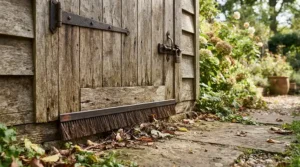
Frequently Asked Questions
❓ How much does a door brush strip to keep mice out cost in the UK?
❓ Can I fit a brush draught excluder for external doors on uPVC or composite?
❓ Do I need a door gap sealing strip on every external door?
❓ Is a brush or rubber better as a garage door bottom seal for rodents?
❓ How often should I replace a door brush strip?
Conclusion
A door brush strip to keep mice out won’t solve every rodent problem, but it closes the single most common entrance for a few pounds and an hour’s work. The key is matching the product to the job. Measure your gap, choose a strip rated above it, use screws on external doors and make sure the bristles actually touch the floor.
For most homes, Stormguard Heavy Duty 838mm is the best all-rounder, with Stormguard PVC 914mm as the budget alternative. Stormguard Concealed Fix suits visible doors, and AFAXINRIE Brush Strip and Stormguard Brush Pile handle frames and small gaps without drilling. For garages, KOTARBAU Brush Strip and Stormguard Garage 2134mm are the ones to check.
Remember that a brush strip is one part of a wider approach. Seal pipes and vents, store food properly, and call a BPCA-registered pest controller if you already have an infestation. Fit the strips this weekend and let your doors do the work.
Recommended for You
- Expanding Foam For Sealing Mouse Gaps: 7 Proven Picks (2026)
- Galvanised Wire Mesh For Rodent Proofing: 7 Proven Picks (2026)
- Steel Wool For Mouse Holes: 7 Tough Picks For UK Homes (2026)
Disclaimer: This article contains affiliate links. As an Amazon Associate, I earn from qualifying purchases. If you purchase products through these links, we may earn a small commission at no additional cost to you.
✨ Found this helpful? Share it with your friends! 💬🤗
