
In This Article
Rats are the most dedicated estate agents in Britain. Give them a gap and they’ll book a viewing. That neat plastic ring around the waste pipe under your sink hides the hole from you, but not from them.
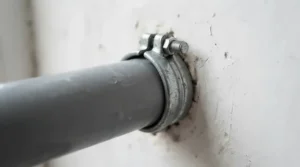
That’s the awkward truth behind every rat-proof pipe collar for waste pipes. The collar itself is rarely the hero. What stops a rat is the chew-proof metal wedged into the gap behind it and, further down the line, a one-way flap in the drain. The numbers are blunt. Test Valley Borough Council’s householder advice says a juvenile rat needs a gap of only around 15mm to enter a building. It tells residents to seal gaps around heating and water pipes, using wire mesh for anything larger.
So this guide separates the job into two layers. Layer one is gap-level protection: stainless steel mesh and mesh-backed tape, the closest thing to a pipe sleeve to stop rats entering through the wall. Layer two is drain-level protection: stainless flaps that let water out but stop rodents climbing in.
Inside you’ll find seven real products sold by UK retailers, with honest notes on what reviewers say. Where review data simply doesn’t exist, I’ll say so rather than invent it. You’ll also get the soil and waste pipe diameters to measure, plus fitting advice you won’t find on a product page. Prices are ranges only, so check current listings and availability before you buy.
What Is a Rat-Proof Pipe Collar for Waste Pipes?
A rat-proof pipe collar for waste pipes is a chew-resistant barrier, typically stainless steel mesh, a metal plate or mesh-backed tape. It is fitted where a waste or soil pipe passes through a wall or floor. It closes the gap rodents exploit while leaving drainage untouched, and it works best when paired with a drain flap.
Here is where the terminology gets muddy. Ask a plumbers’ merchant for a pipe collar and you’ll be handed a cosmetic ring. The Talon Waste Pipe Collar is listed as polypropylene with a chrome-effect finish. The ETAL 110mm Pipe Collar is a snap-on uPVC ring for hiding gaps in kitchens and bathrooms. The PipeSnug 40mm White Waste Pipe Collar and Seal is sold as an airtight, draught-reducing seal. They’re tidy and useful, but none of those listings makes a rodent-proofing claim.
Genuine rodent exclusion borrows from the pest-control trade instead. The market for stainless steel pipe collars in the plumbing aisle is mostly decorative. The metal that does the real work is mesh, tape and drain blockers, so think of a pipe sleeve to stop rats entering as a layered system rather than a single part. That system is what we’re comparing next.
Quick Comparison: 7 Rat-Proofing Options at a Glance
| Product | Type | Material | Price range (check current) | Best For |
|---|---|---|---|---|
| Metex Bird, Rabbit, Rodent & Squirrel Proofing Mesh (6m × 300mm) | Mesh roll | Galvanised steel, 6mm | Around £25-£30 | Tight budgets, dry spaces |
| Metex Vermiguard (5m × 50mm) | Mesh strip | Stainless steel, 5mm | High-£20s upwards | Pipe openings that need airflow |
| Metex RatTape (1m or 5m × 50mm) | Self-adhesive tape | Stainless mesh in butyl | Around £10-£45 by length | A neat seal around wall penetrations |
| Broadfix Twin Flap Rat Blocker (100mm) | Drain flap | 2mm 304 stainless | Roughly £15-£50 | Budget drain protection |
| Metex Buffalo NRV (110mm) | Non-return valve | Plastic and stainless | Around £75-£90 | Rats plus flood backflow |
| Metex Ratwall (100/110mm) | Drain flap | Stainless steel | Roughly £80-£150 | DIY-friendly fitting |
| Metex Nordisk TX11 (100mm) | Twin serrated flap | 316 stainless | Roughly £250-£380 | Persistent infestations |
Looking at the table, the cheapest route to a sealed wall penetration is mesh, with Metex Vermiguard the stainless pick and Metex RatTape the tidiest finish. For drains, Broadfix Twin Flap Rat Blocker undercuts the rest by a wide margin. The gap between Metex Ratwall and Metex Nordisk TX11 is large enough that you should be sure why you’re paying it.
💬 Just one click — help others make better buying decisions too!😊
Top 7 Rat-Proofing Products: Expert Analysis
Seven products, cheapest gap-filler first and premium drain hardware last. Each one is judged on specification, real review sentiment where it exists, and where it fits.
1. Metex Bird, Rabbit, Rodent & Squirrel Proofing Mesh — cheapest cover for big gaps
If the hole around your pipe is closer to a biscuit tin than a pencil, a wide, inexpensive roll gives you material to experiment with.
This is a 6m × 300mm roll of galvanised steel wire mesh with 6mm × 6mm holes and a non-rust coating. It cuts with heavy-duty mesh cutters. In practice, 300mm of width is generous: you can fold it into a dense plug or wrap it around a pipe. The 6mm aperture is comfortably small enough for rats, but it sits right at the margin for the smallest young mice, which some councils say can pass a 5mm gap.
The weak spot is the galvanised finish. Pest-proofing guidance warns that rust can eventually reopen holes in damp places. I’d use this inside a dry void, a garage or a shed, and behind a finished collar, rather than in a permanently wet trench. It suits budget-minded DIYers who plan to pack it in and then seal over it.
I couldn’t find a meaningful body of verified reviews for this specific roll. It’s a commodity material, so judge it on its specification.
Pros:
- ✅ Wide roll covers large gaps easily
- ✅ Low cost per metre of mesh
- ✅ Cuts and folds without specialist tools
Cons:
- ❌ Galvanised coating can corrode in damp spots
- ❌ 6mm holes borderline for the smallest mice
Around £25-£30 for the roll. Good value for dry spaces, but spend more for anywhere damp.
2. Metex Vermiguard — stainless mesh that still lets air through
Most gap-fillers are all-or-nothing plugs. Metex Vermiguard is designed to block animals while keeping ventilation intact.
It’s a 5mm stainless steel proofing mesh sold in 5m rolls, 50mm and 150mm wide. It pushes in, cuts with scissors and folds or rolls easily. The listing names pipe openings, weep holes and air bricks as intended uses, and it carries a one-year guarantee. The practical meaning is that you can roll a strip into a firm cylinder and ram it into the annular gap around a 32mm or 40mm waste pipe, with no rust to worry about.
That ventilation-friendly design matters near air bricks and cavity weep holes, where a solid plug would be the wrong fix. My take is that it suits householders who want stainless performance without trade-level pricing, and it works well as the filler layer under a sealant or tape finish. It is push-in only, so it won’t win any beauty contests unless you cover it.
I found no verified review score for this product, so I won’t quote one.
Pros:
- ✅ Stainless steel resists rust and corrosion
- ✅ Keeps ventilation open where needed
- ✅ Easy to cut, fold and roll
Cons:
- ❌ Needs sealant or mortar to finish neatly
- ❌ Fine wire edges demand gloves
Around £28 for the 5m × 50mm roll. Strong value for a stainless mesh barrier.
3. Metex RatTape — mesh-in-butyl that sticks and shapes
This is the nearest thing to a DIY pipe collar that actually resists chewing: tape you mould around the pipe like a gasket.
Metex RatTape sandwiches 5mm stainless steel mesh between two layers of sticky butyl. It comes in 50mm-wide lengths, including 1m and 5m, and is waterproof. It grips wood, PVC, brickwork and concrete, cuts with tin snips and can be painted to blend in. One retailer lists a two-year guarantee. In practical terms, you can wrap it around a waste pipe where it meets the wall and press it flat, then paint it so it vanishes.
The manufacturer’s instructions specify clean, dry, dust-free surfaces. I’d treat that as non-negotiable, because butyl on crumbling, damp render won’t hold. The sensible use is as the visible outer layer over a mesh plug. It suits renters and anyone wanting a tidy finish.
I found no verified review data for the tape itself.
Pros:
- ✅ Stainless mesh gives genuine chew resistance
- ✅ Waterproof butyl bonds to most masonry
- ✅ Paintable, so it blends in
Cons:
- ❌ Needs clean, dry surfaces to stick
- ❌ Cut stainless edges are sharp
Around £10-£15 for 1m and roughly £40-£45 for 5m. Best value as a finishing layer.
4. Broadfix Twin Flap Rat Blocker — twin flaps without the premium price
Drain flaps can be shockingly expensive, so a stainless twin-flap unit at a modest price is the interesting corner of this market.
The 100mm Broadfix Twin Flap Rat Blocker is made from 2mm-thick grade 304-2B stainless steel. It has double flaps, a hinge system and a tethering kit. The one-way design lets rodents escape but not re-enter. The tether is the detail I’d prize: a flap that works loose and washes downstream is worse than no flap. Check that the stated size matches your pipe, since “4 inch” drains are commonly sold as 100mm or 110mm.
It suits homeowners with accessible chambers who want two flaps rather than one. The same brand’s single-flap 100mm blocker showed a perfect five-star rating on a retail listing, but the sample looked small. Treat that as encouraging, not conclusive. Review data for the twin-flap model itself was thin.
Pros:
- ✅ Double flaps add a second barrier
- ✅ Tethering kit prevents loss downstream
- ✅ Stainless construction suits damp chambers
Cons:
- ❌ Thinner review evidence than pricier rivals
- ❌ Hands-on fitting needs chamber access
Roughly £15-£50 across UK retailers at the time of research. Check current price, but it’s the budget drain pick.
5. Metex Buffalo NRV — rodent barrier plus flood protection
Rats and floods often turn up in the same low-lying gardens, and this valve handles both.
The 110mm Metex Buffalo NRV combines plastic and stainless steel in a watertight single-flap valve. It sits in a manhole chamber and seals the outlet in a flood, preventing backflow into the property. It suits clay, PVC, cast iron and concrete pipes and carries a one-year guarantee. The practical upside is dual protection. The trade-off is that a watertight seal makes debris more of an issue, so I’d inspect it after storms.
If rats are your only concern, a stainless flap-only unit is simpler. If your road has flooded before, this earns its keep. Reviewers on a major UK retailer’s page average 3.8 out of 5, which is respectable for installed drain hardware, though the rating doesn’t say what people disliked.
Pros:
- ✅ Combines rodent and flood backflow protection
- ✅ Watertight sealing in storm conditions
- ✅ Fits clay, PVC, cast iron and concrete
Cons:
- ❌ Plastic components, unlike all-stainless rivals
- ❌ Needs inspection after heavy rain
Around £75-£90. Fair value for flood-prone properties, but unnecessary elsewhere.
6. Metex Ratwall — fits from street level with a pole
Not everyone wants to lower themselves into a chamber. Metex Ratwall is built around hands-off fitting.
It’s a stainless steel flap with an external hinge, a low-force compression fit and configurable inlet or outlet positioning. It comes in 100/110mm and 160mm sizes. It can be fitted by hand or from ground level with an installation pole, and poles in 950mm and 2m lengths are sold separately at roughly £65-£90. Suppliers claim no flow restriction. The same suppliers caution that a blocker alone may not remove rats already in the property.
That pole cost is the hidden part of the price. One buyer on the Amazon listing, as mirrored on a retail aggregator, said they spent over £200 in total. The same reviewer said it “seems to work”, though the pipe misalignment forced them to reverse the flap and fit it elsewhere. A major UK retailer’s listing averages 3.1 out of 5. Honest read: effective in principle, but fitting is where buyers struggle.
Pros:
- ✅ Stainless build with external hinge
- ✅ Installable from street level with a pole
- ✅ Available for 4-inch and 6-inch drains
Cons:
- ❌ Installation pole is an extra cost
- ❌ Mixed fitting experiences in reviews
Roughly £80-£150 depending on retailer. Reasonable value if you budget for the pole.
7. Metex Nordisk TX11 — marine-grade steel with serrated twin flaps
For persistent rat problems, this is the heavyweight in the roundup.
The Metex Nordisk TX11 uses AISI 316 “marine grade” stainless steel, with twin flaps and sharp serrated edges. It’s configurable for inlet or outlet and comes in 100mm and 150mm sizes. One supplier catalogue claims it’s the only rat blocker with Water Research Centre approval. That’s a supplier claim, so verify it before relying on it. A 1m installation pole is a separate purchase.
The retailer warns that installing the flaps in the wrong orientation will block the drain. Read the instructions twice, and consider a drainage contractor. This suits commercial-style problems or repeat infestations. For a one-off sighting, it’s overkill. I found no reliable review score for the 100mm version.
Pros:
- ✅ 316 stainless suits harsh drain environments
- ✅ Serrated twin flaps add deterrence
- ✅ Available in 4-inch and 6-inch sizes
Cons:
- ❌ Highest price in this roundup
- ❌ Wrong orientation blocks the drain
Roughly £250-£380 depending on supplier. Worth it only where the problem is serious.
How Do Rats Get In Around Pipes?
Short answer: through gaps you’d dismiss as cosmetic. Councils describe the entry gap for a young rat as roughly 15mm, about the size of a 50p coin. For mice it can be as little as 5mm, so if you can slide a pencil through, assume a young mouse can follow.
When a gap is too small, rats simply widen it, so a “nearly closed” gap isn’t safe if the edge is soft. Mortar, expanding foam and plastic all give way eventually. Hence the pest-control habit of packing metal into gaps rather than relying on one soft material.
Where pipes are concerned, there are three common routes. The first is the annular gap where a kitchen waste pipe exits through a wall, often hidden behind a collar or cupboard. The second is behind kitchen units, where service pipes enter. Westmorland and Furness Council specifically lists blocking those holes. The third is the drain itself. University of Nebraska extension guidance notes that rats can climb vertical pipes up to about three inches across. That covers every 32mm-50mm waste pipe, though 110mm soil pipes are bigger than that. Defective drains complete the picture, which is why councils advise repairing breaks.
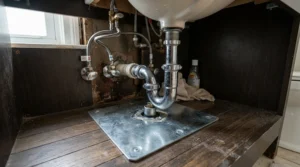
Soil and Waste Pipe Diameters: Measure Before You Buy
Mesh and tape don’t care what size your pipe is, but drain blockers and anything collar-shaped do. Wavin’s guide to soil and waste pipes gives the usual UK sizes.
- 32mm is typically a bathroom basin.
- 40mm is the everyday workhorse for kitchen sinks, showers and baths.
- 50mm serves multiple connected appliances or commercial runs.
- 110mm is the most common soil pipe, carrying toilet waste.
Measure the outside diameter, as tradespeople on MyBuilder point out. Wrap a tape around the pipe and divide the circumference by 3.14 for a reliable figure.
One trap catches buyers. A “4 inch” drain is often described as 100mm, yet plastic drainage pipe is commonly 110mm outside. Some listings, such as the Metex Ratwall and Metex Buffalo NRV, quote different sizes for similar fits. Always check the manufacturer’s stated pipe diameter and material compatibility, rather than assuming.
Finally, note the difference between soil and waste pipe diameters and drain diameters. The 32-50mm runs inside your home need gap sealing. The 100/110mm underground run needs a blocker. Two jobs, two sets of measurements.
How to Choose a Rat-Proof Pipe Collar for Waste Pipes
The best rat-proof pipe collar for waste pipes is a stainless steel mesh or tape seal sized to your gap, paired with a stainless drain flap if your underground drain is accessible. Choose it by following these steps.
- Find every gap first. Inspect where waste, soil and service pipes pass through walls and floors, including behind units. Missing one makes the others pointless.
- Measure the gap, not just the pipe. Anything over about 5mm needs metal, and larger gaps need packing before finishing.
- Pick stainless over galvanised in damp spots. Rust-resistant material keeps the barrier closed for years.
- Match the finish to the visibility. Tape suits visible walls; plain mesh suits hidden voids.
- Check your drain access. If the chamber is reachable, add a flap. If not, budget for an installation pole or a contractor.
- Confirm sizes and guarantees. Verify the stated diameter, and look for a listed guarantee.
- Know when to call in help. If you already see signs of rats, the British Pest Control Association’s rat advice points you towards qualified professionals.
Stainless Steel Pipe Collars vs Plastic Collars vs Mesh Plugs
Let’s be fair to each option. A plastic collar hides gaps, reduces draughts and looks smart for pennies. A mesh plug does the opposite job: it’s ugly but chew-resistant. Stainless steel pipe collars sit awkwardly in between. In my research the stainless products that genuinely stop rodents were mesh, tape and drain flaps, rather than collars from the plumbing aisle.
The professional market reflects this. A February 2026 BPCA report described an adjustable escutcheon plate for pipes from roughly 13mm to 76mm, paired with fill fabric to form a rodent barrier. I haven’t verified UK retail availability, but it shows where the pros have gone: metal plate plus metal filler.
| Option | Rodent resistance | Appearance | Best For |
|---|---|---|---|
| Cosmetic collar (e.g. Talon Waste Pipe Collar) | Not claimed by listings | Tidy | Concealing gaps already sealed |
| Expanding foam alone | Generally considered chewable | Rough | Draught sealing, not rodents |
| Stainless plug (Metex Vermiguard) | High when packed tightly | Hidden | Gaps behind the scenes |
| Mesh tape (Metex RatTape) | High when bonded | Paintable | Visible wall penetrations |
The practical conclusion is to combine a stainless mesh or tape layer with a cosmetic collar over the top. Used that way, Metex Vermiguard or Metex RatTape does the defending while the Talon Waste Pipe Collar handles the looks. A collar on its own is dressing, not defence.
Practical Guide: Fitting a Waste Pipe Gap Seal for Rodents
A waste pipe gap seal for rodents takes under an hour per pipe if you prepare properly.
- Clear and clean. Remove old collars, crumbling mortar and debris. Surfaces must be dry for tape.
- Wear gloves and eye protection. Cut stainless and galvanised mesh is razor-sharp.
- Pack the gap. Roll Metex Vermiguard into a tight cylinder and push it in until the gap is full. Don’t leave “springy” voids.
- Lock it in. Seal over the mesh with mortar or a suitable sealant so it can’t be pulled out.
- Add the finish. Wrap Metex RatTape around the pipe-to-wall joint, press it flat and paint it if you like.
- Cover with a collar. A cosmetic ring now makes the job look professional.
- Never smother vents. Leave air admittance valves and stack vents free so the drainage system can breathe.
Common mistakes in the first 30 days: using foam alone, skipping the cleaning step, and sealing only the kitchen when the downstairs toilet pipe has the same gap. Check your work monthly for the first quarter, and look for fresh droppings or gnaw marks.
✨ Ready to Close the Gaps?
🔍 Take your rat-proofing to the next level with these carefully selected products. Click on any highlighted item to check current pricing and availability. A few metres of stainless mesh and a roll of tape could save you from far costlier repairs!
Real-World Scenarios: Three Homes, Three Fixes
The 1930s semi, £50 budget. Kitchen waste exits through old brick, with a gap around the pipe the width of a thumb. Daily use, dry cavity. Here the best answer is Metex Vermiguard rolled into the gap, sealed with mortar and finished with a cosmetic collar. If the sighting came from the garden, pair it with the Broadfix Twin Flap Rat Blocker later.
The ground-floor flat, no drain access. A renter can’t open the chamber or alter the building. Councils point out that responsibility depends on your tenancy, so check with your landlord before drilling or sealing. Metex RatTape is renter-friendly because it’s painted over rather than built in. Report drain-level issues to the landlord in writing.
The rural property with repeat visitors. Older drains, nearby ditches and several sightings across seasons. This is the case for hardware at drain level: Metex Nordisk TX11 at the outlet, Metex Ratwall or Metex Buffalo NRV where flooding is also a risk, and mesh at every wall penetration. Book a pest controller as well, because blockers alone won’t evict rats already inside.
The pattern across all three is budget, access and persistence. Light problems need gap work, repeated problems need drain work, and serious ones need both plus professional help.
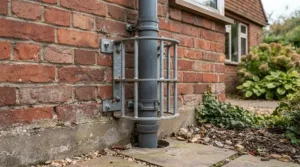
Problem → Solution Guide
Problem: the gap is bigger than your hand. Solution: pack with Metex Bird, Rabbit, Rodent & Squirrel Proofing Mesh or Metex Vermiguard, then fix a rigid patch over the top. Mesh alone can be pulled out.
Problem: the pipe is wrapped in insulation. Insulation hides gaps. Pest-proofing guidance flags insulated pipes as common blind spots, so cut back, inspect and pack metal into the hole before re-wrapping.
Problem: damp walls won’t hold tape. Solution: dry the surface first or use mesh and mortar. Metex RatTape only bonds well to clean, dry substrates.
Problem: rats are already inside. Solution: seal the entry points, but don’t trap rats inside with no exit. A one-way blocker such as the Broadfix Twin Flap Rat Blocker lets them leave. Use professional baiting rather than over-the-counter products.
Problem: the drain flap is blocking. Solution: check flap orientation, which the retailer warns can block drainage if wrong. If you can’t fix it from ground level, call a drainage contractor.
Features That Actually Matter (And Those That Don’t)
What matters: stainless steel over galvanised in damp places, because that’s the difference between a ten-year seal and a two-year one. A tether on any drain flap matters too, since an untethered flap can wash away. Mesh aperture is crucial: 5mm stops almost everything. Look for a listed guarantee, such as the one-year terms on Metex Vermiguard and Metex Buffalo NRV.
What also matters: installation access. A cheap blocker you can’t fit is worse than a dearer one you can. For Metex Ratwall and Metex Nordisk TX11, factor in the pole.
What doesn’t: chrome-effect finishes, which are purely cosmetic and play no role in stopping rats. The same goes for fancy packaging and exaggerated “heavy-duty” language. Grade, thickness and fit tell you more than adjectives.
Where stainless steel pipe collars are sold as decorative trim, don’t mistake them for protection. The invisible mesh behind them does the work.
Long-Term Cost & Maintenance
Rat-proofing costs more upfront than it looks, but far less than damage. One buyer on an Amazon listing described rats chewing a toilet’s flexi pipe and the drywall behind it. Another described a rodent-related repair bill of well over £1,000. Anecdotes, yes, but they illustrate why prevention is cheap insurance.
| Product | Typical range | Install effort | Maintenance | Value verdict |
|---|---|---|---|---|
| Metex Vermiguard | High-£20s | Low | Annual visual check | Excellent |
| Metex RatTape | £10-£45 | Low | Check bond yearly | Very good |
| Broadfix Twin Flap Rat Blocker | £15-£50 | Medium | Inspect twice a year | Good |
| Metex Ratwall | £80-£150 | Medium-high | Inspect after storms | Fair |
| Metex Nordisk TX11 | £250-£380 | High | Inspect twice a year | Serious cases only |
Cost-per-protected-penetration favours mesh by a mile, while drain hardware earns its place only with accessible chambers or repeat problems. Plan a twice-yearly check for any flap, because debris can hold one open. A good routine is to inspect in spring and autumn, when rodent activity tends to rise.
Safety, Regulations and Who Is Responsible
Under the Prevention of Damage by Pests Act 1949, property owners have a legal obligation to keep premises rodent-free. A local authority advice note also points out that defective drainage is a common way rats get in, and suggests a drainage contractor to check yours.
Responsibility splits in practice. You maintain your private drains and pipework. Councils note that the water company usually deals with repairs where your drain meets the public sewer, so check with your provider. Tenants should check their tenancy agreement.
A few safety rules apply:
- Don’t descend into drain chambers. Fit from ground level with a pole or hire a contractor.
- Wear gloves and eye protection around cut mesh.
- Avoid blocking vents and air admittance valves.
- Look for UKCA or CE marking where relevant, and read manufacturer guarantees.
- Keep poisons away from children and pets, and use professional baiting if needed.
FAQ
❓ Can rats chew through plastic pipe collars?
❓ Will a rat blocker remove rats already in my house?
❓ Is stainless mesh better than galvanised mesh around pipes?
❓ How much does it cost to rat-proof waste pipes in the UK?
❓ Which waste pipe size needs a rat-proof collar most?
Conclusion
A rat-proof pipe collar for waste pipes isn’t a single product but a small system. Seal the gap with stainless mesh or tape, hide it under a tidy collar if you like, and close the drain with a flap if your chamber is accessible. For most homes, Metex Vermiguard plus Metex RatTape covers the wall penetrations at very low cost. If you need drain protection, Broadfix Twin Flap Rat Blocker is the budget route, Metex Buffalo NRV adds flood protection and Metex Ratwall suits fitting from the street. Metex Nordisk TX11 is reserved for stubborn, high-pressure sites, and Metex Bird, Rabbit, Rodent & Squirrel Proofing Mesh remains a bargain for dry gaps.
Measure first, check your soil and waste pipe diameters, and don’t trust foam or plastic alone. If you already have a problem, bring in a qualified pest controller too.
Recommended for You
- Door Brush Strip To Keep Mice Out: 7 Proven Picks (2026)
- Expanding Foam For Sealing Mouse Gaps: 7 Proven Picks (2026)
- Galvanised Wire Mesh For Rodent Proofing: 7 Proven Picks (2026)
Disclaimer: This article contains affiliate links. As an Amazon Associate, I earn from qualifying purchases. If you purchase products through these links, we may earn a small commission at no additional cost to you.
✨ Found this helpful? Share it with your friends! 💬🤗
