
In This Article
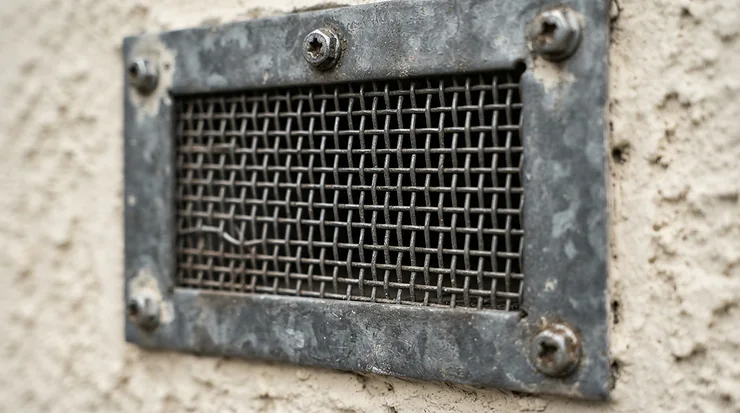
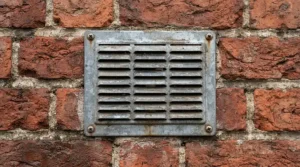
A rodent-proof air brick cover is a fine-mesh or perforated guard fixed over an existing air brick on your outside wall. It lets air pass through but blocks mice, rats and larger insects, protecting your subfloor and cavity from infestation without removing the ventilation your house needs to stay dry.
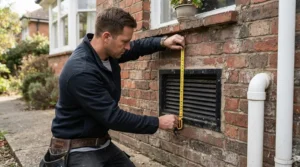
Here’s the awkward truth about your air bricks. They were designed to breathe, not to defend. As Designing Buildings explains, an air brick is a perforated brick that circulates outside air beneath suspended floors and within cavity walls, stopping moisture building up. Brilliant for damp. Terrible for security. The British Pest Control Association’s mouse advice leaflet notes that mice can squeeze through cracks as small as 5mm, while some standard plastic air bricks list front-grille slots of around 6.5mm. Do the maths and you’ll see why your subfloor can turn into a mouse motorway.
So the instinct is to block the holes. Resist it. The better move is a rodent-proof air brick cover, which stops the pests and keeps the airflow. That raises a question we’ll answer properly: can I cover air bricks with mesh without causing damp?
This guide compares seven real products sold on amazon.co.uk, then covers air brick sizes, the ventilation requirements for suspended floors, metal against mesh, and a practical fitting guide. Everything is grounded in real specs and aggregated review sentiment. Nothing here comes from invented testing.
Quick Comparison: Best Rodent-Proof Air Brick Cover Options at a Glance
| Product | Material | Best For |
|---|---|---|
| Roshield ProVent | Stainless mesh, plastic frame | Budget multi-vent homes |
| MouseMesh | 2mm stainless mesh, ABS frame | Neat, colour-matched finish |
| Ready Steady Defend | Stainless mesh, flexible plastic frame | Value four-packs |
| Preventavent | 2mm stainless mesh, plastic or aluminium surround | Choice of three sizes |
| Pest Control Worldwide Aluminium Cover | Aluminium alloy | Gnaw-resistant protection |
| Sarkman | Metal grill plate | Damaged or oversized openings |
| Mastertrap Perforated Aluminium | Perforated aluminium | Slim single-brick vents |
Looking at the table, the plastic-framed mesh covers win on price and looks, while the all-metal options suit anyone worried about rats rather than mice. If you want a metal air brick cover for mice and rats that won’t be chewed, the aluminium models are your shortlist. Budget buyers fitting six or more vents should note that Roshield ProVent and Ready Steady Defend make the multi-pack maths friendliest.
💬 Just one click — help others make better buying decisions too!😊
Top 7 Rodent-Proof Air Brick Cover Picks: Expert Analysis
1. Roshield ProVent — UK-made budget workhorse
Built for people fitting several vents without wincing at the total, the Roshield ProVent is the value anchor of this list.
The standard size is 254 × 102mm, cut for the classic 9×3 inch air brick, with stainless steel mesh set in a UK-moulded plastic frame. The maker says the plastic is recycled. A groove around the edge holds adhesive, so the cover doesn’t rely on screws alone. At roughly 110g, it sits happily on a bead of adhesive while it cures.
Based on the spec comparison, the plastic frame is the trade-off. It won’t rust or dent, but it isn’t gnaw-proof against a determined rat the way aluminium is. For mice, the stainless mesh does the real work. That makes the Roshield ProVent a smart fit for terraces and semis with plenty of standard bricks.
Verified buyers on a UK seller’s eBay listing mention easy fitting, screws and plugs in the box, and tidy screw caps. One independent round-up notes it only suits air-brick-sized openings. I couldn’t verify individual Amazon reviews, so treat this as indicative.
Pros:
- ✅ Sized for standard 9×3 air bricks
- ✅ Adhesive groove aids a firm bond
- ✅ Multi-pack options cut per-cover cost
Cons:
- ❌ Plastic frame less gnaw-resistant than metal
- ❌ Only suits air-brick-sized openings
Price: under £10 per cover at the time of research. Strong value, but check the current price.
2. MouseMesh — brick-matching colours, long guarantee
The original name in this niche, MouseMesh came from a builder fed up with mice using air bricks as front doors.
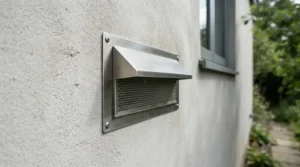
One listing describes a 2mm stainless steel mesh in a flame-retardant ABS frame, measuring about 180 × 255mm. The maker offers three sizes and six colours, plus a 10-year guarantee. That colour range matters more than it sounds: a cover that vanishes against Victorian red brick is one you’ll fit on the front elevation without sulking.
What most buyers overlook is the XL size, which the maker says is best screwed rather than glued. Larger covers carry more leverage, so adhesive alone may let go on uneven brickwork.
Trustpilot reviewers praise build quality, easy fitting and colour matching. On Amazon, single-cover listings showed roughly 4.0 to 4.6 stars at the time of research, while some multipack variants dipped to the low-to-mid 3s. That suggests checking exactly which variant you’re buying.
Pros:
- ✅ Six colours blend with most brickwork
- ✅ 2mm stainless mesh blocks juvenile mice
- ✅ Long manufacturer guarantee
Cons:
- ❌ Multipack listings rate lower than singles
- ❌ Larger sizes need screw fixing
Price: roughly £8-£15 depending on size and colour. A decent premium for the aesthetics and guarantee.
3. Ready Steady Defend — four-pack UK-made value
If your house has a ring of air bricks like a Victorian castle, the Ready Steady Defend four-pack is the sensible bulk buy.
The listing describes durable stainless steel mesh in a flexible, strong plastic frame, made in the UK. “Flexible” is a quiet advantage. A frame that flexes slightly can sit snugly against wonky mortar and weathered brick faces, where a rigid frame leaves a sliver of gap.
I couldn’t verify the mesh aperture or exact dimensions from the listing, so confirm both before ordering. The mesh should be no coarser than the roughly 2-5mm range commonly used for rodent-proofing. Anything wider undermines the point of buying one.
The Amazon listing showed around 4.7 stars from roughly 30 ratings at the time of research. That’s a small sample, but a consistent one.
Pros:
- ✅ Four covers per pack suits whole-house jobs
- ✅ UK-made with stainless steel mesh
- ✅ Flexible frame hugs uneven brickwork
Cons:
- ❌ Small review base so far
- ❌ Mesh aperture needs checking pre-purchase
Price: check the live listing, as pack pricing moves. Likely strong value per cover if you need four or more.
4. Preventavent — fine 2mm mesh in three sizes
The Preventavent range, made by Hamelin, is the one to pick when your openings aren’t standard.
The mesh is 2mm stainless steel. Plastic surrounds come in brown, black or white, with aluminium versions too. Retailer listings show small (245 × 95mm), medium (245 × 170mm) and large (245 × 245mm), so it maps neatly onto single, double and triple bricks. Holes drilled in the corners allow screw fixing, or you can use adhesive.
The maker states plainly that these covers shouldn’t go over vents serving gas appliances, because blocked mesh restricts airflow and raises carbon monoxide risk. Most competitors bury that warning. Credit where due.
Reviewers on the Amazon listing for the brown 245 model mention easy fitting, a good fit, and keeping bugs out of a shed while preserving airflow. Drilling reportedly held better than adhesive on rough surfaces.
Pros:
- ✅ Three sizes match multiple brick types
- ✅ Corner holes allow secure screw fixing
- ✅ Clear gas-appliance safety guidance
Cons:
- ❌ Fixings often not supplied
- ❌ Large versions cost noticeably more
Price: the large version sat around £20 at one UK retailer, so Amazon pricing varies. Mid-range value.
5. Pest Control Worldwide Aluminium Cover — most-reviewed metal option
When a metal air brick cover for mice and rats is the brief, the Pest Control Worldwide Aluminium Cover has the strongest paper trail.
It’s an aluminium alloy cover for internal or external use, sold in 100 × 250mm and 170 × 250mm sizes, with a 12-month guarantee. Those dimensions line up with 9×3 and 9×6 inch bricks. The metal construction means a rat gets no chewable plastic frame to start on.
At the time of research the listing showed about 4.7 stars from over 230 ratings, a ranking of 411 in Amazon’s Rodent Control category, and strong monthly sales. That’s more social proof than any other product here.
The spec sheet won’t tell you this, but flat aluminium covers rely on their perforations for airflow, so free area deserves a glance. Check it against your wall’s ventilation needs before fitting.
Pros:
- ✅ Aluminium resists gnawing
- ✅ Sizes suit single and double bricks
- ✅ Large review base with high rating
Cons:
- ❌ Airflow figures not clearly stated
- ❌ Plain finish may need painting
Price: check current price, as it moves. Strong value for a metal option.

6. Sarkman — heavy metal plate for awkward openings
The Sarkman metal grill plate earns its place for one reason: it covers ugly holes.
It comes in 25 × 10cm, 25 × 20cm and 25 × 30cm versions. The biggest is generous enough to span a crumbling surround or a hole that isn’t quite an air brick any more. The maker describes the aluminium construction as blocking rats, mice, squirrels and wasps.
Perforated or gridded plates typically offer less open area than fine mesh. For a lightly ventilated shed or garage that’s fine, but for a house subfloor you’ll want to check airflow against the ventilation requirements for suspended floors, which we cover below.
On Amazon, the 25 × 30cm model showed around 4.6 stars from roughly 89 ratings, with the smaller sizes a touch higher. Reviewers mention easy fitting, effective results, and drilling holding better than glue.
Pros:
- ✅ Covers oversized or damaged openings
- ✅ Metal construction resists chewing
- ✅ Positive ratings across sizes
Cons:
- ❌ Bulky look on small, neat bricks
- ❌ Perforated plate may reduce airflow
Price: around £12-£15 depending on size. Good value for repair-style jobs.
7. Mastertrap Perforated Aluminium — slim cover for single-brick vents
Narrow and unfussy, the Mastertrap Perforated Aluminium air brick vent cover measures 95 × 245mm. That’s essentially a bespoke fit for a standard 9×3 brick.
Its slim profile is the appeal. It won’t dominate a neat façade, and the aluminium gives a metal air brick cover for mice with a lower visual footprint than the bigger plates.
The caution is evidence. The Amazon listing showed about 3.8 stars from just three ratings at the time of research. That’s too small a sample to draw conclusions. I’d treat it as unproven rather than poor.
Like all perforated plates, airflow is the question. If your vents are doing heavy ventilation duty under a timber floor, a fine open mesh like the stainless models above may preserve more free area.
Pros:
- ✅ Slim profile suits 9×3 bricks
- ✅ Aluminium construction resists gnawing
- ✅ Unobtrusive on neat brickwork
Cons:
- ❌ Only three ratings so far
- ❌ Perforated design may limit airflow
Price: around £15-£16 at the time of research. Fair, but not the best value here.
| Product | Frame / Material | Typical Size | Price Range | Amazon Rating (at research) | Best For |
|---|---|---|---|---|---|
| Roshield ProVent | Plastic + stainless mesh | 254 × 102mm | Under £10 | Check listing | Budget multi-vent homes |
| MouseMesh | ABS + 2mm stainless mesh | ~180 × 255mm | £8-£15 | ~4.0-4.6 (variant-dependent) | Colour-matched finish |
| Ready Steady Defend | Flexible plastic + stainless mesh | Check listing | Check listing | ~4.7 (~30 ratings) | Four-pack value |
| Preventavent | Plastic or aluminium + 2mm mesh | 245 × 95 to 245 × 245mm | ~£20 (large) | Check listing | Non-standard sizes |
| Pest Control Worldwide Aluminium Cover | Aluminium alloy | 100 × 250 / 170 × 250mm | Check listing | ~4.7 (230+ ratings) | Gnaw-resistant protection |
| Sarkman | Metal grill plate | 25 × 10 to 25 × 30cm | £12-£15 | ~4.6-4.7 (80+ ratings) | Damaged openings |
| Mastertrap Perforated Aluminium | Perforated aluminium | 95 × 245mm | £15-£16 | ~3.8 (3 ratings) | Slim single bricks |
Reading across, Pest Control Worldwide Aluminium Cover pairs the best rating with the biggest review base, while MouseMesh wins on finish and guarantee length. If you’re fitting many vents on a tight budget, Roshield ProVent and Ready Steady Defend deliver the lowest cost per cover. Mastertrap Perforated Aluminium is the one to wait on until more ratings arrive.
How to Choose a Rodent-Proof Air Brick Cover (7 Steps)
Choosing well takes about five minutes and saves a repeat job. Work through these in order.
- Check the vent’s job first. If it feeds a boiler, fire or other fuel-burning appliance, don’t cover it at all. Ask a Gas Safe engineer.
- Confirm the mesh aperture. The BPCA cites 5mm as enough for a mouse to enter, so look for 2-5mm. Mesh sold with 6mm squares sits above that figure.
- Measure the brick. Match your cover to your air brick sizes (see below), allowing overlap onto sound masonry.
- Pick material for the pest. Mice: fine stainless mesh. Rats: lean towards metal frames.
- Check free area. Covers shouldn’t strangle airflow. Compare with the ventilation requirements for suspended floors.
- Choose fixing method. Screws are best on uneven brickwork; adhesive suits flat faces.
- Count your vents. Multi-packs cut cost when you have more than four.
Skip any step and you risk buying a cover that fits badly or ventilates poorly.
Can I Cover Air Bricks with Mesh? The Short, Safe Answer
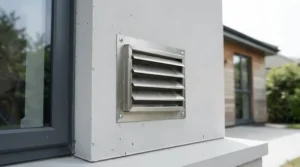
Yes, with three conditions. Can I cover air bricks with mesh? Provided the vent doesn’t serve a gas or solid-fuel appliance, the mesh stays clear, and the overall ventilation still meets what your floor needs, covering with mesh is standard practice.
The first condition is non-negotiable. Retail listings, including Preventavent and Roshield ProVent sellers, carry warnings that mesh covers must not go over vents ventilating gas appliances, because dust, leaves and dirt can block them and raise carbon monoxide risk.
The second is maintenance. Fine mesh blocks more easily than open grilles. A quick check every few months, plus after autumn leaf-fall, keeps it breathing.
The third is arithmetic. Every cover trims some free area, and the floor’s requirement doesn’t care. If you’ve ever wondered whether a mesh guard could cause damp, this is where the answer lives. A choked or undersized vent lets moisture linger beneath timber.
So when someone asks “can I cover air bricks with mesh?”, the honest answer is yes, but treat it as part of a ventilation system rather than a patch. The next section gives you the numbers.
Ventilation Requirements for Suspended Floors: Where the Numbers Come From
Ventilation requirements for suspended floors come from Part C of the Building Regulations in England, set out in Approved Document C on gov.uk. For suspended timber and concrete floors, the guidance is for ventilation on two opposing external walls, providing not less than 1,500mm² per metre run of external wall or 500mm² per square metre of floor area, whichever is greater.
Try a rough illustration. A ground floor measuring 8m × 5m has a 26m perimeter, giving about 39,000mm² on the first rule. The floor-area rule gives about 20,000mm². The larger figure wins. One plastic air brick listing quotes an equivalent area of around 6,170mm², so you’d need roughly seven bricks. If a fine mesh trims each brick’s free area, that margin evaporates quickly.
Older homes often predate these rules, and many fall short already. Fitting mesh to an under-ventilated floor can make a marginal situation worse. Where airflow looks thin, a surveyor or building control officer can advise on adding vents rather than removing covers.
The takeaway: pick covers with generous open area, keep them clean, and treat the arithmetic as your safety margin.
Air Brick Sizes: Measure Before You Order
Air brick sizes follow brick dimensions. The standard single air brick is nominally 9 × 3 inches (about 215 × 65mm), double is 9 × 6 inches, and triple is 9 × 9 inches. Covers are made bigger than the opening so they can fix to the surrounding masonry.
| Nominal Air Brick | Approx. Opening | Cover Examples | Best For |
|---|---|---|---|
| 9 × 3 in (single) | ~215 × 65mm | Roshield ProVent (254 × 102mm); Mastertrap Perforated Aluminium (95 × 245mm); Pest Control Worldwide Aluminium Cover (100 × 250mm) | Standard terrace and semi vents |
| 9 × 6 in (double) | ~215 × 140mm | Preventavent medium (245 × 170mm); Pest Control Worldwide Aluminium Cover (170 × 250mm) | Older double vents |
| 9 × 9 in (triple) | ~215 × 215mm | Preventavent large (245 × 245mm); Sarkman 25 × 20cm | Large or damaged openings |
Knowing your air brick sizes first stops the classic mistake of ordering a cover that overhangs less than 20mm each side. Measure the brick face itself, not the mortar surround. Then add a margin for fixing.
Worth noting: MouseMesh comes in three sizes, so confirm the exact dimensions of the variant you want against your measurements.
Air Brick Mesh Guard or Metal Air Brick Cover for Mice: Which Material Wins?
An air brick mesh guard in stainless steel and plastic is the all-rounder. A metal air brick cover for mice and rats is the heavy-duty alternative. Which wins depends on your pest and your priorities.
| Option | Pros | Cons | Best For |
|---|---|---|---|
| Framed stainless mesh guard (e.g. Roshield ProVent, MouseMesh) | Open airflow, tidy colours, low cost | Plastic frame can be gnawed | Mice, standard vents |
| Aluminium plate (e.g. Pest Control Worldwide Aluminium Cover, Sarkman) | Gnaw-resistant, covers damaged openings | Perforations may limit airflow | Rats, damaged brickwork |
| DIY galvanised mesh sheet | Cheap, flexible | Fiddly, can rust, aperture varies | Odd-shaped holes |
| Replacement air brick with built-in mesh | Neat, permanent | Needs a mason | New builds, major repairs |
Based on the comparison above, mice rarely defeat fine stainless mesh, so a framed guard is usually enough. Rats are a different matter, and a metal frame removes the soft target. Free area favours open mesh; durability favours aluminium.
For most UK homes, the best answer is mixed. Fit framed mesh on routine vents and metal on any vent that’s damaged, low to the ground, or near a rat history.
Underfloor Vent Protection: What Else Needs Sealing?
Underfloor vent protection doesn’t stop at the front-face cover. Mice are opportunists, and a perfectly mesh-guarded brick is useless if they’re nipping in elsewhere.
Start with the vent route itself. Telescopic underfloor vents and cavity sleeves bridge the cavity and carry air to the void. One manufacturer’s datasheet notes a rear grille that prevents vermin and debris entry. If yours lacks that, a front cover is doing all the work alone.
Check extensions too. Where an extension covers old air bricks, builders often connect them with ducts to keep cross-ventilation going. Those pipes need protecting at the outlet. Pipe entries, broken bricks and cracked mortar near ground level are the other usual suspects. Seal gaps with the same chew-resistant approach, never with expanding foam in a ventilation path.
Finally, keep ground levels sensible. Soil or paving piled against an air brick blocks airflow and tempts pests. Good underfloor vent protection is really about whole-route thinking.
✨ Don’t Miss These Exclusive Deals!
🔍 Take your home protection to the next level with these carefully selected products. Click on any highlighted item to check current pricing and availability. These tools will help you create a mouse-free, well-ventilated home your family will love!
Long-Term Cost & Maintenance: What a Rodent-Proof Air Brick Cover Really Costs
Your rodent-proof air brick cover is a small outlay with a long tail. At roughly £8-£15 per vent, eight vents might total around £65-£120. Compare that with the disruption of an infestation under your floor.
Guarantee length changes the arithmetic. At roughly £8-£15 per cover, MouseMesh‘s 10-year guarantee implies about £0.80-£1.50 per vent per year. Pest Control Worldwide Aluminium Cover offers 12 months, though aluminium should outlast that in normal conditions. Plastic frames exposed to sun are the likely ageing point, so check them for brittleness after a few years.
Maintenance is simple. Do a spring and autumn check, clear leaves and cobwebs with a brush, and look for loose fixings after storms. Strukta’s guide recommends checking air bricks every few months and clearing debris with a brush, vacuum or compressed air.
Total cost of ownership therefore favours buying once, fitting properly and scheduling two small checks a year. Cheap covers fitted badly cost more than good ones fitted well.
How to Fit a Rodent-Proof Air Brick Cover in 30 Minutes
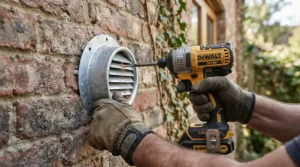
Fitting is a confident DIY job. Before you start, confirm the vent isn’t serving a gas appliance. The Health and Safety Executive’s gas safety guidance says never to block or obstruct fixed ventilation grilles or air bricks. If you’re unsure, ask a Gas Safe registered engineer.
- Clean the brick face. Remove dirt, loose paint and cobwebs with a stiff brush.
- Dry-fit the cover. Check overlap and orientation before committing.
- Choose your fixing. On rough brick, mark and drill the corner holes with a masonry bit, then use plugs and screws. On smooth faces, adhesive works.
- Fix and seal lightly. If gluing, press firmly and hold. If screwing, cap the heads. A thin bead of sealant around the edge helps, but keep the mesh itself clear.
- Diary the checks. Pop a reminder in your calendar for spring and autumn.
Common first-30-day mistakes: gluing onto dusty brick, leaving gaps at the corners, and forgetting to check the cover is square. Reviewers frequently report drilling holding better than adhesive on uneven surfaces, so don’t be proud about reaching for the drill.
Problem → Solution: Fixing Air Brick Cover Headaches
Problem: the cover won’t sit flat on crumbling brick. Use a larger plate like Sarkman at 25 × 30cm to bridge the damage, or repoint first.
Problem: adhesive won’t hold. Switch to screws. One reviewer of a similar framed cover used silicone around the frame, then pressed it on and sealed the edges, which suited uneven brickwork.
Problem: a musty smell or damp after fitting. Check for a clogged mesh. Then recheck the ventilation requirements for suspended floors, because you may simply be short of airflow.
Problem: mice still in the house. The air brick may not be the only entry. Inspect pipe entries, damaged air bricks and gaps, then cover the lot with chew-resistant materials.
Problem: rats gnawing the frame. Move to an aluminium cover such as Pest Control Worldwide Aluminium Cover.
Real-World Scenarios: Matching a Rodent-Proof Air Brick Cover to Your Home
These are illustrative buyer profiles, not personal case claims, designed to show how the reasoning works.
The Victorian terrace on a budget. Eight standard vents, £100 to spend, minimal DIY experience. A Roshield ProVent multi-pack or the Ready Steady Defend four-pack covers the lot cheaply. Fix with screws on soft old mortar.
The 1930s semi that cares about kerb appeal. Four vents on the front, deep red brick. MouseMesh in a matching colour and its long guarantee justify the small premium. Do the front first, then the sides.
The detached house with a rat history. Crumbling surrounds, a garden backing onto fields, and a low vent near a compost heap. Metal is the sensible choice. Pest Control Worldwide Aluminium Cover suits standard bricks, while Sarkman bridges the damaged ones.
Frequency of checks scales with risk: twice a year for most, quarterly for the rat-prone house.
FAQ: Rodent-Proof Air Brick Cover Questions
❓ Do air brick covers stop rats as well as mice?
❓ How many air brick covers do I need for a house?
❓ Will an air brick mesh guard cause damp?
❓ Can I paint a metal air brick cover to match my brickwork?
❓ How often should I clean an air brick mesh guard?
Conclusion: Which Rodent-Proof Air Brick Cover Should You Buy?
A good rodent-proof air brick cover is one of the cheapest bits of home defence you can buy. It stops mice using your subfloor as a hotel, while keeping the air moving that your timbers depend on.
If you’re fitting lots of standard vents on a budget, the Roshield ProVent and Ready Steady Defend make the most economic sense. If looks and a long guarantee matter, MouseMesh is the tidy choice. For awkward sizes, Preventavent gives three options, while Pest Control Worldwide Aluminium Cover and Sarkman suit metal-first thinking. Mastertrap Perforated Aluminium is a slim option worth revisiting once more reviews appear.
Remember the rules that sit beneath all of this. Never cover vents feeding gas appliances, keep the mesh clear, and check your airflow against the ventilation requirements for suspended floors. Do that, and your air bricks go back to doing what they were built for.
Recommended for You
- Rat-Proof Pipe Collar For Waste Pipes: 7 Proven UK Fixes (2026)
- Door Brush Strip To Keep Mice Out: 7 Proven Picks (2026)
- Expanding Foam For Sealing Mouse Gaps: 7 Proven Picks (2026)
Disclaimer: This article contains affiliate links. As an Amazon Associate, I earn from qualifying purchases. If you purchase products through these links, we may earn a small commission at no additional cost to you.
✨ Found this helpful? Share it with your friends! 💬🤗
