
In This Article
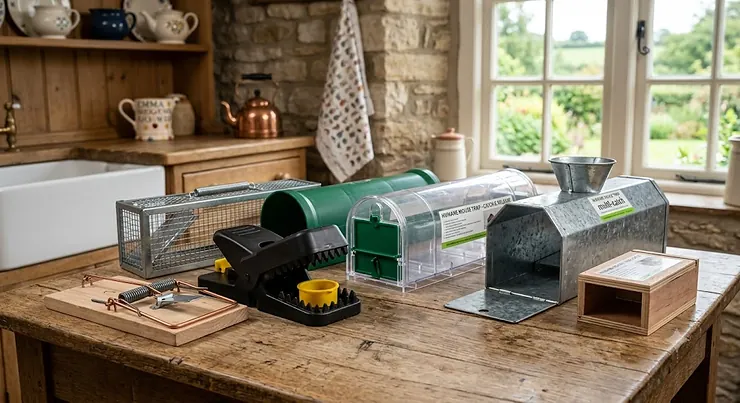
There’s a particular sound every homeowner dreads: the scratch-scratch-scratch behind the skirting board at 2am. If you’ve heard it, you’re not alone — mice are one of Britain’s most persistent uninvited guests, slipping through gaps no wider than a pencil and setting up camp in lofts, kitchens and garden sheds alike. Reusable mouse traps are rodent-catching devices — snap, humane, or electronic — designed to be reset and used again and again, rather than thrown away after a single catch. For anyone tackling more than a one-off mouse, that distinction matters enormously, both for your wallet and for how much plastic ends up in the bin.
This guide cuts through the marketing fluff. We’ve researched seven genuinely available products on amazon.co.uk, compared their build quality, and weighed up what reviewers actually report once the packaging’s been binned. You’ll find honest verdicts, not recycled spec sheets — because, frankly, a spec sheet alone won’t tell you which trap survives a decade in a damp shed and which one snaps its own hinge after three uses. Whether you’re dealing with a single confused field mouse or a full-blown skirting-board metropolis, there’s a sensible, durable option below.
Quick Comparison Table
| Product | Type | Reusable Mechanism | Best For | Price Range |
|---|---|---|---|---|
| Pest-Stop Little Nipper | Wooden snap | Wipe clean, reset spring | Budget-conscious traditionalists | Under £15 (2-pack) |
| ROSHIELD Heavy Duty Snap Trap | Plastic/steel snap | Wash and reset | All-round household use | £10-£20 (6-pack) |
| Victor M250S Electronic | Electronic zap | Rechargeable/battery reset | Hands-off, no-see disposal | £30-£45 |
| Pest-Stop Multi Catch | Galvanised metal | Rinse, no rebait needed | Multiple mice per placement | £20-£35 |
| KENNEAS Humane Catch & Release | No-kill cage | Washable ABS | Pet-and-child households | £10-£18 (4-pack) |
| HOMEREVEL Reusable Snap Trap | ABS/steel snap | Detachable washable bait cup | Kitchens and pantries | £10-£16 (6-pack) |
| ASPECTEK Reusable Snap Trap | Plastic snap | Wash and reset | Whole-house bulk coverage | £8-£15 (6-pack) |
Looking across the table, the split between mechanical snap traps, humane cages, and powered electronic units is really a split in philosophy as much as engineering. The Pest-Stop Little Nipper and ASPECTEK sit at the affordable end and rely on elbow grease to keep them going, while the Victor M250S Electronic asks for a bigger upfront spend in exchange for barely touching a dead mouse ever again. If you’re weighing durable mouse traps against one another, the honest answer is that “best” depends heavily on how squeamish you are and how many mice you’re actually up against.
💬 Found a comparison that clicked? Give it a thumbs up so other readers can find the right trap faster!
Top 7 Reusable Mouse Traps: Expert Analysis
Researching this category means wading through hundreds of near-identical plastic snap traps, most of them white-labelled versions of the same Chinese factory mould with a different sticker slapped on. So we deliberately picked products that differ in mechanism, material and price point — not seven variations on a theme. Below, each one gets the same honest treatment: real specs, real interpretation, and aggregated review sentiment clearly flagged as such.
1. Pest-Stop Little Nipper — the century-old design still trusted by professionals
The Pest-Stop Little Nipper has been catching mice in more or less the same form since 1897, and there’s something oddly reassuring about a product that’s outlived several monarchs. It’s a traditional wooden-base snap trap with a raised treadle platform, meaning the mouse has to physically step onto the plate to reach the bait, which triggers a noticeably strong spring bar.
The wooden base is the real durability story here: unlike moulded plastic, it doesn’t degrade under UV light or turn brittle in a cold garage, and the metal spring mechanism can be re-tensioned rather than replaced. On paper, this means a single trap can realistically survive years of intermittent use, provided the wood doesn’t sit in standing water. Based on the spec comparison with modern plastic rivals, this is genuinely one of the most durable mouse traps on the market simply because there’s less to fail — no plastic hinges, no moulded clips that snap in the cold.
Reviewers consistently report the trigger sensitivity as excellent, often praising how quickly it fires compared with cheaper alternatives, though a recurring theme in aggregated feedback is that the bare wood can absorb odours over repeated use, which some find off-putting when resetting bare-handed. It’s best suited to gardeners, allotment owners, and anyone who wants a trap that doesn’t rely on batteries or complicated assembly — pest control professionals still specify it for exactly this reason.
Pros:
- ✅ Wooden base resists brittleness better than plastic
- ✅ Strong, fast-firing spring mechanism
- ✅ Trusted, century-old design still used professionally
Cons:
- ❌ Wood absorbs odour with repeated use
- ❌ No bait cup — bait sits loose on the treadle
At around £10-£15 for a pack of two, the Pest-Stop Little Nipper represents strong long-term value for anyone happy to reset a trap by hand; the cost per catch drops close to zero after the first few uses.
2. ROSHIELD Heavy Duty Reusable Snap Trap — best all-round heavy-duty snapper
The ROSHIELD 6-pack sits in that sweet spot between “cheap and cheerful” and “proper kit,” built with a reinforced plastic frame and a metal spring bar rated for what the brand describes as professional-grade sensitivity. Six traps in one box means you can cover multiple rooms simultaneously, which matters far more than most buyers realise when dealing with an active infestation rather than a lone wanderer.
The high-sensitivity trigger plate is worth dwelling on: a lighter trigger threshold means the trap fires on the faintest nudge from a mouse’s whiskers, rather than requiring a full paw-plant, which in practice raises the catch rate on cautious, trap-shy rodents. Reviewers consistently note that the traps arrive pre-set and ready to use, and several mention the ease of resetting one-handed after a catch — a small but genuinely useful detail if you’d rather not get too intimate with the process.
What most buyers overlook about this model is the washable plastic housing, which means blood and residue rinse off far more easily than they would from the porous wood of traditional designs — a meaningful hygiene upgrade for kitchens. This is a solid pick for families dealing with a moderate infestation who want reliability without committing to premium pricing.
Pros:
- ✅ Six-pack covers multiple rooms at once
- ✅ Highly sensitive trigger improves catch rate
- ✅ Washable plastic housing is easy to hygiene-clean
Cons:
- ❌ Plastic frame less durable long-term than wood or metal
- ❌ Strong spring tension needs care when setting
In the £10-£20 bracket for six traps, the ROSHIELD kit delivers excellent value per unit, making it one of the most cost-effective long lasting snap traps for anyone tackling a wider infestation rather than a single mouse.
3. Victor M250S Electronic No-Touch Mouse Trap — best premium pick for hands-off disposal
If snap traps make your stomach turn, the Victor M250S takes the mechanical guesswork out entirely. It’s an electronic unit that delivers a high-voltage shock the instant a mouse enters the tunnel and touches both contact plates, powered by four AA batteries capable of dispatching up to 100 mice per set according to Victor’s own testing claims. A green LED blinks after a successful catch, and a red light warns when battery power is running low — small touches that save you from constantly checking an empty trap.
The genuinely clever part is the removable kill chamber: you power off, detach it, tip the contents into the bin, and never see or touch the mouse at any stage. Based on the spec comparison with mechanical alternatives, this is the closest thing to a “set and forget” solution currently sold for domestic use, and the beveled internal columns are specifically engineered to prevent escapes once a mouse has entered — addressing a common complaint about older electronic designs.
Reviewers consistently praise the no-touch disposal and the reliability of the LED indicator system, though a fair few mention that battery life drops noticeably faster with rechargeable cells than with standard alkaline ones, an issue the manufacturer itself acknowledges. It’s the standout option for anyone who’s simply too squeamish for a spring bar but still wants a proper kill rather than a live catch.
Pros:
- ✅ No-touch, no-see disposal via removable chamber
- ✅ LED battery and catch-status indicators
- ✅ Kills up to 100 mice per battery set (manufacturer claim)
Cons:
- ❌ Notably pricier than mechanical alternatives
- ❌ Performance drops with rechargeable batteries
At roughly £30-£45, the Victor M250S costs more upfront, but if squeamishness has previously stopped you dealing with an infestation promptly, the value case writes itself.
4. Pest-Stop Multi Catch — best for catching multiple mice per placement
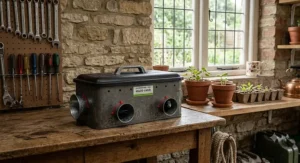
The Pest-Stop Multi Catch is a galvanised steel tunnel trap that works on a simple but genuinely clever tilting mechanism: a mouse walks in chasing the bait scent, its weight tips the internal platform, and it drops into a holding chamber it cannot climb back out of — repeatedly, without resetting, until the manufacturer’s rated capacity of around ten mice is reached.
This is where “reusable” takes on a different meaning entirely. Because nothing needs resetting between catches, it’s the closest thing to hands-off multi-catch pest control without going fully electronic, and the galvanised steel construction means it shrugs off damp sheds, garages and outbuildings in a way plastic housings simply can’t. What most buyers overlook is that this design also sidesteps the “one trap, one mouse, one reset trip” cycle that makes mechanical snap traps such a chore during a genuine infestation.
Aggregated review sentiment is largely positive on catch volume, with several buyers reporting multiple mice caught in a single set-up cycle in barns and lofts, though a recurring caveat is that live mice inside the chamber need checking and dispatching promptly for welfare reasons — this isn’t a “leave it for a fortnight” solution. It’s best suited to sheds, outbuildings, and anyone facing more than the odd stray mouse.
Pros:
- ✅ Catches multiple mice without resetting
- ✅ Galvanised steel resists rust and damp
- ✅ Ideal for sheds, lofts and outbuildings
Cons:
- ❌ Requires regular checking for animal welfare reasons
- ❌ Bulkier footprint than a standard snap trap
Priced around £20-£35, the Pest-Stop Multi Catch earns its keep quickly in any household facing a sustained infestation rather than a lone visitor.
5. KENNEAS Humane Catch & Release — best washable no-kill option
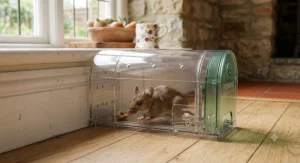
For households with young children, curious cats, or simply an aversion to killing anything, the KENNEAS humane trap offers a no-kill alternative built from washable ABS plastic. A spring-loaded door closes behind the mouse once it enters to reach the bait compartment, trapping it unharmed inside a ventilated chamber until you release it — ideally well away from the house, since mice are notoriously good at finding their way back.
The washable mouse traps angle really matters here: because there’s no snap mechanism and no blood involved, the entire unit rinses clean under a tap in seconds, and the kit includes a small cleaning brush for the corners. On paper this means a genuinely low-maintenance, hygienic reset cycle compared with mechanical designs — you’re not scrubbing dried residue out of a spring hinge.
Reviewers consistently mention the ease of the no-touch release mechanism and appreciate not having to dispose of a dead animal, though a common complaint in aggregated feedback is that particularly small or lightweight mice can occasionally trigger the door without fully entering, resulting in a missed catch. It’s the clear pick for pet-and-child households prioritising welfare over speed.
Pros:
- ✅ Fully washable ABS construction
- ✅ No-touch release; no dead mouse to dispose of
- ✅ Child and pet safe, no snap mechanism
Cons:
- ❌ Lower catch rate than lethal alternatives
- ❌ Requires release well away from the property
At around £10-£18 for a four-pack, the KENNEAS trap is inexpensive to buy but arguably better valued on peace of mind than on raw catch numbers.
6. HOMEREVEL Reusable Snap Trap — best value washable ABS design
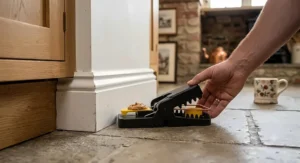
The HOMEREVEL 6-pack takes the classic snap trap formula and adds a detachable bait cup, which sounds like a minor tweak until you’ve tried scraping old peanut butter off a fixed plastic tray. The cup pops out for cleaning or refilling without disturbing the sensitive pedal mechanism, and the whole housing is moulded from washable ABS designed to withstand repeated resets.
Based on the spec comparison with fixed-tray competitors, the detachable cup genuinely speeds up the reset process and reduces the mess involved — a small design decision that has an outsized effect on how often people actually bother resetting a trap rather than binning it after one use. The sensitive pedal trigger is tuned similarly to the ROSHIELD unit, firing on light contact rather than requiring a firm paw-plant.
Aggregated customer sentiment leans positive on the ease of cleaning specifically, with several reviewers noting the bait cup as the standout feature versus older trap designs they’d previously used, though some mention the plastic hinge can loosen slightly after very heavy repeated use. It’s a strong pick for kitchens and pantries where hygiene and quick resets matter more than sheer catch volume.
Pros:
- ✅ Detachable bait cup speeds up cleaning
- ✅ Washable ABS housing resists staining
- ✅ Sensitive pedal trigger improves catch rate
Cons:
- ❌ Hinge can loosen after very heavy use
- ❌ Six-pack sold loose without a storage case
Typically priced £10-£16 for six units, the HOMEREVEL trap is one of the better washable mouse traps for anyone who resets traps often and wants that process to stay pleasant rather than grim.
7. ASPECTEK Reusable Snap Trap — best budget bulk pack for whole-house coverage
Rounding out the list, the ASPECTEK 6-pack is the straightforward, no-frills option — a professional-style plastic snap trap sold in bulk, designed primarily around bait placement simplicity and a dependable trigger mechanism rather than any standout feature. Sometimes that’s exactly what a job needs.
What the spec sheet won’t tell you, but the pricing does, is that buying six traps in one go for whole-house coverage works out considerably cheaper per unit than most single or twin packs — useful if you’re setting traps in the kitchen, utility room, loft and garage simultaneously, which pest control professionals generally recommend during an active infestation rather than relying on one trap in one location.
Reviewers consistently describe the trigger as reliable and straightforward to set, and several specifically call out the value proposition of six traps at this price point compared with premium single-unit alternatives. A recurring theme in aggregated feedback is that the plastic housing, while functional, doesn’t feel quite as robust as the ROSHIELD or HOMEREVEL equivalents — fine for most households, but perhaps not the pick for a garage that regularly floods.
Pros:
- ✅ Excellent per-unit value across six traps
- ✅ Straightforward, reliable trigger mechanism
- ✅ Ideal for covering multiple rooms at once
Cons:
- ❌ Housing feels less robust than premium rivals
- ❌ No detachable bait cup
At around £8-£15 for six, the ASPECTEK pack is hard to beat if budget and coverage matter more than premium build quality.
Reusable vs Disposable Mouse Traps: Why Durable Mouse Traps Win Long-Term
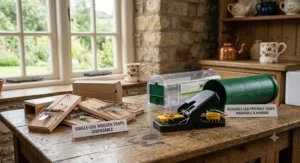
There’s a certain seduction to disposable glue boards and single-use snap traps: cheap, quick, out of the box and into the skirting board. But durable mouse traps tell a different, more patient story once you run the numbers over a full infestation season rather than a single catch.
| Factor | Reusable Traps | Disposable Traps |
|---|---|---|
| Cost over 12 months (moderate use) | £15-£40 total | £40-£90+ in repeat purchases |
| Environmental waste | Minimal — reset, not replaced | High — plastic/board binned each catch |
| Hygiene control | Washable, controllable | Often none, especially glue boards |
| UK legal status | Fully permitted | Glue traps restricted for public use |
The numbers only tell half the story, though — durable mouse traps also mean fewer trips to the shop mid-infestation, which matters when you’re trying to close a problem quickly rather than nursing it along with weekly top-ups. It’s also worth noting that glue traps specifically are now restricted for general public use in England following the Glue Traps (Offences) Act 2022, which makes reusable snap, humane and electronic traps the sensible default for most households rather than simply the eco-conscious one.
✨ Ready to stop buying traps every fortnight? Compare the full lineup above and pick your fighter.
How to Choose Long Lasting Snap Traps
Not every “reusable” trap on Amazon actually earns the label after six months of real use. Here’s how to separate long lasting snap traps from the ones that’ll crack their first winter.
- Check the material first. Wood and galvanised metal outlast moulded plastic, particularly in damp lofts, sheds or garages where UV and moisture do the most damage.
- Look at the spring mechanism. A metal spring bar that can be re-tensioned beats a fixed plastic clip that eventually fatigues and stops firing with full force.
- Prioritise a washable housing. Traps that rinse clean under a tap stay hygienic for longer and are far less likely to be binned in disgust after one bad reset.
- Consider trigger sensitivity. A lighter trigger threshold catches more cautious mice, but check reviews for false-triggering on debris if you’re placing traps outdoors.
- Match the design to your environment. Metal multi-catch units suit sheds and barns; ABS snap traps suit kitchens; humane cages suit households with pets or children.
- Factor in bait cup design. A detachable cup speeds up cleaning and makes you more likely to actually reset the trap rather than abandon it.
- Read aggregated reviews for longevity claims specifically, not just catch rate — a trap can catch brilliantly and still fall apart after ten resets.
Washable Mouse Traps: Maintenance and Cleaning
Washable mouse traps are only genuinely reusable if you actually clean them properly between catches, and this is where a surprising number of buyers cut corners. Bacteria, disease risk and simple bait residue build-up all argue for a proper cleaning routine rather than a quick wipe.
The basics of maintenance and cleaning are straightforward: rinse the trap under hot water with a mild disinfectant, scrub any residue from the trigger plate or bait cup with an old toothbrush, and let it air-dry completely before resetting — a damp trap attracts mould faster than it attracts mice. For wooden traps like the Pest-Stop Little Nipper, avoid soaking, since standing water is precisely what shortens wood-based trap lifespan; a damp cloth wipe is safer than full immersion.
Gloves are worth wearing throughout, both for hygiene and because rodents can carry pathogens on contact — the UK government’s guidance on hantavirus infection risk is worth a quick read if you’re dealing with a heavier infestation, since it explains transmission routes clearly. For humane traps like the KENNEAS, cleaning is even simpler thanks to the fully washable ABS build and included brush — no blood, no fuss, just soap and water.
Trap Lifespan: How Long Should a Reusable Mouse Trap Last?
Trap lifespan is one of the least discussed but most important factors when comparing reusable mouse traps, because a trap that “works great” for three catches and then snaps its hinge hasn’t actually saved you any money.
Realistically, a well-maintained wooden or metal trap — the Pest-Stop Little Nipper or Pest-Stop Multi Catch, for instance — can deliver several years of intermittent service, since there’s simply less material to fatigue or corrode. Plastic snap traps like the ROSHIELD, HOMEREVEL and ASPECTEK units typically manage anywhere from a dozen to several dozen resets before the trigger mechanism or hinge starts to weaken, depending on how roughly they’re handled. Electronic units like the Victor M250S have a different lifespan curve entirely, since the electronics themselves are the limiting factor rather than mechanical wear — expect years of service provided the circuitry stays dry.
Storage matters more than most buyers realise: keeping traps somewhere dry between infestations, rather than leaving them baited and exposed in a damp shed year-round, meaningfully extends trap lifespan across every category on this list.
Cost Per Catch: The Real Value Analysis
Sticker price tells you almost nothing useful on its own. Cost per catch — total spend divided by the number of mice actually caught over the trap’s working life — is the number that actually separates genuine bargains from expensive false economies.
| Product | Approx. Price | Estimated Resets/Catches | Approx. Cost Per Catch |
|---|---|---|---|
| Pest-Stop Little Nipper | £12 (2-pack) | 40+ over lifespan | Under £0.30 |
| ASPECTEK | £10 (6-pack) | 15-20 per trap | Under £0.15 |
| Victor M250S | £38 | Up to 100 (per battery set) | Around £0.40-£0.90 |
Run the maths over a typical moderate infestation — say, 15-20 mice caught over a few months — and the gap between disposable traps and durable mouse traps becomes stark: disposables can easily cost £2-£4 per catch once repeat purchases are factored in, while a well-chosen reusable trap often lands well under £1 per catch across its full working life. The Victor M250S looks pricier per catch on paper, but that figure already includes the convenience premium of never touching a dead mouse, which for some households is worth every penny.
Practical Usage Guide: Setting Up Your Reusable Mouse Trap
Getting the placement and baiting right in the first 48 hours makes a bigger difference to catch rate than almost any spec on the box.
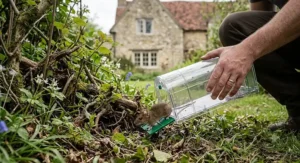
Start by identifying travel routes rather than guessing at random spots — mice hug walls and skirting boards, rarely crossing open floor space, so traps belong flush against walls, behind appliances, or along loft joists rather than in the middle of a room. Bait with something ropy like peanut butter or chocolate spread rather than loose foods like cheese, since a smear forces the mouse to linger and properly trigger the mechanism rather than snatching and running. For the first week, check traps daily; mice are naturally cautious of new objects (a trait called neophobia), so don’t be discouraged if the first few nights produce nothing — that’s completely normal, not a sign the trap’s faulty.
A common early mistake is over-baiting, which lets a clever mouse nibble around the edges without ever touching the trigger plate. Use a pea-sized amount, positioned centrally, and reset promptly after every catch — an unset trap catches nothing, however good its engineering.
Real-World Scenarios: Matching the Trap to Your Situation
The renter in a converted flat, one stray mouse spotted near the bin cupboard: A single HOMEREVEL or ROSHIELD trap tucked behind the kitchen units is proportionate and low-cost — no need for a multi-trap campaign over one sighting.
The family with young children and a nervous dog, scratching heard in the loft: The KENNEAS humane trap removes any risk of small fingers or curious paws near a spring mechanism, while still dealing with the problem without chemicals or poison in the house.
The allotment or smallholding owner with an active infestation in the shed: The Pest-Stop Multi Catch‘s galvanised build and multi-mouse capacity are built for exactly this — damp, semi-outdoor conditions where you’d rather not check a trap every single day.
Problem → Solution: Common Reusable Mouse Trap Issues
Problem: The trap keeps firing empty. Solution: reduce the bait amount and reposition it centrally on the trigger plate — over-baiting lets mice nibble from the side without setting it off.
Problem: No catches after a week. Solution: relocate along a different wall or skirting run; mice rarely cross open floor, so a trap in the wrong spot can sit untouched indefinitely.
Problem: The trap smells even after cleaning. Solution: for wooden traps like the Pest-Stop Little Nipper, a light sand and a wipe with white vinegar lifts embedded odour that plain water can’t reach.
Problem: Small mice trigger the door on a humane trap without being caught. Solution: try a slightly larger bait smear positioned further inside the chamber, encouraging full entry before the door closes.
Problem: A plastic hinge feels loose after repeated resets. Solution: this typically signals the trap is nearing the end of its practical lifespan — a small dab of silicone lubricant can buy a few more resets, but budget for replacement.
Common Mistakes When Buying Reusable Mouse Traps
The single biggest mistake is buying one trap for a multi-room problem — mice rarely stay confined to where you first spot them, so covering several likely routes always outperforms a single, however well-chosen, trap. A close second is prioritising price over material: the cheapest plastic trap on the page often costs more over a year than a slightly pricier wooden or metal alternative, once you factor in early replacements. Buyers also frequently overlook trigger sensitivity, assuming all snap traps fire the same way, when in practice a stiff trigger can let a genuinely light mouse walk straight over it untouched. Finally, many people skip reading aggregated reviews for longevity specifically, focusing only on catch-rate praise — a trap that catches brilliantly once and then breaks isn’t the bargain it first appears.
Reusable Mouse Traps for Different Households
Households with pets or small children are generally best served by humane, no-kill designs like the KENNEAS, simply because there’s no exposed spring mechanism to worry about. Renters and flat-dwellers dealing with occasional sightings rarely need more than one or two washable ABS snap traps such as the HOMEREVEL or ROSHIELD, positioned discreetly and reset as needed. Rural households, allotment owners and anyone with sheds or outbuildings tend to get far more value from metal multi-catch or wooden designs — the Pest-Stop Multi Catch and Little Nipper — since these shrug off damp conditions that would eventually degrade plastic. Anyone simply too squeamish to handle a dead mouse, regardless of household type, is best served by the hands-off disposal of the Victor M250S electronic unit.
Safety, Regulations and Humane Trapping in the UK
Mice aren’t a protected species in the UK, and property owners are broadly expected to control infestations under long-standing pest control law — the government’s guidance on pest control responsibilities sets out what you can and can’t legally use, including the requirement to protect non-target wildlife from any lethal trap you set. Glue boards specifically have been restricted for general public use in England, following sustained welfare campaigning from groups including the RSPCA, which argued — persuasively, it turns out, given the resulting legislation — that indiscriminate sticky traps caused unacceptable suffering to target and non-target animals alike.
Practically, this pushes most UK households toward exactly the categories covered in this guide: quick-kill snap traps, humane catch-and-release designs, and electronic units, all of which are considered more humane and remain fully legal for domestic use. If you do opt for a humane trap, check it at least once daily — leaving a live mouse trapped without food, water or ventilation for extended periods raises its own welfare concerns under the Animal Welfare Act.
Frequently Asked Questions
❓ Are reusable mouse traps actually cheaper than disposable ones?
❓ How many times can you reuse a snap trap?
❓ Are washable mouse traps hygienic to reuse?
❓ What is the average lifespan of a reusable mouse trap?
❓ Are humane mouse traps as effective as snap traps?
Conclusion
Choosing between reusable mouse traps ultimately comes down to matching design to your specific problem rather than chasing the single “best” product. If you want proven, no-nonsense reliability, the Pest-Stop Little Nipper or ROSHIELD deliver it at a fair price. If squeamishness has held you back, the Victor M250S solves that entirely. Facing a genuine infestation in a shed or loft calls for the Pest-Stop Multi Catch, while households with children or pets are almost always better served by the KENNEAS humane design. Whichever you choose, the maths favours durable mouse traps over disposables every time you look past the first catch — cheaper per use, kinder to the environment, and considerably less hassle come the third or fourth mouse.
✨ Ready to finally deal with that scratching in the walls?Pick the trap that matches your household above, and reclaim your kitchen from the tiny freeloaders.
Recommended for You
- Mouse Traps for Garage and Shed: 7 Best Picks for 2026
- Multi-Catch Mouse Trap: 7 Best Options Tested for 2026
- 7 Best Electric Mouse Traps UK 2026: No-Touch; Hygienic Picks
Disclaimer: This article contains affiliate links. As an Amazon Associate, I earn from qualifying purchases. If you purchase products through these links, we may earn a small commission at no additional cost to you.
✨ Found this helpful? Share it with your friends! 💬🤗
