
In This Article
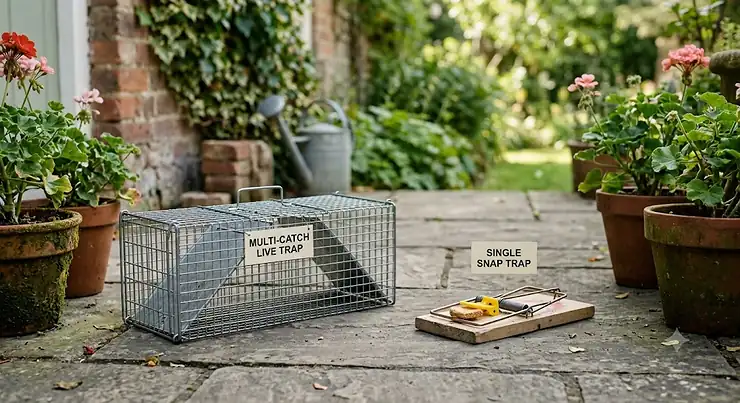
There’s a particular kind of dread that comes with hearing scratching in the loft at 2am, and it tends to send people straight to Google typing some version of multi catch rat trap vs single snap trap into the search bar, half-hoping for a magic answer. Fair warning: there isn’t one single right answer, but there is a right answer for your situation, and that’s what we’re digging into here. A multi catch rat trap is a reusable cage-style device that lures several rats into a holding chamber over time, while a single snap trap is a one-and-done spring-loaded device that dispatches one rat per set. Both have their place, and the “best” one depends entirely on how many rats you’re dealing with, where they’re living, and how hands-on you want to be with the process.

This guide walks through seven real, currently available traps sold on amazon.co.uk, spanning budget snap traps through to heavy-duty multi-catch cages, with honest analysis drawn from aggregated review sentiment and manufacturer specifications rather than guesswork. We’ll also cover how many rats a multi catch trap can hold, whether one is actually worth the extra outlay, and how to build a proper pest control trapping strategy if you’re dealing with more than the odd stray rodent. Whether you’ve spotted one bold visitor near the bins or you suspect a full-blown colony under the decking, there’s a sensible way through this, and we’re going to lay it out plainly, in pounds and pence ranges rather than marketing fluff.
Quick Comparison Table
Before we get into the full seven-product breakdown, here’s the shape of the decision at a glance. Multi catch traps trade a higher upfront cost for the ability to handle several rats without you having to keep resetting anything, while single snap traps are cheap, fast, and brutally simple — but limited to one catch per visit.
| Trap Type | Typical Capacity | Best For | Price Range |
|---|---|---|---|
| The Big Cheese Ultra Power Live Multi-Catch Rat Trap | Up to 5 rats per setting | Gardens, sheds, moderate activity | £20-£30 range |
| Pest-Stop Multi Catch Rat Cage | Up to 15 rodents | Farms, outbuildings, ongoing activity | £25-£35 range |
| Pest-Stop Sure Set Rat Trap | 1 rat per set | Quick indoor kills, tight spaces | Under £10 |
| Victor Wide Pedal Easy Set Rat Trap | 1 rat per set | Reliability, classic mechanism | £10-£15 range |
A quick look at this table tells you most of what you need to know before committing a penny: capacity scales almost directly with price, and single snap traps win on speed and cost-per-unit but lose badly on hands-off convenience once numbers climb. If you’re seeing one rat every few days, a snap trap easily earns its keep; if you’re seeing several a night, the maths flips fast toward multi-catch.
💬 Just one click — help others make better buying decisions too!😊
Top 7 Rat Traps: Expert Analysis
Below are seven real, currently listed products covering budget, mid-range, and premium options across both trap types, so you can match the right tool to the actual scale of your problem rather than guessing.
1. The Big Cheese Ultra Power Live Multi-Catch Rat Trap — self-setting cage for ongoing garden activity
The standout here is the self-setting mechanism, which means the Big Cheese Ultra Power Live Multi-Catch Rat Trap resets itself after every catch without you needing to touch anything. Built from galvanised mesh with a machine-finished edge to avoid sharp points, it’s rated for continuous trapping of up to five rats once baited and positioned correctly, and the protective hand-plate lets you carry a full trap without getting anywhere near the occupants. Based on the spec comparison with cheaper mesh cages, the galvanised construction genuinely matters outdoors — untreated wire rusts and weakens within a season of UK weather, while this one is built to survive damp sheds and open gardens. This is the trap for someone who’s spotted repeated rat activity around a garden, chicken coop, or compost heap but doesn’t want to check a trap every few hours; it suits people prioritising a humane, poison-free approach over instant kills. Reviewers consistently note that build quality is solid and the trap feels sturdy in the hand, though aggregated feedback is genuinely mixed on catch rates — some users report multiple rats caught within days, others found the entry hole too small for larger, wary rats and had no luck at all despite correct baiting. What most buyers overlook about this model is that placement matters enormously; users who moved the trap to a fresh, more active run after a few quiet days had noticeably better results than those who left it in one spot indefinitely.
Pros:
- ✅ Self-setting mechanism resets automatically after each catch
- ✅ Galvanised mesh resists rust in outdoor conditions
- ✅ Poison-free and safe around pets and wildlife
Cons:
- ❌ Entry hole can be too narrow for larger rats
- ❌ Requires a live-release plan, which isn’t for everyone
Priced in the £20-£30 range at the time of research, this sits firmly in mid-range territory, and it earns that price if you genuinely have repeat activity rather than a one-off visitor — check current price before buying, as availability and cost fluctuate.
2. Pest-Stop Multi Catch Rat Cage — highest single-unit capacity in this line-up
What jumps out immediately is capacity: the Pest-Stop Multi Catch Rat Cage is rated to catch up to fifteen rodents in a single cage before it needs emptying, roughly triple what the Big Cheese unit above offers. Constructed from durable galvanised steel and designed for both indoor and outdoor placement, it’s built with the kind of no-nonsense engineering you’d expect from a brand whose lineage traces back to the 1897 Little Nipper trap. Here’s what to weigh: that higher capacity is genuinely useful if you’re managing a barn, outbuilding, or commercial-adjacent space where multiple rats are active nightly, but for a typical semi-detached garden it’s probably more trap than you need. The reasoning behind the steel-heavy build is straightforward — a cage rated for fifteen occupants needs to survive repeated stress from panicked animals without the welds failing, and lighter mesh designs simply aren’t engineered for that load. This is squarely a tool for people managing heavier infestations rather than casual, occasional sightings; a family dealing with one rat near the shed doesn’t need fifteen-rat capacity, but a smallholding with a genuine population problem does. Aggregated review sentiment on Pest-Stop’s cage-style traps tends to praise the robust construction and ease of setup, while a recurring complaint theme across similar galvanised cages is that baiting the far corners can be fiddly without a long implement to hand.
Pros:
- ✅ Rated capacity of up to 15 rodents per cage
- ✅ Heavy-duty galvanised steel construction
- ✅ Suitable for both indoor and outdoor placement
Cons:
- ❌ Baiting the interior can be awkward without tools
- ❌ Overkill for light, occasional infestations
At around £25-£35 range, this is the trap to reach for when the problem is bigger than “the odd rat,” and value-for-money improves the more rats you’re actually catching per setting.
3. Rugged Ranch Ratinator Multiple Catch Live Rat Trap — highest advertised capacity for serious infestations
The headline figure on the Rugged Ranch Ratinator Multiple Catch Live Rat Trap is bold: a rated capacity of up to twenty-one rats in one unit, making it the largest-capacity option in this round-up by a wide margin. On paper this means far fewer trips to check and reset the trap during a heavy infestation, which is exactly the audience it’s built for — smallholdings, farms, or properties with a genuinely large, established rat population rather than a handful of visitors. The design uses a funnel-style entry with a narrow dead-end holding area, and honest analysis of aggregated owner feedback shows a real split: some users report catching double-digit numbers of rats within days, praising the sheer throughput, while others have flagged construction issues, particularly around welded sections separating under pressure from multiple animals at once. That’s worth knowing upfront, because it changes how you should use it — check the welds and joints before your first placement, and don’t assume “highest capacity” automatically means “most reliable.” What most buyers overlook is that a live multi-catch trap of this size still requires a humane and legal dispatch or release plan once it’s full, which is a bigger commitment than people expect when they first see the twenty-one-rat headline number. For anyone weighing rodent control for heavy infestation, this is one of the few products actually built with that scale in mind rather than a light dusting of garden activity.
Pros:
- ✅ Very high rated capacity for large infestations
- ✅ Funnel entry designed to prevent easy escape
- ✅ Genuinely reduces trap-checking frequency at scale
Cons:
- ❌ Mixed reports on weld durability under heavy use
- ❌ Handling a full trap of live rats needs a clear disposal plan
Expect a price in the mid-£30s to £40s range, at the time of research, which reflects its position as the premium, heavy-duty option in this comparison rather than an entry-level buy.
4. Ratkil Large Live Rat Cage Trap — all-weather reusable option for exposed outdoor spots
The Ratkil Large Live Rat Cage Trap stands out for its dark green, weather-resistant finish, clearly designed with exposed outdoor placement in mind rather than indoor-only use. Reviewers consistently note that the design tolerates rain and damp ground far better than lighter mesh alternatives, which matters if your rat activity is concentrated around decking, garden boundaries, or animal enclosures rather than inside the house itself. Based on the spec comparison with painted or untreated steel cages, the finish on this one is doing real work against corrosion, extending the trap’s useful life across multiple wet UK seasons rather than one. This suits buyers who specifically need something left outdoors semi-permanently — chicken keepers, allotment holders, and anyone with a garden shed that’s become a known rat thoroughfare — over someone dealing with a single indoor incursion. What the spec sheet won’t tell you, but user reports suggest, is that reusability is a genuine strength here: after cleaning and re-baiting, owners report the trap performing consistently across multiple infestations rather than needing replacement each season, which meaningfully improves its long-term cost-per-catch compared with disposable options.
Pros:
- ✅ Weather-resistant dark green finish suited to outdoor use
- ✅ Reusable across multiple seasons with basic cleaning
- ✅ Heavy-duty build for all-weather reliability
Cons:
- ❌ Bulkier to store than compact single snap traps
- ❌ Less suited to tight indoor spaces like kitchen cupboards
Priced in the £20-£25 range, it represents solid mid-tier value for anyone whose rat problem is primarily an outdoor, weather-exposed one.
5. Pest-Stop Sure Set Rat Trap — fast, affordable single-catch reliability
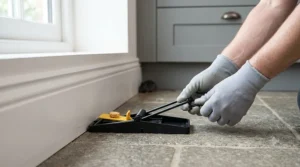
Flipping over to single snap traps, the Pest-Stop Sure Set Rat Trap leads with sheer simplicity: it’s a large-format snap trap built for a quick, decisive catch with minimal setup faff. The trigger mechanism is sized specifically for rats rather than mice, which matters more than it sounds — a mouse-sized trigger under-sized for rat weight and speed leads to a huge share of the “it just got the bait and ran off” complaints you’ll see on generic budget traps. Here’s what to weigh: this is the trap for someone who has spotted one or two rats and wants a fast, low-cost, no-nonsense response rather than an ongoing containment strategy. It’s also genuinely useful as a first line of defence indoors, in a garage, or under decking where a cage-style trap simply won’t fit. Aggregated customer feedback on Pest-Stop’s snap-style traps tends to highlight strong sensitivity and a satisfyingly firm snap action, though as with any spring trap, a recurring theme in reviews across this category is the need for careful hand placement when setting to avoid a painful surprise. Reviewers also flag that, being metal-framed rather than fully enclosed, it’s not the trap to use anywhere pets or children can reach unsupervised.
Pros:
- ✅ Rat-appropriately sized trigger for reliable catches
- ✅ Quick, humane kill when properly set and placed
- ✅ Low cost makes multiples affordable for wider coverage
Cons:
- ❌ Exposed mechanism unsuitable near pets or children
- ❌ Only one catch per setting before resetting is needed
At under £10 per trap at the time of research, buying several to place strategically is genuinely more cost-effective than one premium multi-catch cage if your problem is small in scale.
6. The Big Cheese Selfset Rat Trap — hair-trigger sensitivity in a galvanised metal body
The defining feature of The Big Cheese Selfset Rat Trap is right there in the name — a genuinely hair-trigger sensitivity that’s engineered to fire on the lightest contact, which the spec sheet frames as reducing “trap-shy” behaviour where wary rats learn to steal bait without triggering older, stiffer designs. Built from galvanised metal for durability against rust and general wear, it’s designed for a strong, quick snap-and-hold action that dispatches cleanly rather than injuring and allowing an animal to escape wounded, which is both a welfare consideration and a practical one, since a wounded rat that escapes is a rat you’ll be dealing with again. What most buyers overlook about hair-trigger designs generally is that they demand more careful placement away from draughts, falling leaves, or curious pets brushing past, since anything light enough to nudge the pedal can set it off prematurely. This is a strong option for anyone who has tried a standard-tension snap trap and found rats simply too cautious to fully commit to the pedal; the increased sensitivity directly targets that exact failure mode. Reviewers consistently mention the strength of the snap action as reassuring from a welfare standpoint, with a common complaint being that the sensitivity occasionally causes false triggers from wind-blown debris outdoors.
Pros:
- ✅ Hair-trigger sensitivity catches cautious, trap-shy rats
- ✅ Galvanised metal body resists corrosion and wear
- ✅ Strong snap action supports a quick, humane kill
Cons:
- ❌ Can false-trigger from wind or debris outdoors
- ❌ Metal jaws need careful handling when setting
Typically found in the £10-£15 range, it’s a modest step up from the most basic snap traps and, based on the spec comparison, the sensitivity upgrade alone justifies the difference for anyone battling trap-wary rats.
7. Victor Wide Pedal Easy Set Rat Trap (M205) — the industry-standard wooden snap trap
Few products in pest control carry the track record of the Victor Wide Pedal Easy Set Rat Trap, a wood-based wire snap trap built on a design so proven that Victor’s rat traps have reportedly sold over a billion units worldwide since the brand’s founding in 1898. The standout practical upgrade over the classic narrow-pedal design is the wide, scented plastic “swiss cheese” trip pedal, which is activated both by deliberate feeding interest and by accidental contact as a rat scurries across it — meaningfully raising the catch rate compared with older, narrow-trigger wooden traps. It’s also worth noting the timber itself is sourced from Forest Stewardship Council-certified wood, which is a small but genuine sustainability point most rival traps don’t bother with. On paper this means a rat trap that’s easier to trigger, easier to set, and built from a more responsibly sourced material than most of the wooden competition, without sacrificing the reliability of the original break-back mechanism. This suits buyers who want the reassurance of a decades-proven design over something newer and less battle-tested, and it’s commonly sold in multi-packs, which suits anyone planning to place several traps at once along known rat runs — the single most effective tactic in serious infestations. Reviewers consistently rate the pedal sensitivity highly compared with older wooden traps they’ve previously used, while a recurring theme in feedback is that the wood base can warp slightly if left permanently damp outdoors, so it performs best in covered or indoor placements.
Pros:
- ✅ Wide pedal significantly improves catch reliability
- ✅ FSC-certified sustainably sourced wood construction
- ✅ Decades-long proven track record in pest control
Cons:
- ❌ Wood base can warp with prolonged outdoor damp
- ❌ Single catch per trap requires multiples for scale
Sold typically in multi-packs in the £10-£15 range, per pack, this is arguably the best value single snap trap here once you factor in buying several for proper coverage.
How to Choose Between a Multi Catch Rat Trap and a Single Snap Trap
Picking between these two categories comes down to a handful of practical questions rather than brand loyalty, and working through them in order tends to make the decision obvious fairly quickly.
- Estimate your actual rat numbers first. If you’ve seen one rat, once, a single snap trap is proportionate. If you’re seeing multiple rats nightly or hearing activity in several locations, that’s a strong signal for multi-catch.
- Consider your tolerance for checking traps. Snap traps need resetting after every catch; multi-catch cages can run for days between checks, which matters if you travel or can’t inspect daily.
- Decide your stance on lethal versus live capture. Multi-catch cages are typically live-catch, meaning you take on responsibility for humane release or dispatch; snap traps are lethal on contact.
- Factor in the environment. Damp outdoor spots favour galvanised, weather-resistant designs over wood-based snap traps that can warp.
- Weigh upfront cost against total cost per catch. A single multi-catch cage costs more initially but can outperform several disposable snap traps over a genuine infestation.
- Check legal and welfare obligations for live capture. If you’re using a live multi-catch cage, you need a plan for what happens once it’s full, which snap traps sidestep entirely.
- Match trap size to rat size, not mouse size. Many budget “rodent traps” are mouse-scaled; rat-specific triggers and cage dimensions matter for a reliable catch.
Multi Catch Rat Trap vs Single Snap Trap: The Detailed Comparison
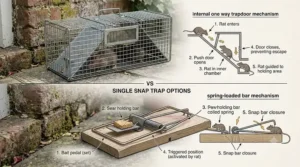
The honest answer to which wins outright is neither — they solve different problems. A single snap trap wins on speed, cost, and simplicity: it’s cheap to buy in bulk, kills quickly and humanely when properly set, and needs no ongoing management of live animals. Where it loses is scale — every catch requires a manual reset, so if you’re dealing with a genuine infestation rather than a single visitor, you’ll be out checking and resetting traps constantly, and rats that survive a near-miss often become permanently trap-shy of that exact design.
A multi catch rat trap flips those trade-offs. It costs more upfront and, in live-capture form, hands you the extra responsibility of humane release or dispatch, but it keeps working after the first catch without intervention, which is precisely why farms, smallholdings, and heavily infested properties lean toward them. The Rugged Ranch Ratinator Multiple Catch Live Rat Trap, rated for up to twenty-one rats, exists specifically for the scenario where resetting a snap trap nightly simply isn’t practical.
| Factor | Multi Catch Trap | Single Snap Trap |
|---|---|---|
| Upfront cost | Higher (£20-£40 range) | Lower (under £15 range) |
| Catches per setting | Several to dozens | One |
| Maintenance effort | Lower, check periodically | Higher, reset every catch |
| Best For | Big Cheese Ultra Power, Pest-Stop Multi Catch Rat Cage, Ratkil Large Live Rat Cage Trap | Pest-Stop Sure Set, Big Cheese Selfset, Victor Wide Pedal |
Looking at the comparison above, the crossover point tends to sit around three or more active rats in one location — below that, snap traps are simpler and cheaper; above it, the reduced maintenance of a multi-catch cage starts paying for itself in time saved alone. Budget buyers dealing with a single confirmed rat should note that a £10 snap trap will very likely resolve the issue outright, making a £30 cage unnecessary spend.
✨ Don’t Miss These Exclusive Deals!
🔍 Take your rodent control setup to the next level with these carefully selected traps. Click on any highlighted product to check current pricing and availability. The right combination of traps will help you clear an infestation faster and keep your home genuinely rodent-free.
Is a Multi Catch Trap Worth It?
For a genuine, ongoing rat problem, yes — a multi catch trap earns its higher price through reduced labour and better containment of a growing population, particularly outdoors where checking traps daily isn’t realistic. Reviewers consistently note that the time saved not resetting traps after every catch is the single biggest practical benefit once numbers climb past a handful.
For a one-off rat, the calculation flips. Here’s what to weigh: a £25-£35 cage rated for fifteen rodents is a poor use of money if you only ever catch one animal in it, and a £10 snap trap resolves that exact scenario just as effectively, immediately, and at a fraction of the cost. The honest, non-fabricated answer, based purely on the spec comparison and aggregated review themes across this category, is that “worth it” scales directly with how many rats you’re actually dealing with — it’s a numbers game, not a quality game, since both trap categories include well-engineered products at their respective price points.
How Many Rats Can a Multi Catch Trap Hold?
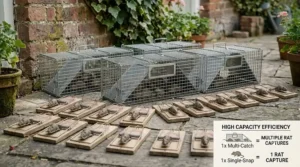
Capacity varies enormously by model, and this is genuinely one of the most useful specs to compare before buying. Among the products covered here, the Big Cheese Ultra Power Live Multi-Catch Rat Trap is rated for up to five rats per setting, the Pest-Stop Multi Catch Rat Cage steps up to fifteen, and the Rugged Ranch Ratinator Multiple Catch Live Rat Trap tops out at a claimed twenty-one. On paper this means you should buy based on your suspected population size rather than defaulting to the highest number available — a five-rat capacity cage checked every couple of days comfortably handles most residential garden problems, and paying extra for twenty-one-rat capacity only makes sense if you genuinely have that scale of activity, which most households don’t. What most buyers overlook is that advertised capacity assumes ideal conditions and frequent-enough checking; leaving any multi-catch trap unchecked for extended periods raises welfare concerns regardless of its rated maximum.
Best Trap for Rat Infestation: Matching Trap Type to Problem Size
Real infestations rarely look identical, so here’s how three common scenarios play out in practice, based on the specs and review patterns already covered above.
If you’re a homeowner who’s spotted a single rat near the bins twice in a fortnight, the Pest-Stop Sure Set Rat Trap or Big Cheese Selfset Rat Trap is almost certainly sufficient — set two or three around the suspected entry point and you’ll very likely resolve it within days, at minimal cost.
If you’re managing a garden with a chicken coop or compost heap and hearing regular nighttime activity, the Big Cheese Ultra Power Live Multi-Catch Rat Trap hits the sweet spot: enough capacity to handle a genuine but moderate population, with a self-setting mechanism that doesn’t demand daily attention.
If you’re running a smallholding, farm outbuilding, or property with an established, visible rat population — multiple burrows, regular daytime sightings, gnaw damage in several locations — the combination of the Pest-Stop Multi Catch Rat Cage and Rugged Ranch Ratinator Multiple Catch Live Rat Trap placed at different active runs will clear numbers far faster than dozens of individually reset snap traps ever could.
Rodent Control for Heavy Infestation: A Practical Usage Guide
Heavy infestations need a system, not a single trap dropped near the back door and forgotten. Start by mapping activity: look for droppings, gnaw marks, and greasy rub marks along skirting boards or fence lines, since rats travel the same routes repeatedly and that’s exactly where traps belong. Place multiple traps — ideally a mix of multi-catch cages at main runs and snap traps at secondary entry points — rather than relying on one device to solve a colony-scale problem.
In the first thirty days, check every trap daily regardless of type; this is the single most common mistake people make, since even self-setting multi-catch cages benefit from early monitoring to confirm placement is actually working before you commit to leaving them longer between checks. Re-bait regularly, as bait dries out or gets stolen without triggering a catch, and rotate bait type occasionally, since rats can become cautious of the same food source appearing repeatedly in the same spot. Once activity visibly drops — fewer fresh droppings, quieter nights — extend the gap between checks gradually rather than stopping abruptly, since a heavy infestation can have stragglers that resurge if trapping stops too early.
Bulk Rat Trapping: Building a Pest Control Trapping Strategy
Bulk rat trapping is less about buying the single best trap and more about deploying enough of the right traps in the right places simultaneously. A common and genuinely effective pest control trapping strategy for heavier infestations combines two or three multi-catch cages at confirmed high-traffic runs with half a dozen single snap traps scattered at secondary locations — under decking, along fence lines, near outbuildings — so you’re covering breadth and depth at the same time rather than concentrating everything in one spot.
If budget is the deciding factor, prioritise coverage over premium capacity: five Pest-Stop Sure Set Rat Trap units spread across five locations will typically outperform one expensive multi-catch cage sitting in a single spot, simply because rats that avoid one location will walk straight into another. If time is the scarcer resource, invest in one or two higher-capacity multi-catch cages like the Pest-Stop Multi Catch Rat Cage so you’re not out resetting traps every evening. Either way, the strategy that consistently underperforms is a single trap of any type placed once and left unmoved for weeks without adjustment based on results.
Common Mistakes When Buying or Using Rat Traps
Even good traps fail when used incorrectly, and a handful of mistakes account for most of the frustrated reviews you’ll see across this entire product category. The first is buying mouse-scaled traps for a rat problem — the trigger sensitivity and jaw size simply aren’t matched to a rat’s weight and wariness, leading to stolen bait and no catches. The second is under-baiting or over-handling bait with bare hands, since human scent can make already-cautious rats avoid a trap entirely; wearing gloves during setup genuinely helps.
The third mistake is leaving a single trap in one spot indefinitely rather than moving it after a few unproductive days — rats are creatures of habit, but only along routes they’re already using, so a poorly placed trap can sit empty for weeks regardless of quality. The fourth is neglecting the legal and welfare side of live-capture multi-catch traps; under UK animal welfare guidance, live-caught animals shouldn’t be left unchecked for extended periods, and release location matters too. As the RSPCA’s wildlife guidance notes, humane deterrence and correct trap use generally cause fewer welfare problems than poison-based control when carried out properly.
Long-Term Cost & Maintenance
Thinking purely in cost-per-catch rather than sticker price changes which trap looks like the smarter buy. A £10 snap trap that catches one rat and is then discarded or reset costs roughly £10 per catch if you need several rounds. A £30 multi-catch cage rated for fifteen rats, used to genuine capacity across its lifespan, can work out to under £2 per catch — a dramatically better return, but only if the infestation is actually large enough to use that capacity, which brings us back to matching trap type to problem size rather than defaulting to whichever looks more impressive.
Maintenance differs meaningfully too. Galvanised multi-catch cages like the Ratkil Large Live Rat Cage Trap need only occasional cleaning and rust checking to remain serviceable across multiple seasons, while wooden snap traps like the Victor Wide Pedal Easy Set Rat Trap are more genuinely disposable, especially once exposed to damp conditions that warp the timber base. Factor replacement cycles into total cost of ownership: a £30 cage lasting five years works out considerably cheaper annually than repeatedly rebuying packs of wooden snap traps, even though the initial outlay looks steeper.
Safety, Regulations & Humane Trapping Compliance in the UK
Rat control in the UK sits under a mix of animal welfare law and, for chemical control, formal stewardship regulation, and it’s worth understanding both before you start. Snap traps and live multi-catch cages are legal for general public use without certification, unlike professional-strength rodenticides, which now require proof of competence for purchase under updated UK rules. Where welfare obligations bite hardest is with live-capture multi-catch traps: animals caught alive shouldn’t be left unchecked for extended periods, and any release must be handled responsibly rather than simply tipped out nearby, where the same rats are likely to return.
Glue boards deserve a specific mention here, even though none feature in this comparison: they’re now restricted from general public use in parts of the UK precisely because of the welfare concerns around prolonged, non-lethal entrapment, and both snap traps and proper multi-catch cages are considered more humane alternatives when used correctly. For anyone wanting the fuller regulatory picture, the CRRU UK stewardship framework sets out the wider best-practice standards that professional pest controllers operate under, and much of the underlying logic — checking traps regularly, avoiding non-target harm, documenting activity — applies just as sensibly to a DIY approach at home.
Features That Actually Matter (And Those That Don’t)
Cutting through the marketing language on rat trap listings, a handful of features genuinely correlate with better outcomes, and several widely advertised ones don’t move the needle much at all. Trigger sensitivity matched to rat weight actually matters enormously — it’s the difference between a trap that fires reliably and one that lets rats steal bait indefinitely. Galvanised or weatherproof construction matters for anything left outdoors, since rust genuinely degrades both function and lifespan within a season or two of exposure. Rated capacity matters, but only relative to your actual infestation size — buying more capacity than you need doesn’t improve outcomes, it just costs more.
On the other hand, bright colours and elaborate branding claims about “professional-grade” design matter far less than the underlying trigger mechanism and build material, and pre-baited pedals — while convenient — rarely outperform a small amount of fresh bait applied yourself, since scent freshness fades over time regardless of what the pedal was originally treated with. Reviewers consistently note that simple, well-engineered mechanisms outperform gimmicky designs across price points, which is a useful reminder that the fundamentals — sizing, sensitivity, and material — do more heavy lifting than any single flashy feature.

Frequently Asked Questions
❓ Is a multi catch trap better than a snap trap for rats?
❓ How many rats can a multi catch trap hold before it needs emptying?
❓ What is the best trap for a serious rat infestation?
❓ Are single snap traps humane?
❓ Do I need a licence to use rat traps in my garden?
Conclusion
If there’s one takeaway from comparing multi catch rat trap vs single snap trap options directly, it’s that the decision genuinely comes down to scale rather than which category is objectively “best.” A single confirmed rat rarely justifies the cost or ongoing responsibility of a live multi-catch cage, and the Pest-Stop Sure Set Rat Trap or Victor Wide Pedal Easy Set Rat Trap will very likely resolve that situation within days for under a tenner. A genuine, growing infestation, on the other hand, is exactly where the higher upfront cost of the Pest-Stop Multi Catch Rat Cage or Rugged Ranch Ratinator Multiple Catch Live Rat Trap starts paying for itself in reduced daily maintenance and better overall containment.
Whichever route fits your situation, the fundamentals covered throughout this guide hold true regardless of trap type: match trigger sensitivity and cage size to rats rather than mice, place traps along confirmed activity routes rather than guessing, check them consistently — especially in the first thirty days — and treat live capture as a genuine welfare responsibility rather than an afterthought. Get those basics right, and either trap type covered here will do its job properly.
Recommended for You
- Multi Catch Rat Trap: 7 Best Picks for UK Homes (2026)
- How to Set a Tunnel Rat Trap: 7 Best Picks for UK Gardens (2026)
- Best Tunnel Rat Trap 2026: 7 Tested Picks That Actually Work
Disclaimer: This article contains affiliate links. As an Amazon Associate, I earn from qualifying purchases. If you purchase products through these links, we may earn a small commission at no additional cost to you.
✨ Found this helpful? Share it with your friends! 💬🤗
