
In This Article
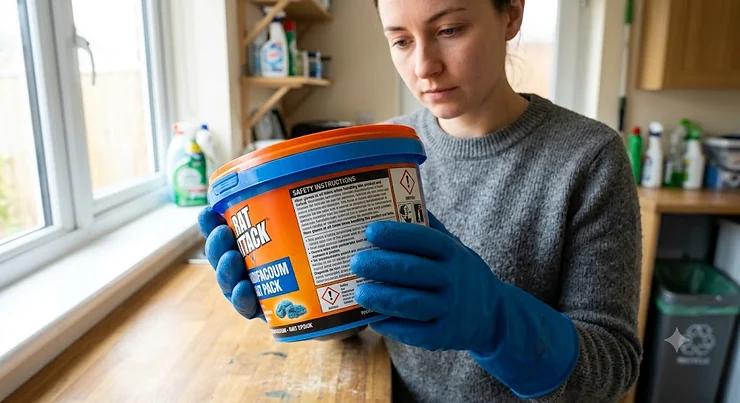
There’s a particular kind of dread that comes with hearing scratching in the loft at 2am, isn’t there? You lie there, mentally cataloguing everything up there that a rat could chew through, and by morning you’re on Amazon looking at bait blocks. Here’s the thing though: brodifacoum is not a “sprinkle it and forget it” product. It’s the strongest anticoagulant rodenticide widely available to UK households, and learning how to use brodifacoum rat poison safely is really the whole ballgame — get the placement, dosage, and disposal wrong and you’re not just risking the rat, you’re risking the family dog, the local barn owl, and potentially a very awkward call to NHS 111. This guide walks through exactly how to use brodifacoum rat poison safely, which products are worth your money, and how to keep pets, kids, and wildlife out of harm’s way while you sort the actual problem out.
Quick definition first, because it matters: brodifacoum is a second-generation anticoagulant rodenticide that stops blood from clotting, causing fatal internal bleeding in rodents typically within three to seven days of a single feed. It’s roughly a hundred times more potent than warfarin, which is exactly why the rules around where and how it can be used outdoors are so tightly controlled by UK regulators. We’ll get into the specifics below, but that single fact should frame everything that follows: this is a genuinely dangerous chemical wearing a friendly grain-block disguise, and treating it with the same casualness as slug pellets is how accidents happen.
Quick Comparison Table: Brodifacoum Products at a Glance
| Product | Format | Best For | Price Range |
|---|---|---|---|
| Roshield Brodifacoum 300g Block Bait | Wax block, single-feed | First-time users, small infestations | Under £20 |
| Pest Expert Formula B+ 900g Sachets | Grain sachets, 0.0029% | Stubborn/resistant infestations | £30-£45 range |
| Pest Expert Formula B+ 1.5kg Sachets | Grain sachets, bulk | Larger properties, farms, sheds | £45-£65 range |
| Pest Expert B+ Pasta Bait 300g | Soft pasta bait | Damp areas, low-food-competition sites | £20-£30 range |
| Roshield Pro Quality Bait Station | Tamper-resistant box | Legal, pet-safe outdoor placement | Under £15 |
A few things jump out once you line these up side by side. First, format matters as much as strength: pasta baits outperform blocks in damp lofts or drains where wax can go mouldy, while grain sachets tend to win in dry sheds with plenty of competing food sources. Second, notice that the Roshield Pro Quality Bait Station isn’t a poison at all — it’s arguably the single most important item on this list, because in the UK it’s a legal requirement to house amateur-approved brodifacoum bait in a tamper-resistant station, not scatter it loose. Skip that line item and you’re not just being careless, you’re breaking the label conditions every one of these products is sold under.
💬 Bookmark this comparison — you’ll want to check back before you buy your bait station and poison together.
Top 7 Brodifacoum Rat Poison Products: Expert Analysis
1. Roshield Brodifacoum 300g Block Bait — best entry point for first-time users
If you’ve never bought rodenticide before, this is where most people land, and for good reason. It’s a single 300g pack of wax-block bait, HSE-registered at the standard amateur concentration of 0.0025% brodifacoum, which is the ceiling for products sold without professional certification. Wax blocks hold their shape in damp conditions better than loose grain, and they’re moulded with a hole so you can thread them onto the retaining rod inside a bait station — which matters enormously, because loose bait that a rat can drag away is loose bait a hedgehog or a curious spaniel can drag away too.
Based on the spec comparison with the other products here, this is a mid-strength option rather than the strongest available — Pest Expert’s B+ range edges it out on raw concentration — but for a first infestation in a loft or under a shed, that’s arguably the right call. Reviewers consistently report decent uptake within a few days when the block is placed along a wall run where rat droppings or smear marks are visible, though a handful note that particularly food-rich sites (working farms, restaurant bins) see slower results, which tracks with what you’d expect from a single-feed anticoagulant competing against tastier options.
Pros:
- ✅ HSE-registered at standard amateur strength
- ✅ Wax formulation resists damp and mould
- ✅ Straightforward for first-time rodenticide users
Cons:
- ❌ Less palatable than pasta bait in high-competition sites
- ❌ Single 300g pack may be light for larger infestations
Expect to pay under £20 for the 300g pack, and it represents solid value as a starter kit — just budget separately for a bait station, since it isn’t included. Check current price before buying.
2. Pest Expert Formula B+ Advanced 900g Sachets — strongest single-feed brodifacoum on the UK market
This is the one pest controllers reach for when a standard-strength bait has already failed. Formula B+ is supplied at 0.0029% brodifacoum, which the manufacturer states is roughly 20% stronger than the 0.0025% concentration used in every other UK brodifacoum product. Practically, that means a faster and more reliable single feed, which matters when you’re dealing with a population that’s been nibbling at weaker baits and surviving.
The 900g pack breaks down into fifteen 60g measured sachets, which is a genuinely underrated feature — measured portions stop you eyeballing how much bait to put down, and precise baiting is exactly what the CRRU stewardship guidance wants amateur users doing. What most buyers overlook about this model is that “strongest” also means “requires more discipline,” not less: a wax-free grain formulation this palatable will also tempt non-target species if it isn’t locked inside a proper station. Reviewers consistently describe rapid uptake and noticeably quicker results than budget alternatives, with the most common complaint being that the sachets, while convenient, generate more packaging waste per session than a straight block.
Pros:
- ✅ Maximum legal amateur concentration (0.0029%)
- ✅ Pre-measured sachets for precise, repeatable dosing
- ✅ Effective against bait-shy or resistant populations
Cons:
- ❌ Higher palatability increases risk if stations aren’t locked
- ❌ More expensive per gram than standard-strength blocks
Priced in the £30-£45 range for 900g, this sits firmly in the mid-tier and earns its premium over standard 0.0025% products specifically for stubborn cases — casual, low-density infestations probably don’t need to spend up for it.
3. Pest Expert Formula B+ Advanced 1.5kg Sachets — best bulk option for larger properties
Same maximum-strength 0.0029% formulation as the 900g pack above, just scaled up to fifteen 100g sachets for a total of 1.5kg. This is the one to reach for if you’re dealing with a farm outbuilding, a large detached property with multiple access points, or a genuinely serious infestation rather than the odd rat under the decking.
Here’s what the spec sheet won’t tell you outright: buying in this format isn’t really about total bait weight, it’s about being able to service several bait stations simultaneously without running out mid-treatment, which is exactly when infestations rebound. On paper this means fewer shopping trips and a lower cost per gram than the smaller pack; in practice it also means you’re storing considerably more brodifacoum on-site, so a locked cabinet, out of reach of children and pets, becomes non-negotiable rather than a nice-to-have. Aggregated reviewer sentiment mirrors the smaller pack — strong, fast uptake — with the added observation from several buyers that the larger volume makes it genuinely cost-effective for multi-station perimeter baiting compared with buying several small packs separately.
Pros:
- ✅ Lowest cost-per-gram in the Formula B+ range
- ✅ Enough volume for multi-station perimeter treatment
- ✅ Same maximum-strength single-feed formulation
Cons:
- ❌ Large stored quantity raises home-storage responsibility
- ❌ Overkill for a single-rat domestic problem
Sitting in the £45-£65 range, this is genuinely good value for larger jobs, but budget-conscious homeowners with a modest infestation are better served by the 300g or 900g options above.
4. Pest Expert Formula B+ Pasta Bait 300g — best for damp, low-competition sites
Pasta bait is a different animal to grain or block bait, and it solves a specific problem: palatability in places where rats have easy access to alternative food. Independent studies cited by the manufacturer found the pasta formulation to be seven to eight times more palatable to rodents than food typically found in grain stores, stables, and residential areas, which is a meaningful claim given that a rat ignoring your bait in favour of the bin next door is the single most common reason amateur treatments fail.
The formulation also contains Bitrex, a bittering agent added specifically to make the bait unpalatable to children — a small detail, but one that shows genuine thought went into layered safety rather than relying on the bait station alone. Based on the spec comparison, this is the format to choose for kitchens, utility rooms, or anywhere there’s competing food, rather than an empty loft where a block would do just as well. Reviewers frame this as their go-to when other baits have already been tried and rejected by a resistant local population, with a smaller number noting the soft texture degrades faster in very hot conditions than a wax block would.
Pros:
- ✅ Far higher palatability than grain or block bait
- ✅ Contains Bitrex bittering agent for added child safety
- ✅ Performs well where rats have alternative food sources
Cons:
- ❌ Softer texture is less heat-stable than wax blocks
- ❌ Marginally pricier per gram than standard grain sachets
Expect a £20-£30 range for the 300g pack (2 x 150g), and it represents strong value specifically as a “second attempt” product after a standard bait has underperformed.
5. Pest Expert Formula B+ Pasta Bait 900g Outdoor — best for extended outdoor perimeter baiting
This is the same high-palatability pasta formulation as above, packaged as six 150g sachets for outdoor and around-building use. Outdoor baiting is where the UK’s stewardship rules bite hardest, and that’s not a coincidence — outdoor rodenticide use is the single biggest driver of secondary poisoning in birds of prey, so a product engineered for faster uptake genuinely reduces the total time bait sits exposed in the environment.
What most buyers overlook here is that “outdoor” doesn’t mean “loose in the garden” — every gram of this still needs to go into a tamper-resistant, weatherproofed station, ideally one that’s pegged or anchored so it can’t be dragged off by a fox. Based on the spec comparison with the block products, the trade-off is durability versus speed: pasta bait won’t survive weeks of exposure to rain and temperature swings as gracefully as a wax block, so it suits shorter, more intensive treatment windows rather than season-long passive baiting. Aggregated reviewer feedback is consistent with the indoor version — fast results — with several outdoor users specifically praising the quicker uptake versus wax blocks left in garden stations over winter.
Pros:
- ✅ High palatability speeds up outdoor treatment windows
- ✅ Reduces total exposure time, lowering secondary-poisoning risk
- ✅ Suitable for restaurants, farms, and commercial premises
Cons:
- ❌ Degrades faster than wax blocks in prolonged wet weather
- ❌ Requires more frequent station checks and top-ups
Priced around the £35-£50 range for 900g, this is best value for anyone running a short, focused outdoor campaign rather than a set-and-forget approach.
6. Pest Expert Formula B+ Advanced 800g Sachets — best mid-size pack for repeat treatments
Slotting neatly between the 900g and 1.5kg options, this pack offers eight 100g measured sachets of the same maximum-strength 0.0029% formulation. It’s a sensible middle ground if you suspect one treatment cycle won’t fully clear the problem but you don’t want to commit to the bulk 1.5kg pack.
Here’s the honest analytical take: pest control rarely resolves in a single visit, and CRRU guidance itself notes that most infestations can be brought under control within roughly 35 days of consistent baiting — which usually means at least two or three top-ups as bait gets consumed and rats continue feeding until the population collapses. An 800g pack maps well onto that realistic timeline for a typical domestic loft-and-garden infestation without leaving you with a large surplus of stored poison once the job’s done. Reviewer sentiment closely tracks the rest of the range — strong, fast single-feed kills — with a few buyers specifically calling out the sachet format as easier to track “how much have I actually put down” than loose sachets from a bigger bag.
Pros:
- ✅ Sized well for a realistic multi-visit treatment cycle
- ✅ Measured sachets simplify dosage tracking
- ✅ Maximum legal amateur strength
Cons:
- ❌ Not the cheapest per-gram option in the range
- ❌ Still needs a separately purchased bait station
You’re looking at roughly £25-£40 for 800g, positioning it as the practical “just right” pack size for most house-and-garden situations.
7. Roshield Pro Quality Tamper-Resistant Bait Station — the non-negotiable safety essential
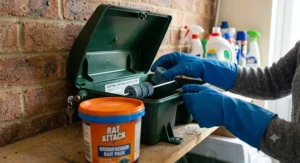
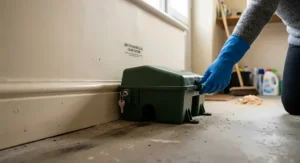
Technically not a poison, but arguably the most important item in this whole line-up, and I’d genuinely hesitate to recommend any of the products above without it. UK regulations make it a legal requirement that all amateur-approved rodenticide bait is used within a tamper-resistant bait station, and this one is manufactured in the UK from recycled plastics sourced from old car dashboards and bumpers — a nice bit of circular-economy thinking for a product built to physically block access to poison.
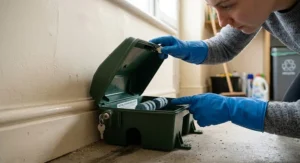
The design logic is straightforward and worth understanding rather than just trusting: entry tunnels are sized and angled so rats and mice can enter to feed, while dogs, cats, hedgehogs, and small children physically cannot reach the bait inside, and the lid locks with a key so nobody can simply flip it open. Based on independent testing write-ups, the construction is noticeably heavier-duty than some budget alternatives on the market, with a solid lid designed for quick visual inspection without needing to fully unlock the unit each time. That last point matters more than it sounds — a station you’re too fiddly to check regularly is a station that doesn’t get checked, and unchecked bait is exactly how infestations run longer than they need to and dead rats go undiscovered.
Pros:
- ✅ Legally required for any outdoor or accessible bait placement
- ✅ Made in the UK from recycled materials
- ✅ Solid, quickly-inspectable lid design
Cons:
- ❌ Sold empty — bait purchased separately
- ❌ Single unit may not cover a large perimeter alone
Priced under £15 per station, this is one of the cheapest items on the list and, frankly, the one purchase you should never skip. Multiple units cost more overall but check current pricing on multipacks for larger properties.
Setting Up Your First Treatment: A Practical Usage Guide
Getting brodifacoum working safely comes down to preparation, not just placement. Start by tracking activity for a day or two — look for smear marks along skirting boards, gnawed packaging, and droppings (roughly the size and shape of a grain of rice, dark and tapered), because bait placed away from an active run gets ignored regardless of how strong it is. Once you’ve identified two or three genuine runs, install your tamper-resistant stations directly along them, not out in the open middle of a room or garden — rats are neophobic and hug walls, so a station sitting proud in open space will simply be avoided for the first few days while they get used to it.
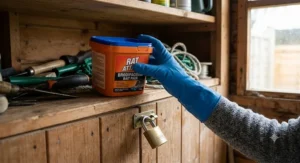
Load the station following the pack instructions exactly — this is not a “more must be better” situation, since overloading doesn’t speed up the kill, it just leaves excess bait sitting around for longer. Check every station every one to two days for the first week, topping up what’s been taken and noting consumption patterns; a station being emptied fast tells you you’ve found a genuine run and possibly a larger population than you first assumed. The most common first-30-days mistake is impatience — because anticoagulants work over three to seven days rather than instantly, people assume the bait “isn’t working” and either double the dose or switch products entirely, when the fix is usually just to wait and keep checking. Wear disposable gloves whenever you handle bait or stations, and always wash your hands afterwards, even if you never touched the poison directly.
Real-World Scenarios: Matching the Product to Your Situation
Not every rat problem looks the same, so it’s worth mapping a few common household situations onto the products above rather than assuming one size fits all.
The first-time loft infestation. You’ve heard scratching at night, found a few droppings near the water tank, but no widespread damage yet. This is textbook territory for the Roshield Brodifacoum 300g Block Bait paired with a single Roshield Pro Quality Tamper-Resistant Bait Station wedged near the loft hatch or along the joist where droppings were found. Budget is modest, the problem is contained, and a standard-strength single feed should clear it within one to two weeks if you’re checking regularly.
The garden shed with an ongoing rat run from next door. If neighbours have had rats too, or your compost bin and bird feeders have been drawing them in for months, you’re likely dealing with a more established, possibly bait-experienced population. This calls for the Pest Expert Formula B+ Advanced 900g Sachets at maximum legal strength, placed in a station anchored to the ground so it can’t be dragged off, and supplemented by cutting off the food source (secured compost, feeders raised off the ground) so the bait isn’t competing.
The farm outbuilding or multi-structure smallholding. Here you’re not treating one hotspot but a whole perimeter, and that’s where the Pest Expert Formula B+ Advanced 1.5kg Sachets earns its keep, spread across several Roshield Pro Quality Bait Stations positioned every few metres along walls and fence lines. Frequency of use is higher, the area is larger, and — critically — outdoor exposure to wildlife is a bigger risk, so daily-to-alternate-day checking becomes essential rather than optional.
How to Choose the Right Brodifacoum Product
- Assess infestation severity first. A single rat sighting calls for a standard-strength block; multiple sightings, established runs, or evidence of a breeding population point toward maximum-strength Formula B+ products.
- Match bait format to the environment. Choose wax blocks for dry, stable locations and pasta bait for damp lofts, drains, or anywhere rats have plenty of competing food.
- Always budget for a bait station separately. Poison without a tamper-resistant station isn’t a complete, legal, or safe purchase — treat the two as one package.
- Check whether you’re baiting indoors or outdoors. Outdoor placements carry stricter stewardship expectations around anchoring, weatherproofing, and check frequency because of wildlife exposure.
- Factor in pets and children on the property. Homes with dogs, cats, or young kids should prioritise locked, anchored stations over any bait format convenience.
- Plan for a realistic treatment window. Budget for at least two to three weeks of consistent checking and top-ups rather than a single application.
- Read the label’s stated use pattern before buying. Some formulations are indoor-only; using an indoor-labelled product outdoors breaches the terms it was legally sold under.
Brodifacoum vs Traditional Snap Traps: A Detailed Comparison
| Factor | Brodifacoum Bait | Snap Traps |
|---|---|---|
| Speed | 3-7 days to death | Instant (if triggered correctly) |
| Effort | Regular checking/top-ups | Daily checking, manual resetting |
| Secondary risk | Real risk to pets/wildlife if mismanaged | Minimal secondary risk |
| Best For | Larger or hidden populations | Single rats, pet-heavy households |
| Carcass location | Often hidden, harder to find | Located at trap site |
The trade-offs here aren’t really about which method is “better” in the abstract — they’re about which risk profile suits your household. Snap traps give you an instant, visible result and near-zero secondary poisoning risk, but they demand daily manual resetting and simply don’t scale to a genuine infestation the way bait does. Brodifacoum, used correctly in a locked station, handles larger or hidden populations far more efficiently, but that efficiency comes with the ongoing responsibility of pet and wildlife management that a snap trap never asks of you. Many pest professionals actually use both together — traps for visible individuals, bait for the population you can’t see — rather than treating them as competing choices.
Brodifacoum Pet Safety: What Every Owner Needs to Know
This is the section to read twice if you share your home with a dog or cat, because pets are disproportionately at risk from anticoagulant rodenticides — both from eating bait directly and from secondary poisoning after eating a poisoned rodent. Brodifacoum works by inhibiting the production of vitamin K-dependent clotting factors, which impairs the blood’s ability to clot and ultimately causes internal bleeding. The genuinely dangerous part is the delay: symptoms are typically delayed by several days, which can give owners a false sense of reassurance that their pet is fine when serious internal damage may already be underway.
Common signs of poisoning include lethargy, exercise intolerance, coughing, difficulty breathing from bleeding into the lungs, weakness, and pale gums, and secondary or “relay” poisoning can also occur when an animal eats a rodent that’s already been poisoned. If you have any reason to suspect exposure, don’t wait for symptoms — never “watch and wait”; contact a vet immediately. Treatment typically involves parenteral vitamin K1, which reverses the anticoagulant effect over roughly 24 to 48 hours from the start of therapy, sometimes alongside blood products in severe cases. Practically, this means keeping the original packaging so you can tell a vet exactly which active ingredient and concentration was involved, checking your garden for dead rodents daily during treatment so pets can’t scavenge them, and never, ever placing bait loose where a curious dog can reach it — station or nothing.
What to Expect: Real-World Performance and Timeline
Specs on a packet don’t always translate cleanly into what you’ll actually observe, so here’s the realistic sequence. Days one to three: bait uptake begins, but you likely won’t see dead rats yet — the anticoagulant effect is cumulative and rats generally keep behaving normally during this window. Days three to seven: this is when most deaths occur, though rats commonly die in burrows or hidden locations away from the bait site rather than conveniently out in the open, which is why “I don’t see any dead rats” doesn’t necessarily mean the treatment has failed. Days seven to fourteen: check for reduced bait consumption as a positive sign the population is dropping, and top up stations that are still being emptied quickly, since that indicates rats you haven’t cleared yet. Beyond two weeks: if consumption hasn’t dropped at all, you’re likely dealing with either a larger population than estimated or genuine bait resistance, and it may be time to escalate to a maximum-strength product or call in a professional.
Long-Term Cost and Maintenance Considerations
Buying the poison is the smallest part of the total cost picture. A realistic domestic treatment involves the bait itself (typically £20-£65 depending on pack size and strength), one or more tamper-resistant stations (roughly £10-£15 each, and these are reusable for years), and your own time checking and topping up stations every one to two days across a two-to-three-week cycle. Where the real long-term value shows up is in the stations, not the bait — a well-made lockable box will outlast several treatment cycles and several different poisons over its lifetime, so it’s worth paying slightly more for a durable one rather than replacing a cheap, cracked station every season. If infestations recur regularly, it’s also worth pricing up proofing work — sealing entry points, securing bins, clearing compost access — since that one-off spend often works out cheaper over a few years than repeated bait purchases for a problem that keeps coming back.
Safety, Regulations, and Legal Compliance for UK Users
The regulatory backdrop here isn’t red tape for its own sake — it exists because anticoagulant rodenticides are subject to the UK Biocidal Products Regulations yet routinely fail environmental risk assessments, and brodifacoum in particular is one of the most persistent, with a plasma elimination half-life of around 92 days compared to a fraction of a day for older, weaker alternatives. Because the Health and Safety Executive recognises there’s no effective substitute and that restricting it outright would create its own risks to human health, it asked the industry to self-regulate through the UK Rodenticide Stewardship Regime, coordinated by the Campaign for Responsible Rodenticide Use (CRRU).
For everyday amateur users, the practical takeaways are: always use tamper-resistant, lockable bait stations for any placement accessible to non-target animals; never bait longer than necessary to achieve control, generally aiming to complete treatment within about 35 days; search regularly for rodent carcasses during and after treatment, since poisoned rats can die up to 100 metres or more from the baited site; and always follow the specific use pattern printed on your product’s label, since indoor-only formulations aren’t legally interchangeable with outdoor ones. You can read the full regulatory background directly from the Health and Safety Executive’s rodenticide guidance if you want the primary source rather than a summary.
Problem → Solution: Common Rat Baiting Issues
Problem: rats are ignoring the bait entirely. This is almost always a palatability or placement issue rather than a product failure — switch from block to pasta bait, or relocate the station directly onto a confirmed run rather than a guessed one.
Problem: bait is disappearing fast but no dead rats are appearing. This is actually a good sign in most cases; anticoagulants take three to seven days to work and rats frequently die underground or in hidden voids, so absence of visible carcasses doesn’t mean the treatment isn’t working.
Problem: the same area keeps reinfesting after successful treatment. Bait alone doesn’t fix entry points — pair any successful treatment with proofing work (sealing gaps, securing food waste) or you’re likely to be back here within a few months.
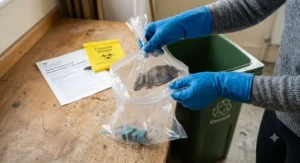
Problem: you’ve found a dead rat in the open, not near a station. Wear gloves, double-bag it, and dispose of it in your general waste bin — rats can be bagged and placed within a standard wheelie bin, but should never be handled without gloves.
Problem: bait has gone mouldy or degraded before being taken. This usually means the format doesn’t suit the environment — switch from a soft pasta bait to a more weather-resistant wax block, or vice versa if a block is sitting untouched in a damp spot.
✨ Struggling to identify entry points? A quick proofing check alongside your bait treatment often solves the problem for good.
Buyer’s Decision Framework
If you’ve spotted one or two rats and no established run, choose a standard-strength block bait in a single bait station, because a contained early-stage problem rarely needs maximum firepower. If you’re seeing daily activity, multiple droppings, or gnaw damage across several rooms, choose maximum-strength Formula B+ sachets across two or more stations, because an established population needs faster, more reliable single-feed control. If you have pets or young children in the home, prioritise the bait station purchase and anchoring over any bait format choice, because containment matters more than concentration in a mixed-household setting. If you’re treating outdoors on a farm, smallholding, or large garden, choose pasta bait for speed and weatherproof, anchored stations spaced along the whole perimeter, because outdoor wildlife exposure risk rises the longer bait sits unconsumed.
Features That Actually Matter (And Those That Don’t)
Genuinely matters: whether the product is HSE-registered at the correct concentration for amateur use, whether bait is measured/pre-portioned for dosage accuracy, and whether your chosen bait station is genuinely tamper-resistant and lockable rather than just marketed as such. Doesn’t matter nearly as much: brand packaging claims about “instant” results (anticoagulants are never instant, regardless of marketing copy), or scent additives beyond genuine palatability testing, which is largely marketing dressing on top of the same core chemistry. Worth checking but often skipped: the specific brodifacoum concentration printed on the pack — the difference between 0.0025% and 0.0029% genuinely affects speed and reliability against resistant populations, and it’s usually printed in small text most buyers never read.
Brodifacoum for Different Types of UK Households
For renters and flat-dwellers, indoor bait stations tucked along skirting boards in kitchens or utility areas, paired with reporting the issue to a landlord or letting agent (rodent control is often a landlord responsibility under the tenancy), tends to be the practical route. For families with young children, pasta baits containing Bitrex offer an extra layer of protection against accidental sampling, though this should never be treated as a substitute for a genuinely locked station placed well out of reach. For pet owners, anchored, lockable stations positioned away from areas dogs or cats routinely access — and daily garden checks for carcasses during treatment — are non-negotiable rather than optional extras. For rural and farm properties, bulk maximum-strength products across multiple perimeter stations make sense given the scale, but come with a correspondingly greater responsibility to check regularly given the wildlife exposure risk of large-scale outdoor baiting.
Frequently Asked Questions
❓ Is brodifacoum safe to use at home?
❓ What is the correct brodifacoum dosage for rats?
❓ How do I safely dispose of a dead rat after using brodifacoum?
❓ What is brodifacoum secondary poisoning?
❓ Is it legal to use brodifacoum rodenticide in my garden?
Conclusion
Brodifacoum earns its reputation as the strongest widely available rodenticide for a reason — when a rat problem has outgrown snap traps and weaker baits, it genuinely works, often clearing an infestation within two to three weeks of consistent, correctly managed treatment. But strength and risk are the same coin here, not opposite sides of it, which is why every product on this list only really does its job properly alongside a locked, anchored bait station and a genuine commitment to checking it regularly. Whether you go with the accessible Roshield Brodifacoum 300g Block Bait for a first-time loft problem or the maximum-strength Pest Expert Formula B+ Advanced 1.5kg Sachets for a farm-scale job, the safety fundamentals don’t change: contain it, check it, and clear up after it properly. Get those three things right and you’ll have solved the rat problem without creating a pet, child, or wildlife problem in its place — which, at the end of the day, is really what “using brodifacoum safely” means.
✨ Don’t Miss These Exclusive Deals!
🔍 Take your rat control setup to the next level with these carefully selected bait stations and single-feed formulations. Click through to check current pricing and availability, and give your home the safe, effective rat control it needs. 🐀🔒
Recommended for You
- Best Brodifacoum Rat Poison UK 2026: 7 Top Picks Ranked
- Bromadiolone vs Brodifacoum Rat Poison: 7 Best UK Picks 2026
- Bromadiolone Rat Poison: 7 Best UK Bait Blocks Rated (2026)
Disclaimer: This article contains affiliate links. As an Amazon Associate, I earn from qualifying purchases. If you purchase products through these links, we may earn a small commission at no additional cost to you. Prices mentioned are approximate ranges at the time of research and may vary — always check the current price on the product page before buying.
✨ Found this helpful? Share it with your friends! 💬🤗
