
In This Article
There’s a particular kind of dread that comes with hearing scratching in the loft at 2am, or finding a neat little pile of droppings behind the shed. If you’re here, you’ve probably already had that moment. You want the problem gone, and you want it gone properly — which is why so many British homeowners end up researching best brodifacoum rat poison rather than reaching for whatever’s cheapest on the supermarket shelf.
Brodifacoum is the strongest anticoagulant rodenticide still available to amateur users in the UK, and it earns that reputation honestly: a single decent feed is often enough to be lethal, which matters enormously when you’re dealing with bait-shy or genuinely resistant rats. But “strongest” doesn’t mean “grab any bag and go.” The active ingredient concentration, the format (grain, block, or paste), how it’s packaged, and whether you’re buying with or without a bait station all change how well — and how safely — it actually works in your specific situation.
This guide walks through seven real, currently available brodifacoum products sold on Amazon UK, compares them head-to-head, and — just as importantly — explains the legal and safety framework around buying and using this particular class of poison in Britain. We’ll cover budget grain sachets, premium single-feed blocks, complete bait station kits, and a few options most buying guides skip entirely.
What Is Brodifacoum?
Brodifacoum is a second-generation anticoagulant rodenticide (SGAR) — a “super-warfarin” compound roughly ten times more potent than first-generation poisons like warfarin. It stops blood from clotting, causing fatal internal bleeding within three to seven days of a single sufficient feed. It’s the most potent active ingredient still sold to non-professional buyers in the UK, and according to the Wikipedia entry on brodifacoum, it has become one of the world’s most widely used pesticides since its introduction.
Quick Comparison Table
| Product | Format | Approx. Price Range | Best For |
|---|---|---|---|
| Pest Expert Formula ‘B+’ Advanced Bait Blocks | Wax blocks | £15-£25 | Strongest single-feed potency |
| Pest Expert Rat Poison Bait Block Kit | Blocks + 2 stations | £20-£30 | Complete beginner setup |
| Roshield Brodifacoum Wax Block Bait | Wax blocks | £10-£18 | All-weather outdoor durability |
| Elixir Gardens UK Rat Poison Grain | Grain sachets | £12-£20 | Bulk indoor infestations |
| RatKil Rat Poison Grain Sachets | Grain sachets | £8-£14 | Tightest budget |
| The Big Cheese Ultra Power Block Bait | Wax blocks | £9-£16 | Recognisable high-street brand |
| Pest X Pro Predator Rat Poisoning | Sachets | £10-£17 | Lesser-known alternative pick |
Looking at the table, the pattern that jumps out is format, not brand: block baits generally cost more per kilogram but resist damp and last longer in outdoor stations, while grain sachets are cheaper and more palatable but degrade faster if conditions turn wet. Kits bundling bait with lockable stations, like the Pest Expert Rat Poison Bait Block Kit, sit at the top of the price range simply because you’re buying hardware alongside poison — a fair trade if you don’t already own a station. Bargain hunters gravitate toward RatKil, but the smaller pack sizes mean the per-kilogram cost isn’t actually much lower once you do the maths.
💬 Found a product that’s sorted your rat problem? A quick share helps other readers make a safer, smarter choice too.
Top 7 Brodifacoum Rat Poisons: Expert Analysis
1. Pest Expert Formula ‘B+’ Advanced Bait Blocks — strongest legal concentration for amateurs
Pest Expert Formula ‘B+’ Advanced Bait Blocks sit at the top of nearly every serious UK rat-control shortlist, and there’s a specific reason for that: it’s formulated at the maximum brodifacoum concentration permitted for amateur sale, 0.0025%. That’s not marketing puffery — it’s the regulatory ceiling, so nothing sold without a professional licence legally goes stronger.
On paper, this means fewer return visits to top up bait. The blocks are wax-bound, which matters more than it sounds: wax resists moisture far better than loose grain, so blocks holding their shape in a damp shed or an exposed garden bait point is a genuinely practical advantage, not a spec-sheet flourish. Reviewers consistently report that uptake is fast — often within a night or two — even against rats that have shrugged off cheaper first-generation baits like warfarin or difenacoum-based products.
Based on the spec comparison with the rest of this list, Pest Expert Formula ‘B+’ Advanced Bait Blocks are best suited to households with a confirmed, active infestation rather than as a precautionary first step — several UK suppliers explicitly advise against reaching for brodifacoum unless other baits have already failed or resistance is suspected, precisely because of its strength and environmental persistence. A common theme in aggregated customer feedback is satisfaction with speed of results, alongside occasional comments about the higher price per block compared with grain alternatives.
Pros:
- ✅ Maximum legal brodifacoum concentration for amateurs
- ✅ Wax formulation withstands damp and outdoor conditions
- ✅ Fast uptake even against bait-shy or resistant rats
Cons:
- ❌ Pricier per kilogram than grain-based alternatives
- ❌ Overkill for minor, early-stage mouse problems
Expect to pay in the £15-£25 range depending on pack size at the time of research; given the concentration and durability, it represents solid value for a confirmed rat infestation rather than routine prevention.
2. Pest Expert Rat Poison Bait Block Kit — best all-in-one starter kit
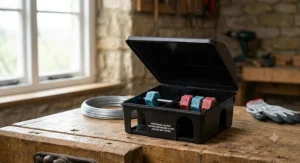
If you’ve never bought rodenticide before and don’t own a bait station, the Pest Expert Rat Poison Bait Block Kit solves that problem in one purchase. It bundles 1.5kg of brodifacoum bait blocks with two lockable, tamper-resistant bait boxes, so there’s no separate hunt for compatible hardware.
The practical upside here is compliance as much as convenience: UK regulations require all amateur-approved rodenticides to be deployed inside a tamper-resistant station, and buying bait and box together removes any guesswork about fit or quality. What most first-time buyers overlook is that a cheap, flimsy station undermines the whole point of using a stronger poison — a determined pet or curious child shouldn’t be able to access the bait, and budget stations sometimes fall short there. This kit’s stations are built to a properly lockable standard, which is exactly what the label instructions on brodifacoum products expect.
Aggregated review sentiment for this kit skews strongly toward first-time buyers who say the instructions were clear enough to get started without prior pest-control experience. A recurring, honest critique is that 1.5kg is more bait than a single small infestation typically needs — useful to know before you buy if you’re dealing with just one or two rats rather than a colony.
Pros:
- ✅ Everything needed included — no separate station purchase
- ✅ Two lockable stations ensure amateur-use compliance
- ✅ Genuinely beginner-friendly instructions
Cons:
- ❌ Bait quantity can be excessive for small infestations
- ❌ Higher upfront cost than bait-only options
At around £20-£30, this sits mid-to-upper range, but factoring in the two bait stations, it’s arguably the best value pound-for-pound if you’re starting completely from scratch.
3. Roshield Brodifacoum Wax Block Bait — best all-weather durability
Roshield Brodifacoum Wax Block Bait is a specifically UK-manufactured option built around a culinary-grade wheat flour and wax formulation, and the brand markets it explicitly toward “stubborn infestations” and areas showing resistance to gentler rodenticides.
The wax-block construction is the standout feature worth expanding on: it’s engineered to resist mechanical damage and to keep working in damp, humid, or genuinely wet outdoor conditions — a meaningful difference if your bait points are in a garden shed, under decking, or anywhere exposed to British weather for weeks at a time. Reviewers frequently note that blocks placed outdoors months earlier were still intact and being taken, which speaks to the manufacturing quality more than the active ingredient itself (brodifacoum concentration is identical across most amateur products at 0.0025%).
Here’s what to weigh before committing to this one: Roshield itself recommends against using brodifacoum as a first-line treatment, suggesting it’s better reserved for cases where other bait types have already underperformed. That’s honest advice from the manufacturer, not just a legal disclaimer, and it should shape how you decide between this and a milder difenacoum product if you’re dealing with a fresh, unconfirmed infestation.
Pros:
- ✅ UK-manufactured with strong weather resistance
- ✅ Suitable for both indoor and outdoor bait points
- ✅ Effective against resistant rat populations
Cons:
- ❌ Manufacturer recommends it only after milder baits fail
- ❌ Sold in smaller pack sizes than some rivals
Priced typically between £10-£18 for a 300g pack, it’s a competitively priced mid-tier pick, particularly for anyone whose infestation is centred outdoors or in a damp outbuilding.
4. Elixir Gardens UK Rat Poison Grain — best for large indoor infestations
Grain bait works differently to blocks, and Elixir Gardens UK Rat Poison Grain leans into that difference deliberately. Sold in bulk 1kg packs split into 10 x 100g sachets, it’s aimed at buyers dealing with a genuinely large indoor problem rather than a single stray rat.
Grain’s key practical advantage is palatability — rats are naturally drawn to whole cereal over a compressed wax block, and for indoor infestations where moisture resistance matters less, that palatability can translate into faster uptake. Based on the spec comparison, the trade-off is durability: loose grain degrades faster than wax blocks if it gets damp, which is exactly why most suppliers position grain products as an indoor-first solution and blocks as the outdoor-capable option.
What reviewers seem to appreciate most, based on aggregated sentiment across retailer listings, is the sheer bulk-buy value — 1kg split across ten sachets means you’re not constantly reordering during a serious infestation. A fair number of buyers report success within days of placement, consistent with brodifacoum’s single-feed mechanism, though as with any grain bait, spillage and mess during placement is a recurring minor complaint.
Pros:
- ✅ Highly palatable to rats, encouraging faster uptake
- ✅ Bulk 1kg pack suits larger or ongoing infestations
- ✅ Individually portioned 100g sachets for controlled dosing
Cons:
- ❌ Less weather-resistant than wax block alternatives
- ❌ Loose grain format is messier to handle and place
Expect a price in the £12-£20 range for the 1kg pack at the time of research, which works out competitively per kilogram against smaller sachet-only rivals.
5. RatKil Rat Poison Grain Sachets — best budget entry point
For anyone who wants brodifacoum’s potency without committing to a large bulk purchase, RatKil Rat Poison Grain Sachets are the cheapest way in, sold as six 25g sachets rather than the larger multi-hundred-gram packs found elsewhere on this list.
The smaller format isn’t a downside so much as a different use case: this is realistically enough bait to deal with a modest infestation of a handful of rats rather than a full-blown colony, and its low headline price makes it an accessible first purchase for someone testing the waters before investing in a bigger kit. Based on the active ingredient being identical brodifacoum at professional-grade strength, there’s no meaningful drop in killing power compared with pricier options — you’re simply paying for less volume.
Reviewers and comparison sites alike tend to position this as the value pick specifically because the strength-to-price ratio holds up; one independent UK buying guide noted that despite the smaller pack, the quantity is typically enough to handle dozens of rats given brodifacoum’s single-feed lethality. The honest caveat is that if your infestation turns out to be larger than expected, you’ll be reordering sooner than with the bulkier alternatives on this list.
Pros:
- ✅ Lowest entry price point on this list
- ✅ Full-strength brodifacoum despite smaller pack size
- ✅ Good option for testing before a larger commitment
Cons:
- ❌ Smaller total quantity than bulk competitors
- ❌ May require reordering for larger infestations
At roughly £8-£14 per pack, it’s the most accessible starting point here, though value-conscious buyers dealing with a confirmed larger problem may find the bulk options work out cheaper long-term.
6. The Big Cheese Ultra Power Block Bait — best recognisable high-street brand
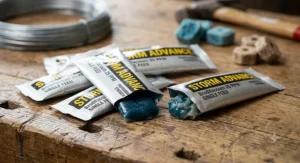
The Big Cheese Ultra Power Block Bait carries one advantage the others on this list can’t quite match: brand recognition. It’s a name many buyers will already have seen on supermarket and DIY-store shelves, which for some buyers translates into reassurance during a stressful pest situation.
Beyond the brand name, what most buyers overlook about this range is that The Big Cheese produces multiple rodenticide formulations under similar packaging, and it’s worth checking the specific listing carefully — some of the brand’s block baits use difenacoum rather than brodifacoum, so buyers specifically wanting brodifacoum’s single-feed strength need to confirm the active ingredient on the product page before adding to basket, not just the brand name. The brodifacoum-specific Ultra Power range is positioned as the brand’s strongest tier, described as fast-acting and biodegradable, with British-sourced grain bound into the block.
Aggregated customer sentiment tends to be positive on ease of use and the twin-pack bait station kits the brand offers alongside its refills, making it a sensible pick for buyers who’d rather stick with a household name they already trust than research a specialist brand from scratch.
Pros:
- ✅ Widely recognised, trusted UK high-street brand
- ✅ Biodegradable block formulation
- ✅ Compatible bait stations sold as matching accessories
Cons:
- ❌ Range includes non-brodifacoum variants — check the label
- ❌ Not always the strongest option gram-for-gram
Pricing generally sits around £9-£16 depending on pack size, positioning it as a solid mid-range option once you’ve confirmed you’re buying the brodifacoum variant specifically.
7. Pest X Pro Predator Rat Poisoning — best lesser-known alternative
Rounding out this list is Pest X Pro Predator Rat Poisoning, a less widely reviewed but genuinely capable option worth considering if the bigger names above are out of stock or don’t suit your bait-station setup. Sold in six-pack sachets, it uses brodifacoum as its active ingredient in an easy-to-use format designed for both indoor and outdoor rodent control.
The honest analytical case for including a smaller brand here is straightforward: the active ingredient concentration ceiling for amateur products is regulated, so a lesser-known brand using brodifacoum at the standard permitted strength isn’t meaningfully weaker than a household name using the same compound — the differences tend to show up in formulation quality, palatability, and weather resistance rather than raw killing power. What the spec sheet won’t tell you, but scattered user reports suggest, is that smaller brands like this can vary more in batch consistency simply because of smaller production runs, so it’s worth keeping an eye on freshness dates.
Because this brand has a smaller review footprint than the market leaders, we’d flag that verifiable aggregated review data is thinner here than for the bigger names above — worth factoring in if social proof matters to your buying decision, even though the underlying chemistry is standard-strength brodifacoum.
Pros:
- ✅ Standard-strength brodifacoum at a competitive price
- ✅ Sachet format suited to indoor and outdoor stations
- ✅ Useful alternative when bigger brands are out of stock
Cons:
- ❌ Smaller pool of verifiable customer reviews
- ❌ Less brand recognition may deter cautious first-time buyers
Typically priced around £10-£17, it’s a reasonable value pick provided you’re comfortable buying a brand with a shorter track record than the market leaders above.
Practical Usage Guide: Setting Up Brodifacoum Bait Safely
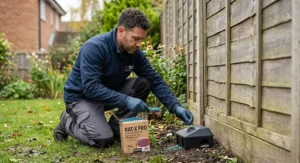
Buying the right product is only half the job — how you deploy it determines whether it actually works and stays safe. Start by identifying rat runs: look for smudge marks along skirting boards, gnaw marks, and droppings, and place bait points along these routes rather than randomly around a room. Every bait point needs to sit inside a lockable, tamper-resistant station; loose bait, indoors or outdoors, is never compliant with UK label instructions regardless of which product you’ve bought.
For rats specifically, most brodifacoum products recommend one to three blocks per bait point, spaced roughly ten metres apart, reducing to five metres in heavy infestations. Check stations every five to seven days initially, topping up bait that’s been taken and noting activity levels — a sudden drop in uptake after the first week is a good sign the population is declining. One mistake buyers commonly make in the first fortnight is giving up too early: brodifacoum takes three to seven days to kill after a sufficient feed, so rats will often keep feeding and appear active for several days even as the poison is working.
Once activity stops entirely, don’t simply abandon the stations. Search the treated area for carcasses over the following one to two weeks and dispose of them promptly and hygienically — this isn’t just good housekeeping, it’s a genuine secondary-poisoning safeguard, since predators and scavengers eating a poisoned rat can themselves be harmed. Once you’ve had no activity for a week or two, remove uneaten bait, clean the stations, and store any leftover product in its original packaging, out of reach of children and pets, ready for future use if needed.
Real-World Scenarios: Which Product Fits Your Situation
Not every rat problem looks the same, and matching product to circumstance saves both money and hassle. Consider a few common profiles.
If you’re a homeowner with a first-time, low-level sighting — one rat spotted in the garden, no droppings indoors — starting with a smaller, budget-friendly option like RatKil Rat Poison Grain Sachets makes sense; you get full-strength brodifacoum without overcommitting to a large pack you might not need.
If you’re dealing with an established infestation in a semi-detached house with a damp, exposed garden shed, durability matters more than initial cost, which points toward Roshield Brodifacoum Wax Block Bait or Pest Expert Formula ‘B+’ Advanced Bait Blocks — both are built to survive weeks outdoors without breaking down.
If you’re a total first-timer with no existing pest-control equipment and want the least room for error, the Pest Expert Rat Poison Bait Block Kit removes the guesswork by including compliant stations alongside the bait itself, which matters when getting the setup wrong is both a safety and a legal issue.
How to Choose Brodifacoum Rat Poison: 6 Key Criteria
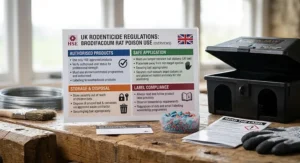
- Confirm brodifacoum, not just “rat poison.” Product names on Amazon can be inconsistent — check the active ingredient listed on the product page or safety data sheet before buying, since some ranges include non-brodifacoum variants under similar branding.
- Match format to environment. Grain suits dry indoor spaces and palatability-driven uptake; wax blocks suit damp, outdoor, or long-duration placements.
- Buy or confirm a tamper-resistant station. Every amateur brodifacoum product legally requires deployment inside a lockable bait box — factor this into your budget if you don’t already own one.
- Size the pack to your infestation, not your budget. Under-buying means reordering mid-treatment; over-buying wastes money on a product with finite shelf life.
- Check for a UK HSE registration number on the packaging. This confirms the product is properly authorised for amateur sale in Britain, rather than an imported or non-compliant listing.
- Weigh brand reputation against price. Well-known brands often carry a premium for consistency and larger review pools, while smaller brands can offer comparable chemistry at a lower cost with less social proof.
Brodifacoum vs Difenacoum: What’s the Real Difference?
The two most common anticoagulants in UK amateur rodenticides are brodifacoum and difenacoum, and the difference between them is more than marketing language. Difenacoum is also a second-generation anticoagulant, but it’s noticeably less potent gram-for-gram and typically needs a rat to feed on it more than once, or over several consecutive days, before a lethal dose accumulates. Brodifacoum, by contrast, is formulated to deliver a lethal dose from a single substantial feed, which is precisely why it’s marketed as the strongest amateur option and why suppliers reserve it for stubborn or resistant infestations.
In practice, this means difenacoum is often the sensible first choice for a fresh, unconfirmed problem — it’s gentler on the environment and gives you a lower-strength option to try first. Brodifacoum earns its place when difenacoum-based bait has already been tried and failed, or when you’re dealing with a known resistant population, which is common in parts of the UK where warfarin and first-generation resistance has been documented for decades. The trade-off for that extra strength is a longer half-life in animal tissue, which raises the stakes on secondary poisoning risk to predators like owls and foxes if carcasses aren’t cleared promptly.
Long-Term Cost & Maintenance: What You’ll Actually Spend
A single bag of bait rarely tells the whole story of total cost. Factor in the bait station itself if you don’t already own one — typically £8-£15 per lockable box if bought separately, though kits bundling bait and stations, like the Pest Expert Rat Poison Bait Block Kit, often work out cheaper than buying both components individually. Ongoing costs depend heavily on infestation size and how disciplined you are about the check-and-replace cycle: a single rat might be dealt with from one small pack, while an established colony can realistically require two or three reorders over a month of active treatment.
It’s also worth weighing rodenticide against the alternative of calling in professional pest control, which in the UK typically runs from roughly £150 upwards for an initial visit and treatment plan, according to figures widely cited by UK pest control trade bodies. DIY brodifacoum treatment is considerably cheaper for straightforward cases, but persistent infestations, large properties, or situations involving wall cavities and roof spaces often genuinely justify professional involvement — both for effectiveness and because professionals can access stronger, more tightly regulated products than amateur users are permitted to buy.
Safety, Regulations & Compliance Guide
Brodifacoum’s regulatory status in the UK has tightened meaningfully in recent years, and it’s worth understanding the current picture before you buy. Consumer-grade brodifacoum products remain legally available to the public without certification through DIY stores, garden centres, and online retailers including Amazon, provided they’re clearly labelled for amateur use and used strictly in and around buildings rather than in open countryside. Professional-strength products, by contrast, are restricted to certified pest controllers, and since January 2026 professional outdoor use of any second-generation anticoagulant requires the operator to hold a recognised qualification and be registered with the Campaign for Responsible Rodenticide Use, which coordinates the UK’s rodenticide stewardship regime.
For amateur buyers, the core legal obligations are consistent across every product on this list: bait must always be placed inside a tamper-resistant, lockable station; it must be used in and around buildings rather than in open fields or watercourses; and any carcasses found must be removed and disposed of properly to limit the risk of secondary poisoning to pets and wildlife. The Health and Safety Executive’s rodenticide guidance confirms this stewardship regime meets the principles set out by the UK Government, and following the product label — which is legally binding, not just advisory — is the simplest way to stay compliant.
If a person or a pet does ingest brodifacoum accidentally, this is a medical emergency requiring immediate attention rather than home treatment. The NHS guidance on poisoning advises contacting emergency services or the relevant poisons information service straight away, and keeping the product packaging on hand to show the exact active ingredient and concentration to responders.
Features That Actually Matter (And Those That Don’t)
Marketing copy on rodenticide packaging can blur together fast, so it’s worth separating genuine performance factors from noise. Active ingredient concentration matters enormously — but since brodifacoum’s amateur ceiling is fixed by regulation at 0.0025%, claims of being “6x stronger” than rivals using the same active ingredient at the same legal concentration deserve healthy scepticism; the real variance tends to sit in formulation and palatability, not raw chemistry. Weather resistance genuinely matters if your bait points are outdoors, which is why wax-block construction is a real differentiator rather than a gimmick.
On the other hand, elaborate station designs with excessive features rarely translate into meaningfully better outcomes over a simple, sturdy, properly lockable box — the core requirement is that it excludes children, pets, and non-target wildlife while remaining accessible to rats, and most compliant stations achieve that regardless of extra bells and whistles. Similarly, “biodegradable” packaging claims are a nice-to-have for environmental conscience but don’t affect how well the bait actually performs against an infestation.
Problem → Solution: Common Rat Bait Issues
Problem: Rats aren’t touching the bait at all. This is often a placement issue rather than a product one — bait points not on an active run, or competing food sources nearby, are the usual culprits. Try repositioning stations directly along smudge marks and gnaw evidence, and consider switching from block to grain (or vice versa), since palatability preference can vary between rat populations.
Problem: Bait is disappearing but rat activity continues. Remember brodifacoum takes three to seven days to cause mortality after a sufficient feed — continued activity in the first week doesn’t mean the product has failed. Give it the full window before concluding otherwise.
Problem: Bait has gone mouldy or degraded outdoors. This usually signals a grain product used in a damp environment where a wax block, such as Roshield Brodifacoum Wax Block Bait, would hold up better.
Problem: Suspected resistance despite correct use. If a full treatment cycle with brodifacoum genuinely shows no reduction in activity after several weeks, this is a signal to bring in a certified professional pest controller rather than escalate further amateur treatment, since amateur products are already at the maximum legally available strength.
Problem: Finding rat carcasses in inaccessible spaces. A persistent, unpleasant odour without a visible carcass often means a rat has died in a wall cavity or under flooring — this is another point at which professional help, including odour and extraction services, is often the practical solution.
Buyer’s Decision Framework
If this is your first sighting and the infestation seems minor, choose a smaller grain sachet product like RatKil Rat Poison Grain Sachets, because you avoid overcommitting budget to a problem that might resolve with limited bait.
If you’re dealing with confirmed, ongoing activity indoors and want maximum reliability, choose Pest Expert Formula ‘B+’ Advanced Bait Blocks, because the maximum legal concentration reduces the chance of needing a second treatment cycle.
If your bait points are outdoors or in damp conditions, choose a wax block product such as Roshield Brodifacoum Wax Block Bait or The Big Cheese Ultra Power Block Bait, because block formulations resist moisture far better than loose grain.
If you own no equipment at all, choose the Pest Expert Rat Poison Bait Block Kit, because it bundles compliant stations with bait in a single, beginner-friendly purchase.
What to Expect: Real-World Performance Timeline
Translating the specs into a realistic timeline helps set expectations. Day one to three typically shows initial bait uptake, often visible through disturbed or partially eaten blocks and grain. Days three to seven are when brodifacoum’s anticoagulant mechanism takes effect internally, meaning rats may still appear active during this window even as the poison works. A noticeable drop in visible activity and bait consumption commonly shows up between days seven and fourteen, at which point checking for and removing carcasses becomes the priority. Full resolution of a moderate infestation typically falls within the widely cited 35-day benchmark used across the UK pest control industry as the point at which ongoing activity should prompt a rethink of approach rather than continued baiting.
Frequently Asked Questions
❓ Is brodifacoum rat poison legal to buy in the UK?
❓ How long does brodifacoum take to kill a rat?
❓ Is brodifacoum dangerous to pets?
❓ What's the strongest brodifacoum rat poison available without a licence?
❓ Do I need a bait station to use brodifacoum legally?
Recommended for You
- Bromadiolone vs Brodifacoum Rat Poison: 7 Best UK Picks 2026
- Bromadiolone Rat Poison: 7 Best UK Bait Blocks Rated (2026)
- Where to Place Rat Bait Stations: 7 Top UK Picks for 2026
Disclaimer: This article contains affiliate links. As an Amazon Associate, I earn from qualifying purchases. If you purchase products through these links, we may earn a small commission at no additional cost to you.
✨ Found this helpful? Share it with your friends! 💬🤗
