
In This Article
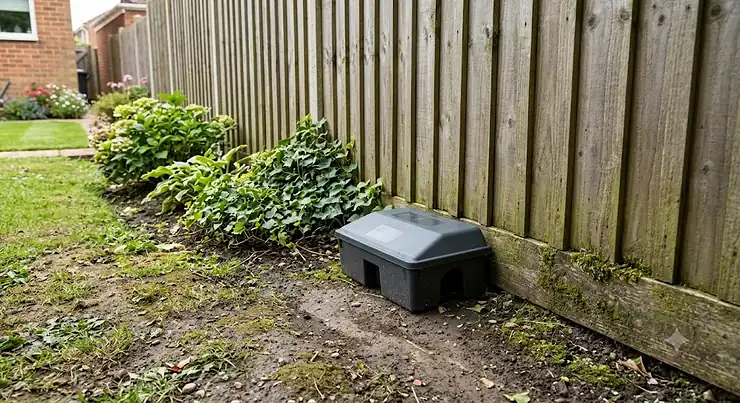
You’ve bought a bait station. You’ve filled it with poison. You’ve put it… somewhere. And three weeks later the bait sits there untouched while the scratching in your loft carries on regardless. Sound familiar? Here’s the uncomfortable truth: where to place rat bait stations matters more than which bait station you buy. A £40 professional-grade box in the wrong spot will lose to a £12 budget model placed correctly, every single time.
A rat bait station is a lockable, tamper-resistant box that houses rodenticide bait (or a snap trap) while keeping children, pets and wildlife away from it — the box itself does none of the work unless a rat actually walks into it, which is entirely a matter of positioning. Before you spend another penny, it’s worth knowing that under UK law, dealing with an infestation on your own property is generally your legal responsibility, and councils have specific powers to intervene if the problem becomes a statutory nuisance — so getting placement right isn’t just about saving money on bait, it’s about resolving the problem before it escalates.
This guide covers seven genuine, currently available rat bait stations sold on Amazon UK — spanning budget, mid-range and premium options — alongside the placement science that actually determines whether any of them work: how far apart to space them, how many you need, why the wall matters more than the middle of the lawn, and the spotting signs that tell you where rats are actually running before you commit to a single position.
Quick Comparison Table
| Product | Price Range | Best For | Key Feature |
|---|---|---|---|
| Pest-Stop Rat Bait Station | around £12-£18 | Budget-conscious first-timers | Shock-resistant, lockable, UK-made |
| The Big Cheese Rat & Mouse Bait Station | around £10-£15 | Tight spaces, indoor/outdoor | Compact tamper-resistant lid |
| Rentokil Rat Bait Station | around £15-£20 | Trusted-brand reassurance | Doubles as snap-trap housing |
| Pest Expert Heavy Duty Bait Boxes (x4) | £30-£40 range | Multi-point perimeter baiting | Four stations, industrial strength |
| ROSHIELD PRO BOX | £20-£30 range | Serious or recurring infestations | Dual-bend tunnel entry |
| ROSHIELD Snap Trap Protector Box | £15-£25 range | Poison-free households | No rodenticide required |
| Pest-Stop Double Bait Station | £25-£35 range | Heavy, ongoing rat activity | Continuous-feed twin tubes |
Looking at the table, there’s a clear split between single-point solutions for small gardens and the multi-pack or continuous-feed options built for properties with an established, ongoing problem. The Pest Expert Heavy Duty Bait Boxes stand out for anyone needing to cover several access points at once without buying four separate products, while the ROSHIELD Snap Trap Protector Box is the outlier for households that want results without rodenticide in the garden at all. Price alone tells you very little here — the right call depends entirely on how many entry points your property has and how bad the activity already is.
💬 Not sure which one fits your garden? Scroll down to the placement guide below before you buy — it’ll save you a returns headache.
Top 7 Rat Bait Stations: Expert Analysis
1. Pest-Stop Rat Bait Station — best all-rounder for first-time buyers
The standout here is simplicity: it’s a shock-resistant, fully lockable box designed by one of the UK’s longest-standing pest control manufacturers, and it does exactly what it says with no learning curve. The lockable lid takes a supplied key, the shell is moulded to survive being knocked, sat on or rained on for months, and the internal layout is built specifically to work with Pest-Stop’s own wax block and grain bait formulations, though it will accept most standard blocks. Based on the spec comparison with pricier rivals, what you’re paying less for here is brand extras, not build quality — the shock-resistant claim holds up against comparable mid-tier stations in independent pest-control retailer testing. This is the sensible starting point for anyone dealing with their first sighting of rat activity around a shed or garden boundary, rather than an established, multi-point infestation. Reviewers consistently report straightforward assembly and note that the lock genuinely deters curious pets, though a handful mention the entry holes feel slightly narrow for the largest sewer rats. It’s sold as a single unit or in three- and six-packs, which matters once you get to the spacing maths further down this guide.
Pros:
- ✅ Genuinely lockable, tested against pet tampering
- ✅ Multi-pack options cut the per-unit cost
- ✅ UK-manufactured with readily available spare bait
Cons:
- ❌ Entry holes feel tight for the largest rats
- ❌ No viewing window to check bait levels
Priced around £12-£18 per station depending on pack size, it represents strong value for a first deployment — you’re not paying a premium for features a beginner doesn’t yet need.
2. The Big Cheese Rat & Mouse Bait Station — best for tight, awkward spaces
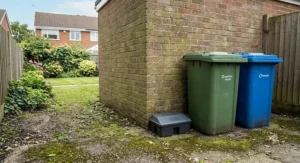
What makes this one worth a look is its compact footprint, which slots into gaps behind bins, under decking overhangs, and along narrow side-return alleys where bulkier stations simply won’t fit. The tamper-resistant lockable lid meets the same basic safety standard as its larger rivals, and the dual entry points on either end allow rats to approach from either direction along a run, which matters because rats rarely double back on themselves once committed to a route. What most buyers overlook about this model is that “compact” also means a smaller bait capacity, so it needs checking and topping up more frequently than the larger boxes on this list — plan on visiting it every few days rather than weekly. Aggregated review sentiment from retailer sites is generally positive on ease of use and value, with a recurring theme that it’s better suited to light-to-moderate activity than a serious infestation with multiple rats feeding simultaneously. Households with cats in particular flag the compact size as reassuring, since there’s less of a footprint for a curious paw to investigate.
Pros:
- ✅ Fits spaces larger stations physically can’t
- ✅ Lowest price point of any station on this list
- ✅ Suitable for both indoor and outdoor placement
Cons:
- ❌ Smaller bait capacity needs more frequent refills
- ❌ Less robust for heavy, multi-rat infestations
At around £10-£15, it’s the cheapest genuinely tamper-resistant option here, and honestly the right choice if your problem is one or two rats rather than a colony.
3. Rentokil Rat Bait Station — best for brand trust and flexibility
The standout feature is versatility: this station is built to house either loose rodenticide bait or a Rentokil Advanced snap trap, so you can switch strategy without buying a second product if you decide against poison later. Made in the UK and supplied with a key, the lock mechanism is a proper barrel-style lock rather than a simple clip, and the shell is rated for continuous outdoor exposure. Here’s what to weigh: Rentokil’s own guidance is explicit that using poison bait outside a station like this isn’t just advisable but a legal requirement under UK pesticide regulations, which is a detail a lot of first-time buyers don’t realise until they’ve already scattered loose bait. Verified buyer reviews on major UK retailer sites are strongly positive, with recurring themes around ease of setup and a sense of security from the name recognition, though a small number of reviewers note the rat simply avoided the station for the first couple of weeks — consistent with the cautious “neophobic” behaviour rats are known for around any new object. This is the pick for anyone who wants the reassurance of a market-leading pest control brand behind the product.
Pros:
- ✅ Doubles as housing for bait or a snap trap
- ✅ Genuine barrel lock, not a basic clip
- ✅ Strong brand reputation and UK manufacturing
Cons:
- ❌ Rats can take one to two weeks to approach
- ❌ Slightly pricier than own-brand equivalents
At around £15-£20, this sits mid-pack on price but is arguably the safest “if in doubt” choice for someone who wants one trusted product rather than seven options to compare.
4. Pest Expert Heavy Duty Bait Boxes (x4 pack) — best for multi-point perimeter coverage
The advantage that jumps out immediately is the pack size: four large, lockable, industrial-strength boxes arrive together with a key, which means you can cover an entire garden perimeter — shed, compost bin, fence line, decking — in one purchase rather than buying single units repeatedly. Each box is described as “industrial strength” and is compatible with super-strength blocks, grain and pasta bait, giving flexibility on which rodenticide format you use based on weather and rat preference in your specific garden. Based on the spec comparison with single-unit competitors, the real value proposition here isn’t box quality alone but the fact that CRRU guidance on spacing (which we cover in detail below) effectively requires several stations for anything beyond a tiny garden — buying four at once is both cheaper per unit and logistically simpler than four separate orders. Reviewer sentiment aggregated across retailer listings is favourable on build quality and capacity, with the recurring praise being that the boxes withstand a full UK winter without cracking, though the overall footprint is bulkier than the compact options and needs more storage space if you rotate stations seasonally.
Pros:
- ✅ Four stations cover a full garden perimeter
- ✅ Compatible with multiple bait formats
- ✅ Better cost-per-unit than buying singly
Cons:
- ❌ Bulkier footprint than compact single stations
- ❌ Overkill for a single confirmed access point
At £30-£40 for the full pack, this typically works out cheaper per station than buying four Pest-Stop or Rentokil units individually, making it the value pick for genuine multi-point infestations.
5. ROSHIELD PRO BOX — best for serious or recurring infestations
What sets this apart on the spec sheet is the dual-bend entry tunnel, a design detail that matters more than it sounds: a straight-through tunnel lets larger animals reach further inside, while a dual-bend forces the rat to navigate a genuine turn, which non-target species like hedgehogs, birds and cats’ paws simply can’t manage. Manufactured in the UK from recycled car plastics, the extra-large chamber accepts either poison bait blocks on a secure internal rod or a snap trap, and the shell is explicitly rated for UV and weatherproof durability, which matters if a station is going to sit in direct sun through a British summer. What the spec sheet won’t tell you, but user reports suggest, is that the extra-large capacity translates into noticeably fewer refill visits compared with compact stations — useful if you’re managing a rental property or a garden you don’t visit daily. This is the pick for a confirmed, ongoing infestation rather than a first sighting, and it commands a premium price to match its capacity and build.
Pros:
- ✅ Dual-bend tunnel blocks non-target animal access
- ✅ Large capacity means fewer refill visits
- ✅ UK-manufactured from durable recycled materials
Cons:
- ❌ Premium price relative to compact alternatives
- ❌ Larger footprint needs more discreet placement thought
At £20-£30, it sits toward the premium end but is genuinely justified for anyone tackling activity that a smaller station hasn’t already resolved.
6. ROSHIELD Snap Trap Protector Box — best poison-free option
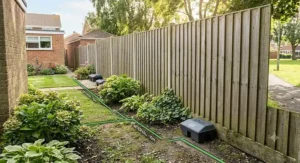
The standout feature is the entire premise: this is a tamper-resistant enclosure built specifically to house a snap trap rather than rodenticide, giving households with dogs, cats, chickens or a wildlife-conscious mindset a lethal but poison-free route to rat control. The green, low-profile casing is designed to blend into borders and shrubbery rather than stand out, and the internal mechanism is triggered only by the weight and movement pattern of a rat entering the tunnel, minimising accidental triggering by smaller non-target visitors. Here’s the trade-off worth weighing honestly: snap traps require more frequent checking than poison, since a caught rat needs removing promptly rather than simply being left to feed over days, and the kill radius of the box means it’s not compatible with poison bait if you change your mind later. Aggregated review sentiment highlights this as the go-to for gardens near watercourses or wildlife habitats, where second-generation anticoagulant rodenticides carry a documented risk of secondary poisoning up the food chain. For anyone philosophically opposed to poison, or simply gardening somewhere that makes rodenticide use questionable, this is the most defensible option on the list.
Pros:
- ✅ No rodenticide, so no secondary poisoning risk
- ✅ Discreet green casing blends into borders
- ✅ Ideal near wildlife habitats or watercourses
Cons:
- ❌ Needs more frequent checking than poison stations
- ❌ Not compatible with bait if you switch methods
Priced around £15-£25, it’s a specialist rather than a default choice, but the right one if poison genuinely isn’t an option for your household or location.
7. Pest-Stop Double Bait Station — best for heavy, ongoing rat activity
The feature that immediately separates this from every other product here is the continuous-feed design: two clear feeder tubes hold a running supply of bait that gravity-feeds into the chamber as rats consume it, meaning you’re not opening the station every few days to manually top it up. The clear tubes are the clever bit — you can see the bait level at a glance from a distance, without unlocking anything, which cuts down on how often you need to physically handle the station. This is explicitly built for professional-grade, sustained infestations rather than casual use, and Pest-Stop positions it as the choice pest controllers reach for when they need a station to keep working reliably between scheduled visits. Based on the spec comparison with single-chamber stations, the trade-off is straightforward: you’re paying more for reduced maintenance frequency, which makes sense if the alternative is a weekly round trip to a garden you don’t visit often, but is unnecessary spend for a single confirmed access point that a compact station would handle just as well. This is the “set it and check monthly rather than weekly” option on this list.
Pros:
- ✅ Continuous-feed tubes reduce refill frequency
- ✅ Clear tubes let you check levels without unlocking
- ✅ Professional-grade design for sustained infestations
Cons:
- ❌ Higher price than single-chamber stations
- ❌ Unnecessary capacity for light, single-point activity
At £25-£35, it’s the priciest single unit on this list, but for anyone managing an ongoing problem across a larger site, the reduced maintenance burden can genuinely justify the outlay.
Rat Activity Signs: What to Look For Before You Buy
Before you place a single station, you need evidence of where rats are actually travelling — not where you assume they are. The clearest giveaway is droppings: dark, rice-grain-sized pellets clustered along a regular route, distinct from the smaller, thinner droppings mice leave behind. Look next for smear marks — greasy black rub marks along skirting boards, fence bases and pipework, caused by dirt and oil in a rat’s fur as it repeatedly brushes the same edge on its nightly run. Gnaw marks on wood, cabling or plastic guttering are another strong indicator, since a rat’s incisors never stop growing and it gnaws constantly to wear them down. Local council guidance notes that the common brown rat rarely strays more than fifty metres from its burrow under normal conditions, which is precisely why signs of activity — not guesswork — should dictate where you position a bait station, rather than placing one wherever happens to be convenient. Scratching noises at night in wall cavities, lofts or under decking, and visible burrow entrances roughly the size of a tennis ball near compost heaps or shed foundations, complete the picture. Find two or more of these signs clustered in one area, and you’ve found your station’s real home — not the middle of the lawn.
Where to Place Rat Bait Stations: The Complete Placement Guide
This is the section that actually determines whether your bait station works, so treat it as the core of the whole buying decision:
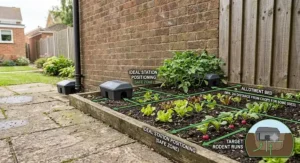
- Follow the established run, not your own logic. Rats travel along consistent routes hugging walls, fences and hedgerows — position the station directly on that line, not somewhere that merely “makes sense” to a human walking through the garden.
- Keep it against a solid vertical surface. Rats are thigmotactic, meaning they instinctively keep their whiskers brushing a wall or edge as they move, avoiding open ground where they’re exposed to predators — a station in open lawn gets ignored far more often than one against a fence or wall.
- Target the access points, not the destination. Place stations near where rats enter your garden or property — gaps under fences, gaps around pipework, the base of a shed — rather than near where you’ve simply seen them once.
- Prioritise shelter and food sources. Compost bins, bird feeder spillage zones, log piles, garden sheds and decking overhangs are magnets for rat activity, so a station positioned adjacent to (not on top of) these features tends to see faster uptake.
- Choose shade and shelter from weather. Direct sun and rain both degrade bait faster and can make rats more cautious about entering an exposed box — a position under decking, against a north-facing wall, or beneath dense shrubbery keeps bait fresher for longer.
- Secure it against movement. A station that rocks, slides or can be nudged aside by wind or a curious dog will be avoided by naturally cautious rats — stake, weight or fix it in position wherever possible.
- Avoid public access routes entirely. Never position a station on a path used by children, near a play area, or somewhere a dog off its lead could interact with it unsupervised — CRRU’s Code of Best Practice is explicit that any bait point must be at least as secure from non-targets as a proper tamper-resistant box, and placement is your first line of defence, not just the lock itself.
✨ Ready to put this into practice? Grab a couple of the stations reviewed above and start with the highest-activity spot you identified in the signs section.
Rat Bait Station Garden Placement: Getting It Right Outdoors
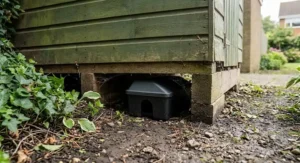
Garden placement comes with its own specific pitfalls that indoor or perimeter placement doesn’t. The single biggest mistake is positioning a station directly beside a vegetable patch or fruit cage — not because rats won’t visit, but because it puts rodenticide within reach of anything else foraging in that same soil, and it looks, to any visiting inspector or neighbour, like poor practice regardless of how secure the box actually is. Compost bins are the classic magnet: rats are drawn to the warmth and food scraps, so a station tucked against the base of the bin (not inside it) tends to see rapid uptake. Decking is another prime zone — the void underneath is dry, dark and rarely disturbed, exactly the conditions rats favour for daytime shelter, and a station placed at a decking access gap will often outperform one placed anywhere else in the same garden. Raised beds, garden sheds and greenhouse bases follow the same logic: position the station at the base, tight against the structure, rather than a metre or two away in open ground. If you keep chickens, rabbits or other outdoor pets, treat their feed store as a rat magnet in its own right and position a station nearby, since spilled feed is one of the most common reasons gardens develop a rat problem in the first place.
Rat Bait Station Near a Wall: Why It Matters More Than You Think
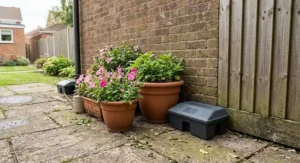
If there’s one placement rule worth remembering above all others, it’s this: a rat bait station near a wall will consistently outperform one in open space, and the reason is entirely behavioural rather than aesthetic. Rats navigate primarily by touch and scent, using their whiskers and flanks to maintain contact with a vertical edge as they move — this is why you’ll almost never see fresh droppings in the middle of a lawn, but will reliably find them tracing the base of a fence, wall or hedge line. A station placed flush against a wall, ideally at a corner or junction where two runs might intersect, taps directly into this instinct rather than asking the rat to break from its natural behaviour to investigate something in open ground. This is doubly true for exterior walls near foundations, where gaps around pipework, airbricks or subsidence cracks often serve as entry points into cavity walls or subfloor voids — a station positioned right at that gap intercepts rats before they ever get inside. As a rule of thumb, the closer you can get the station to touching the wall itself, rather than sitting a foot or two away from it, the higher the likelihood of uptake within the first week.
How Many Bait Stations Do I Need? Spacing and Coverage Explained
This is one of the most common questions we see, and the honest answer is: it depends on your infestation level and the size of the area, but there is a widely used industry rule of thumb to start from.
| Infestation Level | Recommended Spacing | Typical Coverage |
|---|---|---|
| Light / first signs | Every 10 metres along runs | 1-2 stations for an average garden |
| Moderate, confirmed activity | Every 7-8 metres along runs | 3-4 stations around the perimeter |
| Heavy / established infestation | Every 5 metres along runs | 5+ stations, multiple access points |
Professional guidance for outdoor rat baiting commonly recommends spacing bait points around ten metres apart under normal conditions, tightening to five metres apart where infestation levels are high, which is precisely the logic behind moving from a single Pest-Stop station up to a multi-pack option like the Pest Expert four-pack once activity is confirmed at more than one spot. The practical takeaway is that most average UK gardens with light activity genuinely only need one or two well-placed stations, while a property backing onto farmland, a watercourse or a poorly maintained neighbouring plot may reasonably need four or five to cover every access point along the boundary. Resist the urge to cluster several stations in one favourite spot — spreading coverage along the entire suspected run beats concentrating it in a single location every time.
How to Set Up a Rat Bait Station: Step-by-Step
Getting a new station into service correctly in the first 24 hours makes a measurable difference to how quickly rats start feeding. Start by choosing your position using the placement rules above, then secure the station so it can’t rock or slide — most models include mounting holes or a stake option, and a station that moves in the wind is a station rats will avoid. Load the bait according to the manufacturer’s instructions, securing wax blocks onto the internal rod where fitted, since loose bait that rats can drag out defeats the entire purpose of a tamper-resistant design. Lock the lid and pocket the key somewhere memorable — a surprising number of first-time users lose it within the first month. Resist the temptation to check daily; rats are naturally cautious of new objects in their environment, a trait called neophobia, so expect a lag of anywhere from a few days to two weeks before you see genuine uptake, and avoid moving the station in that window, since relocating it resets that adjustment period entirely. Once feeding begins, check and top up every three to seven days depending on the station’s capacity, and always wear gloves when handling bait or a station that’s held it, both for hygiene and to avoid transferring your scent onto fresh bait blocks. In the first month, the single most common mistake is giving up and moving the station after only two or three days of apparent inactivity — patience, more than any product feature, is what separates a resolved infestation from an ongoing one.
📍 Placed your stations but still seeing activity after two weeks? It’s usually a spacing problem, not a product problem — revisit the coverage table above.
Real-World Scenarios: Matching the Station to Your Situation
Consider a semi-detached house with a small rear garden and a single confirmed access point near a shed base — this is the classic case for one Pest-Stop Rat Bait Station or The Big Cheese Rat & Mouse Bait Station, positioned directly against the shed’s foundation, checked weekly, with no need to overspend on a multi-pack designed for a much larger problem. Now picture a semi-rural property backing onto open farmland, with droppings along three separate fence lines and an active burrow near the compost heap — this scenario calls for the Pest Expert Heavy Duty Bait Boxes (x4) or the ROSHIELD PRO BOX, spaced at roughly seven-metre intervals along each confirmed run, because a single station simply can’t cover multiple simultaneous access points regardless of how well it’s placed. Finally, imagine a family with a dog that free-roams the garden and a strong preference against using poison near a pond at the bottom of their plot — the ROSHIELD Snap Trap Protector Box is the obvious fit here, delivering a lethal but rodenticide-free solution positioned well away from the water, checked more frequently than a poison station would need, but without any risk of secondary exposure to wildlife drawn to the pond.
Common Mistakes When Buying and Placing Rat Bait Stations
The single most frequent mistake is buying one station for a multi-point problem, then concluding the product “doesn’t work” when really the issue is coverage, not quality — revisit the spacing table above before assuming you need a different brand. A close second is positioning stations based on where a rat was seen once, rather than along the consistent run identified by droppings and smear marks over several days of observation. Many buyers also underestimate how long uptake genuinely takes, moving or removing a station after only a few days of apparent inactivity when two weeks of patience would have resolved it. Placing a station in open ground rather than against a wall or structure is another common error rooted in human logic rather than rat behaviour — remember, thigmotaxis means rats avoid exposed open space by instinct. Finally, a surprising number of people skip the lock entirely, either losing the key or leaving it unlocked “just this once,” which defeats the entire safety rationale for buying a tamper-resistant station over loose bait in the first place.
Rat Bait Stations vs Traditional Alternatives
| Method | Effectiveness | Pet/Child Safety | Effort Required |
|---|---|---|---|
| Bait station + rodenticide | High, works over days | High, if genuinely lockable | Low, periodic checks only |
| Open snap trap | High per catch, but visible | Moderate, exposed mechanism | Medium, frequent resetting |
| Ultrasonic repellers | Low to unproven | High, no chemicals or mechanism | Very low, plug and forget |
| Poison-free bait station (snap trap housed) | High, no chemical risk | Very high | Medium, frequent checks |
Compared with an open snap trap left exposed on a shed floor, a locked bait station delivers a similar or better result while removing almost all the safety risk to pets and children that comes with an exposed spring mechanism. Ultrasonic repellers consistently underperform against both options in independent testing and are best treated as a secondary deterrent rather than a primary control method, since rats can habituate to a consistent frequency within days. For most UK households, the real choice sits between a poison-based bait station for speed and a housed snap trap for anyone unwilling to introduce rodenticide into their garden at all.
🔍 Weighing poison against a poison-free option? The ROSHIELD Snap Trap Protector Box above covers the chemical-free route without sacrificing effectiveness.
Long-Term Cost & Maintenance
A single rat bait station represents a genuinely low ongoing cost once you account for the full picture: the station itself is typically a one-off purchase lasting several years if kept out of direct weather damage, while replacement bait blocks generally run to a few pounds per refill and are needed roughly every one to four weeks depending on activity levels. Compare that against a recurring professional pest control contract, which commonly runs into several hundred pounds annually for ongoing visits, and the DIY route pays for itself within the first treatment cycle for most light-to-moderate infestations. The genuine long-term cost to budget for isn’t the station or the bait, though — it’s your own time, since regular checking (weekly for standard stations, less often for continuous-feed models like the Pest-Stop Double Bait Station) is what actually determines whether an infestation resolves in weeks rather than dragging on for months. Where the maths shifts back toward calling in a professional is a severe, structural infestation involving wall cavities or subfloor access, where DIY stations alone often can’t reach the source and ongoing property damage risks quickly outweigh any savings on call-out fees.
Features That Actually Matter (And Those That Don’t)
A genuine barrel-and-key lock matters enormously — a flimsy clip-fit lid that a determined dog can nose open isn’t meaningfully safer than no lid at all, regardless of what the packaging claims. Dual-bend entry tunnels matter too, since they’re the actual mechanism preventing non-target animals from reaching bait, not a marketing flourish. Weatherproofing matters if the station will sit outdoors year-round, since a cracked or warped shell after one winter defeats the purpose entirely. What matters far less than manufacturers suggest: colour (rats respond to scent and touch, not the shade of plastic), branded bait compatibility claims (most standard blocks and grain baits fit most stations regardless of brand pairing), and oversized capacity for a light, single-point infestation, where a compact station will do the same job as a premium one at a fraction of the price.
Safety, Regulations & Compliance Guide
Under UK regulation, amateur-use rodenticide must be deployed inside a tamper-resistant bait station — using loose poison anywhere accessible to children, pets or non-target wildlife isn’t just poor practice, it’s non-compliant with the guidance that underpins the UK’s entire rodenticide stewardship regime. That matters beyond a simple safety box-tick: anticoagulant rodenticides carry a well-documented risk of secondary poisoning, where predators and scavengers such as owls and foxes are affected after eating rodents that have fed on bait but not yet died, and peer-reviewed research on non-target rodenticide exposure has repeatedly found detectable rodenticide residue in a majority of raptor species tested globally. Practically, this means checking stations regularly and removing any dead rats you find promptly, rather than leaving carcasses where a predator might scavenge them, and it’s part of why several products on this list — particularly the poison-free ROSHIELD Snap Trap Protector Box — exist as a deliberate alternative for wildlife-conscious gardens. If an infestation persists beyond about a month of consistent, correctly placed baiting, that’s generally the signal to call a BPCA-certified professional rather than continuing to escalate DIY treatment indefinitely.
Frequently Asked Questions
❓ Where is the best place to put a rat bait station?
❓ How many bait stations do I need for one garden?
❓ How close to a wall should a rat bait station be?
❓ How long does it take for rats to enter a new bait station?
❓ Do rat bait stations work without poison?
Conclusion
Getting rat control right in a UK garden comes down to two separate decisions working together: choosing a station that’s genuinely tamper-resistant and built for the scale of your problem, and — far more decisively — placing it where rats actually travel rather than where it’s convenient for you to check. Whether that’s the budget-friendly Pest-Stop Rat Bait Station for a single confirmed access point, the compact Big Cheese Rat & Mouse Bait Station for tight spaces, or the multi-point coverage of the Pest Expert Heavy Duty Bait Boxes for a bigger perimeter, the product only ever does half the job. The placement rules, spacing table and activity signs covered throughout this guide are what turn any of these seven products from an expensive plastic box into an actual solution. Start with the signs, follow the wall, respect the spacing, and give it the two weeks it genuinely needs before judging whether it’s working.
Recommended for You
- Best Rat Bait Station UK: 7 Tamper-Proof Picks for 2026
- How To Use Rat Bait Blocks Safely: 7 Top UK Picks 2026
- Best Rat Bait Blocks 2026: 7 Top Picks That Actually Work
Disclaimer: This article contains affiliate links. As an Amazon Associate, I earn from qualifying purchases. If you purchase products through these links, we may earn a small commission at no additional cost to you.
✨ Found this helpful? Share it with your friends! 💬🤗
