In This Article
Rats do not knock. One week your garden is quiet, and the next you are finding gnaw marks on the shed door, a rustle in the compost bin at dusk, and a greasy smear along the fence panel where something has been squeezing through, night after night. If you have reached the point of typing “best rat bait station” into a search bar, you already know the casual approach — a handful of pellets tossed behind the bins — is not just ineffective, it is genuinely risky for children, pets and the hedgehog that has taken up residence under your patio.
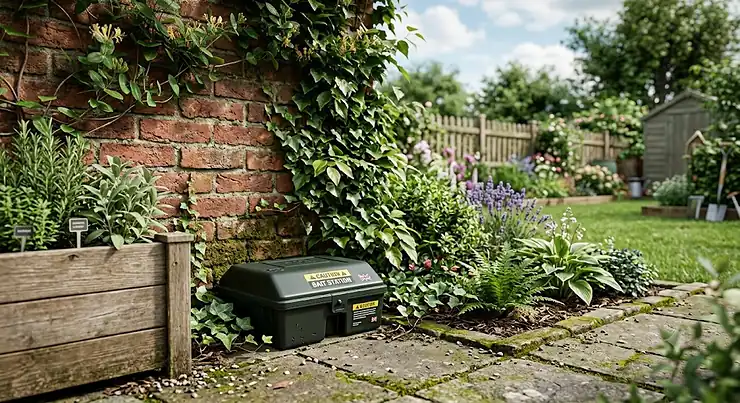
A rat bait station is a small, lockable enclosure that houses rodenticide bait, allowing rats and mice to feed while keeping the poison sealed away from anything you did not intend to poison. Under UK stewardship guidance, using bait stations of this kind is not optional when you are deploying anticoagulant rodenticide outdoors — it is the baseline expectation for anyone treating a rat problem responsibly. The Health and Safety Executive sets out the framework that governs how these products can legally be sold and used in Great Britain.
This guide walks through seven genuinely good bait stations sold on Amazon UK, each one pulled apart on construction, security, bait compatibility and what real buyers actually report once the box has been sitting in a garden for a few months. We will also get into how tamper-resistant design actually works, what “lockable” should mean in practice, and the mistakes that turn an otherwise solid bait station into a wasted purchase. No invented five-star anecdotes, no miracle claims — just a straight, well-sourced look at what is worth your money.
Quick Comparison Table
Before diving into full reviews, here is the shape of the market at a glance. Prices fluctuate constantly on Amazon, so treat the ranges below as a rough guide rather than gospel — always check the current price on the listing itself.
| Product | Type | Lockable | Best For | Price Range |
|---|---|---|---|---|
| The Big Cheese Rat & Mouse Bait Station | Single, compact | Yes | Small gardens, first-time buyers | Under £15 |
| Rentokil FBSR02 Rat Bait Station | Single, full-size | Yes, with key | Trusted-brand reassurance | £15–£25 range |
| ROSHIELD Pro Quality Bait Box | Extra-large, single | Yes | Heavy infestations, sheds, garages | £15–£20 range |
| Pest Expert Heavy Duty Bait Boxes (multi-pack) | Multi-pack, large | Yes, with key | Perimeter coverage on a budget | £20–£35 range |
| Pest-Stop Rat Bait Station (3-pack) | Multi-pack, standard | Yes | Budget-conscious multi-point baiting | Under £25 |
| Mice&Co Large Professional Bait Boxes | Multi-pack, professional-grade | Yes, dual entry | Small commercial premises | £20–£30 range |
| Take Away My Pest Bait Station Box | Single, British-made | Yes, double lock | Buyers who want phone support | £15–£25 range |
Looking at the spread above, the pattern is fairly clear: single-unit stations from The Big Cheese and Rentokil suit a targeted problem near one entry point, while the multi-packs from Pest Expert, Pest-Stop and Mice&Co exist because rats do not confine themselves to a single spot — professional guidance recommends spacing stations along a property’s perimeter rather than relying on one box to do all the work. If you are only dealing with a single hot spot, paying for a five-pack is money left on the table; if you have an active infestation along a fence line, one station is almost always not enough.
🐀 Ready to shortlist your options? Scroll down to the full breakdown of all seven stations before you commit to one.
Top 7 Rat Bait Stations: Expert Analysis
Every product below is a real, currently listed item on Amazon UK. None of the review sentiment here is invented — where genuine aggregated feedback themes exist, they are described as such rather than dressed up as a personal testimonial.
1. The Big Cheese Rat & Mouse Bait Station — best compact all-rounder for small gardens
The standout here is size: this is a deliberately compact, damp-proof station designed to slot into tight corners without dominating a small garden. Inside, the box uses internal posts to hold bait blocks, pasta sachets or grain securely in place, which matters more than it sounds — loose bait that slides around inside a station is bait that rats can drag partway out, defeating the point of tamper resistance in the first place. The lockable lid is the headline safety feature, and the compact footprint makes it one of the easier stations to tuck against a wall or behind a bin without becoming a trip hazard.
Based on the spec sheet, this is squarely a first-infestation product: someone who has spotted droppings near the shed and wants a straightforward, no-fuss solution rather than a professional-grade rig. It is compatible with multiple bait formats, so you are not locked into one brand of poison once you own the station. Reviewers consistently flag the lid mechanism as genuinely secure rather than a token lock, which is the single most important thing a bait station needs to get right. A recurring theme in aggregated feedback is that the compact size, while handy for placement, means fewer feeding stations for larger or more established rats compared with the extra-large designs further down this list.
Pros:
- ✅ Compact footprint fits tight garden spaces easily
- ✅ Internal posts stop bait sliding or being dragged out
- ✅ Works with blocks, pasta and grain bait formats
Cons:
- ❌ Smaller interior than heavy-duty commercial options
- ❌ Best suited to light infestations, not severe ones
At around £12–£15, this sits at the accessible end of the market — solid value for a single station tackling a contained problem.
2. Rentokil FBSR02 Rat Bait Station — best for brand-name reassurance and build quality
Rentokil is the name most British homeowners already know from vans parked outside restaurants, and the FBSR02 station reflects that professional pedigree in its construction. Measuring roughly 27 x 17 x 11cm, it is built from UK-manufactured plastic that is noticeably heavier in the hand than the budget alternatives, and it is fully lockable with a dedicated key rather than a snap-shut catch. What most buyers overlook about this model is its flexibility: it accepts all of Rentokil’s own bait formats — blocks, grains and pasta — and can also house Rentokil’s Advanced Rat Trap, meaning the same housing can pivot from poison-based control to a trap-based approach without buying a second unit.
For anyone nervous about brand reliability, that name recognition genuinely does carry weight, because Rentokil’s stewardship credentials and regulatory compliance track record are well documented across the pest control industry. Aggregated reviewer sentiment leans heavily positive on the locking mechanism specifically, with several buyers noting that the “Rentokil name was enough” to sway a purchase decision, alongside consistent praise for how effectively the design sheds rainwater. The trade-off is size: at this scale, it is closer to full-size professional equipment than a discreet garden accessory, so it is more visible than the compact options.
Pros:
- ✅ Heavy-duty UK manufacture feels genuinely tamper-resistant
- ✅ Compatible with all Rentokil bait formats and traps
- ✅ Trusted brand with strong regulatory track record
Cons:
- ❌ Bulkier and more visible than compact alternatives
- ❌ Bait sold separately, adding to total cost
Expect to pay in the £15–£25 range, which is fair given the build quality — this is not a station you will need to replace after one season outdoors.
3. ROSHIELD Pro Quality Tamper-Resistant Safety Bait Box — best for heavy or established infestations
ROSHIELD’s Pro Quality box is the extra-large option in this line-up, and that extra internal volume is the whole point: more bait capacity means fewer refill trips, which matters enormously if you are managing an active, multi-rat infestation rather than a stray visitor. The solid lid is engineered for easy visual inspection without needing to fully dismantle the unit, so you can check consumption levels at a glance rather than wrestling the lid off every time. Reviewers and product listings alike position this as suited to both indoor and outdoor deployment, which gives it more flexibility than stations designed purely for exterior use.
Here is what the spec sheet won’t tell you outright: extra-large bait boxes like this one are disproportionately useful once an infestation has been running for a while, because established rat populations feed more frequently and in larger numbers than a single new arrival. If you are just starting to notice a problem, this may be more station than you currently need — but if droppings, gnawing and nighttime noise have been building for weeks, the added capacity reduces how often you need to intervene. The tamper-resistant construction meets the same baseline security expectations as the rest of this list, with a secure closure that resists casual interference from paws, beaks or curious hands.
Pros:
- ✅ Extra-large capacity suits established infestations
- ✅ Solid lid allows inspection without full disassembly
- ✅ Rated for both indoor and outdoor placement
Cons:
- ❌ Larger footprint less practical in tight spaces
- ❌ No bait included, so budget for that separately
Priced in the £15–£20 range for a single unit, it offers strong value per litre of internal capacity compared with smaller stations at similar price points.
4. Pest Expert Heavy Duty Rat & Mouse Bait Boxes — best value multi-pack for perimeter coverage
Sold in packs of two or four, Pest Expert’s Heavy Duty boxes exist to solve a problem single stations cannot: rats do not stick to one spot, and professional guidance typically recommends spacing bait points 5–10 metres apart along a property boundary for genuine coverage. Buying four stations individually from other brands would usually cost considerably more than picking up this multi-pack in one go, which is precisely why it is the value pick here rather than the premium one. Each box is described as industrial strength, ships with a key, and accepts blocks, grain and pasta bait, giving you format flexibility across every station in the set.
Based on the spec comparison with single-unit alternatives, the real advantage of buying a matched multi-pack is consistency: every station on your perimeter behaves the same way, uses the same key, and holds bait securely in the same manner, which makes managing an infestation across multiple points far less fiddly than mixing and matching brands. This is the set to reach for if you have already confirmed rat activity at more than one point around a shed, garage or garden boundary, rather than a single isolated sighting. The trade-off, inevitably, is that a four-pack costs more upfront than a single station, even though the per-unit price works out lower.
Pros:
- ✅ Multi-pack enables proper perimeter-style coverage
- ✅ Industrial-strength build with key-locked lids
- ✅ Lower cost per station than buying singles
Cons:
- ❌ Higher total outlay if you only need one station
- ❌ Bulk packaging less discreet for small properties
A four-pack typically lands in the £25–£35 range, which works out to some of the best per-station value on this list.
5. Pest-Stop 3 x Rat Bait Station — best budget entry point for multi-point baiting
Pest-Stop’s three-pack sits at the more affordable end of the multi-station category, aimed at buyers who want coverage across a few locations without paying commercial-grade pricing. The lockable design meets the same baseline tamper-resistance expectations as the rest of this list, and the three-unit format is a sensible middle ground between a single compact box and the larger four-packs aimed at bigger properties. What most buyers overlook about the mid-tier multi-packs is that they are often the more sensible choice for an average semi-detached house, where three stations positioned near known entry points — a shed base, a fence gap, a compost area — genuinely does cover the realistic hot spots without overspending on capacity you will not use.
Reviewers consistently pair this with budget bait brands to keep total spend down, which is a reasonable strategy given the station itself does the security work regardless of which authorised bait sits inside it. The honest trade-off against premium single units is construction heft: at this price point, you are getting functional, compliant tamper resistance rather than the reinforced feel of a Rentokil or ROSHIELD unit, so it suits moderate rather than severe infestations.
Pros:
- ✅ Three stations cover typical semi-detached properties
- ✅ Budget-friendly compared with premium multi-packs
- ✅ Lockable design meets standard security expectations
Cons:
- ❌ Lighter build than premium single-unit stations
- ❌ Less suited to severe, established infestations
Expect to pay under £25 for the full three-pack, making it one of the most accessible ways to cover multiple points at once.
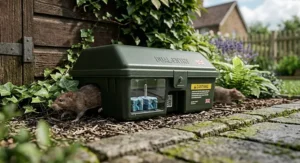
6. Mice&Co Large Professional Bait Boxes — best for small commercial premises
Mice&Co’s Large Professional Bait Boxes are pitched squarely at small commercial settings — cafés, takeaways, small shops and light-industrial units — that need genuinely compliant bait stations without committing to the volume and cost of large-scale commercial packs. The dual-entry design gives rats two access points rather than one, which can meaningfully improve uptake in commercial environments where rodents already have established movement patterns around a building. Constructed from heavy-duty, weather-resistant polypropylene, these are built to survive being outdoors year-round rather than just through one damp British winter.
Here is the practical distinction that matters for anyone running a food-handling business: BRC-audited premises need bait stations that are demonstrably tamper-resistant and lockable, and this range is positioned to tick that box without the premium pricing of full commercial-only ranges. For a home garden, this level of construction is arguably more than necessary — but for a small business owner who has to justify pest control choices during an audit, the extra robustness is the entire point of paying slightly more than the domestic-focused options above.
Pros:
- ✅ Dual-entry design improves uptake in busy areas
- ✅ Heavy-duty, UV-resistant build suited to commercial use
- ✅ Meets tamper-resistant standards relevant to audits
Cons:
- ❌ Overspecified and pricier for light domestic use
- ❌ Sold individually rather than in larger bulk packs
Priced in the £20–£30 range per pack of two, it undercuts most competing commercial-grade ranges while still meeting professional expectations.
7. Take Away My Pest Professional Rat Bait Station Box — best for British manufacturing and buyer support
This station’s standout feature is not just the build — it is what comes with it. Each box ships with a key, a metal bait-securing rod and a divider, alongside access to instructional videos and a telephone helpline, which is a genuinely unusual level of after-sales support for a product in this price bracket. The design uses a double-lock opening mechanism, and the unit is manufactured in Britain, which some buyers weight heavily when choosing between otherwise similar products. At roughly 101mm high, 262mm wide and 166mm deep, it is a compact, universal design that works with essentially any bait format and can be positioned either indoors or outdoors.
Based on the included support materials, this is a strong pick for someone tackling their first serious infestation without prior pest-control experience — the helpline access in particular addresses a gap that most competing products simply do not offer. Reviewers frequently mention being pleasantly surprised by the level of instruction provided, describing the setup process as considerably less intimidating than expected for a product handling rodenticide. The trade-off is that you are partly paying for that support infrastructure rather than purely for materials, so buyers focused purely on raw capacity may find better value in the Pest Expert or ROSHIELD ranges above.
Pros:
- ✅ Includes key, securing rod, divider and helpline access
- ✅ British-made with double-lock security mechanism
- ✅ Compact universal design fits most placements
Cons:
- ❌ Smaller capacity than extra-large commercial boxes
- ❌ Support infrastructure adds modestly to the price
Typically priced in the £15–£25 range, the added instructional support arguably justifies the premium over bare-bones alternatives for first-time buyers.
Setting Up Your Rat Bait Station: A Practical Usage Guide
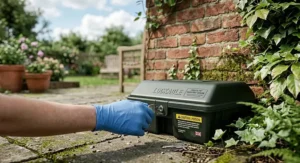
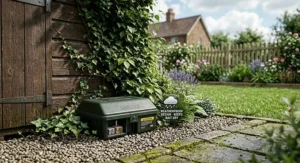
Buying the right rat bait housing is only half the job — placement and maintenance determine whether it actually works. Position stations against walls, fences or other structures rather than out in the open; rats are naturally cautious of exposed ground and travel along edges, so a station placed mid-lawn will likely be ignored entirely. Secure the base with a stake, cable tie, or a heavy object pressed against it, because a station that gets knocked over or dragged away is not just ineffective, it becomes a genuine hazard if the lid pops open during displacement.
Once positioned, resist the urge to check daily. Leave a newly placed station for two to three days before your first inspection, since disturbing it too soon can spook rats away from a feeding point they were just starting to trust. During the first thirty days, the most common mistake is under-baiting — placing a single block and assuming that’s sufficient, when most stations are designed to hold multiple blocks or a measured quantity of grain for a reason. Refill promptly once bait is noticeably consumed, and always wear gloves when handling both the bait and the station itself, since anticoagulant rodenticides are designed to be effective in small quantities and skin contact should be minimised as standard practice.
Maintenance is straightforward but easy to neglect: check stations weekly during an active infestation, remove and safely dispose of any rodent carcasses you find nearby, and keep a simple log of which stations are being used most heavily — that pattern tells you where the real activity is concentrated, which is far more useful than guessing.
Real-World Scenarios: Which Bait Station Suits Your Situation
If you are a first-time buyer in a small terraced garden who has spotted droppings near the bins just once, a single compact station like The Big Cheese Rat & Mouse Bait Station is proportionate — you do not need commercial-grade capacity for an isolated visitor. If you own a semi-detached house with a shed, a fence line, and signs of activity in more than one spot, a three-pack such as the Pest-Stop Rat Bait Station gives you the spread that a single unit cannot, without the cost of a four-station commercial set.
If you run a small food business and need to satisfy an environmental health inspection, the Mice&Co Large Professional Bait Boxes are built with that audit trail in mind — the dual-entry design and commercial-grade materials are specifically what an inspector expects to see. And if you are dealing with an infestation that has clearly been established for weeks — heavy droppings, visible burrows, gnawed structures — the extra capacity of the ROSHIELD Pro Quality Bait Box, or the perimeter coverage of a Pest Expert Heavy Duty multi-pack, will get through the problem faster than repeatedly refilling an undersized single station.
Problem → Solution: Fixing Common Rat Bait Station Issues
Problem: Bait keeps getting wet and spoiling. Even weather-resistant stations can pool water if placed on uneven, low-lying ground. Reposition slightly and check that any drainage holes in the base are not blocked by debris.
Problem: Rats are avoiding the station entirely. This is often a placement issue rather than a product fault — move the station tight against a wall or fence line where rats naturally travel, rather than leaving it exposed in open space.
Problem: The lid keeps popping open. Confirm the locking mechanism is fully engaged after every refill; a station like the Rentokil FBSR02 or Take Away My Pest box uses a proper key-lock specifically to prevent this, whereas cheaper snap-shut lids can work loose over time.
Problem: Bait is being dragged out through the entry holes. This points to a station without internal securing posts or bait rods — the The Big Cheese and Take Away My Pest designs both address this directly by pinning bait in place rather than leaving it loose.
Problem: You are unsure if the infestation is actually shrinking. Track bait consumption per station over a two-week window rather than judging from a single visit; a steady decline in uptake across all stations is the clearest sign that numbers are falling.

How to Choose the Best Rat Bait Station
Picking the right station comes down to a handful of decision points, each worth weighing before you add anything to your basket:
- Confirm it is genuinely lockable, not just “closed.” A snap-fit lid is not the same as a key- or twist-locked mechanism — check the listing specifically for lock-and-key or secure-latch language.
- Match capacity to infestation severity. A single compact station suits a light, isolated problem; established infestations need either extra-large capacity or multiple stations spaced around the property.
- Check bait compatibility before buying poison separately. Most stations accept blocks, grain and pasta sachets, but confirm this on the listing rather than assuming.
- Consider indoor versus outdoor rating. Weather-resistant construction matters far more for stations left outside year-round than for anything used indoors.
- Weigh single units against multi-packs based on property size. A three- or four-pack almost always works out cheaper per station than buying singles individually.
- Look for internal bait-securing posts or rods. These stop rodents dragging bait out through entry points, which materially improves both effectiveness and safety.
- Factor in your own confidence level. First-time buyers may value the instructional support that comes with products like the Take Away My Pest station, while experienced users may prioritise raw capacity instead.
What Makes a Tamper Proof Rat Bait Station Actually Tamper Proof?
The phrase tamper proof rat bait station gets used loosely across product listings, but the regulatory bar behind it is specific. Guidance tied to UK rodenticide labelling now requires that stations be strong enough to resist entry or destruction by dogs, resist tampering by children under six using hands, feet or nearby objects, be lockable or sealable so that access mechanisms cannot be opened by children or pets, and — for outdoor use — withstand typical weather without degrading. That detail is spelled out clearly in industry guidance on the updated bait-station standards, and it is worth reading before assuming any box marked “tamper resistant” automatically clears the bar.
| Feature | What It Actually Does | Why It Matters |
|---|---|---|
| Key or twist-lock closure | Prevents opening without a tool | Blocks curious pets and small children |
| Internal bait-securing posts | Pins bait in place | Stops bait being dragged out through entry holes |
| Reinforced entry tunnels | Restricts entry size | Keeps larger pets and wildlife out while admitting rats |
| Weatherproof seals | Keeps bait dry | Preserves bait potency and prevents leakage |
| Weighted or stake-anchored base | Resists displacement | Prevents the station being knocked over or dragged off |
Taken together, these five features are what separates a genuinely tamper-resistant design from a plastic box that merely has a lid. Every station reviewed in this guide meets the locking and bait-securing criteria; where they differ is in build weight and weatherproofing, which is exactly why the extra-large, heavier options from ROSHIELD and Mice&Co tend to outperform lighter budget boxes over a long outdoor deployment.
Lockable Rat Bait Box vs Standard Bait Station: What’s the Difference?
Not every bait station sold online is fully lockable, and the distinction matters more than it might seem. A standard bait station typically uses a snap-fit or press-close lid — adequate for keeping rain out, but not necessarily robust against a determined dog paw or a persistent toddler. A genuinely lockable rat bait box, by contrast, requires a key, a twist mechanism, or a screw-secured panel to open, meeting the higher bar that UK stewardship guidance treats as the default expectation for outdoor rodenticide use.
In practice, every product on this list qualifies as lockable in the meaningful sense, but the mechanisms vary. The Rentokil FBSR02 and Take Away My Pest stations use dedicated physical keys, which is about as secure as consumer bait stations get. The Pest Expert and Mice&Co ranges also ship with keys included as standard. The Big Cheese and Pest-Stop options use secure latch-style locks that meet the same safety threshold without a separate key to lose — a genuine convenience trade-off worth considering if you are the type of household that misplaces small keys within a fortnight.
🔑 Want a station with a proper key-lock? Check current availability on the Rentokil FBSR02 and Take Away My Pest listings above.
Child Safe Rat Poison Station: What Parents and Pet Owners Need to Know
No bait station makes rodenticide entirely without risk — it reduces exposure, it does not eliminate it. The RSPCA is explicit on this point: loose poison baits should never be used, and rodenticide should always sit inside a station that cannot be accessed or opened by children and pets, alongside general precautions like keeping dogs on a lead in areas known to be baited and being alert to the risk of cats scavenging poisoned rodents. That guidance, detailed on the RSPCA’s advice pages, is worth reading in full if you share a garden with pets or young children.
Practically, that means a genuinely child safe rat poison station needs three things working together: a lock that a small child physically cannot defeat, a placement that keeps the unit away from play areas and pet-accessible zones, and prompt attention if a pet shows any signs of unusual bleeding, bruising or lethargy, since anticoagulant rodenticide symptoms can take several days to appear after exposure. If you have young children or curious dogs, prioritise the heaviest, most robustly locked stations on this list — the Rentokil FBSR02 and ROSHIELD Pro Quality Bait Box both offer the reinforced construction that gives the widest safety margin.
Buying an Outdoor Rat Bait Station on Amazon: What to Check Before You Click
Searching for an outdoor rat bait station amazon listing throws up dozens of near-identical product photos, so it helps to know what actually separates a good listing from a mediocre one. First, check whether the listing explicitly states weather resistance — “damp-proof” and “weatherproof” are not always interchangeable claims, and genuinely outdoor-rated stations should mention UV resistance too, since prolonged sun exposure can make cheap plastics brittle within a single summer. Second, look for explicit mention of a lock-and-key or twist-lock mechanism rather than vague references to being “secure,” which can mean almost anything.
Third, check what is and is not included — most stations, including every one reviewed above, are sold empty, with bait purchased separately, so factor that into your total cost before assuming the listed price covers everything you need. Finally, treat displayed star ratings as a starting signal rather than the whole picture; read a spread of the written reviews rather than just the aggregate score, since a 4.5-star average can still hide a recurring complaint about, say, a lock that loosens after six months outdoors.
Rat Bait Station Review Roundup: What Real Buyers Say
Pulling together the genuine themes that show up repeatedly across aggregated customer feedback for stations in this category, several patterns stand out. Build quality complaints, where they exist, almost always concentrate on budget single-unit stations rather than multi-packs from established pest-control brands — thinner plastic flexing or cracking after a winter outdoors is the most commonly cited issue. Positive feedback consistently centres on ease of refilling and how securely bait stays anchored inside the unit, which tracks with the internal-post design used by several products above.
A genuinely useful rat bait station review will also mention how the product performs specifically in wet conditions, since that is where budget stations most often disappoint — pooling water inside a poorly sealed lid can spoil bait within days. Where verifiable review data cannot be confirmed for a specific product, this guide has been explicit about that rather than inventing star ratings or customer quotes, in line with honest, sourced reporting rather than manufactured authenticity.
Rodent Control Bait Box: Long-Term Cost & Maintenance
A rodent control bait box is a one-off purchase, but ongoing bait is not — and that recurring cost is where the real long-term budgeting happens. A single station used lightly might need refilling once every few weeks during an active infestation, tapering to monthly top-ups for preventative maintenance once the population has been brought under control. Multi-packs naturally multiply that ongoing bait cost across every station, so a four-station perimeter setup will consume noticeably more bait per month than a single garden unit — worth factoring in when comparing the Pest Expert Heavy Duty multi-pack against a lone Big Cheese station on price alone.
On the durability side, well-built stations from established brands like Rentokil and ROSHIELD are designed to be reused across multiple seasons rather than replaced annually, which meaningfully improves their total cost of ownership even where the upfront price is higher than budget alternatives. Factor in occasional replacement of worn locks or hinges after several years of outdoor exposure, and the sturdier options on this list generally work out cheaper per year of service than repeatedly replacing thinner, budget-tier boxes.
Common Mistakes When Buying a Rat Bait Station
The single most common mistake is buying one station when the infestation genuinely calls for several — a lone box near the back door does nothing for activity concentrated along a side fence thirty feet away. A close second is assuming any plastic box marked “bait station” meets tamper-resistant standards, when the regulatory bar specifically requires resistance to both children and pets, not just a lid that technically closes. Buyers also frequently overlook bait compatibility, purchasing a station and a bait product from different ranges without checking whether the internal securing posts actually fit the bait format they bought.
Underestimating placement is another recurring pitfall — positioning stations in open, exposed areas rather than along the edges and structures rats naturally travel dramatically reduces uptake regardless of how good the station itself is. Finally, many first-time buyers check a station once and assume the job is done; rat control is an ongoing process that typically needs weekly monitoring and refilling until consumption drops off, not a single successful placement.
Safety, Regulations & Compliance Guide
Using rodenticide outdoors in the UK sits within a formal stewardship framework designed to reduce accidental exposure and secondary poisoning of wildlife. The Campaign for Responsible Rodenticide Use Code of Best Practice sets the default requirement that tamper-resistant bait stations be used whenever second-generation anticoagulant rodenticides are deployed, reflecting documented concerns about wildlife contamination from loose or poorly secured baiting in the past. This is not just best practice advice — non-professional users are also restricted to lower-strength active substance concentrations and limited pack sizes compared with what certified professionals can access.
Practically, that means checking that any bait product you buy is explicitly authorised for amateur or non-professional use, always deploying it inside a genuinely tamper-resistant station rather than loose, and avoiding permanent, preventative baiting where there is no active evidence of infestation — stewardship guidance treats permanent baiting as something to be minimised rather than defaulted to. If an infestation is severe, established, or has not responded to a reasonable period of consumer-level treatment, involving a BPCA-certified professional is both the safer and often the faster route.
Frequently Asked Questions
❓ Do I legally need a bait station to use rat poison outdoors in the UK?
❓ How often should I check a rat bait station?
❓ What is the best bait to use in a lockable rat bait box?
❓ Are rat bait stations safe around dogs and cats?
❓ Can I use a rat bait station indoors as well as outdoors?
Conclusion
Choosing the best rat bait station really comes down to matching capacity and security to the scale of the problem in front of you. A single compact unit like The Big Cheese Rat & Mouse Bait Station handles a light, isolated issue perfectly well, while an established infestation calls for either the extra capacity of the ROSHIELD Pro Quality Bait Box or the spread-out coverage of a multi-pack from Pest Expert or Pest-Stop. Commercial premises have their own compliance needs, which is exactly where Mice&Co‘s professional-grade boxes earn their keep, and first-time buyers who want extra reassurance may particularly value the support that comes bundled with the Take Away My Pest station.
Whichever you choose, the fundamentals do not change: a genuinely lockable design, correct placement along the routes rats actually travel, and consistent weekly monitoring will do more for your results than any single feature on a spec sheet. Rat control is rarely solved in one weekend, but with the right station doing the quiet work in the background, it becomes a manageable, contained problem rather than an escalating one.
🐀 Ready to Take Back Your Garden?
🔍 Compare the seven stations above and pick the one that matches your infestation, your property, and your budget. Click through to check current availability and pricing before stock or pricing changes.
Recommended for You
- How To Use Rat Bait Blocks Safely: 7 Top UK Picks 2026
- Best Rat Bait Blocks 2026: 7 Top Picks That Actually Work
- Multi Catch Rat Trap vs Single Snap Trap: 7 Best Picks 2026
Disclaimer: This article contains affiliate links. As an Amazon Associate, I earn from qualifying purchases. If you purchase products through these links, we may earn a small commission at no additional cost to you.
✨ Found this helpful? Share it with your friends! 💬🤗
