
In This Article
There’s a particular kind of dread that comes with hearing a scratch behind the skirting board at eleven at night. You freeze. You listen. You tell yourself it was the boiler. It wasn’t the boiler. If you’ve landed here, you already know that, and you’re past the denial stage — you’re in the “right, let’s actually deal with this” stage, which is a much better place to be.

Mouse bait stations for home use exist precisely for this moment: they’re small, lockable boxes that let you place rodenticide or bait blocks exactly where mice travel, without leaving poison loose where a curious dog, cat, or toddler could reach it. Under UK law, if you’re using rodenticide indoors, it must sit inside a tamper-resistant station — this isn’t optional advice, it’s a legal requirement tied to how these products are licensed. So the box matters just as much as what’s inside it.
This guide walks through seven genuinely available UK stations, from budget corner units under a fiver to metal-bodied premium boxes, with honest analysis of what each one gets right and where it falls short. We’ll also cover indoor bait stations specifically, lockable design standards, child-resistant locks, discreet placement near skirting boards, and how refills actually work in practice — because a bait station you can’t easily top up is a bait station that quietly stops working.
Quick Comparison: Mouse Bait Stations for Home at a Glance
| Product | Best For | Lock Type | Price Range |
|---|---|---|---|
| Pest-Stop Mouse Bait Station | Tightest budget, corner placement | Key-lockable | Under £5 |
| The Big Cheese Rat & Mouse Bait Station | Low-profile wall runs | Key-lockable | Under £7 |
| Rentokil Mouse Bait Station | First-time buyers wanting brand trust | Key-lockable | £5-£8 range |
| The Big Cheese Ultra Power Block Bait2 Twin Pack | Visual monitoring, refills | Key-lockable | £8-£12 range |
| Roshield 5 Mouse Bait Boxes | Multi-room coverage, sustainability | Key-lockable | £12-£16 range |
| Rentokil Fast Action Mouse Killer Twin Pack | No-touch convenience | Sealed, tamper-resistant | £10-£16 range |
| The Big Cheese Ultra Power All-Weather Bait Station | Heaviest-duty, mixed indoor/outdoor use | Key-lockable, metal body | £17-£24 range |
Reading this table, a pattern jumps out fast: price climbs roughly in step with either build robustness (metal versus plastic) or convenience (pre-baited versus empty). The Pest-Stop Mouse Bait Station and The Big Cheese Rat & Mouse Bait Station are near-identical in what they do — house bait safely in a lockable shell — so the deciding factor there is really shape and where you’re putting it. Meanwhile, the Rentokil Fast Action Mouse Killer Twin Pack costs more not because the box itself is fancier, but because you’re paying to skip the fiddly job of handling loose bait blocks yourself.
Found a station that looks right for your situation? Check today’s price before it changes.
Top 7 Mouse Bait Stations for Home: Expert Analysis
Picking the right station isn’t just about grabbing whatever’s cheapest on the shelf at your local hardware shop — it depends on where the activity is, who else lives in your house, and how hands-on you want to be with refilling. Here’s the honest breakdown of seven real, currently available options.
1. Pest-Stop Mouse Bait Station — best triangular design for tight corners
The party trick here is the shape: a triangular profile that tucks into the internal corner of a room instead of sitting awkwardly flush against a flat wall. It sounds like a small thing until you’re trying to hide a bait station behind a kitchen bin without it looking like, well, a bait station.
At roughly 260mm by 145mm by 45mm, this is a slim unit built from shock-resistant plastic, with a lockable lid that needs the supplied key to open — no clips, no twist mechanisms a determined child or dog could figure out by trial and error. It’s rated for both indoor and sheltered outdoor use, and it’s compatible with standard bait blocks, though bait itself isn’t included, so factor that into your first order. Based on the spec comparison with other budget stations on this list, the triangular geometry is the standout feature; most competitors at this price point are simple rectangular boxes.
Reviewers on retailer sites consistently describe it as easy to position discreetly along skirting boards and behind furniture, and pest control trade buyers frequently list it among preferred professional-grade options despite the low cost — a reasonable proxy for durability, since trade users replace stock less patiently than homeowners do. What most buyers overlook is that the corner-fit design only pays off if you actually have a corner to exploit; against a long, flat run of skirting, a low-profile rectangular station may sit flusher.
Pros:
- ✅ Genuinely discreet triangular shape for corners
- ✅ Key-lockable for child and pet safety
- ✅ Among the cheapest tamper-resistant options available
Cons:
- ❌ Bait sold separately, adding to first-time cost
- ❌ Less effective along flat, cornerless skirting runs
At under £5, this is a sound starting point if you’re deploying several stations around a single-mouse sighting rather than committing to one expensive unit — value for money here is hard to beat.
2. The Big Cheese Rat & Mouse Bait Station — best low-profile pick for wall runs
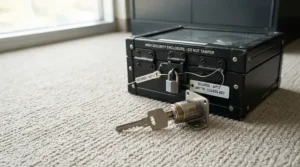
The Big Cheese is one of the most recognisable names in UK pest control, and this bait station is one of the reasons why: it’s a compact, low-profile box measuring around 226mm by 120mm by 76mm, designed to sit flush against walls and along the routes mice actually use, rather than jutting out where you’ll stub your toe on it in the dark.
It accepts pretty much every standard bait format — wax blocks, pasta sachets, and grain bait — which matters more than it sounds, because different mice populations show different bait preferences, and a station locked into one bait type limits your options if the first attempt doesn’t work. The lid is lockable, satisfying the legal requirement that any rodenticide use indoors sits inside a tamper-resistant station. Here’s what the spec sheet won’t spell out for you: the “low profile” language isn’t just cosmetic — a flatter box is genuinely less likely to be nudged, kicked, or knocked over during daily foot traffic in a busy kitchen or hallway.
Aggregated feedback across retailer listings points to consistent praise for ease of setup and general reliability, with The Big Cheese’s broader brand reputation carrying real weight — it’s one of the best-selling names in UK rodent control for a reason. A recurring theme in reviews of the base model is that buyers eventually want the reusable, refillable version rather than a single-use pre-baited one, since ongoing infestations rarely resolve in a single feeding cycle.
Pros:
- ✅ Fits flush along skirting boards and wall runs
- ✅ Compatible with block, pasta, and grain bait types
- ✅ Backed by one of the UK’s most trusted pest brands
Cons:
- ❌ No viewing window to check bait levels
- ❌ Bait needs purchasing separately for the base unit
For anyone dealing with activity along a specific stretch of wall — behind the sofa, under kitchen units — this is a dependable, unfussy choice that won’t draw attention.
3. Rentokil Mouse Bait Station — best for first-time buyers wanting brand reassurance
If you’ve never dealt with a mouse problem before, there’s something to be said for going with the name that’s practically synonymous with pest control in the UK. The Rentokil Mouse Bait Station is a lightweight, fully reusable box supplied with a key, designed to house any standard Rentokil bait while keeping it out of reach of children, pets, and wildlife.
What sets this apart on paper is the level of detail in the entry design: internal baffles create a tunnel effect that plays to mice’s natural instinct to travel along enclosed edges rather than crossing open floor space — a behaviour called thigmotaxis, and it’s the same principle that makes mice hug your skirting boards in the first place. Based on the spec comparison with the cheaper options above, the Rentokil unit doesn’t add dramatically more physical robustness, but the tunnel-baffle interior is a genuine, meaningful refinement rather than marketing fluff.
Reviewers describe it consistently as “neat, clean and effective,” with several long-term users specifically praising how easy it is to reload once the bait’s been taken — a detail that matters because a station you dread refilling is a station that sits empty for weeks. One recurring caution in aggregated feedback: keep the supplied key somewhere memorable, because losing it means you can’t safely reopen the unit to refill or dispose of spent bait.
Pros:
- ✅ Interior tunnel design encourages natural mouse behaviour
- ✅ Lightweight yet fully reusable across seasons
- ✅ Strong brand trust for nervous first-time buyers
Cons:
- ❌ Losing the single supplied key is a genuine risk
- ❌ No bundled bait, so it’s an extra purchase
This sits comfortably in the mid-budget range and is a sensible default if you’re not sure which station to start with.
4. The Big Cheese Ultra Power Block Bait2 Mouse Killer Station Twin Pack — best for visual monitoring and easy refills
This twin pack solves a problem the earlier entries on this list quietly ignore: how do you know when it’s time to top up the bait without unlocking and opening the box every few days? The answer here is a translucent inspection chamber, letting you glance at the unit and see at a glance whether the bait’s been visibly reduced.
Supplied with five 20g poison bait blocks containing brodifacoum across the twin pack, these stations are designed to fit discreetly into corners with two-way entry points, meaning mice can approach from either direction — useful in rooms where you’re not entirely sure which way the activity is coming from. On paper, this means less guesswork about when to intervene, which genuinely reduces the total number of times you need to handle the unit. Reviewers consistently flag the viewing window as the standout practical feature versus similarly priced twin packs that require full disassembly just to check status.
The refill logic deserves a specific mention because it’s one of the secondary keywords worth addressing properly: this is a reusable, refillable station, not a single-use disposable box, so once the initial bait blocks are consumed, you buy replacement 20g blocks rather than the whole unit again — a meaningfully better long-term cost picture than throwaway pre-baited alternatives.
Pros:
- ✅ Translucent window shows bait consumption at a glance
- ✅ Two-way entry suits uncertain activity direction
- ✅ Genuinely refillable rather than single-use
Cons:
- ❌ Brodifacoum is a potent second-generation compound requiring careful handling
- ❌ Twin pack may be light coverage for a whole-house problem
At roughly £9-£12 for the pack, this earns its place squarely in the mid-range for anyone who wants to actively track progress rather than baiting blind.
5. Roshield 5 Mouse Bait Boxes — best for multi-room coverage and sustainability credentials
Once a single mouse sighting turns into “I think there’s more than one,” coverage becomes the priority — which is exactly where a five-pack earns its keep. Roshield’s tamper-resistant mouse bait boxes are manufactured in the UK from recycled plastics, sourced in part from old car bumpers and dashboards, which is a genuinely unusual detail for this category and worth knowing if sustainability factors into your buying decision at all.
Each box is key-lockable and designed to house wax blocks or pasta sachets, and the pack format lets you spread five stations across a kitchen, utility room, loft hatch, and garage in one purchase rather than buying single units repeatedly. Here’s what most buyers overlook: five stations isn’t overkill for an established problem — pest control professionals typically recommend baiting multiple confirmed activity points simultaneously rather than concentrating bait in one spot, because mice forage across a surprisingly wide territory relative to their size, often 3-10 metres from their nest in a single night.
Aggregated customer review data across retailer platforms shows ratings in the 4.2 to 4.4 out of 5 range with well over 2,000 reviews collectively for Roshield’s mouse station range — a genuinely sizeable review pool that lends real weight to the aggregated sentiment, which leans heavily toward praise for build quality and ease of setup, with occasional comments about the plastic feeling lighter than metal alternatives.
Pros:
- ✅ Five stations cover multiple rooms in one purchase
- ✅ UK-manufactured from recycled plastic materials
- ✅ Large, well-established review pool backing quality claims
Cons:
- ❌ Plastic build feels lighter than metal competitors
- ❌ Bait sachets or blocks purchased separately in most listings
For a confirmed multi-point infestation rather than a single stray sighting, this pack offers some of the best per-station value on this list.
6. Rentokil Fast Action Mouse Killer Twin Pack — best no-touch convenience option
Not everyone wants to handle bait blocks, load a station, and manage refill schedules — and that’s a completely legitimate preference, not laziness. This twin pack is ready-baited straight out of the box with alphachloralose at 4% concentration, a fast-acting active ingredient that works differently to the anticoagulant compounds used in several other entries on this list, targeting the mouse’s body temperature regulation rather than blood clotting.
The appeal is straightforward: unlock nothing, load nothing, just place the sealed, tamper-resistant station in an area of confirmed activity and let it do its job. Each station is rated to handle multiple mice per unit, and the twin-pack format means you’re covering two locations from a single purchase. What the marketing copy won’t tell you outright is that because alphachloralose acts faster than anticoagulants, it’s often favoured by users who want visible results within days rather than the one-to-two week timeline typical of second-generation anticoagulant baits — though faster action doesn’t necessarily mean a higher overall kill rate for an established colony.
Reviewer sentiment aggregated across retail platforms is generally positive on convenience specifically, with the main friction point being that once the pre-loaded bait is exhausted, refilling isn’t as simple as a reusable empty station — some users report needing to purchase a fresh twin pack rather than topping up loose bait, so factor that into ongoing cost if your problem persists beyond the first cycle.
Pros:
- ✅ Zero bait handling required at setup
- ✅ Fast-acting alphachloralose formulation
- ✅ Genuinely simple for squeamish first-time users
Cons:
- ❌ Less straightforward to refill than empty reusable stations
- ❌ Ongoing cost adds up if reinfestation continues
This sits in the £10-£16 range and earns its premium over empty stations purely through the time and hassle it saves.
7. The Big Cheese Ultra Power All-Weather Bait Station — best heavy-duty build for mixed indoor and outdoor use
At the top of this list sits the one genuinely different construction: a durable metal strongbox rather than moulded plastic, built for situations where a determined pet, an inquisitive fox, or simple wear and tear over months of use might eventually compromise a plastic shell. The lockable lid keeps the tamper-resistant credentials intact while the metal body adds a level of physical robustness the rest of this list simply doesn’t offer.
Because it’s rated for all-weather use, this is the pick if your mouse problem straddles indoor and outdoor space — a garage that connects to the house, a utility room with an external door, or a shed where activity has been spotted before it moves inside. Based on the spec comparison with the plastic units above, the trade-off is straightforward: more weight and bulk in exchange for meaningfully better long-term durability, particularly in damp or exposed spots where plastic can become brittle over a couple of winters.
Aggregated retailer feedback describes the build as genuinely sturdy, with buyers specifically citing confidence that the unit “won’t get knocked about” compared with lighter alternatives — a reasonable trade for the roughly £18-£24 asking price, which puts it firmly at the premium end of this comparison.
Pros:
- ✅ Metal construction outlasts plastic in exposed spots
- ✅ Genuinely weatherproof for mixed indoor/outdoor use
- ✅ Locking mechanism feels more substantial under load
Cons:
- ❌ Bulkier and heavier than every other pick here
- ❌ Premium price for a purely indoor mouse problem
If your budget stretches and durability matters more than discretion, this is the most future-proof option on the list.
Practical Usage Guide: Setting Up Indoor Bait Stations Correctly
Buying the right box is only half the job — placement and routine make or break results. Start by identifying activity signs: droppings (small, dark, roughly rice-grain-sized), gnaw marks on packaging or skirting, or a faint musky smell in enclosed cupboards. Mice are thigmotactic, meaning they hug edges and avoid open floor space, so position stations directly against walls, not in the middle of a room, and always with the entry holes facing along the direction of travel rather than out into open space.
For the first thirty days, check stations every two to three days rather than weekly. New bait placements often see little activity in the first 48 hours simply because mice are naturally cautious around new objects in their environment — a behaviour called neophobia. Resist the urge to move the station if nothing’s happened by day three; consistency matters more than repositioning. A common early mistake is placing too few stations: professional guidance typically suggests one station every few metres along a confirmed activity route, not a single box for an entire kitchen.
Once you see bait consumption, top up promptly rather than waiting for the compartment to run completely dry, since a station that runs empty for several days simply trains mice to look elsewhere. Always wear gloves when handling bait or clearing a station, and wash hands afterwards regardless. Keep a simple written note of which stations you’ve placed where — it sounds excessive until you’re trying to remember which of six boxes is tucked behind the washing machine three weeks later.
Real-World Scenarios: Matching the Station to Your Household
Picture three different households, because the “best” bait station genuinely depends on who’s living there. First, a young family with a toddler and a boisterous dog: here, the priority is uncompromising lockability and placement well out of reach of curious hands and paws — the Pest-Stop Mouse Bait Station or Rentokil Mouse Bait Station, tucked into corners behind furniture the toddler can’t move, make more sense than anything with a wider footprint.
Second, a renter dealing with an established problem in a shared house with several confirmed activity points across the kitchen, hallway, and airing cupboard — coverage matters more than any single feature, making the Roshield 5 Mouse Bait Boxes pack a sensible starting point, since spreading five stations across the property addresses multiple routes at once rather than gambling on one location.
Third, a homeowner with a semi-detached property where activity seems to be moving between an attached garage and the kitchen — a genuinely mixed indoor-outdoor situation calling for the durability of The Big Cheese Ultra Power All-Weather Bait Station in the garage, paired with something more discreet like The Big Cheese Rat & Mouse Bait Station indoors.
Problem → Solution: Fixing Common Bait Station Frustrations
Problem: mice avoid the station entirely. This is almost always neophobia in the early days, or a bait type the local population simply doesn’t favour. Give it a week before switching bait formats, and try pasta sachets instead of wax blocks if the wax hasn’t been touched — pasta bait tends to be more universally palatable.
Problem: bait disappears but mouse activity continues. This usually means multiple mice are feeding without a lethal dose reaching each individual, or the population is larger than one or two stations can handle. Add stations at additional confirmed activity points rather than assuming the product has failed.
Problem: the lid feels stiff or the key won’t turn smoothly. A light smear of a dry lubricant on the lock mechanism resolves this in most cases — never force a stiff lock, as repeated force can crack cheaper plastic housings.
Problem: worry about pets or children near a station. Reposition it somewhere genuinely inaccessible rather than assuming the lock alone is sufficient — behind heavy furniture, inside a cupboard with a childproof catch, or elevated on a shelf edge along a wall where mice still travel but toddlers can’t reach.
Problem: uncertainty about when to call a professional. If bait consumption continues steadily for more than three to four weeks with no drop-off in activity, or if you’re finding droppings in multiple unconnected rooms, that typically signals an infestation beyond what DIY bait stations alone can resolve.
How to Choose Mouse Bait Stations for Home
- Confirm the legal basics first. Any indoor rodenticide use in the UK must sit inside a tamper-resistant, lockable bait station — this isn’t a nice-to-have, it’s how the products are legally permitted to be used.
- Match the lock type to your household risk. Homes with young children or dogs should prioritise a genuinely key-operated lock over a simple clip mechanism.
- Decide between empty and pre-baited. Empty, refillable stations cost less over time; pre-baited twin packs cost more but remove the need to handle loose bait.
- Think about placement geometry. Triangular or corner-fit designs suit rooms with obvious internal angles; low-profile rectangular boxes suit long, flat skirting runs.
- Factor in coverage, not just per-unit price. A single premium station covering one spot is often worse value than a multi-pack covering several confirmed activity points.
- Check bait compatibility before buying refills. Not every station accepts every bait format — wax block, pasta sachet, and grain bait sizing can vary between brands.
- Weigh build material against your environment. Plastic suits dry indoor placement; metal or heavily reinforced plastic suits garages, sheds, and mixed indoor-outdoor use.
Indoor Bait Stations vs Traditional Snap Traps
The instinctive comparison most people make is bait stations against classic snap traps, and the honest answer is that they solve different problems rather than competing head-to-head. Snap traps deliver an immediate, visible result — you know within a day whether it worked — while bait stations work over a longer window, often one to two weeks with anticoagulant compounds, but they scale far better across multiple simultaneous activity points without you needing to check and reset a mechanical trigger daily.
Snap traps also require you to physically dispose of a mouse, which understandably puts some buyers off entirely; bait stations largely remove you from that part of the process, though you may still occasionally find a mouse that hasn’t made it back to its nest. For households with pets or children, indoor bait stations paired with a genuinely tamper-resistant, lockable design generally offer a safer profile than snap traps left in open reach, since a spring-loaded trap poses its own injury risk to curious fingers or paws. In practice, many experienced users run both in parallel: traps for fast, confirmed kills near an obvious entry point, and bait stations for broader, lower-maintenance coverage across the rest of the property.
Lockable Bait Boxes and Child-Resistant Locks: What the Law Actually Requires
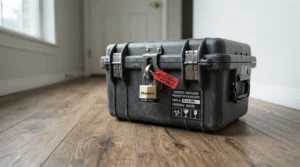
This is worth unpacking properly, because “lockable” gets used loosely in product listings when the underlying legal standard is quite specific. Following updated conditions from the Health and Safety Executive, tamper-resistant bait stations sold in the UK must be strong enough to resist entry or destruction by dogs, and strong enough to resist entry by children under six years old using hands, feet, or household objects reasonably available in the area. They must also be lockable or sealable so that neither children nor dogs can access the bait compartment through the same opening mechanism used to refill it. You can read the full regulatory detail on rodenticide bait box standards from the British Pest Control Association.
Every station featured in this guide uses a genuine key-operated lock rather than a simple clip or twist-lid, which meaningfully raises the bar over the kind of loose, unlockable bait trays sometimes still found in older or cheaper listings. That said, a lock is only as good as where you put the box: even a fully compliant, key-locked station shouldn’t be treated as childproof storage in the way you’d trust a medicine cabinet. Position it somewhere a small child physically can’t reach or manipulate, not just somewhere it’s locked shut, and always store the key itself well away from where children play.
Discreet Rodent Bait: Placement Near Skirting Boards
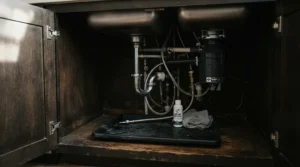
Mice travel along edges, not across open floors, which is precisely why skirting boards are the single most effective placement zone in most homes. Position stations flush against the board itself, with the entry hole angled to intercept the natural direction of travel — usually running parallel to the wall rather than perpendicular to it. Behind large kitchen appliances, under low units, and in the corners where two skirting runs meet are consistently the most productive spots, echoing the same corner-hugging behaviour that makes triangular designs like the Pest-Stop Mouse Bait Station genuinely useful rather than a gimmick.
Discretion matters for reasons beyond aesthetics too — a bait station that’s visually obvious can be nudged or investigated by pets, and in rented or shared accommodation, an ugly plastic box in the middle of a hallway isn’t exactly welcome. Low-profile stations like The Big Cheese Rat & Mouse Bait Station sit flush enough to tuck behind a bin, under a radiator, or along a skirting run without drawing attention, while still remaining fully accessible to mice travelling their usual routes. If a spot along the skirting board seems obvious to you, it’s usually obvious to a mouse too — droppings and gnaw marks nearby are a reliable sign you’ve picked the right stretch of wall before you even see live activity.
Refills: Getting the Most From a Reusable Bait Station
Refilling isn’t just a maintenance chore, it’s where most of the long-term value or waste in bait stations actually happens. Reusable, empty stations — like the Roshield 5 Mouse Bait Boxes or the base Rentokil Mouse Bait Station — cost more upfront relative to a single-use pre-baited box, but the ongoing cost of buying replacement bait blocks or sachets is significantly lower than repeatedly buying whole new pre-baited units once the initial charge is exhausted.
As a rough cost-per-use comparison: a pack of replacement 20g bait blocks typically covers several refill cycles across multiple stations for a modest outlay, whereas a pre-baited twin pack like the Rentokil Fast Action Mouse Killer Twin Pack needs replacing as a whole unit once consumed, which adds up quickly if the problem runs beyond a few weeks. The stations with a translucent inspection window, such as The Big Cheese Ultra Power Block Bait2 Twin Pack, earn their keep here specifically because they let you time refills accurately rather than guessing or opening the lock unnecessarily often. As a rule of thumb, refill as soon as consumption is visibly obvious rather than waiting for the compartment to sit empty — an empty station for even a few days can undo weeks of progress by training mice to bypass it.
Common Mistakes When Buying Mouse Bait Stations
The most frequent mistake is buying a single station for what turns out to be a multi-point problem, then concluding the product “doesn’t work” when really the coverage was never sufficient. A close second is choosing based purely on price without checking bait compatibility, only to discover the cheapest station doesn’t accept the bait format already sitting in the cupboard. Buyers also commonly underestimate how much placement matters relative to the product itself — even the most expensive premium station on this list will underperform a budget option if it’s placed in the middle of a room instead of against a wall along a confirmed travel route.
Another recurring pitfall is treating a lockable station as a substitute for basic prevention. A bait station manages an existing population; it doesn’t seal the gap under your back door or the hole around a pipe where mice are getting in to begin with. Skipping that proofing step means you may see short-term success followed by the same problem returning within a season. Finally, some buyers assume pre-baited convenience options are automatically “better” — in reality they simply trade a lower time cost for a higher ongoing financial cost, and the right choice depends entirely on which trade-off suits your household.
Safety, Regulations and Compliance Guide
UK amateur users are permitted to buy and use certain rodenticides, but only within tamper-resistant bait stations meeting HSE’s robustness standards, and manufacturers’ product labels are legally binding instructions rather than general guidance. The Campaign for Responsible Rodenticide Use coordinates the UK’s stewardship regime specifically to reduce unnecessary exposure of non-target wildlife, and its Code of Best Practice sets out seven core principles for anyone using these products, starting with surveying the site properly before baiting begins.
This stewardship exists for good reason: peer-reviewed research from the University of Bristol found that a substantial proportion of British hedgehogs tested carried detectable anticoagulant rodenticide residues, primarily through secondary exposure — eating slugs, insects, or other prey that had themselves ingested bait — rather than direct consumption. You can read the full hedgehog exposure study for the underlying data. Practically, this means always using a genuinely tamper-resistant station rather than loose bait, retrieving and disposing of any dead mice promptly rather than leaving them accessible to garden wildlife, and never placing bait outdoors where hedgehogs, birds, or foxes might encounter it directly.
For persistent or severe infestations, the British Pest Control Association consistently recommends escalating to a professional rather than continuing to add amateur bait stations indefinitely, partly because professionals have access to rodenticide formulations not available to the public, and partly because some urban mouse populations have developed resistance to certain older anticoagulant compounds.
FAQ
❓ Are mouse bait stations safe to use with pets in the house?
❓ How long does it take for a mouse bait station to work?
❓ Where should I place a mouse bait station indoors?
❓ Can I use the same bait station for both rats and mice?
❓ Do I need to refill a bait station regularly?
Conclusion
There’s no single “best” mouse bait station for every home — the right pick depends on how many activity points you’re dealing with, who else lives in the house, and how hands-on you want to be with refills. For a single confirmed sighting along one stretch of skirting board, something like the Pest-Stop Mouse Bait Station or The Big Cheese Rat & Mouse Bait Station will do the job without fuss or unnecessary spend. For a more established problem spanning several rooms, the coverage offered by a multi-pack such as Roshield 5 Mouse Bait Boxes makes far more sense than repeatedly buying single units.
Whichever you choose, the fundamentals stay constant regardless of price: a genuinely lockable, tamper-resistant design, placement along the routes mice actually travel rather than wherever’s convenient for you, and consistent checking in the first month rather than a “set and forget” approach. Get those three things right, and the specific box you’ve chosen matters far less than how carefully you use it.
✨ Ready to take the next step? Browse today’s options and pick the station that fits your home before the activity spreads any further. 🐭🔒
Recommended for You
- Mouse Bait Blocks vs Bait Stations: 7 Top UK Picks (2026)
- Best Mouse Poison UK: 7 Top Picks Ranked & Tested (2026)
- Mouse Bait Blocks: 7 Best UK Picks Compared (2026)
Disclaimer: This article contains affiliate links. As an Amazon Associate, I earn from qualifying purchases. If you purchase products through these links, we may earn a small commission at no additional cost to you.
✨ Found this helpful? Share it with your friends! 💬🤗
